8 Rifles that keep their value over decades
Rifles that hold value over decades usually share three traits: real history, proven performance, and steady demand. Whether you are a hunter, collector, or someone who wants a rifle that will not crater in price, these eight models have track records of hanging onto their worth and, in some cases, multiplying it many times over.
1. Winchester Model 1876

The Winchester Model 1876 is a textbook example of long-term appreciation. Produced from 1876 to 1897, it reportedly sold new for about fifty dollars, yet pristine rifles tied to the American West now bring more than 100,000 dollars at major auctions. The Winchester Model 1876 Lever Action Rifle entry notes that Winchester manufactured more than 60,000 M rifles before production stopped.
That relatively modest production run, plus frontier use, keeps demand high. On sites listing Winchester Rifles Model 1876, even honest working guns command serious money. Collector discussions of a Winchester chambered in 50 and 95, such as the 50-95 Express mentioned in a Winchester value help thread, show how rare chamberings and clean condition can push prices sharply higher.
2. Mauser Model 98
The Mauser Model 98 has been a blue-chip bolt-action since 1898. Built for hard military use and fielded in both World Wars, it still trades briskly as surplus and custom sporters. Standard wartime rifles in solid shape typically bring 800 to 1,500 dollars, while scarce contracts, sniper variants, and matching-number examples can climb toward 10,000 dollars when documented and unmolested.
That spread reflects how broad the Mauser ecosystem has become. Hunters prize the controlled-round-feed action for dangerous game builds, while collectors chase specific arsenals and years. As long as shooters want classic bolt guns and gunsmiths keep building on original receivers, the Model 98’s combination of history and utility should keep values from sagging.
3. M1 Garand
The M1 Garand, adopted by the U.S. military in 1936, is one of the few service rifles that behaves like a blue-chip stock. Original World War II examples with correct parts routinely sell in the 1,000 to 2,500 dollar range, with rarer manufacturers and documented service history bringing more. The Civilian Marksmanship Program has helped set the market by grading and pricing rifles in consistent tiers.
Because the CMP releases authentic rifles with clear descriptions, buyers have a benchmark for condition and originality. That transparency stabilizes prices and keeps fakes in check. Add in the Garand’s role in U.S. history and its reputation as a smooth-shooting .30-06, and you have a rifle that appeals to collectors, competitors, and hunters, which is exactly the mix that supports long-term value.
4. Lee-Enfield No. 4 Mk I
The Lee-Enfield No. 4 Mk I, produced from 1941 to 1956 for British and Commonwealth forces, has quietly turned into a solid performer in the surplus market. Typical rifles now bring roughly 600 to 1,200 dollars, depending on arsenal markings, matching numbers, and bore condition. Its reputation for fast cycling and reliability in World War II gives it more than nostalgic appeal.
Plenty of No. 4 rifles were sporterized for deer hunting, and those conversions still see use in the field, which keeps parts and interest alive. Unaltered military examples, however, are what collectors pay up for, especially rifles with original wood and correct sights. As clean surplus dries up, the gap between cut-down hunters and intact service rifles keeps widening, which supports prices for the best examples.
5. Remington Model 700
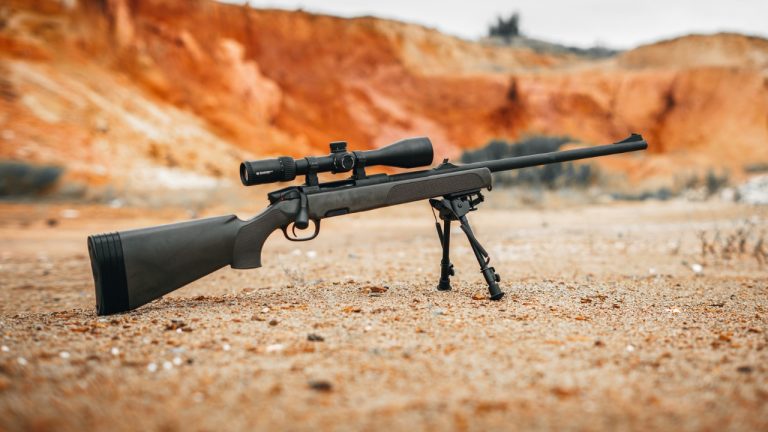
The Remington Model 700, launched in 1962, is one of the few modern bolt guns that reliably holds its price. Typical used rifles resell for about 70 to 90 percent of their original sticker, so a 1,000 dollar rifle often brings 800 to 1,200 dollars if it is clean and unmodified. That kind of retention is rare for a mass-produced sporting rifle.
The reason is straightforward: the Model 700 became a standard for hunters and custom builders. Its action is the basis for countless precision builds, and aftermarket stocks, triggers, and barrels are everywhere. That ecosystem means a buyer can upgrade instead of replacing the rifle, which keeps demand steady and cushions resale values even when newer factory models appear.
6. Ruger 10/22
The Ruger 10/22, introduced in 1964, is proof that a rimfire can be a safe place to park money. New rifles often list around 300 dollars, yet used carbines routinely sell for 200 to 400 dollars, especially if they include magazines or basic upgrades. That shallow depreciation curve is unusual for a .22 that has been in production for decades.
Because the 10/22 is so common, buyers know parts and magazines will be available for the long haul. A huge aftermarket of barrels, triggers, and chassis systems lets owners personalize the rifle instead of trading it away. As long as .22 Long Rifle remains the go-to training and plinking round, a reliable semi-auto like the 10/22 will keep moving quickly at fair prices.
7. Colt AR-15 SP1
The Colt AR-15 SP1, the first civilian version of the AR platform in 1964, has shifted from “old black rifle” to collectible. Early SP1 rifles with serial numbers under 100,000 now bring roughly 1,500 to 3,000 dollars, especially if they retain original furniture and finish. That appreciation reflects their status as the starting point for the modern sporting rifle market.
Collectors pay attention to details like slab-side receivers and early features documented in videos such as Colt SP1 history, where Today, Colt, and Here are all part of the story. With so many later AR variants on the market, the SP1’s value comes from being first, not from having the latest features, and that kind of historical “first” tends to age well.
8. AK-47 Pattern Rifle
The AK-47 pattern rifle, designed in 1947 by Mikhail Kalashnikov, has become one of the most recognizable firearms on the planet. In the United States, semi-automatic imports and clones such as the WASR-10 typically resell in the 700 to 1,000 dollar range, assuming they are in good mechanical condition. That stability has held even as specific import batches dry up or regulations shift.
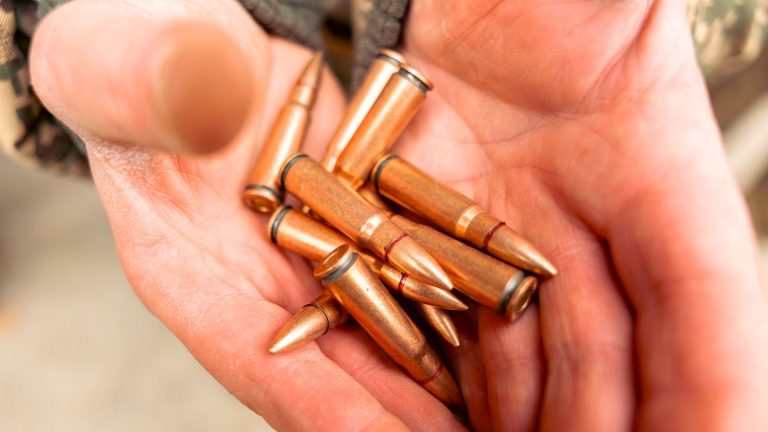
Part of the AK’s staying power is sheer global familiarity, from military service to civilian ranges. Owners know the platform is durable, magazines are plentiful, and 7.62×39 ammunition remains widely available. When a rifle has that kind of worldwide footprint and a reputation for running in ugly conditions, buyers are comfortable paying real money for used examples, which keeps values from sliding over time.

Asher was raised in the woods and on the water, and it shows. He’s logged more hours behind a rifle and under a heavy pack than most men twice his age.