The Worst Calibers for Backcountry Hunts
When you head into the backcountry, the last thing you want is a caliber that makes the hunt harder than it needs to be. Weight, ammo availability, recoil, and real-world performance matter far more once you’re miles from the truck. A cartridge that’s fine on a groomed range or during a quick day hunt can fall apart when weather, distance, and terrain step in. Some calibers demand too much, offer too little, or simply bring drawbacks that show up at the worst time. These are the ones that tend to let you down when the country gets big and the stakes get high.
.22 LR

The .22 LR has its place, but that place is nowhere near a backcountry hunt for big or medium game. While it’s lightweight and easy to carry, it can’t deliver the energy or penetration needed for responsible shots on larger animals. Even at close range, terminal performance is far too limited, especially when you factor in wind, angles, and an animal that won’t stand still.
Once you hike into real country, you quickly realize the .22 LR falls short on every front that matters. It can dispatch small game for camp meat, but relying on it for anything bigger leaves you in a bad spot. You might shoot well with it, but the caliber simply doesn’t offer what backcountry hunting demands.
.17 HMR
The .17 HMR is a fun, accurate rimfire, but it struggles the second you ask it to do more than deal with varmints. Its lightweight bullets shed energy fast and get pushed around by the slightest wind. Even experienced shooters find themselves guessing corrections at ranges where backcountry shots begin.
When you’re dealing with tougher animals and steep angles, the .17 HMR’s limitations become even more obvious. It’s not meant for penetration, and the risk of wounding an animal is high. The cartridge works in controlled conditions, but mountains and unpredictable weather show how unforgiving it really is.
.410 Bore Slugs
Some hunters swear a .410 slug can handle more than it should, but that confidence rarely survives a real backcountry environment. The limited payload and low energy make ethical shots tricky even at modest distances. Accuracy varies wildly from gun to gun, and the short effective range forces you into tight encounters you may not get.
In steep country or open basins, the .410 gives you little margin for error. Tough animals don’t react to these slugs the same way they do to heavier projectiles. The cartridge demands perfect shot placement with minimal room for recovery, which is a losing proposition miles from help or a second chance.
.30 Carbine
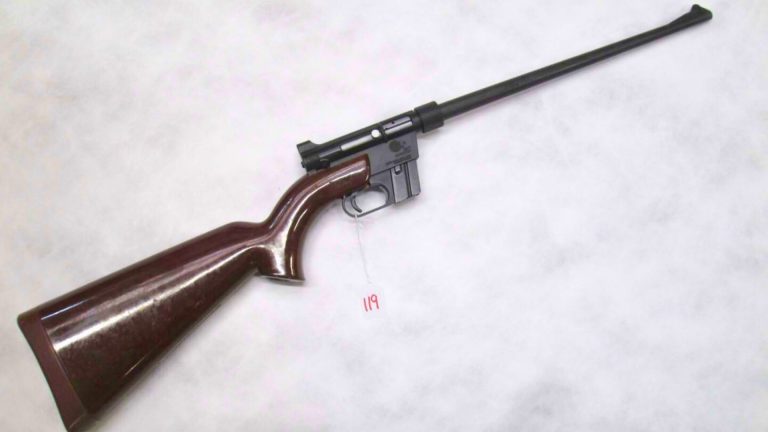
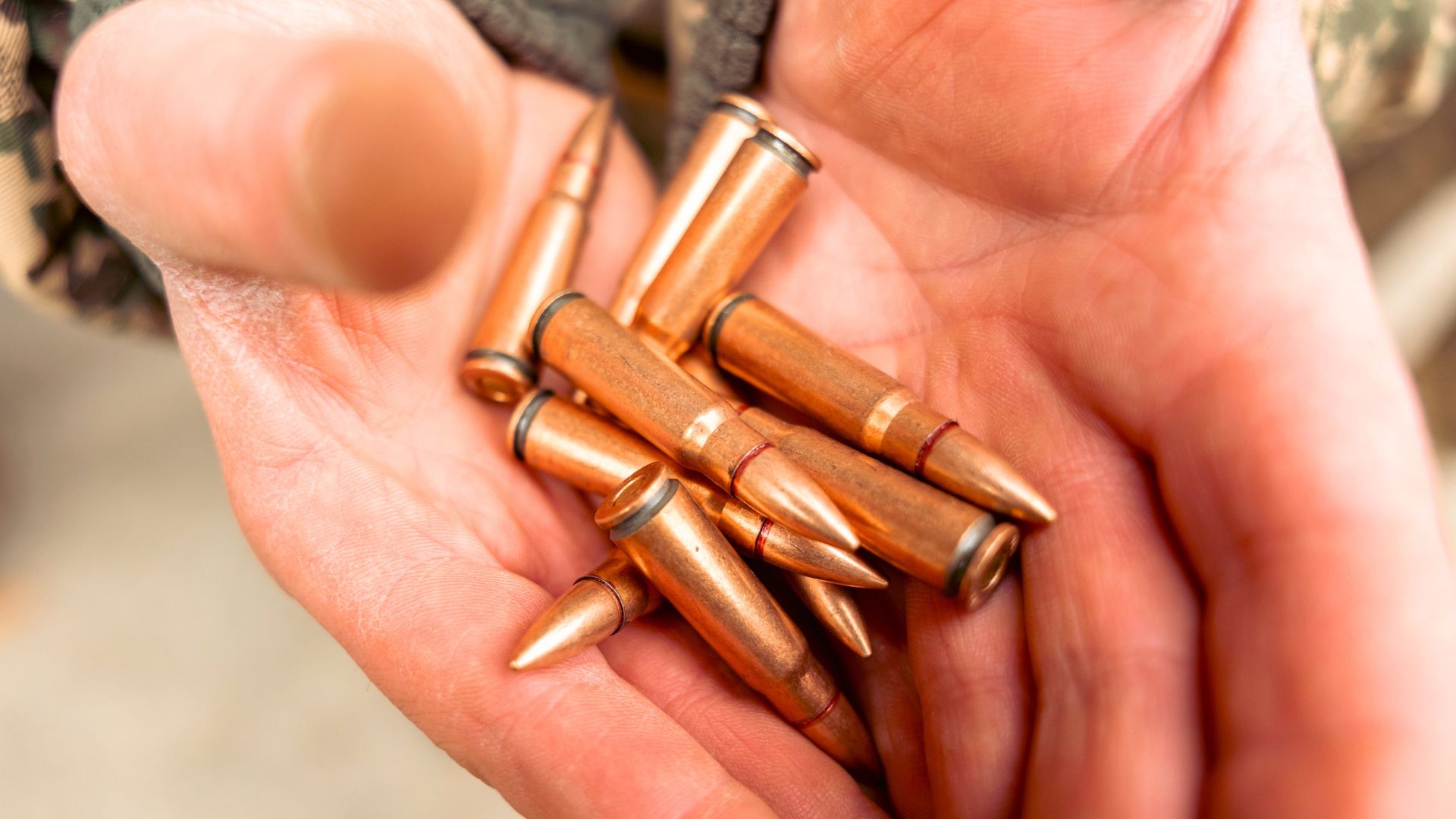
The .30 Carbine is soft-shooting and handy, but it was never designed for backcountry hunts. Its energy drops fast, and bullet construction isn’t geared toward deep penetration on bigger animals. Heavier-bodied game soaks up its limited power and often keeps moving.
In big terrain, you’ll likely face shots beyond the .30 Carbine’s comfort zone. Even inside 100 yards, performance varies enough to make it a poor choice. Hunters who carried it thinking it behaves like a lightweight .30-cal centerfire often realize too late that it performs much closer to a hot pistol round.
5.7×28mm
The 5.7×28mm is fast and flat at close range, but its light bullets can’t carry the momentum needed for animals you encounter deep in the mountains. Fragmentation or limited penetration is common, making consistent performance a challenge.
Real backcountry shots involve wind, tough hide, and unpredictable angles. The 5.7 struggles in all of those situations. It’s fun on steel and varmints, but taking it into big country is asking it to perform far outside its lane. When stakes are high and pack-outs are long, you need something with more authority.
.32 ACP
The .32 ACP is a compact handgun caliber that brings almost nothing useful to a backcountry hunt. Even at close range, energy and penetration are barely adequate for defensive use, let alone for clean kills on game. Bullet construction varies widely, and many loads underperform in anything thicker than light tissue.
Trying to hunt with a .32 ACP leaves you in a constant scramble for perfect shot placement. In the mountains, perfect opportunities are rare. It’s a caliber that makes every situation more complicated and every shot more questionable. You’ll spend more time worrying than hunting.
.25 ACP
The .25 ACP offers even less capability than the .32 ACP, and that’s saying something. Designed for pocket pistols, it lacks the velocity, weight, and consistency needed for anything resembling responsible hunting. Its wound channels are minimal, and penetration is unreliable on anything bigger than small pests.
Backcountry conditions amplify these weaknesses. Animals move, wind gusts, and angles get tricky. Relying on a .25 ACP for anything more than the smallest camp chores is a recipe for wounded game and a long, frustrating trek. It belongs nowhere near serious hunts.
9mm Luger (For Big Game)
The 9mm is an excellent defensive round, but it’s poorly suited for big-game hunting in rugged terrain. Penetration varies dramatically by load, and expansion can work against you when you need momentum to break through muscle and bone.
Even in carbine form, the 9mm lacks the energy needed beyond short distances. Shots you might confidently take with a rifle become questionable. When the country opens up and the animals get larger, the 9mm leaves you working with far too little power to make clean, ethical kills.
.357 SIG
The .357 SIG offers fast velocities but relies on lightweight bullets that fragment more than they penetrate. On the range, that’s fine. In the backcountry, it can be a problem. Big animals don’t react the same way targets do, and you don’t get the luxury of second-guessing your shot after it’s taken.
Even in ideal conditions, energy delivery is inconsistent. Barriers, angles, and heavy bone can all stop the round short. In steep terrain where your shot needs to count, the .357 SIG leaves you with too narrow a performance window.
.45 Colt (Cowboy Loads)
Modern .45 Colt +P loads can shine, but traditional cowboy-pressure ammunition is another story. These mild loads are safe in older revolvers but lack the punch needed for anything more than small- to medium-bodied game at close range.
Backcountry hunts rarely hand you those ideal conditions. With traditional loads, you’ll find yourself limited to very short distances, and even then, penetration may disappoint. Without heavy, modern loads behind it, the .45 Colt becomes more nostalgia than tool.
.30-30 Winchester (At Longer Backcountry Distances)
The .30-30 is a great round in the right setting, but its limitations become obvious once shots stretch out. Backcountry hunting often involves ridges, basins, and cross-canyon opportunities, and the .30-30’s trajectory starts working against you fast.
Wind drift and energy drop-off make judgment calls tougher. Inside its range, the .30-30 performs well, but backcountry demands often push it past that sweet spot. When you need reach and dependable terminal performance at unpredictable distances, the old lever-gun round struggles.
.223 Remington (For Large-Body Backcountry Game)
The .223 Remington can take deer with the right bullets and perfect shots, but backcountry hunting rarely offers perfect anything. Wind and steep angles expose its lack of mass, and long furrows of elevation amplify its weaknesses.
On bigger-bodied game like elk or mountain mulies, the .223 runs out of steam too quickly. You’ll spend more time passing on shots than taking them, and the ones you do take may leave you questioning the outcome. It’s a capable round for many uses, but backcountry big game pushes it far beyond its intended lane.

Asher was raised in the woods and on the water, and it shows. He’s logged more hours behind a rifle and under a heavy pack than most men twice his age.