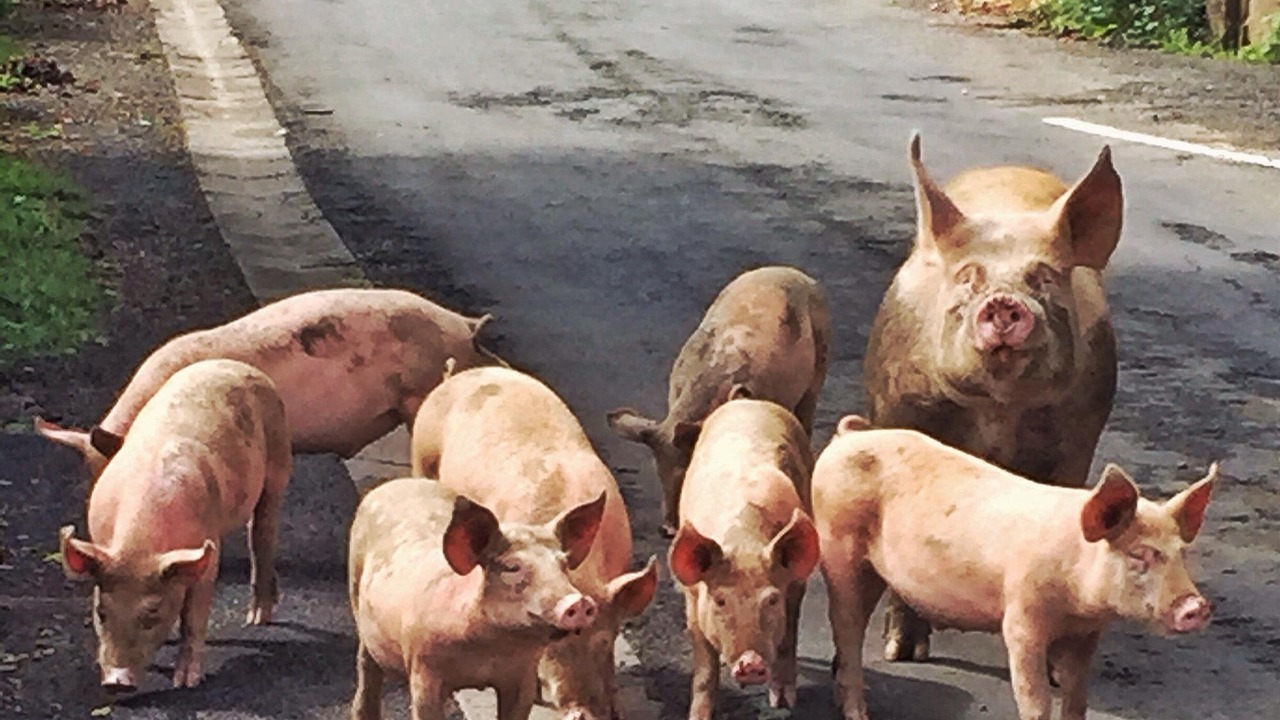
Runaway pigs wreak havoc in neighborhoods as owners admit they can’t catch them
Across the country, loose pigs are ripping up lawns, startling drivers and testing the patience of neighbors who say they are outmatched by animals that can sprint, dig and vanish before anyone can grab a leash. What starts as a quirky sighting of a wandering hog quickly turns into a costly, sometimes frightening ordeal as owners and officials admit they simply cannot catch them. I set out to trace how these runaway pigs are reshaping suburban life, from Texas cul-de-sacs to Florida retirement streets and a California block ruled by one potbellied escape artist.
The stories share a common thread: residents watching their yards, flower beds and sense of security disappear under hooves, while the systems meant to control livestock and wildlife struggle to keep up. Behind the viral clips and exasperated quotes lies a deeper collision between fast-growing suburbs and animals that are stronger, smarter and more adaptable than most people realize.
Spring’s pig problem spills into Louetta Lakes
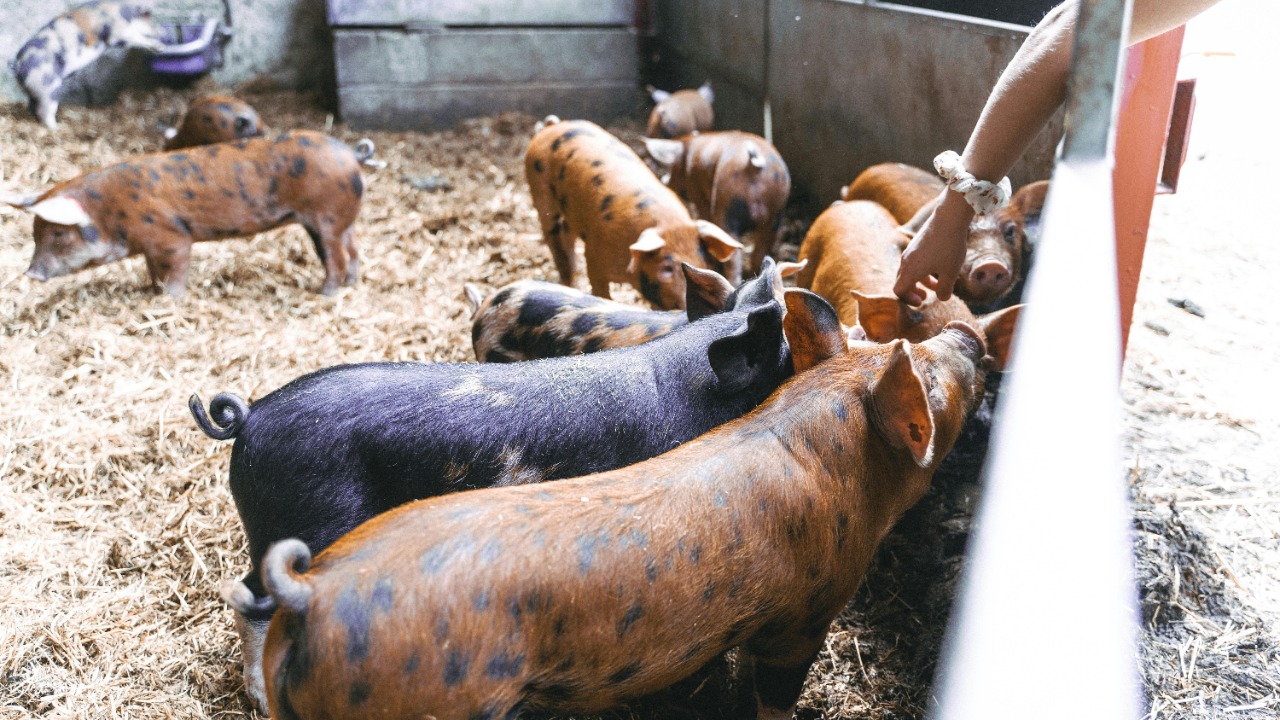
In northwest Harris County, the quiet streets around the master-planned community of Louetta Lakes have become a case study in how quickly a pig problem can escalate. Residents in Spring describe waking up to find front yards shredded overnight, with turf rolled back like carpet and decorative beds churned into bare dirt. The animals, captured on doorbell cameras and phones, are not timid barnyard pets but muscular hogs that move in small groups, root aggressively and then vanish into nearby drainage corridors before anyone can react.
Video clips from the area show the pigs trotting confidently along neighborhood streets near Louetta, ignoring cars and porch lights as they nose through landscaping and topple edging stones. In one short clip, labeled from Jan in Spring, the camera pans across a line of houses while the narrator notes that “they have a pig problem in spring” and that the animals are tearing up this neighborhood near Luetta, a reference to the same corridor locals know as Louetta. The images of torn sod and scattered mulch match what residents describe as a nightly pattern of damage that has turned a once manicured subdivision into a patchwork of repair jobs and temporary fencing, with no clear end in sight.
‘It’s not cute anymore’: neighbors hit a breaking point
For many Spring residents, the novelty of spotting pigs on the sidewalk evaporated as the destruction mounted. One neighbor, identified as Smith, walked a reporter through a yard where the extent of the destruction was visible in every direction, with lawns and landscaping “torn up” and flower beds reduced to mounds of exposed soil. The phrase “it’s not cute anymore” has become a shorthand in the neighborhood for the moment when a curious wildlife encounter turns into a recurring financial hit, as homeowners tally the cost of re-sodding, replanting and repairing irrigation lines after each visit from the herd.
Smith described a sense of exhaustion as much as anger, explaining that “we contacted everybody we know to contact and they just keep coming back,” a line that captures how powerless many residents feel once the pigs learn a route through a subdivision. The neighbors have tried calling animal control, private trappers and local officials, but the animals return to the same lawns and flower beds throughout their neighborhood, drawn by soft, irrigated soil and easy access to food. That cycle of complaint, temporary relief and renewed damage has hardened attitudes in Spring, where some residents now talk less about coexisting with wildlife and more about how to keep their property from being destroyed night after night.
Owners who cannot catch their own pigs
Part of the frustration in these communities comes from the awkward reality that some of the pigs tearing up yards are not anonymous wild hogs but animals with owners who admit they cannot control them. In one short video from Jan in Spring, a resident points out that “those things that like to roll around in mud” are now roaming freely through Luetta La, a stretch of neighborhood where the line between escaped livestock and feral hogs has blurred. The pigs move with the confidence of animals that have escaped before, weaving between parked cars and across driveways while people film from a distance instead of intervening.
When owners do speak up, they often sound as overwhelmed as their neighbors. Some acknowledge that they lack the fencing, equipment or experience to round up a full-grown hog once it bolts, especially in a dense subdivision where firing a tranquilizer or setting a large trap is not straightforward. The result is a kind of accountability vacuum, where residents see pigs that appear domesticated but hear from owners who say they cannot catch them, leaving the community to absorb the damage while local authorities debate whether to treat the animals as pets, livestock or invasive wildlife.
Texas suburbs on the front line of feral hog incursions
The chaos in Spring is part of a broader pattern across Texas, where invasive pigs have long been a rural problem and are now pushing deeper into suburbs. State wildlife officials estimate that feral hogs cause hundreds of millions of dollars in damage each year, with one report pegging the statewide impact at 670 million dollars as the animals root through crops, pastures and increasingly, residential lawns. In a separate Texas suburb, a resident told a reporter, “I can’t go out there and start blasting,” a blunt acknowledgment that even when homeowners are armed and angry, they are constrained by the realities of firing at feral pigs in a neighborhood full of families, parked cars and thin backyard fences.
State guidance on feral hogs underscores why these animals are so hard to manage once they reach built-up areas. They are prolific breeders, highly intelligent and capable of traveling long distances in search of food and cover, which means a herd displaced from one property can quickly reappear in another subdivision or greenbelt. In places like Cinco Ranch and Katy, local updates warn residents that if they have seen torn-up turf, muddy wallows or a wild hog sprint across a shopping center, they are witnessing the same trend that has hit Spring, as feral pigs adapt to sprinkler-fed lawns and ornamental plantings that mimic the soft soils and food sources of rural fields.
From Cinco Ranch to Palm Coast, lawns become feeding grounds
In the master-planned communities around Katy, neighborhood bulletins now spell out what many homeowners have already learned the hard way: if you have seen torn-up turf, muddy wallows or a wild hog sprint across your neighborhood or nearby shopping centers, you are not alone. One advisory aimed at residents of Cinco Ranch explains that wild hog sightings are on the rise in suburban areas like Katy, where manicured greenbelts and golf courses provide ideal rooting grounds. The message is clear that these animals are no longer confined to remote ranches but are increasingly comfortable weaving through cul-de-sacs and drainage easements in search of food.
Farther east, in Florida, the same pattern is playing out in places like Palm Coast, where feral hogs are tearing through a neighborhood and forcing residents to rethink how they protect their property. One homeowner, Richard Sagala, installed a fence around his home on Nora Lane in a bid to keep the animals out, only to find that determined hogs can root under or push through barriers that would stop a dog or coyote. Another video from the same city captures a resident exclaiming, “There was a humongous pig,” as neighbors describe an invasion of feral hogs that are tearing up their lawns and leaving behind cratered yards that look more like construction sites than suburban frontages.
When one pig rules the block: Stockton’s ‘Wiggly’ saga
The problem is not limited to feral swine. In Stockton, California, neighbors have been grappling with a potbellied pig named “Wiggly” who has become a one-animal symbol of how disruptive a single runaway can be. Residents say the pig is causing havoc, digging holes and damaging property as it roams freely through the block. One neighbor described how Wiggly “runs the street,” a phrase that captures both the animal’s daily routine and the sense that human residents have lost control of their own shared space to a determined, 100-plus pound escape artist.
Unlike feral hogs that slip in from surrounding wildlands, Wiggly is a known pet, which complicates the response. Neighbors complain that the pig’s owner has not been able, or willing, to confine the animal, leaving others to fill in holes, repair fences and worry about what happens if a child or small dog gets too close. The Stockton case shows how even domesticated pigs, once they learn they can break out and roam, can inflict the same kind of property damage as wild hogs, while also raising thorny questions about liability, animal welfare and the limits of local ordinances written for dogs and cats rather than free-ranging potbellies.
Why pigs are so hard to catch, even for professionals
Behind every exasperated quote about runaway pigs is a practical problem: these animals are built to evade capture. Adult hogs can sprint faster than most people expect, pivot quickly and disappear into surprisingly small gaps in fences or hedges. In Spring, video segments show pigs darting across lawns and flower beds throughout their neighborhood, often at dusk or after dark, when visibility is low and residents are reluctant to chase a large, tusked animal. One broadcast clip from Harris County, labeled as Published at 5:52 PM, shows just how quickly the pigs can move from one yard to the next, leaving a trail of churned soil behind them.
Professional trappers and wildlife officers face their own constraints in suburban settings. Large corral traps that work on ranches are hard to deploy in tight backyards, and shooting hogs, even at close range, is fraught in neighborhoods where a missed round could travel through multiple homes. A report on Feral pigs tormenting a Texas suburb captured this dilemma in a single resident’s remark that he “can’t go out there and start blasting,” even as the animals tore up his yard. That tension between the need to act and the risk of acting recklessly leaves many communities stuck in a holding pattern, watching pigs grow bolder with each successful raid.
Residents turn to social media as unofficial early-warning system
As official responses lag, neighbors have turned to social media and short video platforms to document the havoc and warn one another in real time. In Spring, clips shared from Jan show pigs trotting through Luetta and Luetta La, with captions noting that “they have a pig problem in spring” and that the animals are tearing up the neighborhood. One widely shared short, hosted on a platform that favors vertical video, captures the animals in grainy evening light as the narrator mutters about the damage to yards, a raw, unscripted record of how quickly a herd can move through multiple properties before anyone can intervene.
Similar videos have emerged from Palm Coast, where neighbors filmed the “humongous pig” that startled Residents on a quiet street, and from Stockton, where clips of Wiggly digging holes and trotting past parked cars have circulated among local Facebook groups. In some cases, these posts function as an informal alert system, letting people know when pigs are active so they can bring in pets or delay a nighttime walk. In others, they serve as evidence in disputes with owners or appeals to local officials, documenting the scale of the problem in a way that a simple complaint call cannot. The viral nature of these clips has also pushed the issue into wider public view, turning what might have been isolated neighborhood gripes into part of a national conversation about runaway pigs and who is responsible for stopping them.

Leo’s been tracking game and tuning gear since he could stand upright. He’s sharp, driven, and knows how to keep things running when conditions turn.