Guns that wear out faster than the hunters who carry them
Hunters like to imagine their rifles and shotguns as heirlooms, tools that will outlast the seasons and eventually be handed down. In reality, some modern firearms are built or used in ways that guarantee they will wear out faster than the people carrying them. The gap between a gun that shrugs off decades of hard use and one that loosens, rusts, or burns out in a few years often comes down to design choices, maintenance habits, and the environments where it is pushed.
I want to look at why certain hunting and survival guns fail early, how specific calibers and components accelerate that decline, and what long term shooters are doing differently. From barrel burnout to flimsy stocks and neglected lubrication, the pattern is clear: durability is rarely an accident, and premature failure almost always leaves a trail of avoidable decisions.
When “lifetime” guns fail in a few seasons
Most hunters still talk about rifles as if they are permanent fixtures, yet a growing number of owners are discovering that some models loosen up or lose accuracy long before they expected. Reports of Parts that rattle, finishes that flake, and groups that suddenly open up are no longer rare anecdotes. When a hunter has to retire a relatively new rifle because the action feels loose or the point of impact wanders, the promise of a “lifetime” tool starts to look more like marketing than engineering.
Some of the worst offenders are marketed as budget or survival options, where low weight and low price trump long term robustness. In one breakdown of unreliable firearms, reviewers highlighted guns that struggled to reach even 1,000 rounds before serious issues appeared, a pattern echoed in a list of 23 particularly fragile designs. When a tool meant to contain repeated high pressure explosions is built to the same cost constraints as a disposable gadget, it is not surprising that it ages faster than the hunter behind the trigger.
Barrel burnout: the hidden clock inside your rifle
Every shot erodes steel, and in some chamberings that erosion happens at a startling pace. Precision shooters and hunters have learned the hard way that “More Podwer + Small Bore = Short Barrel Life The” is not just a catchy formula but a practical warning. When a cartridge burns a large volume of powder through a relatively narrow bore, the throat of the barrel is blasted by hot gas and unburned particles, which accelerates wear and shortens the useful life of the tube according to detailed guidance on Short Barrel Life. Hunters who chase flat trajectories and high velocities often discover that the price of that performance is a barrel that loses its edge after only a few thousand rounds.
Long range communities now talk openly about “barrel burners” and factor replacement costs into their caliber choices. One discussion of switching to 6.5 Creedmoor noted bluntly that Barrel life is down with certain high efficiency rounds, even if recoil is softer. Another shooter comparing 6.5 Creedmoor to .308 pointed out that for just 2 more grains of powder in a .260 class cartridge, the expected life of a precision barrel might top out around 2600 rounds before accuracy fades. For a casual deer hunter who fires a box of ammunition each year, that may not matter, but for someone who trains heavily, the barrel can age out long before the rest of the rifle shows any wear.
Caliber choices that chew through steel
Some cartridges are notorious for punishing barrels and actions, especially when paired with light hunting rifles. Enthusiasts who compare mid power rounds to magnums often highlight that 308 can be loaded and purchased for quite cheap while 338 Lapua is expensive and, as one analysis put it, Also harder on barrels as speed and energy climb. The same logic applies in the hunting world, where high pressure magnums deliver impressive terminal performance but erode throats and lugs faster than milder options.
Guides who specialize in large game point out that Rifles chambered for . 300 Win Mag tend to be heavy, long, and somewhat cumbersome, and that the high pressure ammunition is notoriously tough on barrels, often requiring more frequent replacement if fired often. In practice, that means a hunter who trains extensively with a . 300 Win Mag may find the barrel losing precision well before the stock, trigger, or optics show any age. When shooters on long range forums talk about “barrel burners,” they are not being dramatic, they are describing a real maintenance cycle that comes baked into certain caliber choices.
Design shortcuts that guarantee early failure
Even before the first shot is fired, some guns are set up to age badly because of how they are built. Cost cutting in stocks and small parts is a recurring theme, with one technical breakdown noting that Most budget rifles have extremely cheap stocks made of injection molded plastic. Those stocks can flex under recoil, shift with temperature, and allow actions to move in the bedding, all of which accelerates the feeling that a rifle is “shot loose” even if the steel components are still sound.
Survival style rifles add another layer of compromise. Some ultra light takedown designs are praised for packability but criticized for fragile locking systems and thin barrels that heat quickly. One video warning viewers to avoid specific survival rifles noted that a couple of the worst offenders might actually go “kaboom” in the shooter’s face, a vivid way of describing catastrophic failure in certain Oct era designs. Another rundown of Feb reliability failures emphasized that when parts rattle and finishes flake early, it is usually because the underlying materials and tolerances were chosen for price, not longevity.
Maintenance: the unglamorous difference between heirloom and junk
Even a well designed rifle will not last if it is neglected in the field. Hunters routinely expose their firearms to mud, rain, and freezing temperatures, then lean them in a corner until the next season. Detailed advice on How to Maintain Hunting Gear for Longevity stresses that maintaining hunting gear is essential to ensure its reliability, safety, and long term performance. That guidance is blunt about the consequences of skipping basic cleaning and lubrication, especially when firearms are exposed to moisture and dirt.
Specialists in firearm care for harsh environments describe the Unpredictable Environments of where a day can start in crisp, dry air and end in wet snow or swamp humidity. They warn that moisture is a “sneaky saboteur” and that dust and dirt are “gritty offenders” that work their way into actions and triggers. A separate overview on Maintain Hunting Gearnotes that hunters often face recurring maintenance tasks if they want smooth operation in low temperatures. In practice, the difference between a rifle that still cycles cleanly after decades and one that seizes up after a few winters is often nothing more than whether its owner took that advice seriously.
Cold, oil, and the mechanics of failure
Extreme weather does not just test the hunter, it tests the chemistry of lubricants and the tolerances of moving parts. Detailed cold weather guidance explains that Extreme cold presents another set of problems that must be dealt with before hunting season, because Cold can cause oil or grease to thicken and slow down firing pins or actions. When a rifle that runs flawlessly on a warm range suddenly fails to fire in a subzero deer stand, the culprit is often congealed lubricant or hidden condensation that turned to ice.
Specialists in corrosion control for hunters reinforce that Hunting in such conditions means You might start your day in crisp, dry air and end in a damp, corrosive environment. If the gun is not wiped down and re oiled, microscopic rust can start in hours, especially in the bore and chamber. Over time, that corrosion pits the steel, increases friction, and accelerates wear on parts that already endure high stress. A separate cold weather overview on Dec conditions emphasizes stripping excess oil and keeping mechanisms clean and free of any buildup, a simple step that can prevent a lifetime rifle from aging prematurely in a single brutal season.
Reliability lessons from sidearms and survival guns
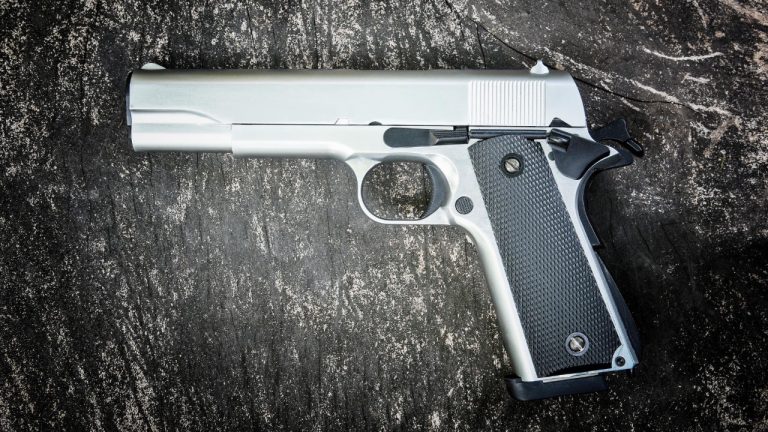
Hunters often focus on rifles, but the way pistols age under hard use offers its own cautionary tales. One long running debate about the 1911 platform includes blunt assessments that You are right to be concerned about such things, because the 1911 is notorious for jamming frequently, with Specifically the ejector mechanism and the fit between the barrel and the slide singled out as weak points. Another historical reflection on service pistols notes that if you carried a 1911 in Vietnam you can bet your but that pistol killed some Krauts and Nips, and that They all were used in WW1 and WW2 and served the United States Armed Forces from 1911 to 1985. That combination of legendary service life and finicky reliability shows how a design can be both durable in materials and temperamental in function.
Modern survival and preparedness communities have drawn their own conclusions about what lasts. In one discussion about long term sidearms, a commenter declared, “I’ve got the answer for you. Glock 19. Without question. Anyone who owns pistols has a Glock 19. Endless parts, simple design,” highlighting how parts availability and simplicity matter as much as metallurgy. In a separate thread on sustenance living, a user named Ihavnostr argued that for SHTF or WROL scenarios You can always rely on an AR or AK platform for defensive use, while the .22lr is the sustenance round and a .30 30 or .45 70 lever action covers larger game. That mix of rugged rifles and ubiquitous pistols reflects a hard earned consensus about what actually survives years of rough handling.
Do guns really wear out, or just change owners?
Collectors and tinkerers are quick to point out that not every firearm is on a fast track to the scrap heap. In a detailed answer to the question “Do guns wear out,” one enthusiast named Nicholas Meletio, who Studied at Hillcrest High School Author has 74 answers and writes that the honest response is “Yes. Also no.” He explains that some guns can fire tens of thousands of rounds with only minor parts replaced, while others are effectively worn out by poor maintenance or abuse long before their design limits are reached. The nuance matters, because it shifts the focus from an abstract lifespan to the specific way a particular gun is used and cared for.
Practical maintenance advice for hunters reinforces that point. One experienced shooter notes that, as a general rule, if the rifle is shooting a respectable group everything is normal inside a barrel and there is no need to worry, a perspective laid out in a guide to Firearm Maintenance. The same source emphasizes that if you look after yours you can pass it on, a reminder that while steel and wood do fatigue, they often fail first in the hands of owners who ignore small warning signs. In that sense, guns that wear out faster than the hunters who carry them are less a mystery of metallurgy and more a predictable outcome of choices about caliber, construction, and care.
Choosing tools that will outlast you
For hunters who want their firearms to age gracefully, the most effective strategy is to choose designs and calibers with proven staying power and then maintain them with discipline. Historical and modern survival rifles that have stood the test of time, such as classic .22s and robust lever actions, are highlighted in overviews where readers are invited to Clickon images of Two survival rifles for sale, including An Israeli Armalit example alongside Henry, Savage 24, and Browning 22 Auto models. These guns were not built to be the lightest or cheapest, but to function reliably after years of neglect in a truck cab or cabin closet.

Leo’s been tracking game and tuning gear since he could stand upright. He’s sharp, driven, and knows how to keep things running when conditions turn.