Military equipment sightings that sparked public questions
Military hardware rarely appears in civilian skies without a plan, a permit or a press release, so when unfamiliar aircraft or strange lights show up, people start asking hard questions. From drones as big as cars over the East Coast to unidentified objects near nuclear sites, sightings of military equipment and possible surveillance platforms have become flashpoints for anxiety and speculation. I see the same pattern each time: a blurry video, a nervous community and a long wait for answers that often never fully arrive.
Those gaps in explanation are not just fodder for social media. They shape public trust in national security institutions, influence how lawmakers talk about defense policy and even push intelligence agencies to change how they collect and share data. Looking across recent episodes, the common thread is less about aliens and more about accountability, transparency and who controls the skies above homes, bases and critical infrastructure.
The New Jersey drone wave that refused to fade
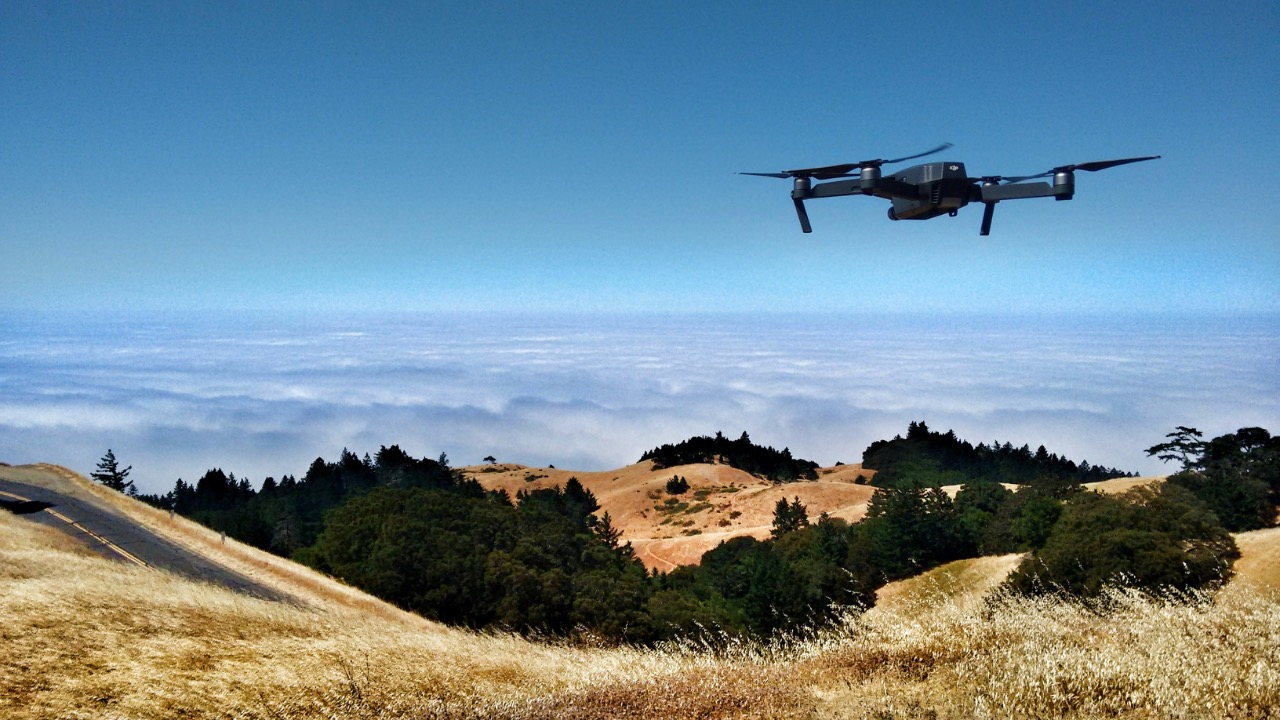
When large drones started appearing over parts of New Jersey and neighboring states, residents were not just curious, they were scared. Reports described machines as big as cars moving in coordinated formations over neighborhoods and near sensitive sites, and I see why that triggered alarm about surveillance and air safety. While the wave of fear has passed, detailed reporting on the mysterious drones makes clear that authorities never fully pinned down who was flying them or why. That lingering ambiguity is what keeps residents and local officials pressing for more information long after the buzzing in the night sky stopped.
The New Jersey incidents did not stay local for long. A New Jersey senator publicly described witnessing “unexplained and unidentified” drones, and video shared by national broadcasters showed residents pointing to objects that seemed to hover with a purpose over several East Coast states. In one widely shared account, mysterious drones were described as operating near military sites, which immediately raised questions about national security and whether foreign powers might be testing U.S. defenses. I read those accounts as a case study in how quickly a local airspace puzzle can escalate into a national political issue once elected officials and cameras get involved.
East Coast fears and a Pentagon forced to respond
As sightings multiplied from New Jersey into Massachusetts, Virginia, Pennsylvania and New York, the story shifted from oddity to perceived threat. Conspiracy theories flourished, including claims that the flights were part of a so called Project Blue Beam scenario, which some social media users framed as a staged event meant to manipulate the public. A widely shared post by Richard Picz In pointed out that several countries were reporting similar unidentified drones, and it framed the U.S. incidents as part of a broader wave that raised questions about airspace security and potential foreign surveillance. That framing resonated with residents who were already uneasy about what they saw overhead.
The Pentagon eventually had to address the issue directly. In a televised briefing, News LIVE Gen Pat Ryderacknowledged a surge in drone sightings along the East Coast and confirmed that the aircraft did not appear to pose an immediate kinetic threat. I read that as a careful balancing act, reassuring the public that there was no active attack while avoiding definitive statements about origin or intent. The lack of firm attribution left a vacuum that political figures quickly filled, with some, including Donald Trump, demanding that the U.S. government provide clear answers about the New Jersey drones and suggesting that foreign surveillance or more exotic explanations might be in play.
Drones near bases and the question of who owns the sky
Far from the Northeast, drone sightings near military installations in Texas showed how quickly a local nuisance can become a national security talking point. Residents in communities near a base in White Settlement described drones flying low over homes and toward the perimeter of a joint reserve facility operated with Lockheed Martin, and they wanted to know who controlled that airspace. Coverage of drones near a made clear that despite the volume of reports, the FBI said it had uncovered nothing nefarious, but the agency also acknowledged that the deluge of sightings had amplified concerns about national security and airspace safety. I see that as a reminder that even when there is no confirmed hostile activity, perception alone can strain trust between communities and the military.
Nationally, unidentified UAVs over military installations have become a recurring headache. Reporting on mysterious drone sightings describes how unidentified UAVs over military installations have sparked security concerns across the United States, with numerous sightings of suspected surveillance drones prompting bases to go on alert. I read those accounts as evidence that the line between hobbyist drones, commercial platforms and potential foreign reconnaissance is increasingly blurred, and that the regulatory framework has not kept pace with the technology. When residents see drones near restricted areas and get no clear explanation, their questions about who actually owns the sky above their homes only grow louder.
When unexplained objects meet nuclear weapons
Public anxiety spikes whenever unidentified aircraft appear near nuclear facilities, and history shows why. Accounts compiled about UFOs near nuclear describe incidents around installations such as the USS Roosevelt and the Rendlesham Forest area, where personnel reported strange lights or objects close to nuclear weapons or reactors. I see those cases as the template for modern fears: if something unknown can approach the most tightly guarded technology on Earth, people naturally wonder what else might be vulnerable.
Even outside the United States, researchers are still grappling with unexplained phenomena that echo those nuclear adjacent stories. In Chile, camera traps meant to study wildlife captured strange lights blazing through the wilderness, and scientists like Bravo noted that some declassified Pentagon files on UAP show similar characteristics. The same research points out that generally poor quality data means most UAP reports end up categorized as airborne clutter such as birds and weather balloons, which tells me that even when nuclear or military sites are involved, mundane explanations often still fit the evidence better than anything extraordinary.
From fringe to formal: how UAP became a Pentagon job
What strikes me most about the past decade is how quickly unidentified aerial phenomena moved from the fringe into official bureaucracy. Coverage of the Pentagon’s evolving approach shows that believers in the paranormal helped spur a new hunt for UAP inside the Defense Department, and that internal advocates pushed for structured programs to examine military sightings. An in depth account of how believers shaped the describes how officials who took pilots’ reports seriously helped turn what had been a taboo subject into an accepted intelligence mission. I read that shift as a direct response to repeated sightings of unexplained objects around military hardware, where dismissing pilots or radar operators was no longer tenable.
That institutional change took concrete form in units such as The Unidentified Aerial Phenomena Task Force. According to a detailed timeline, Unidentified Aerial Phenomena, running from 2017 to 2020 inside the Office of Naval Intelligence, collected and analyzed reports before its mission was folded into a successor organization that continues to track military sightings. I see that as a sign that once the Pentagon accepted UAP as a category of operational risk, it could no longer treat these episodes as one off curiosities. Formal task forces and reporting chains mean that every strange object near a warship or bomber now feeds into a larger dataset that policymakers can no longer ignore.
UFOs, public opinion and the new seriousness
For decades, talk of UFOs was shorthand for conspiracy theories, but that cultural script has shifted. Interest in the idea that alien beings might be visiting Earth from off planet has skyrocketed in recent years, and I see that surge as both a cause and a consequence of government transparency. A detailed analysis of how UFO sightings gained explains how official acknowledgments, including statements from the Defense Department, helped move the topic from the fringe into mainstream policy discussions. When military pilots describe unknown objects on camera and intelligence officials admit they cannot immediately explain them, the public naturally recalibrates its expectations.
That shift has also changed how media outlets frame sightings of military equipment and UAP. Instead of mocking coverage, I now see more stories that treat witnesses as credible and focus on data quality, sensor limitations and classification rules. A separate report that tracks how interest in UFOs rose after key disclosures notes that the Defense Department itself said it wanted to reduce stigma so pilots would report what they saw, a stance reflected in a linked Defense Department statement. I interpret that as a recognition that unexplained objects, whether drones, balloons or something rarer, pose real operational risks when they share airspace with fighter jets and tankers, and that public opinion now expects a more open accounting of those risks.
Data, clutter and what modern UAP reports actually show
Behind the headlines about strange lights and sudden drone swarms, the data tell a more grounded story. A detailed morphological guide to unidentified anomalous phenomena, framed as Modern UAP Report, explains what the data shows about airborne clutter. According to that analysis, a large share of cases fall into categories such as birds, weather balloons, plastic bags or lightning that can register on sensors, which matches what I have seen in declassified summaries that emphasize sensor error and misidentification. When people spot unfamiliar shapes near military aircraft, the odds still favor prosaic explanations, even if those explanations are not immediately obvious from a shaky smartphone video.
Government investigations over decades reinforce that pattern. A timeline of what multiple agencies have learned about UFOs highlights a 2021 DNI report that followed the Navy’s confirmation of video showing unidentified objects “buzzing” U.S. warships near California, and it notes that the report concluded more systematic data collection was needed. I read that conclusion as an admission that for all the sensor coverage around modern military platforms, the system was not designed to catalog every anomaly. When the data are sparse or inconsistent, unexplained does not automatically mean extraordinary, but it does mean the military has to work harder to distinguish a stray balloon from a novel surveillance platform.
Black triangles, stealth technology and misread sightings
Some of the most persistent stories about mysterious military equipment involve so called black triangle UFOs. A detailed explainer on these sightings, framed around Key Takeaways For exam purposes, urges readers to focus on officially acknowledged technologies like stealth fighters, drones and advancements in radar when assessing these reports. That guide notes that many black triangle sightings have prosaic explanations, including experimental aircraft and misidentified conventional planes, which fits with what I know about how stealth platforms such as the B 2 Spirit or certain classified drones can appear as unfamiliar silhouettes at night. I see those cases as a reminder that cutting edge military technology often looks stranger than people expect.
Historical research into unexplained flashes of light in old sky surveys adds another layer to that story. Scientists Beatriz Villarroel and Bruehl propose that some of those mid twentieth century anomalies might be linked to nuclear weapons tests that triggered unknown atmospheric effects, rather than to spacecraft. I interpret that suggestion as a useful caution: when people see strange shapes or lights near modern military hardware, the explanation may involve complex interactions between human technology and the environment, not necessarily a new platform or an off planet visitor. That perspective helps keep the focus on test ranges, classified programs and atmospheric physics instead of leaping straight to the most dramatic conclusion.

Leo’s been tracking game and tuning gear since he could stand upright. He’s sharp, driven, and knows how to keep things running when conditions turn.