Wildlife officials tracking invasive species that are spreading faster than expected
Wildlife officials across the United States are racing to keep up with invasive species that are advancing far more quickly than earlier models suggested. From fast-moving insects to aquatic invaders hitchhiking on storms, the pace and scale of spread are forcing agencies to rethink how they track, predict, and contain these organisms.
A pattern is emerging that links climate shifts, global trade, and local gaps in surveillance into a single accelerating problem. The headline story is not just that new invaders are arriving, but that familiar threats are expanding their ranges faster than expected and colliding with infrastructure, agriculture, and even wildfire risk in ways that are only now becoming clear.
Why non-native species are moving faster than models predicted
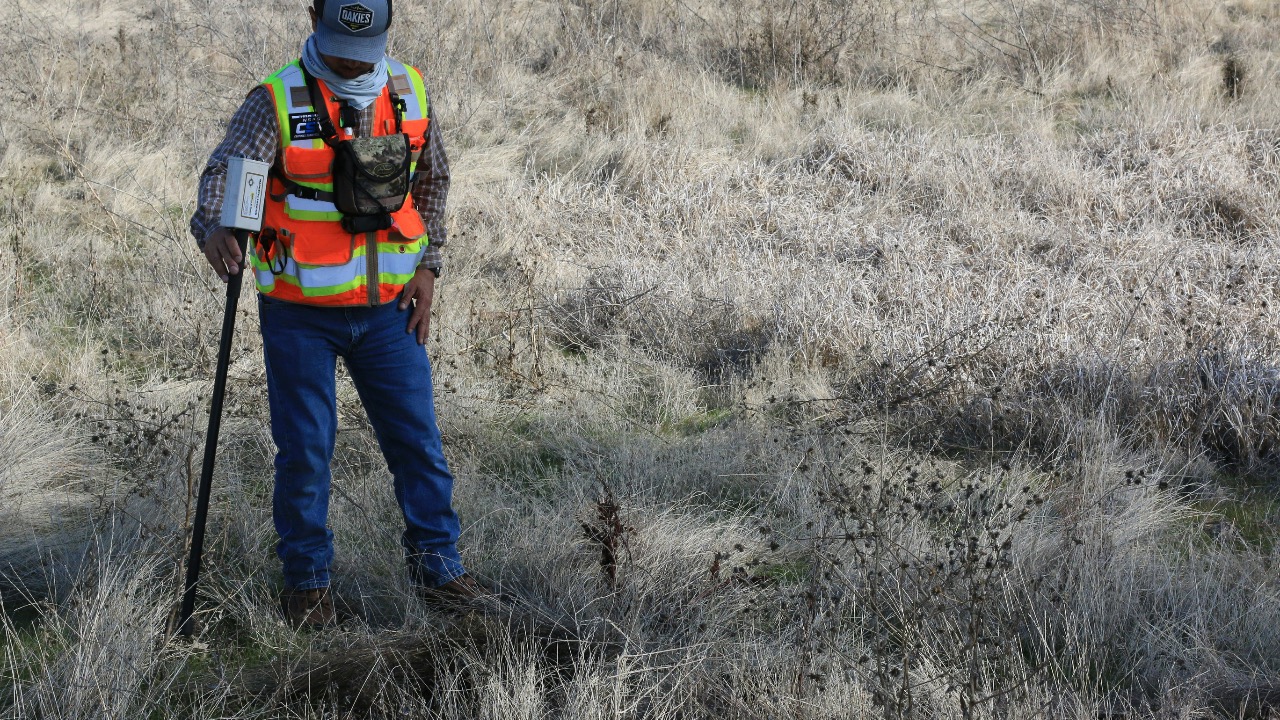
Recent research shows that non-native plants and animals are not just spreading, they are moving at speeds that outstrip native species by orders of magnitude. One analysis found that non-native species can expand their ranges at about 35 kilometers per on their own, while native species lag far behind. That gap matters because it means invaders can quickly exploit new climate zones and disturbed habitats that local species cannot reach in time, tilting entire ecosystems toward the newcomers.
Human behavior acts as a multiplier on top of that natural spread. When the same research team accounted for how shipping, trade, and travel move organisms around, they concluded that human activity can push non-native species to expand their ranges roughly 100 times faster than native species. Field reports echo that dynamic, describing how Native species are essentially stranded while invaders leapfrog across continents with help from cargo containers, landscaping materials, and even backyard firewood. Wildlife officials are now trying to align their tracking systems with this accelerated reality, because models built on slower, natural spread no longer match what they are seeing on the ground.
California’s golden mussel discovery and a new aquatic front line
Few recent discoveries have jolted biologists quite like the tiny bivalve that turned up in California. Earlier in the summer, state experts confirmed that a golden mussel had been found in the Sacramento area, described as the first known occurrence of this species in North America and likely introduced to Californ waters by a vessel traveling from an international port. That single confirmation signaled that an invasive, non native freshwater and brackish water bivalve that has caused major problems elsewhere had finally breached a new continent.
State specialists such as Martha Volkoff quickly framed the sighting as part of a broader surge of invasives in the region. In a separate briefing, she pointed out that rats are among the most damaging invasive animals in California and that even familiar pests can be controlled if residents use snap traps correctly. That pairing of a new aquatic threat with long-standing terrestrial invaders underscores how complex the state’s biosecurity challenge has become. Agencies are now trying to monitor shipping routes, inland waterways, and urban neighborhoods at the same time, all while acknowledging that their previous risk maps did not anticipate a golden mussel foothold in North America and.
Storm driven spread from Helene and Milton to Georgia and beyond
Extreme weather is emerging as another powerful driver, with hurricanes standing out as delivery systems for invasive species. Federal scientists have warned that storms such as Helene and Milton can carry plants, animals, and pathogens into new locations in Florida and Georgia, where they may threaten ecosystems, agriculture, human health, or cultural practices. The United States Geological experts behind that warning are now trying to estimate which invaders are most likely to piggyback on hurricane induced flooding, and how far those organisms might travel once they are uprooted from their original habitats.
On the ground, that risk has already become reality. Reports from the Georgia Recorder describe how Hurricanes Helene and swept a wave of invasive species into Georgia in 2024, altering waterways and stressing local management programs. Taken together with the broader modeling work by the United States Geological scientists, those accounts suggest a feedback loop in which climate driven storms open corridors for invaders, which then complicate recovery by choking wetlands, outcompeting native vegetation, and undermining infrastructure that was never designed with these organisms in mind.
Lanternflies, spongy moths, and the insect front that keeps expanding
Insects have become some of the most visible symbols of how quickly invasive species can adapt and spread. In the eastern United States, the Spotted lanternfly (Lycorma delicatula) has already established itself in multiple states, and researchers now suspect that They may have gotten their evolutionary superpowers in China, where populations adapted to urban environments before arriving in North America. That backstory helps explain why the insect has been able to thrive in cities as well as vineyards and orchards, leaving a trail of honeydew coated trees and mold that frustrates residents and growers alike.
Other insects are poised to cause similar damage if they are not tracked aggressively. Outreach campaigns highlight species such as the Spongy Moth (Lymantria dispar) among five invasive species to watch closely, noting that defoliated trees and brown splotches on leaves can signal an infestation. In New York, officials have built detailed profiles for the spongy moth, including life cycles and control options, on dedicated pages such as the Discovered Five Invasive resource. Broader lists of Invasive Pests such as the Asian Long Horned Beetle, Marmorated Stink Bug, Emerald Ash Borer, and European Gypsy Moth give homeowners concrete targets to watch for. Each of these insects has its own trajectory, but together they illustrate why wildlife and forestry officials say their monitoring networks are struggling to keep pace.
‘Squash on sight’ and the battle along transportation corridors
Virginia’s experience with lanternflies shows how quickly an invader can move once it finds a foothold near major infrastructure. By late summer, the red and white spotted lanternfly had spread to more than half of Virginia’s counties, with populations especially dense along the state’s major transportation corridors. Reporter Shannon Heckt captured the urgency of the situation with a simple directive from officials: residents were told to squash the insects on sight. That blunt message reflects how quickly the lanternfly can leap from rail yards and highways into vineyards, orchards, and backyard trees if it is not killed before it lays eggs.
The regional campaign also fits into a larger pattern of corridor based spread. The same highways, rail lines, and river ports that power Virginia’s economy also give lanternflies a ride on pallets, vehicles, and outdoor equipment. Similar dynamics play out in New York, where agencies warn that moving untreated Discovered Five Invasive firewood can transport insects and diseases far beyond their original outbreak zones. Viewed together, these stories show wildlife officials rethinking how they map risk, focusing less on static county boundaries and more on the actual flows of goods and people that let invaders jump hundreds of miles in a single season.
Aquatic invaders, harmful growths, and the quiet spread under the surface
While insects grab headlines, some of the most consequential invasions are happening in lakes and rivers where the public rarely sees the early stages. Wildlife officers in the interior West recently reported finding a lone mussel larvae, known as a veliger, in a major river system, a discovery that prompted warnings about a new threat to a key waterway. According to What According Post, that single veliger was enough to trigger heightened boat inspections and rapid response planning, because any lake that develops adult mussels can see clogged intake pipes, damaged infrastructure, and cascading ecological changes.
Elsewhere, officials have been sounding the alarm about a different kind of aquatic invader that does not just grow, it smothers. In one US region, Officials issue warning as a harmful growth spreads across waterways, describing it as a poster child for how an invasive organism can blanket native plants and alter habitat structure. Nicole Westhoff has been cited in that context, explaining that the growth does not just expand, it suffocates other life by cutting off light and oxygen. These aquatic cases underscore that tracking invasive species is not just about counting new arrivals, it is about detecting subtle shifts in water quality and species composition before the damage becomes obvious from the shore.
Termites, kudzu, and the way invasives intersect with homes and fire
On land, some of the fastest moving invasions are happening at the boundary between wild habitat and human structures. In Florida, researchers affiliated with UF and IFAS Florida have documented invasive termites that are threatening homes and spreading farther than predicted. Their findings are reflected in a publicly available Florida termite distribution map that shows multiple invasive species expanding their ranges and showing no signs of slowing. For wildlife and building officials, that map has become both a tracking tool and a warning sign that older models underestimated how quickly these termites could exploit warmer temperatures and dense urban development.
Farther north and west, a very different invader is changing how fire managers think about risk. When high winds downed a power line in March 2025, a spark on a patch of kudzu unleashed a 600-acre forest fire, according to The Atlanta Journal Constitution. That incident has become a stark example of how an invasive vine that once had a reputation as the plant that ate the South can now act as a ladder fuel, carrying flames into tree canopies and complicating suppression. Wildlife and forestry officials are increasingly treating kudzu removal as part of fire prevention, which shows how invasive species management is merging with other public safety priorities.
Data, apps, and the push to crowdsource invasive tracking
Given how quickly these species move, agencies are turning to the public for help with surveillance. In Pennsylvania, conservation staff use a platform known as iMapInvasives to track where aquatic invasive species are likely to be introduced. They quantify risk using metrics tied to recreational boating, waterfowl movements, and data from the United States Geological Survey’s Nonindigenous Aquatic Species database, then update maps that guide boat inspections and outreach. That kind of modeling would be impossible without large, shared datasets that pool observations from professionals and volunteers.
New York has taken a similar approach by building a statewide Network where residents can report sightings of invasive plants, insects, and aquatic organisms year round. Local coverage around one lake emphasized that invasive species are tracked continuously on the iMapInvasives platform so the public can play a key role in management, a point reinforced by the Invasive Network messaging. State agencies are also curating broader hubs such as the Discovered Five Invasiveportal, which consolidates identification guides, regulations, and reporting tools. Together, these systems are reshaping how wildlife officials track invasives, shifting from occasional surveys to near real time maps built from thousands of individual reports.
Policy, conferences, and the race to keep science ahead of pests
Behind the field work and public apps, there is a quieter race in the policy and research community to stay ahead of emerging threats. In the Southeast, scientists have warned that invasive pests are outpacing the research needed to manage them effectively. One Clemson affiliated expert summed up the new mindset by saying that Early action is not optional anymore, it is essential for safeguarding South Carolina’s economy and natural landscapes. That statement reflects a shift away from waiting for conclusive long term studies before acting, toward a model where agencies move quickly on preliminary evidence to prevent small incursions from becoming entrenched.

Leo’s been tracking game and tuning gear since he could stand upright. He’s sharp, driven, and knows how to keep things running when conditions turn.