Ten lesser-known facts about the Apache and their history
The Apache are often reduced to a handful of images, from desert raids to a single famous name like Geronimo, yet their story stretches from Alaska and Canada to the mountains of the Southwest and into modern spiritual and political life. This overview walks through ten lesser-known facts that show how The Apache shaped, and survived, centuries of upheaval while holding on to distinct ideas about identity, family, warfare, and the spirit world.
By tracing where the Apache came from, how they named themselves, how they organized power, and how they adapted to European invasion and Christianity, the history that emerges is far richer than the stereotypes of warriors on horseback. Each section highlights a specific insight, then ties it back to the historical and cultural record that scholars and Apache voices have preserved.
1. The name “Apache” is not what they called themselves
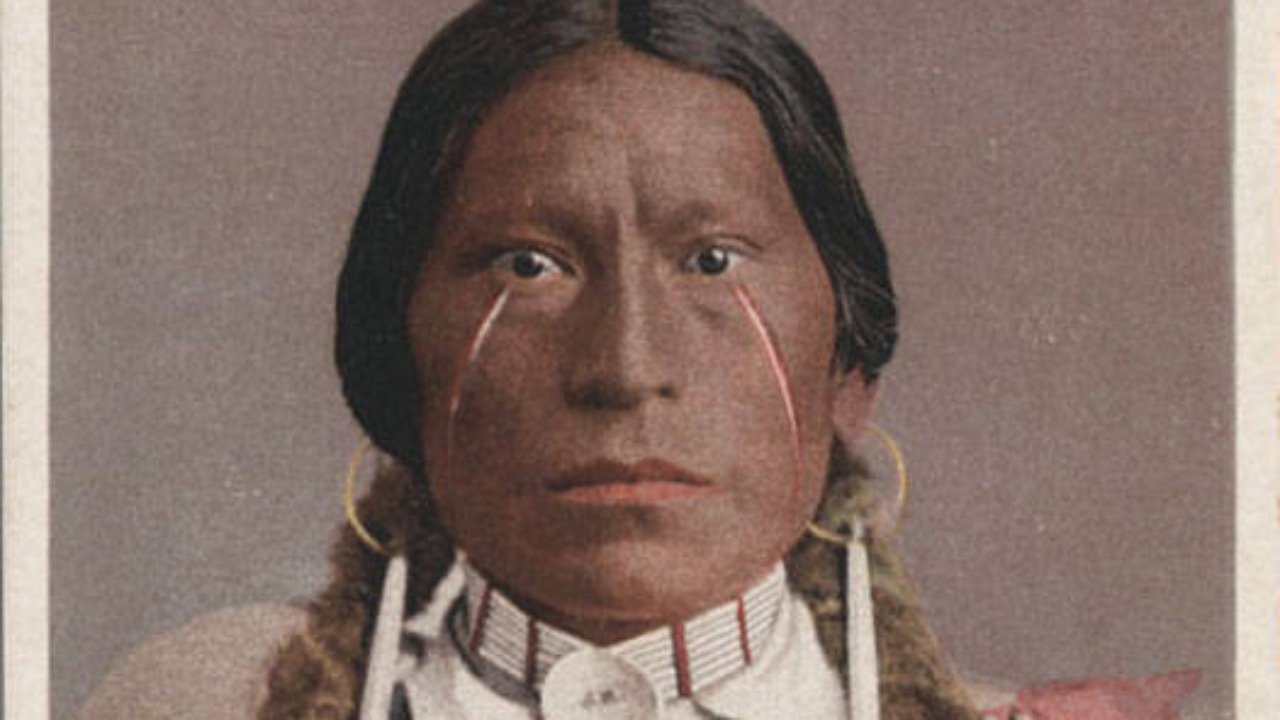
One of the most basic misunderstandings starts with the name itself. The word “Apache” likely comes from the Zuni language, where the Zuni described their neighbors with a term often translated as “enemy,” and Spanish speakers later adopted and spread that label for the Apache Tribe. Several accounts explain that while outsiders used “Apache,” the people themselves used names such as “Indé” or “Diné,” meaning “the people,” a pattern that fits a wider Indigenous habit of calling one’s own community simply “the people.” In some references, the Apache are grouped alongside the Navajo People under that same idea of “the people,” which shows how an external name can obscure how a community understands itself internally.
That tension appears clearly in modern discussions of tribal names, where lists of Indigenous nations explain how groups like The Apache and Navajo People both carry exonyms that do not match their own words for “the people.” One social post on tribal names, for example, explicitly sets “The Apache ( Apache people )” alongside other nations and stresses that these are entities with their own meanings, not just labels invented by outsiders, a reminder that a term like “Apache” is layered with Zuni, Spanish, and later American viewpoints rather than a simple self-description from the community itself.
2. From northern Athabaskan roots to “newcomers” in the Southwest
Popular imagination often treats the Apache as if they had always lived in the deserts of Arizona and New Mexico, yet linguistic and archaeological work points to a long migration from the north. Apaches are part of the Athabaskan, or Athapaskan, language family, which today stretches from Alaska and western Canada to the Southwest, where Navajo and Apache represent one branch among many. One detailed cultural overview notes that Apaches originally came from Athapankan people who historically inhabited present day Alaska and northwestern Canada, and that around a millennium ago a southern group broke away and moved toward what is now the American Southwest. Archaeological summaries add that Apache and Navajo peoples trace their ancestral roots to Athabaskan speaking communities in eastern Alaska and western Canada, who entered the Southwest prior to European contact.
When these findings are compared with broader surveys of Indigenous peoples of the American Southwest, a consistent theme emerges: while the Southwest hosts very ancient farming cultures, the Navajo and Apache are described as relative newcomers, arriving within roughly the last 800 years. Linguists who map Athabaskan languages reinforce this by showing how Indigenous American Athabaskan speech appears in three main regions, including the Southwest cluster of Navajo and Apache, alongside Pacific Coast and Western Subarctic groups. That pattern, combined with accounts that Other Athabaskan speaking people in North America still reside in Alaska, Canada, and the Northwest Pacific Coast, supports the idea that Apache history is not just a desert story but part of a continent spanning movement.
3. Apache social structure was flexible, not chaotic
Early anthropologists sometimes portrayed Apache life as loosely organized bands roaming at will, yet closer study shows a structured society that simply did not fit European expectations. In a discussion of Grenville Goodwin’s work, one Answer and Explanation Key on Apache social structures stresses that Goodwin saw a system that could not be forced into the neat categories of European civilization but still “stood out on its own.” Apache groups balanced small, mobile local bands with larger regional identities, and they relied on kinship networks, clan ties, and shared ceremonies to hold people together rather than centralized states. That flexibility helped them survive in harsh environments and respond quickly to threats.
Later ethnographic summaries of Western Apache life describe residence as matrilocal, with the son in law responsible for hunting, protection, and labor on his in law’s farm, and they emphasize that marriage could be dissolved by either party, which gave women leverage inside the household. Other teaching resources on Apache Tribe history underline that Apache society was matrilineal and that, after a marriage, the groom moved in with the bride’s family, where the mother’s line defined inheritance and social belonging. Set alongside broader notes on Life in the deserts of the Southwest, which stress how the Apache way of life prepared members for survival with clear rules about proper and improper behavior, these details reveal a community that prized order, but on its own terms.
4. Women held more authority than the warrior stereotype suggests
Popular stories about the Apache often focus on male warriors, yet the internal balance of power leaned strongly toward women in family and community life. Several sources agree that Apache society was matrilineal, meaning lineage and inheritance were traced through the mother’s line, and that Family Life and Community Apache practices within the Apache Tribe placed mothers and daughters at the center of daily work. One educational summary notes that after marriage the groom moved into the bride’s family home and that her relatives would even help him find a new bride if the marriage ended, which underscores how authority flowed through women’s kin networks, not male centered clans.
Descriptions of decision making add more nuance. One historical overview explains that although Apache men made decisions about war and whether to move to a new location, women had influence too, and that the oldest woman in a local group often acted as leader and was greatly respected. Another social media discussion of Apache society stresses that Apache women held crucial roles, that mothers, grandmothers, and aunts played key parts in children’s upbringing, and that women’s work and knowledge were central to their people’s survival. Against that backdrop, figures like Lozen, described as a legendary Apache woman warrior who could ride a horse, shoot, and, according to oral accounts, use spiritual power to locate the enemy, stand out not as anomalies but as extreme examples of a broader pattern in which Apache women shaped strategy as well as home life.
5. Food and animal taboos reveal a distinctive spiritual logic
Another underappreciated aspect of Apache culture lies in what people refused to eat or kill. Ethnographic notes list specific prohibitions under “2.9 Food taboos: Most Apache tribes would not eat fish believing they were diseased. Some Tribes would eat birds such as quail but other Apache tribes would not eat the bear.” A broader historical summary of The Apache adds that some taboos were regional, such as fish, which many groups across the Southwest, including certain Pueblo communities, avoided. These rules were not arbitrary; they reflected beliefs about purity, health, and the spiritual status of certain creatures within the Apache world.
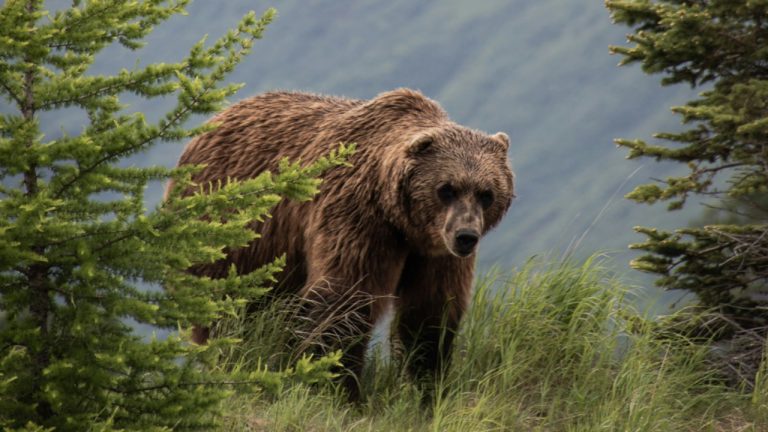
Accounts of hunting practices highlight one striking example. A narrative about captive life among Apaches notes that Apaches never hunted bears, that there was a strong taboo against killing bears, and that bears were considered ancestors of the people. Only if attacked would they kill a bear, and even then the act carried heavy ritual weight. When this is compared with descriptions of how other Indigenous cultures, such as the Ainu in northern Japan, deeply revered bears, fed them special foods, and honored them with dance, prayer, and offerings, a shared pattern emerges in which powerful animals are treated as kin or divine messengers rather than simple game. Apache food rules, in that sense, map out a moral universe where some beings are too close to human or too spiritually charged to consume.
6. Apache views of death mixed fear, speed, and spiritual warning signs
Death customs among the Apache also diverged sharply from common Hollywood images of stoic warriors. Several cultural summaries explain that Other Southwestern tribes, such as the Apache, feared the spirits of the deceased and believed that the dead resented the living, which led The Apache to bury corpses as quickly as possible and to burn the deceased’s house and possessions. One detailed account on Native American death traditions notes that the Apache thought the dead could bring harm, so families sought to separate themselves from the place and objects tied to the person who had died, then underwent rituals of purification.
Spiritual beliefs around omens reinforced this caution. A study of Indigenous and colonial soundscapes in Arizona reports that, like other cultures, Western Apache believe that owls carry the spirits of the dead and that their cries foretell death, while trickster figures like Coyote play roles in stories about misfortune. Broader entries on Apache spirituality add that The Apache believed sicknesses were often, though not always, sent by evil spirits to people who had offended them, and that such ailments could be treated with herbs as well as by dancing and chanting. Placed next to Navajo concepts like the Chindi, a ghost believed to linger near the deceased and cause illness and death if contacted, these ideas point to a regional pattern in which death is respected and feared, and where quick burial, ritual cleansing, and careful avoidance of certain signs are all strategies for keeping dangerous forces at bay.
7. Guerrilla warfare grew from environmental skill, not pure aggression
Apache fighters are often portrayed as inherently warlike, yet their famous guerrilla tactics grew out of deep environmental knowledge and a long struggle for survival. One detailed social media summary on Apache society notes that Their expertise in guerrilla tactics and the land itself enabled the Apache to resist colonization far longer than many others, and it highlights their mobility, endurance, and profound connection to land and lineage. Another historical reflection from within Apache culture recalls that from early childhood, Apaches were raised in an Apache culture of warriors that produced some of the greatest guerrilla fighters, who fought Spanish, Mexican, and later United States armies for roughly 300 years. That upbringing combined practical training in tracking and concealment with a worldview that framed defense of homeland as a core duty.
Specific anecdotes bring those skills to life. One description of The Apache in a broader Athapascan context notes that The Apache used bows and arrows, then later used guns, and that Apache warriors knew how to hide themselves by tying brush to their backs and crawling so that even an experienced observer could not see them until they were just a few feet away. Another story recounts how An Apache warrior once stood behind a bush “hardly big enough to hide a rabbit,” yet melted into the earth, demonstrating the final legacy of the hidden Apaches. Modern historical commentary also describes These Apache warriors as capable of walking 85 to 110 kilometers per day, sometimes covering 180 kilometers in a single day under extreme heat, using smoke signals from mountaintops and traveling at night to avoid detection. Seen this way, the long Apache Wars and the Apache–Mexico Wars look less like random raiding and more like a sustained, highly skilled campaign to defend territory against Spanish, Mexican, and U.S. expansion.
8. Encounters with Spanish power produced both war and creative diplomacy
When the Spanish first pushed north from central Mexico into what is now New Mexico and Arizona in the sixteenth and seventeenth centuries, they encountered fiercely independent Apache bands who did not fit easily into mission systems or colonial labor structures. Under imperial expansion from Spain, soldiers and missionaries tried to fold Native communities into a network of presidios and missions, but the Apache response was never one-dimensional.
While raiding and counter-raiding became common along the northern frontier of New Spain, the historical record also shows periods of negotiation, alliance, and trade. Some Apache groups entered into peace agreements with Spanish officials, accepting rations at presidios in exchange for reduced hostilities. These arrangements were fragile and often collapsed under pressure, but they reveal a strategic flexibility. Apache leaders understood when open war made sense and when diplomacy, even with an expansionist empire, could buy time, food, or security.
This pattern continued under Mexican and later American rule. The long struggle commonly called the Apache Wars was not a single continuous conflict but a shifting series of truces, betrayals, alliances, and renewed fighting. By placing diplomacy alongside warfare, the Apache emerge not simply as rebels against colonial power, but as political actors navigating impossible circumstances with calculated choices.
9. Christianity and the “Apache Christ” show a layered religious world
Missionaries from Spain and later the United States worked intensely to convert Apache communities to Christianity. Over time, many Apache individuals were baptized and participated in church life, particularly under Catholic influence during the Spanish and Mexican periods. Yet conversion did not automatically erase older beliefs about spirits, sacred mountains, healing power, and ceremonial obligations.
Scholars sometimes use the phrase “Apache Christ” to describe the way Christian symbols were reinterpreted through Apache spiritual frameworks. Rather than abandoning their worldview, many Apache believers blended elements. Christ could be understood not as a replacement for traditional spiritual forces but as a powerful sacred figure operating within a broader cosmos already populated by holy beings and dangerous spirits.
This kind of religious layering is common in Indigenous history. Instead of a simple story of “traditional religion versus Christianity,” the Apache experience shows adaptation. Ceremonies, prayers, and Christian sacraments could coexist in complex ways. Even today, some Apache families identify as Christian while also maintaining strong ties to traditional teachings, demonstrating that spiritual identity, like political identity, has never been static.
10. Healing dances and Crown ceremonies remain a living tradition
One of the most powerful counters to the idea that Apache culture belongs only to the past is the continued practice of ceremonial life. Among Western Apache and other groups, healing dances and Crown ceremonies—sometimes referred to as Gaan dances—remain central to community identity.
The Crown dancers represent mountain spirits who are believed to bring protection, healing, and balance. During certain ceremonies, masked dancers embody these beings, moving in prescribed patterns accompanied by song and rhythm. These events are not performances for outsiders; they are sacred acts meant to restore harmony, cure illness, and reaffirm relationships between people, land, and spirit powers.
Despite centuries of suppression, forced relocation, and boarding school policies, these ceremonies survived. Today, Apache communities in Arizona, New Mexico, and Oklahoma continue to hold rites of passage, healing rituals, and seasonal observances. Their endurance makes a final, essential point: the Apache are not just figures in nineteenth-century war photographs or textbook chapters about the frontier. They are living nations with active governments, ongoing spiritual traditions, and a future shaped as much by resilience as by resistance.

Leo’s been tracking game and tuning gear since he could stand upright. He’s sharp, driven, and knows how to keep things running when conditions turn.