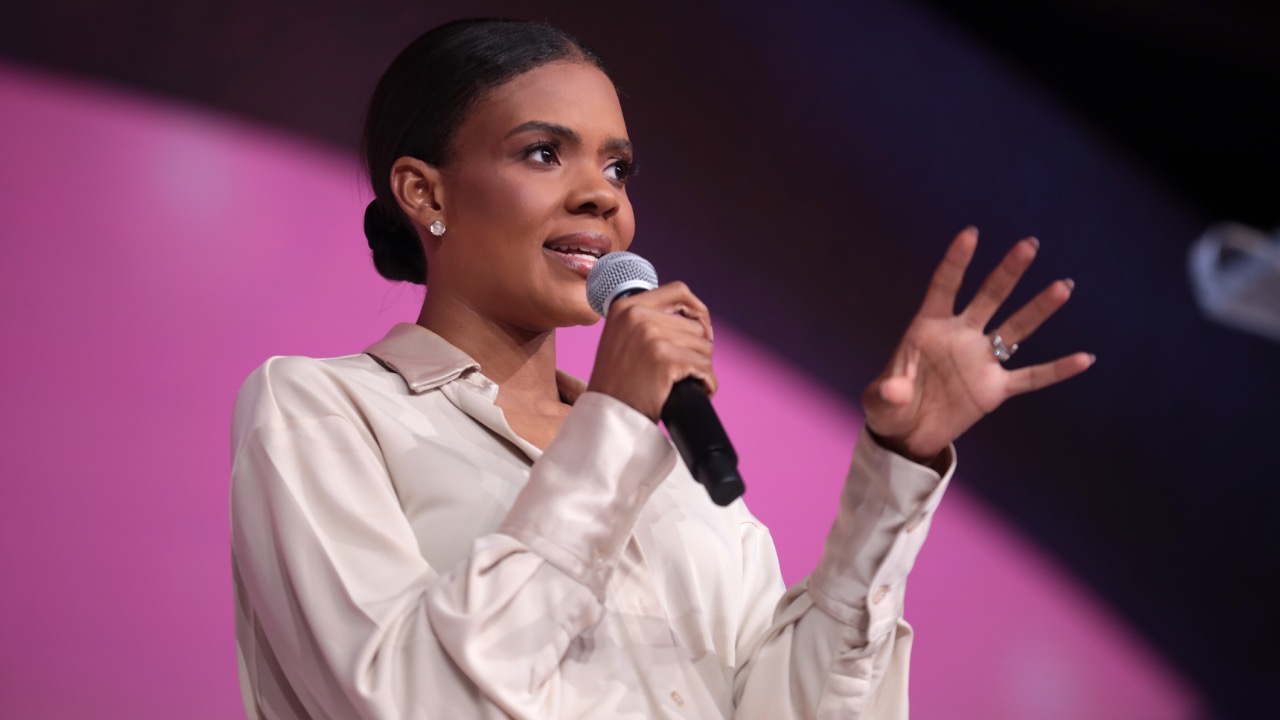
Candace Owens calls on U.S. soldiers to resign amid political backlash
Candace Owens has ignited a rare firestorm inside the pro-Trump right by urging U.S. service members to walk away from the military, arguing that Donald Trump has “betrayed America” with his handling of the Iran conflict. Her call for resignations, framed as a moral stand against a war she describes as serving foreign interests, has split the MAGA movement and raised alarms about the line between political dissent and encouraging troops to abandon their posts.
The clash is unfolding as Trump’s supporters confront a new reality: one of the most prominent conservative influencers who once championed his presidency is now telling uniformed Americans that staying in service makes them complicit in a dishonorable mission. The reaction from MAGA loyalists, veterans and foreign policy hawks illustrates how volatile the mix of online activism, culture-war celebrity and real-world warfare has become.
From Trump ally to outspoken critic
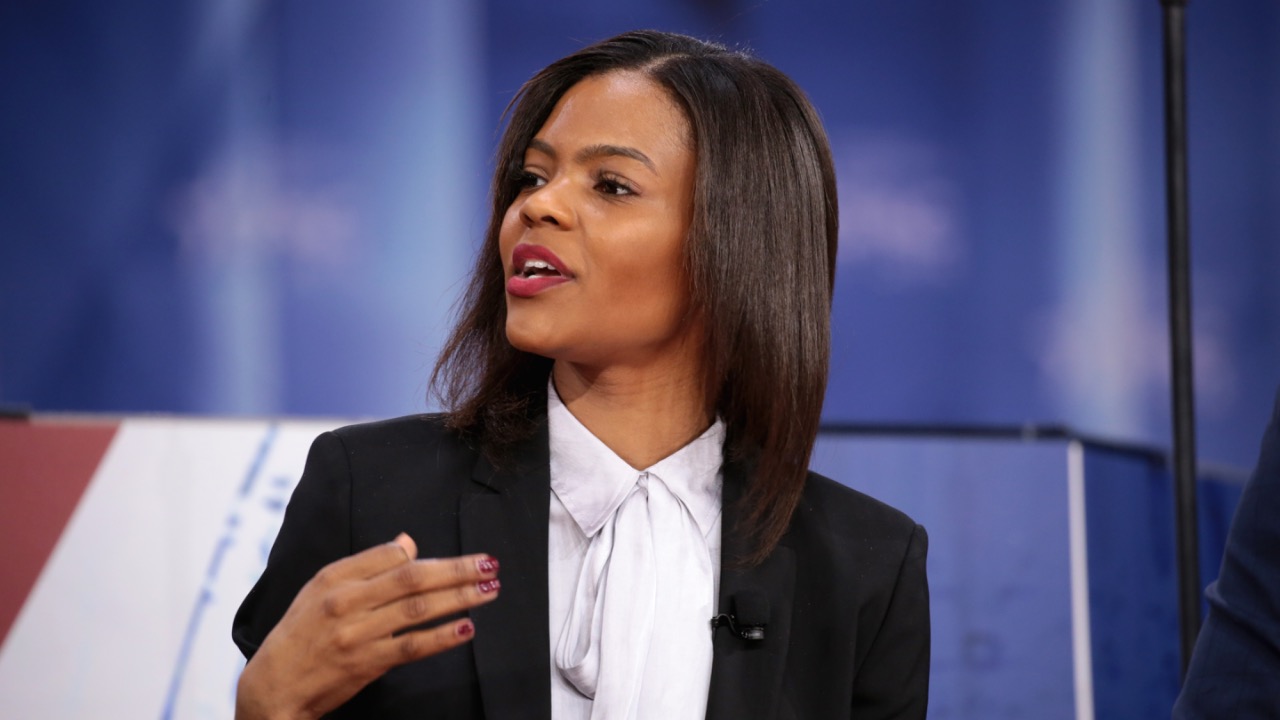
For years, Candace Owens built her brand as a staunch defender of Trump and a sharp-tongued critic of progressives. She emerged as a high-profile African American conservative voice, with viral videos and podcast appearances that turned her into a familiar name even for people who did not follow right-wing politics closely. Profiles of Candace Owens have often highlighted how she leveraged confrontational commentary and takedowns of the progressive movement to cultivate a loyal audience.
Her identity as a conservative commentator was tightly bound to Trump’s rise. She regularly praised his policies, attacked his critics and framed his presidency as a turning point for America. That history is part of what makes her current break so jarring for the MAGA movement. Reports now describe her as “once a staunch Trump ally” who has shifted into open opposition, accusing him of betraying the very country she once said he was saving.
The pivot did not come out of nowhere. Owens had already been moving into more combative territory inside the right, including a public feud with Erika Kirk in a streaming series that examined personal and ideological rifts among conservative influencers. Commentators noted that even some right-leaning viewers felt that discussion crossed a line and became too personal, with reactions appearing almost every day as clips circulated online. That earlier controversy foreshadowed the current moment: a figure who thrives on confrontation now directing that energy at Trump himself.
The Iran war and a charge of “betrayal”
The immediate backdrop to Owens’s call for resignations is Trump’s decision to launch what he described as “major combat operations in Iran,” as Washington moved into a new phase of confrontation with Tehran. Reporting on the conflict recounts that the announcement of expanded operations in Iran came as U.S. forces and allies were already on high alert in the Middle East, with fears that the fighting could spiral into a wider regional war.
Owens seized on that decision as proof that Trump had abandoned the America First principles he once championed. In her telling, the president was no longer prioritizing U.S. interests but was instead serving Israeli interests and dragging American troops into a conflict that she believes does not defend the homeland. One account of her commentary quotes her accusing Trump of sending “dishonorable men to your death,” language that framed the Iran campaign as morally illegitimate rather than just strategically unwise.
Her criticism of the Iran war is not limited to Trump’s judgment as commander in chief. She has portrayed the conflict as a betrayal of the young Americans who enlisted believing they were protecting their own country. In social media posts and podcast segments, she argued that no one should be “MURDERED” for what she views as a misbegotten war, echoing a broader online backlash against U.S. and Israel strikes in the region. That framing, focused on the lives of individual soldiers and Marines, set the stage for her next, far more explosive step.
“Do not join or remain”: Owens’s call for resignations
Earlier this month, Owens moved from harsh criticism of policy to direct instructions aimed at the troops themselves. In a widely shared message, she told U.S. soldiers to resign today and declared that Trump had “betrayed America.” She urged service members not to join or remain in the United States military under current conditions, casting continued service as complicity in a dishonorable mission. Coverage of her comments emphasized that she explicitly told troops that resignation means to exit the military, and that she wanted them to act immediately.
One detailed account of the episode described how she stunned the MAGA world by calling on U.S. troops to quit the military and repeating that “Trump Has Betrayed America.” Another report summarized her message as a plea to “do not join or remain in the United States military,” a line that crystallized the break between her and the pro-Trump base that had long championed strong support for the armed forces. In that telling, her argument was not just about policy but about honor and conscience: she framed the Iran conflict as an immoral war and said no one should die for it.
Her rhetoric was not couched in abstract legal language. She spoke directly to young enlisted personnel and officers, telling them that they had a duty to refuse participation in what she portrayed as a betrayal. In one segment highlighted by Alex Griffing, Owens, described as a controversial MAGA podcaster, moved from criticizing Trump’s choices to telling service members that they should not allow “dishonorable men” to send them to their deaths. That leap from commentary to a call for personal action is what has triggered the most intense backlash.
How the MAGA base is reacting
The reaction inside the MAGA movement has been fierce and fragmented. Some Trump loyalists have accused Owens of trying to engineer a “MAGA collapse,” arguing that her call for resignations is a direct attack on the movement’s credibility at a moment of war. Reports on the fallout describe a conservative base stunned to see one of its own urging U.S. soldiers to resign today and declaring that Trump has “betrayed America.” The sense of betrayal cuts both ways: Owens says Trump betrayed the country, while his defenders say she has betrayed the cause.
Coverage of the controversy notes that Maria Villarroel and other commentators have framed the episode as a crisis inside MAGA, with Owens’s message circulating alongside angry responses from pro-Trump influencers who see her as undermining morale. Some of those critics argue that whatever disagreements exist about the Iran conflict, telling troops to quit in the middle of a war is a red line. They contend that such rhetoric gives ammunition to Trump’s political enemies and risks weakening the United States in the eyes of adversaries.
There is also a segment of the right that has rallied to Owens’s side. These supporters share her suspicion of foreign entanglements and say Trump’s Iran strategy looks too much like the interventionist policies he once criticized. They echo her language about a “betrayal” of America First principles and insist that refusing to fight in a war they see as serving Israeli interests is an act of patriotism rather than disloyalty. That split shows how the MAGA coalition, once united around Trump’s persona, is now fracturing along foreign policy lines.
Military ethics and the limits of dissent
Owens’s call for resignations has also drawn scrutiny from people far outside the MAGA orbit, especially those focused on civil-military relations. In the United States, service members swear an oath to the Constitution and are subject to a legal framework that treats desertion and disobedience as serious offenses. While troops retain some rights to personal political opinions, they operate under strict rules about public statements, participation in partisan activity and refusal of lawful orders.
Her message raises difficult questions about where public commentary ends and encouragement of misconduct begins. Telling troops to “resign today” and explaining that resignation means to exit the military could be interpreted as urging them to abandon their obligations in the middle of a conflict. Legal experts would likely distinguish between a soldier who completes a term of service and chooses not to re-enlist, and one who quits without authorization while deployed. Owens’s rhetoric does not always draw that line clearly, which is part of why her words have alarmed critics.
There is also a broader concern about the politicization of the rank and file. For decades, U.S. leaders have tried to preserve the norm of a nonpartisan military that carries out civilian decisions regardless of which party holds power. When a high-profile political influencer tells troops to refuse service based on disagreement with the commander in chief’s foreign policy, that norm comes under strain. The worry is not only about immediate resignations but about a culture in which service members see themselves as partisan actors rather than constitutional ones.
Owens’s argument: America First or isolationism?
Owens has framed her position as a defense of genuine America First principles. In her view, Trump’s Iran campaign shows that he is no longer focused on protecting the homeland but is instead entangled in Middle East power struggles that do not justify American bloodshed. She has accused him of serving Israeli interests and sacrificing U.S. troops for a foreign agenda, a charge that taps into long-standing debates on the right about alliances and intervention.
Her critics counter that she is sliding into isolationism and that her rhetoric risks weakening deterrence at a dangerous moment. They argue that Iran’s actions in the region, including support for proxy militias and attacks on U.S. interests, require a strong response, and that Trump’s decision to begin major combat operations in Iran reflects that reality. From this perspective, Owens’s insistence that no one should be “MURDERED” for the war ignores the strategic calculations that presidents must make when confronting adversaries.
The split mirrors older fights inside Republican circles, from debates over the Iraq War to disagreements about NATO. What is new is the role of online personalities in driving those arguments directly into the barracks and onto the phones of young soldiers. Owens is not a senator on the Armed Services Committee. She is a conservative commentator whose influence comes from social media and streaming platforms, yet her words are now being parsed as though they were a formal policy statement.
How other conservative voices are handling the fallout
Other conservative commentators have tried to navigate the controversy without alienating either Trump loyalists or Owens’s followers. Some have focused on the substance of the Iran conflict, arguing that the administration should clarify its objectives and exit strategy. Others have zeroed in on the propriety of telling troops to resign, saying that whatever one thinks of Trump’s choices, encouraging mass exits from the military is irresponsible.
Reports indicate that Owens’s message has become a flashpoint in right-wing media, with segments devoted to dissecting her motives and speculating about her future in the movement. Some see her as positioning herself as a post-Trump leader, someone willing to challenge the former president from the right on foreign policy. Others dismiss her intervention as a publicity play that trades on outrage without offering a coherent alternative strategy.
The feud with Erika Kirk, which had already exposed tensions among conservative influencers, now looks like an early warning sign of a broader realignment. In that dispute, Owens’s aggressive style drew mixed reviews, with some viewers cheering her willingness to confront perceived hypocrisy and others lamenting that the conversation had become too personal. The current clash over the Iran war and military resignations has similar contours, only with far higher stakes.
Media framing and the “MAGA collapse” narrative
Outside observers have framed the episode as evidence of a potential “MAGA collapse,” a phrase that captures both the drama of the moment and the anxiety among Trump’s supporters. One widely circulated report described how Owens told U.S. soldiers to resign today, accused Trump of betraying America and in the process set off a wave of commentary about whether the movement is splintering. In that account, her message is not just a personal outburst but a sign that the coalition around Trump is fraying under the pressure of war.
Another report on the same controversy highlighted how conservative outlets and social media feeds filled with reactions from across the right, from die-hard loyalists to disillusioned former supporters. Maria Villarroel and others chronicled how some MAGA figures rushed to defend Trump and denounce Owens, while others quietly shared her concerns about the Iran conflict. The phrase “MAGA collapse” may be dramatic, but it reflects a real fear among activists that internal fights over foreign policy could weaken the movement ahead of future elections.
Some analysts, however, caution against overstating the rupture. Trump still commands intense loyalty from large parts of the Republican base, and many of his supporters see Owens’s comments as an outlier rather than a trend. They argue that social media flare-ups often look more significant than they are, and that the core of the MAGA movement remains aligned behind Trump’s leadership. Whether that holds as the Iran conflict unfolds is an open question.
International context: Iran, Israel and the Middle East
The substance of Owens’s critique cannot be separated from the broader Middle East context. Trump’s decision to begin major combat operations in Iran came after a period of escalating tensions, with Tehran’s regional activities and attacks on U.S. interests prompting calls in Washington for a stronger response. The conflict has drawn in Israel and other regional players, turning Iran into the focal point of a wider struggle over power and security in the Middle East.
Owens’s argument that U.S. troops are being used to serve Israeli interests speaks to a long-running debate about how closely Washington should align its military posture with Israel’s security concerns. Some critics of intervention in the region say that American forces are too often placed in harm’s way for objectives that are not directly tied to defending the homeland. Supporters of a strong alliance counter that Israel is a key partner in a volatile region and that its security is intertwined with broader U.S. interests.
Coverage of the backlash to U.S. and Israel strikes has highlighted how quickly online narratives about foreign conflicts can shape domestic political debates. Owens is not alone in questioning the rationale for the Iran campaign, but her status as a conservative influencer who once championed Trump gives her critique particular resonance. Her insistence that no American should be “MURDERED” for this war taps into a wider fatigue with Middle East interventions that spans ideological lines.

Asher was raised in the woods and on the water, and it shows. He’s logged more hours behind a rifle and under a heavy pack than most men twice his age.