U.S. citizen sentenced in Russia after attempting to smuggle Kalashnikov rifle parts through a Moscow airport, reports say
A U.S. citizen from California has been sentenced to four years in a Russian penal colony after Russian authorities said he tried to carry Kalashnikov rifle parts through a Moscow airport. The case, which centers on wooden assault rifle stocks found in his luggage, has quickly become another flashpoint in already tense relations between Russia and the United States. Russian investigators framed the episode as attempted firearms smuggling, while the defendant argued he had no intention of trafficking weapons.
Russian reports say the man was stopped at a Moscow airport security checkpoint, where officials said they discovered multiple Kalashnikov stocks hidden among his belongings. The court verdict, which followed several months of pretrial detention, reflects how Russian courts are treating foreign nationals caught up in sensitive security cases at a time of deep political friction.
How Russian officials say the smuggling attempt unfolded
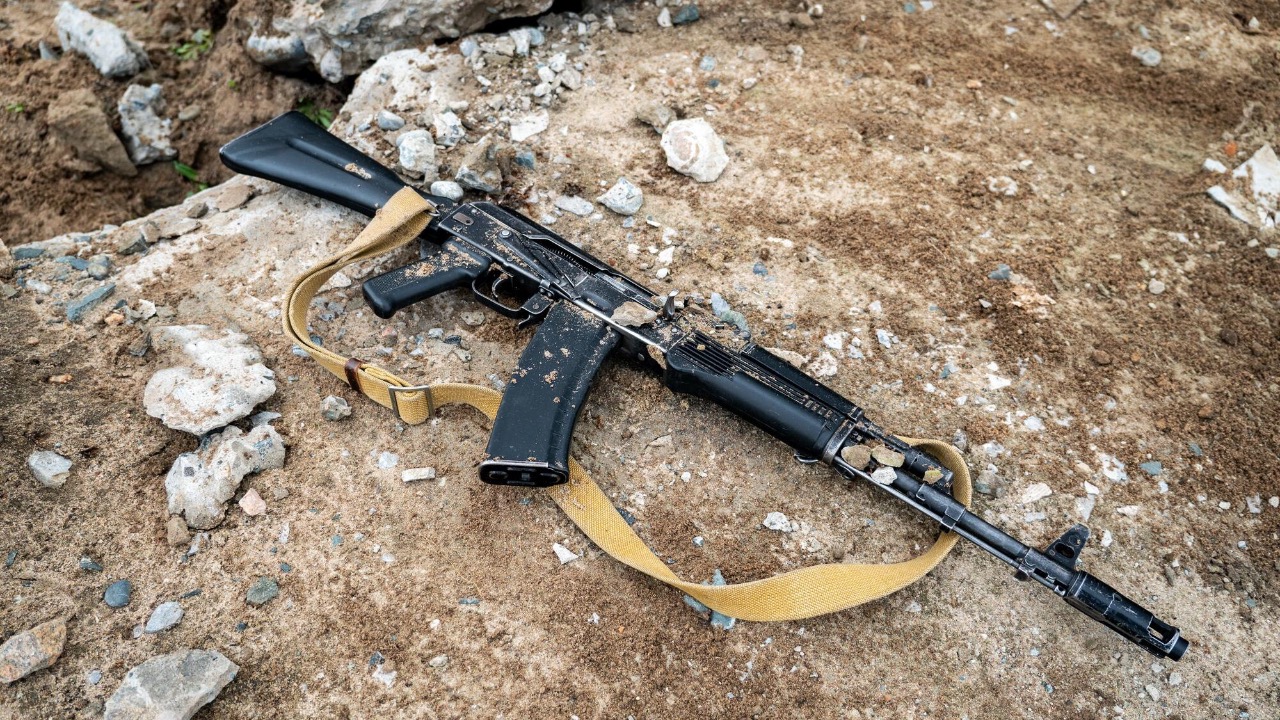
Investigators described a relatively straightforward airport interception that escalated into a high-profile criminal case. The U.S. citizen was detained in Moscow after security staff scanning his luggage reported suspicious objects that turned out to be stocks for Kalashnikov assault rifles, which Russian law treats as key firearm components. Officials said the man had packed the wooden parts in a way that suggested an effort to conceal them, then attempted to leave the country with the items in his checked baggage.
According to material cited in Russian media, the arrest followed an inspection at a Moscow airport terminal, where transport police and customs officers jointly examined the bags. One report on the attempted firearms smuggling case said the man had earlier purchased the stocks at a store on Moscow’s Arbat Street, then tried to take them out of Russia without declaring them. Another account from a Russian news agency, relayed through TASS reporting, said the items were discovered after the luggage passed through an X-ray machine, which prompted a manual search.
What the court decided and the four-year sentence
The Moscow court that heard the case concluded that the U.S. citizen had attempted to smuggle firearm components out of Russia in violation of national weapons laws. Judges found that the Kalashnikov stocks qualified as significant parts of a military-style rifle and that transporting them without authorization met the threshold for a criminal offense. On that basis, the court imposed a sentence of four years in a Russian penal colony, a punishment that Russian outlets described as consistent with the charges brought by investigators.
Russian coverage of the verdict emphasized that the man was convicted of attempted firearms smuggling, not of espionage or more politically charged offenses that have featured in other recent cases involving Americans. The four-year term was presented as a response to an effort to remove controlled items from the country, with prosecutors arguing that the defendant understood the nature of the parts he was carrying. The sentence, which Russian media said would be served in a general-regime colony, reflects how courts in Moscow have applied weapons laws in cases involving foreign nationals and Kalashnikov components, as seen in reports that Russia jails US for Kalashnikov parts smuggling.
The California connection and the defendant’s background
Russian and independent outlets identified the defendant as a man from California, highlighting his status as a U.S. citizen traveling in Russia rather than a long-term resident. Reports described him as a visitor who had come to Moscow and purchased the rifle stocks locally, then attempted to fly out of the country with them. The detail that he came from California featured prominently in coverage that framed the case as part of a broader pattern of Americans facing serious charges in Russia.
One report said the California man tried to mitigate his legal exposure by offering the rifle stocks to Russian authorities after his arrest, presenting the gesture as a kind of donation to the Russian military. According to a detailed account of the California man, he had allegedly ordered the Kalashnikov stocks online and paid through a cryptocurrency wallet before collecting them in Moscow. Russian investigators treated these details as evidence of planning rather than an impulsive purchase, arguing that the use of digital payments and a specialized shop indicated a deliberate effort to obtain firearm parts.
Kalashnikov stocks and why Russian law treats them as sensitive
The focus on Kalashnikov stocks might seem technical, but Russian law draws a sharp line around components for the iconic assault rifle. Stocks for a Kalashnikov are not just decorative wood; they are structural parts that help stabilize the weapon and can be classified as controlled items when separated from the rest of the rifle. Russian authorities argued that moving such parts across borders without permission can facilitate illegal assembly or modification of firearms outside the country.
In the court case, prosecutors stressed that the wooden stocks were designed specifically for Kalashnikov assault rifles and therefore fell under restrictions that apply to military-grade weaponry. Reports said the man was found with several stocks rather than a single souvenir piece, which investigators cited to support the charge that he intended to smuggle components. Coverage of the verdict in Moscow aligned with other reporting that described how Russia jails US for trying to leave with a Kalashnikov stock, treating the parts as strategically sensitive because they can be combined with other components to restore or upgrade functional rifles.
The defendant’s strategy and the reported “donation” to the Russian military
One of the most striking details in the case is the reported attempt by the California man to avoid a heavy sentence by offering the seized parts to Russian forces. After his arrest, he allegedly proposed that the Kalashnikov stocks be transferred to the Russian military as a gesture of support, arguing that this should count in his favor. Russian media described this as an unusual strategy that did not convince the court, which proceeded to convict him of attempted smuggling despite the offer.
The same reporting said investigators traced the origin of the stocks to an online purchase, with payment routed through a cryptocurrency wallet before the items were picked up in Moscow. That pattern, which was outlined in the weapons smuggling sentence coverage, led investigators to frame the case as a premeditated scheme rather than a misunderstanding about souvenir rules. The court ultimately sided with prosecutors, treating the donation proposal as irrelevant to the underlying offense and emphasizing that the crime was complete once the defendant attempted to carry the parts through airport control.
Airport security, Vnukovo and the role of Russian transport police
Russian television coverage placed the incident at a Moscow airport where transport police and security services have stepped up scrutiny of foreign passengers. A broadcast segment that listed the case among our main stories said the man tried to leave through Vnukovo airport but failed to make the flight after security staff spotted the suspicious shapes on an X-ray screen. Transport police then took him into custody for questioning, which led to the opening of a criminal case.
The episode illustrates how Russian airport security procedures now intersect with broader national security concerns. Officials at Vnukovo and other Moscow hubs are tasked not only with intercepting drugs or undeclared cash, but also with identifying items that might have military significance, including rifle parts. The fact that the California man was stopped at the screening stage, rather than during a random customs check, suggests that scanning technology and trained operators remain central to Russia’s approach to policing outbound passengers in sensitive categories such as weapons components.
Legal context: Russian firearms rules and foreign defendants
Russian weapons law treats the unlicensed movement of firearm parts as a serious offense, particularly when the items are associated with military models like the Kalashnikov. In this case, prosecutors argued that the defendant had violated rules on the circulation of weapons by attempting to export controlled components without a permit. The court accepted that argument, applying a statute that criminalizes both completed smuggling and attempts, which allowed a conviction even though the stocks never left Russian territory.
Foreign defendants in Russian weapons cases often face an uphill battle, as courts give significant weight to investigative findings and technical assessments by state experts. The California man’s argument that he did not intend to smuggle weapons, and that he had tried to donate the stocks to Russian forces after the fact, did not overcome the prosecution’s narrative that he knowingly acquired and concealed the parts. Legal analysts following the case pointed out that the four-year sentence reflects how Russian judges calibrate punishment when they want to signal that even partial or failed smuggling efforts involving Kalashnikov parts will be treated as serious crimes.
Diplomatic backdrop and comparisons with other U.S. cases
The sentencing of a U.S. citizen in Moscow for handling Kalashnikov stocks comes at a time when relations between Washington and Moscow are already strained over a series of detentions. Although this case centers on weapons components rather than espionage or political activity, it feeds into a growing list of Americans held in Russian prisons. Each new conviction adds pressure to diplomatic channels, where officials must decide whether to treat such cases as routine criminal matters or as part of a broader standoff over detainees.
Unlike some higher profile arrests, Russian media framed the California man’s prosecution as a straightforward response to a customs violation. Even so, the image of a U.S. citizen from California receiving a four-year term in a Russian penal colony for carrying Kalashnikov stocks reinforces the perception that Russia is prepared to apply its laws aggressively to foreigners who cross sensitive lines. Coverage that described how a Russian court jailed a US citizen for Kalashnikov parts smuggling placed the incident within a broader context of security-focused prosecutions that complicate efforts to stabilize bilateral ties.
Media narratives, citation trails and public reaction
Russian and international outlets have approached the story with different emphases, but they rely on overlapping sets of facts drawn from court documents and official statements. Some coverage focused on the dramatic detail that the defendant offered the rifle stocks to the Russian military, while others highlighted the technical classification of Kalashnikov parts under Russian law. The case has also generated a web of secondary references and citation trails, with related content on platforms such as mothersanddaughters.themoscowtimes.com, generationp.themoscowtimes.com and ru.themoscowtimes.com that connect back to the original reporting on the four-year sentence in a Russian prison for attempted firearms smuggling.
Social media sharing links, including those that allow users to repost the citizen sentenced story on Facebook or tweet about the years in Russian, have helped push the episode into broader public view. On the other side of the information chain, links associated with the California-focused reporting, such as magaz.global, support.meduza.io, meduzaenglish, meduza_en and policies.google.com, illustrate how coverage of a single Moscow court decision can ripple across multiple platforms. Public reaction has ranged from concern over the treatment of Americans in Russian courts to arguments that anyone carrying Kalashnikov parts through a Moscow airport should expect a harsh legal response.

Asher was raised in the woods and on the water, and it shows. He’s logged more hours behind a rifle and under a heavy pack than most men twice his age.