The calibers that still make sense for real-world hunting
Every few years the hunting world gets swept up in new cartridges promising flatter trajectories, better ballistics, or the latest long-range advantages. Some of those rounds are genuinely useful, but many exist mostly on paper or at the range. When you step back and look at real hunting—cold mornings, steep terrain, quick shots, and animals inside 300 yards—a handful of cartridges still stand out for practical reasons.
These are rounds that are widely available, easy to shoot well, and capable across a wide range of North American game. They work in common rifle platforms, ammunition is easy to find, and they’ve proven themselves season after season. When you’re hunting for meat or filling a tag rather than chasing ballistic charts, these calibers still make solid sense.
.25-06 Remington
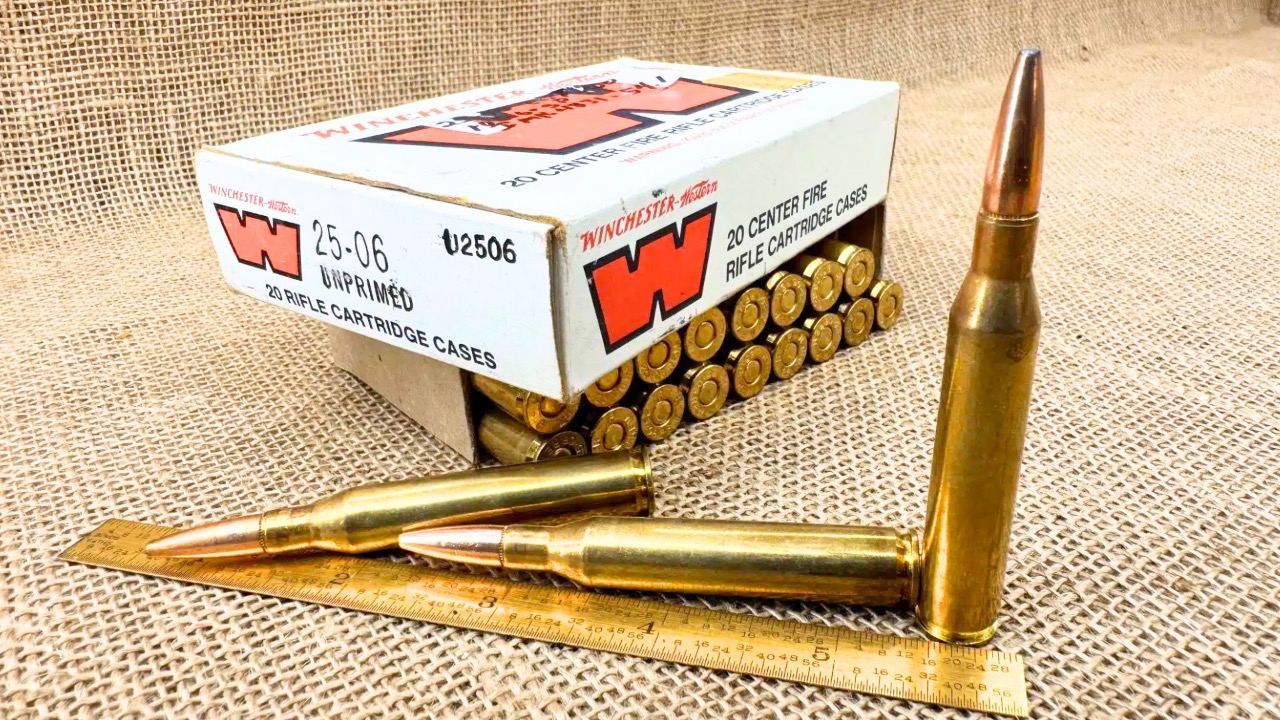
When you spend time in open country—prairie draws, sage flats, or wide agricultural fields—you quickly learn why the .25-06 Remington still holds its place. It shoots flat, carries plenty of speed, and hits deer-sized game with authority without beating you up on the bench.
You’ll notice right away how forgiving it is when distances stretch past 200 yards. With 100- to 120-grain bullets, the .25-06 handles whitetail, mule deer, and pronghorn cleanly while keeping recoil manageable. That matters during long practice sessions and when you’re teaching new hunters. The cartridge has also been around long enough that rifle choices and ammunition are easy to find, which makes it practical in the real world rather than theoretical.
.35 Whelen
If you hunt timber, brush country, or places where shots happen fast and inside 200 yards, the .35 Whelen makes a lot of sense. It throws heavy bullets with authority, and it hits noticeably harder than most standard deer cartridges.
You’ll appreciate the way it performs on larger animals like elk or black bear. A 225- or 250-grain bullet penetrates deep and delivers dependable results without extreme recoil. The Whelen also runs in standard long-action rifles, which means you don’t need a specialized platform. In thick cover where you may only get one clear shot, the cartridge provides confidence that the animal won’t travel far.
.280 Ackley Improved
The .280 Ackley Improved quietly earned respect among experienced hunters because it balances reach, recoil, and power extremely well. It drives 140- to 175-grain bullets fast enough for longer shots while staying comfortable to shoot.
When you’re hunting mixed terrain—timber one day and open basins the next—it gives you flexibility. The cartridge performs well on deer, antelope, elk, and even larger game with the right bullet selection. It also benefits from excellent modern bullet designs that maintain velocity and resist wind drift. You don’t have to chase extreme magnums to get capable performance, which is why the .280 AI continues to show up in serious hunting rifles.
7mm Remington Magnum
The 7mm Remington Magnum has been filling tags for decades, and there’s a reason it refuses to disappear. It pushes high-BC bullets fast, giving you a cartridge that handles distance and wind better than many standard rounds.
When you’re hunting elk country or big western terrain, that extra reach matters. A 160- or 175-grain bullet carries plenty of energy deep into the distance while maintaining a relatively flat trajectory. At the same time, recoil stays manageable compared with larger magnums. You’ll still see this cartridge in camps across the West because it performs consistently on animals that don’t always cooperate with perfect shot distances.
.338 Winchester Magnum
For hunters who regularly pursue elk, moose, or big bears, the .338 Winchester Magnum still holds a practical role. It carries serious energy and pushes heavy bullets that penetrate through bone and muscle.
You’ll notice the difference the moment you step into country where animals are large and terrain is unforgiving. The .338 hits hard enough to anchor animals that might otherwise travel long distances after the shot. With 200- to 250-grain bullets, it remains one of the most reliable big-game cartridges available. While recoil demands respect, experienced hunters appreciate the confidence it brings when the stakes are higher.
.257 Weatherby Magnum
The .257 Weatherby Magnum was built for speed, and that speed translates well to real hunting in open landscapes. It shoots extremely flat and keeps bullets moving fast enough to minimize holdover at longer distances.
If you hunt pronghorn or mule deer where the wind rarely stops and shots often stretch across wide basins, this cartridge becomes very appealing. Bullets in the 100- to 115-grain range maintain velocity well and deliver clean results on deer-sized game. While it requires a longer barrel to reach full performance, the payoff is a cartridge that handles distance confidently without stepping up to heavier magnums.
.358 Winchester
The .358 Winchester doesn’t get much attention these days, but it remains extremely effective where hunting happens inside thick woods. It fires large-diameter bullets that hit hard at modest ranges.
In areas where shots rarely exceed 150 yards, the cartridge performs with authority. A 200- or 225-grain bullet penetrates deeply and delivers significant impact on deer, black bear, or elk. It also fits in short-action rifles, making for compact and easy-handling setups. Hunters who spend time in dense forest often appreciate how quickly it puts animals down when opportunities appear in tight cover.
6.5 PRC
The 6.5 PRC is a newer cartridge, but it fills a practical role rather than chasing novelty. It offers noticeably more velocity than smaller 6.5 rounds while keeping recoil manageable.
In the field, you’ll notice how well it carries energy and resists wind drift when distances stretch. That makes it useful for mule deer, elk, and similar game in big western terrain. Modern rifles chambered in 6.5 PRC tend to be accurate and well suited to today’s high-performance bullets. While it’s not necessary for every hunt, the cartridge provides a practical balance for hunters who regularly deal with longer shots.
.375 Ruger
When you’re hunting in places where the animals can weigh half a ton or more, the .375 Ruger earns its place. It delivers heavy bullets at strong velocities while fitting into standard-length rifle actions.
For moose, large bears, or international hunts involving tough game, the cartridge brings serious stopping power. Bullets in the 270- to 300-grain range penetrate deeply and maintain momentum through heavy bone. Despite the power, the design allows relatively compact rifles, which helps when you’re moving through rough country. Hunters who need a reliable large-game cartridge appreciate the straightforward performance the .375 Ruger provides.
.300 Weatherby Magnum
The .300 Weatherby Magnum has been proving itself in the field for generations. It produces excellent velocity and maintains strong energy at longer distances.
In big mountain terrain or wide valleys where shots can stretch unexpectedly, the cartridge gives you flexibility. With 165- to 200-grain bullets, it handles deer, elk, and larger game without hesitation. Recoil is noticeable, but many hunters accept that tradeoff because the cartridge performs reliably across a wide range of hunting conditions. It remains a practical choice for those who want magnum performance without stepping into extremely specialized cartridges.

Asher was raised in the woods and on the water, and it shows. He’s logged more hours behind a rifle and under a heavy pack than most men twice his age.