Vikings reached North America long before Columbus — and the encounters weren’t peaceful
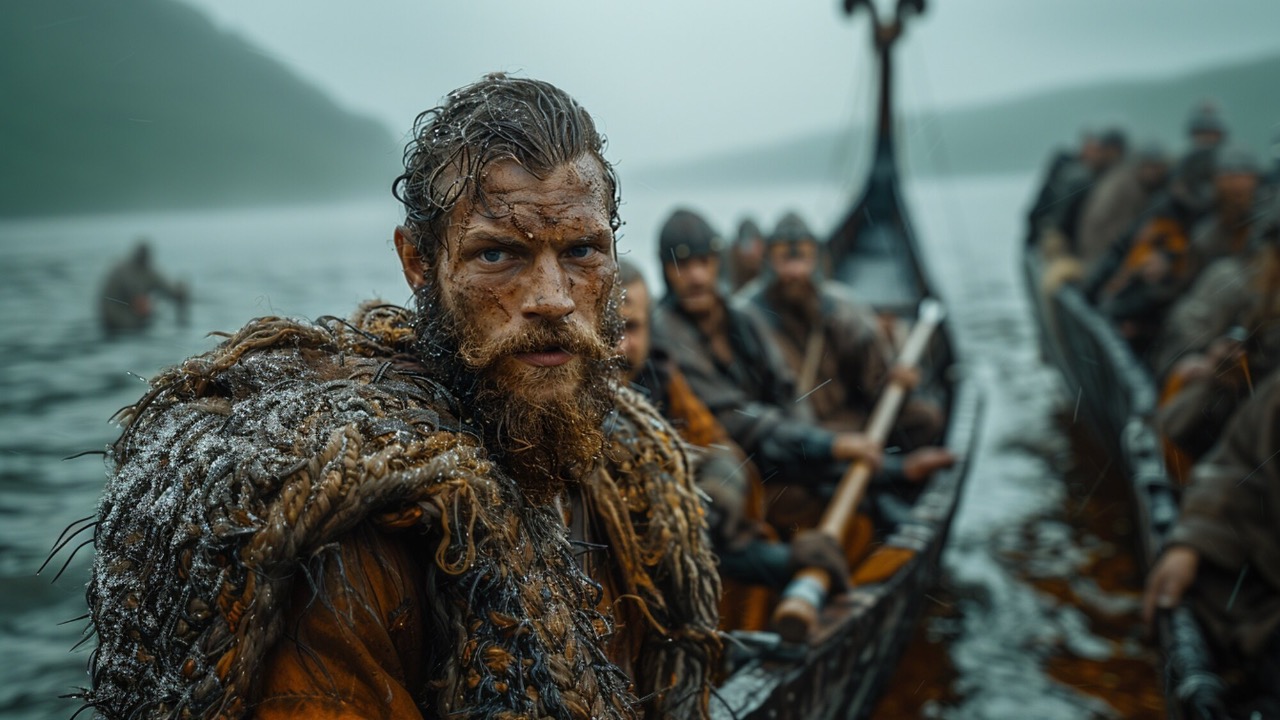
Centuries before Christopher Columbus crossed the Atlantic, Norse seafarers from Greenland and Iceland reached the shores of North America and tried to stay. Archaeology and saga literature now show that their landings around the year 1000 were real, and that contact with Indigenous communities quickly turned from wary curiosity to violence. The story that emerges is not a heroic discovery tale but a brief, tense encounter in which Native Americans held the advantage and forced the Vikings to withdraw.
From rumor of new lands to a hard Atlantic frontier

The Norse push into North America grew out of an already ambitious expansion that had carried Viking-age sailors from Lindisfarne to Orkney and Iceland, then on to Greenland. Their world stretched in a long arc across the North Atlantic, with Greenland positioned as a fragile outpost that depended on trade, timber and iron from abroad. Archaeological evidence indicates that the Greenland settlers used lumber and possibly iron ore imported from North America, a sign that contact with western lands was not a one-off stunt but part of a broader economic strategy linked to Greenland.
The earliest written hints of western lands describe sailors aboard an Icelandic trading ship blown off course en route to Greenland around the year 985. Those Icelandic mariners reported new shores to the west, which later saga writers would fold into narratives of exploration and settlement. By the time Leif, later known as Leif Erikson, sailed from Greenland, the idea of a fertile Vinland across the sea had already taken shape in Norse imagination, blending rumor, navigational experience and opportunism.
Modern popular history has sometimes framed the Norse arrival as a benign prelude to later European colonization. Yet even the sagas, written from a Norse perspective, describe a frontier defined by fear and conflict. Norse colonists were used to raiding and seizing land in Europe, but when they crossed into North America they met communities who could not be easily intimidated and who were willing to fight back.
Evidence that Vikings reached North America first
For generations, the idea that Vikings reached America before Columbus sat uneasily between legend and scholarship. That uncertainty shifted decisively with the discovery of a Norse site at L’Anse aux Meadows in northern Newfoundland, which is now recognized as a World Heritage landmark on lists that include early North American sites such as Discovered cultural properties. Excavations there uncovered turf-walled halls, iron-working evidence and artifacts that match Norse material culture from Greenland and Iceland rather than later European or Indigenous traditions.
Radiocarbon dating has provided a tighter timeline for that presence. Researchers used radiocarbon dating, a way to estimate age based on the amount of carbon-14 in a living thing, on wood from the Newfoundland site and concluded that Vikings landed in North America more than 470 years before Christopher Columbus sailed to the Bahamas. That study placed the cutting of the wood around the year 1021, which aligns closely with saga accounts that place the Vinland voyages around the turn of the millennium, and supports the argument that the Researchers were measuring a real Norse presence rather than a later intrusion.
Earlier excavations had already suggested a similar timeframe. A report on the original digs at L’Anse aux Meadows noted that radiocarbon readings all cluster around 1000, with the latest dating from 1080, plus or minus 70 years, according to Collins of the. That range fits a short-lived settlement that began near the year 1000 and did not last far into the twelfth century. The site’s location, at the northern tip of Newfoundland, also fits saga descriptions of a base in a more northerly region, with additional expeditions sailing south to more temperate lands that they called Vinland.
These findings have filtered into popular culture and public history. Educational sites and history-focused platforms now routinely state that Norse sailors reached America centuries before Columbus, with some explaining that the Vikings reached America around the year 1000. The basic claim that Norse explorers were the first known Europeans in North America has moved from fringe theory to widely accepted fact, backed by both archaeology and scientific dating.
Vinland in the sagas and on the map
The Vinland Sagas, particularly the Saga of the Greenlanders and the Saga of Erik the Red, provide the most detailed narrative of the Norse in North America. They describe how Leif laid the groundwork for later colonizing efforts by establishing a foothold on Vinland, where he constructed shelters and left a small group to overwinter. According to one account, Leif found timber, wild grapes and fertile land, which encouraged further voyages by other Greenlanders.
Historians and archaeologists have long tried to match those saga descriptions to real geography. The identification of L’Anse aux Meadows as a Norse site provided a firm anchor. Discussions of Vinland often point out that L’Anse aux Meadows became a staging point because of the striking stories from the Vinland Sagas, which describe voyages further south to milder climates. While the exact location of Vinland remains debated, the sagas consistently portray it as a place of rich resources that tempted the Greenland Norse to attempt permanent settlement.
Commercial and popular histories have built on this framework. A book marketed under a title that focuses on the history and legacy of Norse settlements in Greenland and Vinland, available through a retailer that lists Discovered volumes, treats Vinland as a real extension of the Norse world, not a mythic island. That perspective reflects the convergence of saga study and archaeological work over the past several decades.
Yet the sagas are not simple travelogues. They blend exploration narratives with family drama, feuds and moral lessons. Their portrayal of Native Americans, referred to in Norse sources as Skrælings, is filtered through the anxieties of a small settler group on unfamiliar shores. The stories of Vinland therefore have to be read both as historical memory and as frontier literature shaped by fear of the unknown.
First contact: trade, curiosity and a fragile peace
Accounts of the first meetings between Norse visitors and Native Americans suggest that contact did not begin with immediate violence. One narrative describes how, soon after landing, Norse explorers encountered Indigenous peoples of the region, likely ancestors of later Native American communities, and engaged in tentative trade. A detailed reconstruction of these events explains that the first contact and first trade between Norse Greenlanders and local Native Americans involved exchanges of goods such as red cloth and milk products.
The sagas describe the Skrælings as curious about Norse technology and ships, while the Norse were interested in furs and other local products. The two groups attempted to communicate through gestures and improvised signs. For a brief period, this fragile arrangement allowed the Norse to acquire resources and the Indigenous communities to obtain novel items without open conflict.
Yet the same sources hint that underlying tensions were never far from the surface. The Norse were heavily armed and accustomed to raiding. The Indigenous groups, whose exact identities remain debated among scholars, had their own political structures and territorial expectations. The sagas suggest that both sides watched the other warily, aware that any misunderstanding could tip the balance toward bloodshed.
Modern commentary on these encounters emphasizes how limited and precarious the peaceful phase was. One analysis of early contact stresses that, although there was some trading, the first European settlement was not successful and contact with the local Indigenous people, called Skraelings, was limited and tense, with hostilities eventually driving the Norse out, as described in an essay on However first contact. The pattern that emerges is one of initial curiosity that quickly gave way to fear and confrontation.
How a trading relationship turned violent
The sagas and later retellings agree that the fragile peace between Norse settlers and Indigenous communities did not last. A thousand years ago, the Vikings had a shock encounter with Native Americans that ended in disaster, according to a narrative that reconstructs the sequence of events from saga material and archaeological context. One version explains that when Leif Erikson and his companions established their base, they underestimated both the numbers and determination of their Indigenous neighbors, a miscalculation that would prove fatal as When Leif Erikson his group faced retaliation.
One saga episode describes how a Norse bull broke loose and charged through the Indigenous camp, terrifying its inhabitants. Another recounts a dispute during trade, in which a Norseman killed a Skræling. In both versions, the result was the same. The Indigenous warriors regrouped and launched a coordinated attack on the Norse settlement, using volleys of arrows and slings. The Norse, though armed and experienced in European warfare, were outnumbered and fighting on unfamiliar terrain. Women and noncombatants were present inside the camp, further limiting the settlers’ ability to respond.
Later interpretations highlight how these events exposed a key vulnerability in the Norse strategy. Despite their extensive raids and pillaging across Europe, the Vikings encountered difficulties in subduing a group of people they had underestimated. A social media summary of this perspective states that, despite their extensive raids and pillaging across Europe, the Vikings encountered difficulties in subduing a group of people they met in North America, and that they were eventually repelled and withdrew from Despite Their Extensive that region.
The violent turn in relations is also reflected in the Norse terminology. The word Skræling, used for Indigenous peoples, carried connotations of otherness and hostility. One saga scene describes a Norse leader being struck by an arrow and recognizing that the wound will cause his death, a stark acknowledgment of the settlers’ vulnerability. These narratives, even when embellished, preserve a memory of a frontier where Norse arms did not guarantee dominance.
Native resistance and the limits of Viking power
When historians compare Norse experiences in Europe to their North American venture, the difference in outcomes is striking. In Europe, Viking raiders exploited political fragmentation and surprise to seize monasteries, towns and even territories such as parts of England and Normandy. In North America, they faced Indigenous societies that were not organized like European kingdoms but were fully capable of defending their homelands.
One modern commentary on Norse and Native American contact argues that the Greenland Norse did not integrate into local communities in any meaningful way. A detailed essay on the question of intermarriage concludes that, from archaeological and textual evidence, there is no indication that Greenland Norse took Native American wives, and that there is no sign of long-term domestic partnerships with Indigenous women. The author writes that what we can say is that from the archeological and textual evidence, there is no indication that this was the case, and that especially in the saga accounts the Norse show little interest in the natives except to slaughter them, as summarized in a What analysis of American Vikings.
This lack of integration meant that Norse settlers could not rely on alliances or kinship ties to secure their position. Instead, they remained a small, isolated group surrounded by communities that saw them as intruders. When conflict broke out, the Indigenous fighters could draw on superior numbers, local knowledge and mobility. The Norse, by contrast, were tied to a fixed base, dependent on supply lines stretching back to Greenland and Iceland.
Some reconstructions of the battles between Vikings and Native Americans, including creative visualizations and documentary-style videos, emphasize the tactical mismatch. One video on early confrontations, titled around first contact and battles, imagines a lone navigator in a canoe facing Norse ships and then shifts to scenes of ambushes and skirmishes that favor the Indigenous side, reflecting the idea that the Nov depiction of combat shows Native warriors using the terrain to their advantage. While such portrayals are interpretive, they align with the basic saga claim that the Norse were eventually overwhelmed and forced to retreat.
The result was a rare case in which Viking expansion met a hard stop. Native resistance did not just inflict casualties. It shattered the viability of the Vinland project, making further attempts at permanent settlement politically and psychologically unattractive for the Greenland elite. The sagas present the decision to abandon Vinland as a reluctant recognition that the risks outweighed the potential gains.
Greenland’s dependence on western lands
Even after the failure of permanent settlement, contact between Greenland and North America likely continued in more limited forms. Archaeological evidence suggests that Greenlanders obtained wood and possibly iron ore from western lands, which some scholars interpret as evidence of repeated voyages for resources. The Greenland settlements, perched on marginal land in the North Atlantic, lacked sufficient timber for shipbuilding and construction, which made access to North American forests attractive.
World history discussions of Vinland emphasize that interest in finding tangible archaeological evidence to support the sagas goes back a long time, and that L’Anse aux Meadows became central because it tied narrative sources to physical remains. References to L’Anse aux Meadows often note that, because of the striking stories from the Vinland Sagas, interest in the site and its surroundings has persisted, as summarized in an overview that begins with Anse and Meadows Because of the saga tradition.
Greenland’s reliance on western timber may also explain why the Norse kept returning to the region even after abandoning hopes of colonization. Short-term resource-gathering expeditions carried lower risk than trying to defend a permanent settlement against hostile neighbors. These voyages could still end in violence, but they did not require the same level of commitment or exposure.
At the same time, Greenland’s own fortunes were changing. As European trade routes shifted and climatic conditions worsened, the Greenland colonies became more vulnerable. Their tenuous link to North American resources could not compensate for broader economic and environmental pressures. The memory of failed settlement and bloody encounters with Native Americans likely discouraged any renewed push to establish a lasting Norse presence across the western sea.
How the story has been retold and marketed
The narrative of Vikings in America has attracted not only scholars but also publishers, tour operators and heritage groups. Books and products marketed under titles that highlight American Vikings or Norse settlements in North America present the saga of exploration as both adventure story and origin myth. A product listing for a work on Norse settlements in Greenland and Vinland, for example, is promoted through a shopping platform that aggregates Product information from many brands and stores, which shows how the Vinland story has been folded into a broader commercial ecosystem.
Some of these works stress the drama of the voyages and the romance of a lost colony. Others, such as a history of the Viking world that traces events from the notorious raid at Lindisfarne to the settlements of Orkney, Iceland and the elusive Vinland somewhere in North America, aim to place the Vinland episode within the full sweep of Norse expansion. A description of that book notes that it covers the elusive Vinland, somewhere in north America, alongside more established Viking arenas like Lindisfarne, Orkney and Iceland.
Heritage organizations have also embraced the story. Tourist sites connected to Danish and Scandinavian heritage promote books and exhibits under the theme of American Vikings. One such retailer highlights a volume that explores whether Greenland Norse took Native American wives, marketed alongside other Scandinavian cultural goods, under a listing that identifies it as Discovered through interest in American Vikings. Another listing from the same retailer, which also uses the label Untitled, further illustrates how the theme has been packaged for a consumer audience.
Magazine and book distributors have joined in as well. A discount retailer promotes a paperback history of early exploration under a product page that highlights the long and strange voyage of European discovery, showing how the Vinland story now sits alongside narratives of later explorers. The listing is presented as Discovered content for readers interested in exploration history.
These commercial retellings often emphasize the novelty of Vikings in America, but they can downplay the violence of contact and the agency of Native Americans. The marketing focus on adventurous Norse seafarers risks turning a story of invasion and resistance into a simple prequel to Columbus. The historical record, however, points to a much more contested and short-lived encounter.
Leif Erikson, Columbus and the politics of “discovery”
The confirmation that Norse sailors reached North America centuries before Columbus has inevitably fed into debates about who really discovered America. Educational videos and online explainers now routinely state that the Vikings reached America 471 years before Columbus, with one video explicitly contrasting the voyages of the Vikings with those of Christopher Columbus. Such comparisons can be useful for correcting Eurocentric myths that treat 1492 as the first moment of contact between Europe and the Americas.
However, the language of discovery itself is contested. Indigenous communities had lived in the Americas for thousands of years before any European arrival. Framing either Leif Erikson or Christopher Columbus as the discoverer of America centers European perspectives and sidelines the people who already inhabited the land. Some historians therefore prefer to talk about first known European arrivals rather than discovery, a shift that better reflects the asymmetry of these encounters.

Leo’s been tracking game and tuning gear since he could stand upright. He’s sharp, driven, and knows how to keep things running when conditions turn.