Lawmakers approve sweeping gun-control bill targeting “assault-style” firearms
Virginia lawmakers have approved a far-reaching gun control bill targeting the sale and transfer of so-called assault-style firearms and high-capacity magazines, setting up a defining test of how far a newly empowered Democratic majority is willing to go on gun policy. The measure, advanced after years of vetoes from Governor Youngkin, is already drawing intense praise from gun safety advocates and sharp warnings from gun rights groups and Republican legislators. At stake is not only who can buy certain semi-automatic rifles in Virginia, but also how courts will interpret the Second Amendment in an era of increasingly aggressive state-level restrictions.
How the bill reached the governor’s desk

The path to passage began earlier this year when the Virginia Senate, led by a Democratic majority, moved a slate of gun safety proposals that had previously been blocked by Youngkin. A key committee in the Virginia Senate advanced measures dealing with assault-style firearms, large-capacity magazines and public carry, signaling that the party intended to use its control of the General Assembly to revisit vetoed ideas.
Coverage of that committee action highlighted how Democrats framed the effort as a response to mass shootings and everyday gun violence, arguing that restrictions on assault weapons in public spaces would survive constitutional scrutiny. Supporters described a new political era on guns in Richmond, with Spanberger and other prominent figures signaling that voters had given them a mandate to tighten firearm laws.
On the House side, Virginia House Democrats quickly followed suit. In early February, House Democrats approved a sweeping package over unified Republican opposition, reviving several measures that had stalled or been vetoed under Youngkin. Gun safety advocates described that House vote as a turning point in Virginia’s approach to gun violence, while opponents warned that the package would punish law-abiding gun owners without addressing underlying crime.
What the new assault-style restrictions do
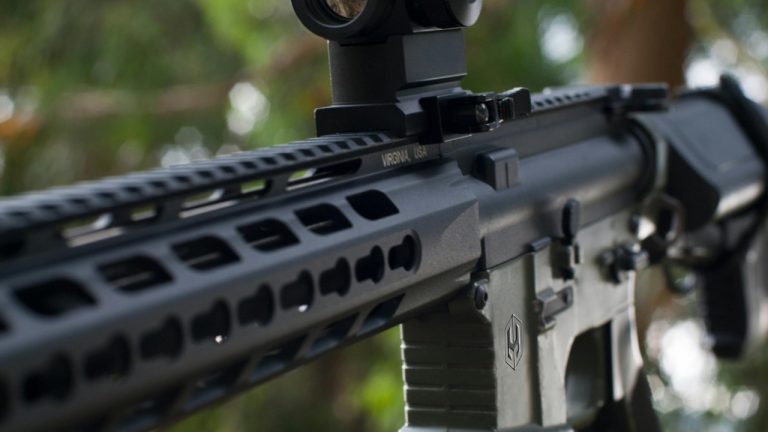
The newly approved bill is built around a broad definition of what counts as an assault firearm. A Current draft of the legislation, drawn from § 18.2 308.2:2 as amended, defines “Assault firearm” as a semi-automatic center-fire rifle that accepts a detachable magazine and has specific military-style features, or a similar semi-automatic pistol or shotgun configured to fire rapidly with minimal recoil. The language is designed to capture popular models that accept detachable magazines and can be outfitted with tactical accessories, rather than relying on a short list of brand names.
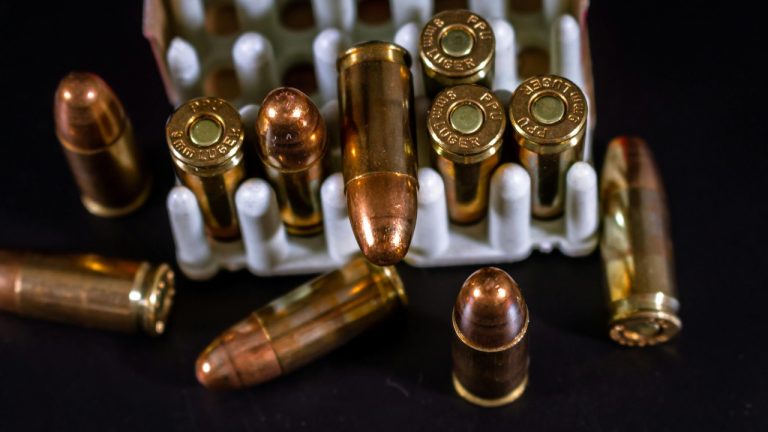
Under that definition, the bill restricts the sale, transfer, importation and manufacture of a wide range of commonly owned rifles and pistols in Virginia. A summary circulated by gun rights advocates stresses that the measure would Ban new sales of widely used semi-automatic rifles, while allowing existing owners to keep their firearms under certain conditions. The legislation also targets magazines that hold more than ten rounds, aligning Virginia with other states that have imposed ten-round limits on civilian magazine capacity.
In addition, lawmakers in Mar approved Senate Bill 749, which gun control supporters describe as a major step that bans the sale, manufacture and import of firearms labeled as assault weapons. Advocates say pairing the assault firearm definition with a direct prohibition on new commercial activity will gradually shrink the number of such guns in circulation.
How Virginia’s plan fits a national pattern
Virginia is not acting in isolation. Other states are reworking their assault weapon statutes to broaden what counts as a banned firearm and to close perceived loopholes. In New Jersey, a measure known as NJ S2309 now classifies semi-automatic rifles with detachable magazines and just one military-style feature as assault weapons, capturing rifles with thumbhole stocks or second handgrips that previously skirted older definitions. Supporters in Virginia point to such laws as evidence that courts have tolerated relatively aggressive feature-based bans.
In Minnesota, lawmakers are weighing a separate package that would reshape how the state treats certain rifles and background checks. A proposal Sponsored by Rep Tina Liebling, Kim Hicks, Andy Smith and 32 other DFL members would tighten oversight of specific semi-automatic rifle types and expand screening of gun buyers. Together, these efforts show that Virginia’s debate is part of a broader state-level push to define and regulate assault-style firearms even as federal law remains unchanged.
Supporters see a long overdue safety measure
Gun safety advocates in Virginia argue that the new restrictions will reduce the lethality of shootings in homes, schools and public spaces. When the House acted in Feb, Gun safety groups praised the package as a long-awaited course correction after years in which Youngkin vetoed stricter gun laws. They contend that limiting access to rapid-fire rifles and large magazines will give victims more time to flee and police more time to intervene.
Virginia Democrats have also linked the bill to a larger strategy that includes safe storage requirements, stronger background checks and restrictions on firearms in sensitive locations. Earlier coverage described how Virginia Democratsadvanced several bills at once, including the assault weapon proposal and a ten-round magazine cap. Supporters say that layering these measures together will have a greater impact than any single restriction.
Some advocates also see the Virginia bill as a model for other legislatures that want to avoid the pitfalls of earlier bans. They point to the detailed statutory definition in § 18.2 308.2:2 and the focus on specific features, arguing that this approach is more likely to withstand challenges than older laws that relied on broad or vague language.
Opponents warn of constitutional and practical risks
Gun rights groups and Republican lawmakers describe the new bill as one of the most sweeping firearm restrictions in the country and predict a swift legal challenge. During debates over the House package, critics warned that the assault weapon provisions could backfire by inviting a court ruling that explicitly protects both assault-style rifles and the magazines they use, which would limit what states can regulate in the future. One opponent quoted in Feb coverage suggested that the law might drive firearm businesses out of Virginia and leave small dealers unable to survive.
Industry advocates also argue that the bill unfairly targets law-abiding owners of popular rifles that are rarely used in crime compared with handguns. In one widely shared summary, opponents claimed that Virginia lawmakers had just passed one of the most sweeping gun control bills in the country, warning that it would criminalize routine behavior for enthusiasts and collectors.
Some critics also frame the fight in national political terms. A viral post about HOUSE DEMS FILE ASSAULT WEAPONS language tied to Senate Bill 749 portrays the push as part of a long-running effort by national Democrats to expand bans on modern sporting rifles and even certain firearm receivers. For these opponents, the Virginia bill is another front in a broader battle over the future of gun culture in the United States.
What happens next in Virginia
With the assault firearm bill and related measures now approved by both chambers, attention turns to how the legislation will be implemented and challenged. A social media post from Mar noted that Virginia lawmakers have approved a controversial bill that restricts the sale, transfer, importation and manufacture of certain rifles and magazines, and that locals and legislators are already reacting to the new limits. Law enforcement agencies, firearm dealers and current owners will all have to interpret the scope of the law as guidance and regulations emerge.
Courts are likely to play a central role. Earlier commentary on the Senate package suggested that at least some Democratic lawmakers believe the assault weapon provisions can survive scrutiny under recent Supreme Court decisions, which emphasize historical analogues for firearm restrictions. Opponents counter that there is no historical tradition of banning widely owned rifles and that the broad feature-based definitions in Virginia and in measures like NJ S2309 will be vulnerable.

Leo’s been tracking game and tuning gear since he could stand upright. He’s sharp, driven, and knows how to keep things running when conditions turn.