Why courts keep ruling AR-15 bans unconstitutional
If you’ve followed gun cases over the last decade, you’ve probably noticed a pattern. Courts keep revisiting laws that try to ban AR-15–style rifles, and again and again those laws run into serious constitutional problems. The shift didn’t happen overnight. It developed through a series of major rulings that changed how judges evaluate firearm restrictions.
When you read modern decisions, the reasoning often centers on history, common ownership, and the limits of government power under the Second Amendment. Judges aren’t weighing popularity or politics. They’re asking whether a restriction fits within the constitutional framework laid out by higher courts. Once you understand that framework, it becomes clearer why bans on commonly owned rifles struggle to survive in court.
The “Common Use” Standard From Heller

When you look at modern Second Amendment rulings, you’ll keep seeing one case referenced: District of Columbia v. Heller. In that decision, the Supreme Court of the United States ruled that the Second Amendment protects firearms “in common use” for lawful purposes.
That phrase carries real weight in court. When judges evaluate bans on AR-15 rifles, they look at how widely those firearms are owned by ordinary citizens. With millions in circulation across the country, courts often find it difficult to argue that the platform falls outside common civilian use. Once a firearm meets that standard, banning it outright becomes much harder to justify under the constitutional test established in Heller.
The Historical Tradition Requirement
Another major shift came with New York State Rifle & Pistol Association v. Bruen. That ruling changed how courts analyze gun laws by requiring governments to show that a restriction aligns with historical firearm regulations.
In practice, that means modern lawmakers can’t simply argue that a rule seems reasonable. Courts expect evidence that similar restrictions existed around the time the Second Amendment was adopted. When judges examine bans on AR-15-style rifles, governments often struggle to point to historical examples of broad firearm prohibitions. Without that historical backing, many bans fail the test laid out in Bruen.
Courts Focus on Function, Not Appearance
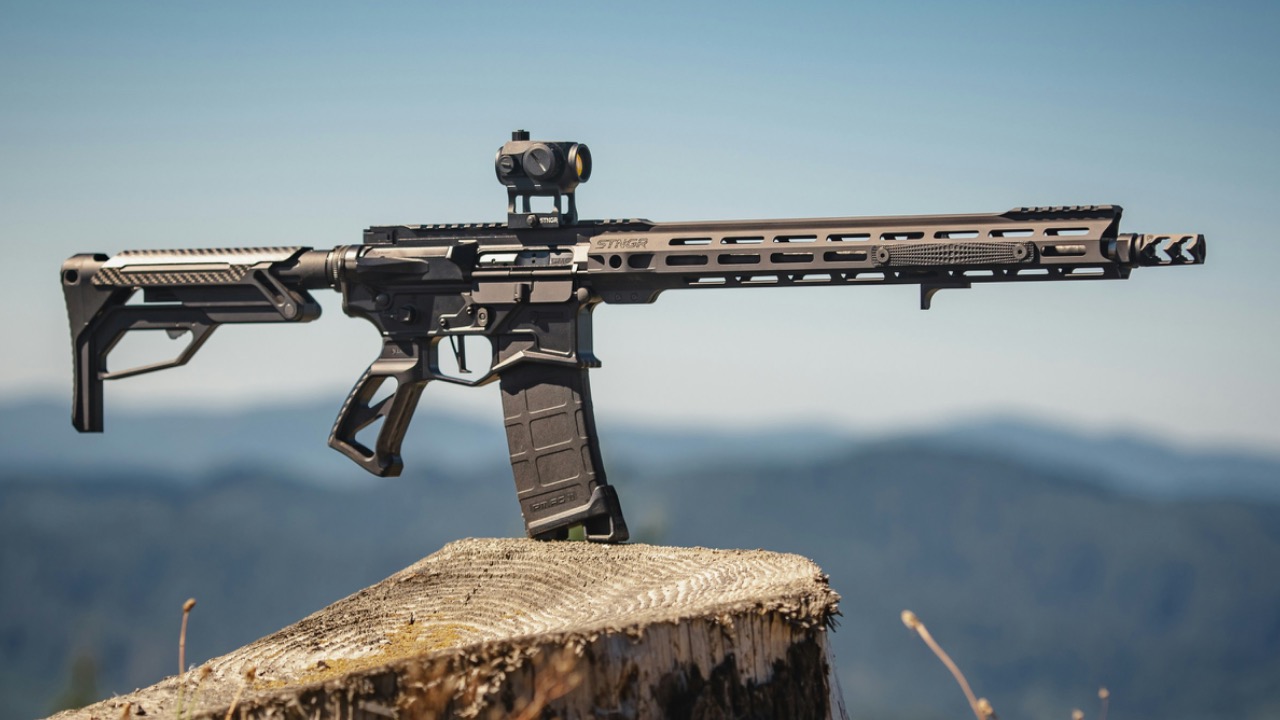
A recurring argument in AR-15 bans centers on cosmetic features—things like adjustable stocks, pistol grips, or flash suppressors. Courts increasingly look past those external details and focus on how the firearm actually functions.
When you examine the mechanics, the AR-15 operates as a standard semi-automatic rifle. One trigger pull fires one round, the same as countless hunting rifles. Because of that, judges often question laws that treat these rifles differently based on external design elements. When the function remains the same as other legal firearms, courts tend to view bans based on appearance with skepticism.
The Platform’s Widespread Civilian Ownership
Ownership numbers play a major role in these rulings. Estimates often place the number of AR-15-style rifles in civilian hands well into the tens of millions. When courts evaluate a ban, those figures matter.
From a constitutional perspective, widespread lawful ownership suggests a firearm has become part of ordinary civilian life. Judges reviewing these cases frequently note that such rifles are used for target shooting, hunting in some states, and home defense. Once a firearm is that widely owned, banning it entirely begins to look less like regulation and more like prohibition of a commonly exercised right.
Self-Defense Remains a Central Factor
Modern Second Amendment rulings repeatedly point back to self-defense as the core protected activity. That idea traces back to the reasoning in District of Columbia v. Heller and continues to influence later cases.
When you read court opinions about AR-15 bans, judges often examine whether the firearm is commonly chosen for lawful defensive purposes. Many owners select the platform because of its controllability, modularity, and manageable recoil. Courts don’t necessarily weigh whether it’s the best defensive tool. They ask whether ordinary citizens choose it for lawful protection. If the answer is yes, banning it outright becomes difficult under current precedent.
Semi-Automatic Firearms Have Long Been Legal
Another point that appears frequently in court opinions involves the history of semi-automatic firearms themselves. These designs have existed for more than a century and have been widely available to civilians for decades.
When judges review bans targeting AR-15 rifles, they often recognize that the underlying technology isn’t new or unusual. Semi-automatic operation has long been accepted as part of the American firearms landscape. Because of that historical acceptance, courts tend to question laws that single out one category of semi-automatic rifles while leaving many others untouched.
Governments Must Prove the Ban Fits Historical Limits
Under the framework created by New York State Rifle & Pistol Association v. Bruen, the burden falls on the government to defend a restriction with historical evidence. That requirement changes the courtroom dynamic.
Instead of citizens proving why they need a firearm, the state must demonstrate that similar restrictions existed in earlier periods of American history. In many AR-15 cases, governments struggle to find historical analogues for sweeping bans on a widely owned rifle type. When that historical record comes up thin, courts often conclude the restriction cannot survive constitutional scrutiny.
The “Dangerous and Unusual” Test
Another concept courts rely on comes directly from the reasoning in District of Columbia v. Heller: the idea that weapons both dangerous and unusual may fall outside Second Amendment protection.
For AR-15 bans, that definition creates a problem for governments. A firearm that is owned by millions of Americans is difficult to label unusual. Courts frequently point out that common ownership cuts against that classification. Once a firearm is widely possessed for lawful purposes, the “dangerous and unusual” argument becomes harder to sustain.
Lower Courts Must Follow Supreme Court Precedent
Federal judges don’t operate in a vacuum. Lower courts are bound to follow precedents established by the Supreme Court of the United States, even if individual judges might personally disagree.
That means rulings like District of Columbia v. Heller and New York State Rifle & Pistol Association v. Bruen shape every modern Second Amendment case. When courts review AR-15 bans, they must apply the legal tests defined in those decisions. If a law doesn’t fit that framework, judges are often compelled to strike it down regardless of political pressure or public debate.
Courts Separate Policy Debates From Constitutional Limits
When you read these rulings closely, you’ll notice something important. Judges often say the same thing in different ways: policy arguments belong to legislatures, but constitutional limits still apply.
Courts reviewing AR-15 bans frequently acknowledge that lawmakers may have safety concerns. At the same time, judges emphasize that constitutional rights place boundaries on how far regulations can go. Even if a policy goal seems reasonable, it must still fit within the Second Amendment framework established by the courts. That separation between policy preference and constitutional law is a major reason these bans continue to face legal trouble.

Asher was raised in the woods and on the water, and it shows. He’s logged more hours behind a rifle and under a heavy pack than most men twice his age.