10 massive fish species still swimming in America’s rivers
America’s rivers still hide giants that can rival anything in the ocean, from ancient sturgeon to armor plated predators. These massive fish species are not only record breakers, they are also bellwethers for river health and reminders of how much life still moves beneath the surface. Each of the ten entries below highlights a single heavyweight that still swims in U.S. freshwater and shows why its survival matters to anglers, scientists, and communities that depend on living rivers.
1. White sturgeon
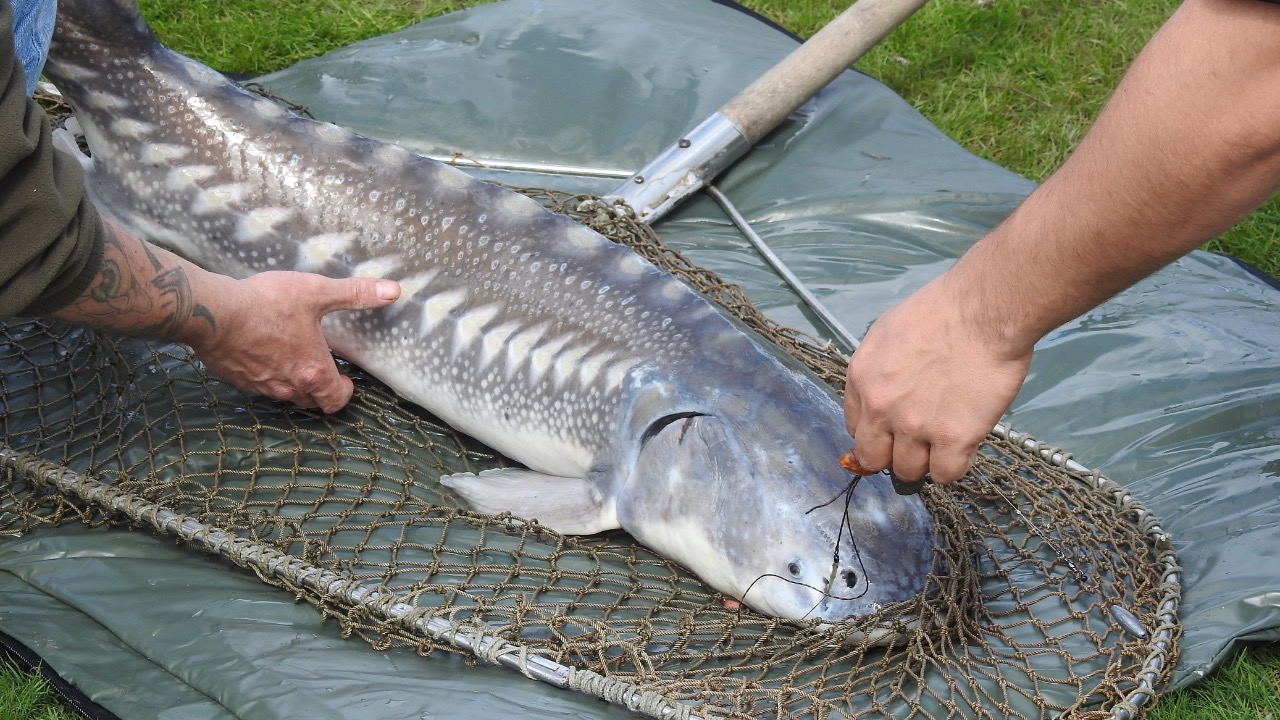
The White Sturgeon, Acipenser transmontanus, is widely described as North America’s largest freshwater fish. Historical accounts cited in recent coverage report that some White Sturgeon have reached more than 20 feet in length and weighed almost a ton, and individuals can live longer than 100 years. One detailed feature on White Sturgeon describes how this long lifespan and slow reproduction make the species especially vulnerable to overfishing and habitat disruption.
Another overview of Acipenser transmontanus notes that these fish are opportunistic bottom feeders that consume crustaceans, fish, and worms along deep river channels. Because White Sturgeon depend on long, connected stretches of clean water, their status has become a rallying point in debates over dam operations, pollution, and harvest rules in the Columbia and Sacramento systems. Where they still thrive, they signal that big river ecosystems are functioning well enough to support a true freshwater giant.
2. Alligator gar
The Alligator Gar, Atractosteus spatula, is often called a living fossil and is recognized by federal biologists as one of the largest freshwater fish in North America. A detailed profile of the species’ Physical Characteristics describes a torpedo shaped body, long broad snout, and heavy diamond shaped scales that can help individuals reach 350 lbs (159 kg). Another federal summary on Size and Shape notes that their common length still dwarfs most river fish.
Angling focused reporting lists Alligator Gar, or Atractosteus, at up to 300 lb in a ranking of North American “monster fish,” with one breakdown specifying “Alligator Gar (Atractosteus spatula) to 300+ lb” and Paddlefish “170-200 pounds” in the same context. That assessment appears in a feature on Alligator Gar that also emphasizes their appeal as a challenge species. A separate federal FAQ on the largest freshwater fish notes that in North America the alligator gar is the largest non sturgeon freshwater fish, which gives conservation agencies a clear reason to protect the slow growing adults that anchor river food webs.
3. Lake sturgeon
Lake Sturgeon, Acipenser fulvescens, are another heavyweight that still cruises big rivers connected to the Great Lakes and upper Mississippi basin. Species summaries for Lake Sturgeon highlight their status as long lived, bottom dwelling fish that historically reached impressive sizes before intensive harvest and dam construction fragmented their range. A linked profile of Acipenser fulvescens notes that this species is now a focus of restoration work in several Midwestern rivers.
Social media coverage of the largest freshwater fish in North America points out that, viewed from above, the head of a white sturgeon looks like that of a giraffe or a mythical dragon and describes that species as North America’s largest. In the same discussion, Lake Sturgeon are presented as another example of Nor American sturgeon that can live 50 to 60 years in rivers where dams and pollution are controlled. Because these fish spawn only periodically and need clean gravel beds, their recovery has become a test of long term river management across the upper Midwest and Canada.
4. American paddlefish
The American Paddlefish, Polyodon spathula, is instantly recognizable by its long rostrum and filter feeding lifestyle. Species references for American Paddlefish describe a large river fish that historically ranged through the Mississippi and its major tributaries. A companion entry for Polyodon spathula notes that adults can grow well beyond typical sport fish sizes, often exceeding 100 pounds in productive waters.
An angling focused ranking of North American giants lists Paddlefish, identified as Polyodon, at “170-200 pounds” and places them among the continent’s top river trophies. That assessment appears alongside Alligator Gar and Flathead Catfish in a feature that treats Paddlefish as one of the heaviest freshwater fish available to hook. Because Paddlefish rely on dense plankton blooms and unobstructed migration routes, their presence in a river signals that water quality and flow patterns still support a complex food chain from microscopic organisms to apex filter feeders.
5. Blue catfish
The Blue Catfish, Ictalurus furcatus, represents the heavyweight end of the catfish family in U.S. rivers. An angler’s guide to Blue Catfish describes them as the heavyweights of American Catfish and notes that they are often simply called “Blues.” The same guide explains that They are native to the Mississippi, Missouri, and Ohio systems but have been widely introduced across the southeastern US through stocking programs, where they now dominate many tailwaters.
Species references for Blue Catfish records and Ictalurus furcatus show that individual fish can exceed 100 pounds, with several state records built around massive river caught specimens. A video survey of the biggest fish caught in every state lists Blue Catfish alongside paddlefish, lake trout, carp, sheefish, and striped bass among the heaviest freshwater records. Managers now weigh the popularity of trophy Blue Catfish against concerns that dense populations may affect native mussels and smaller fish in some rivers.
6. Flathead catfish
Flathead Catfish are another outsized predator that has turned parts of American river systems into catfish country. An angling feature that groups North American “monster fish” lists “Flathead Catfish (P…” alongside Alligator Gar and Paddlefish, placing them in a top tier of heavy freshwater species that can push triple digit weights. A separate breakdown of state records notes that Arizona has produced a flathead catfish of 76 pounds, part of a long list of giant catfish, paddlefish, and striped bass in the biggest fish caught in every state.
The same record summary, which opens with the exclamation “Wow, that’s a big fish,” frames these catches as benchmarks for how large river predators can grow when forage and habitat align. Flathead Catfish thrive in deep holes, logjams, and slow eddies, where they feed heavily on live fish. Their spread into new drainages has raised alarms for some biologists who worry about impacts on native sunfish and bass, yet they have also become a major draw for guides and local tourism in river towns.
7. American eel
The American eel is not as bulky as a sturgeon or gar, but recent fieldwork shows that sizable individuals still move far up inland rivers. Biologists surveying the Kansas River reported finding a rare ocean born fish species swimming hundreds of miles from the sea and identified it as an American eel. Coverage of that discovery described how Biologists in the documented the eel’s presence and highlighted its complex life cycle that links Atlantic spawning grounds with Midwestern streams.
The same report explained that the American eel begins life in the ocean, drifts toward North America as a larva, then migrates into rivers where it can grow to several feet in length before returning to the sea to spawn. For inland communities, the sight of such a fish in the Kansas River is a reminder that dams, water withdrawals, and pollution can disrupt connections between rivers and the coast. Protecting migration corridors for American eels benefits a wide range of other species that rely on similar pathways.
8. Sheefish
Sheefish, sometimes called “the tarpon of the north,” are the world’s largest type of whitefish and represent a northern counterpart to the giants of the Lower 48. A feature on large and unusual freshwater fish notes that Sheefish inhabit big rivers and lakes in Alaska and Northwestern Canada and can reach impressive sizes that appeal to adventurous anglers. In that discussion, Sheefish in Alaska are highlighted alongside world record gar and other outsized species.
Although Sheefish are more associated with Arctic drainages than temperate rivers, their presence in large, free flowing systems connects them to the same conservation questions that surround sturgeon and paddlefish. They depend on long migrations between feeding and spawning areas and on stable ice and flow patterns. As climate change alters river temperatures and timing of breakup in Alaska and Northwestern Canada, Sheefish have become a useful indicator of how northern river ecosystems respond to warming and shifting hydrology.
9. River “monsters” near U.S. cities
Several of these species now feature in popular “river monster” style checklists that show just how close big fish swim to American population centers. A Quick Reference Table titled “River Monsters Near You” lists Species such as Alligator Gar, Blue Catfish, and paddlefish, along with a Common Max Size column and notes on the FATKAT Advantage for targeting them. That table appears in a guide to River Monsters Near that encourages anglers to explore large rivers rather than only small lakes.
The same guide, which is also linked through a separate river monsters list, frames these fish as accessible goals rather than distant legends. By translating scientific size records into practical expectations for anglers, it helps local communities see their home rivers as valuable recreational resources. That perspective can support calls for cleaner water, better access, and science based harvest rules that keep big breeding fish in the system.
10. Giant fish in national collections
Behind the scenes, national archives and museum collections document how large America’s freshwater fish can grow and how their ranges have changed. A federal collection of freshwater fish of compiles historical records, illustrations, and specimens of species such as sturgeon, paddlefish, and large catfish. These archives show that giants once swam in rivers across the continent, from the Columbia to the Mississippi, long before modern dams and intensive harvest.
Modern list style features on American freshwater fish and slideshow surveys of biggest fish in draw heavily on those records to highlight White Sturgeon, Alligator Gar, and other outsized species. A separate overview of North America’s biggest uses those same data to argue that protecting large, old individuals is essential for sustaining wild populations that still inspire awe.

Asher was raised in the woods and on the water, and it shows. He’s logged more hours behind a rifle and under a heavy pack than most men twice his age.