Why some of the best military weapons were never widely issued
When you spend enough time studying military firearms, you notice a strange pattern. Some truly capable weapons never make it past small production runs or limited adoption. Meanwhile, other guns with obvious flaws end up in the hands of thousands of soldiers.
It rarely comes down to performance alone. Politics, logistics, timing, cost, and training all play a role. A rifle might shoot beautifully but require expensive tooling. A machine gun might perform flawlessly but arrive after the military has already committed to something else. Even small details—like ammunition compatibility or maintenance complexity—can decide whether a weapon thrives or disappears.
When you look back at military trials and development programs, you’ll find plenty of excellent designs that quietly faded away. Here are several weapons that proved their worth but never saw the wide service they probably deserved.
Johnson M1941 Rifle
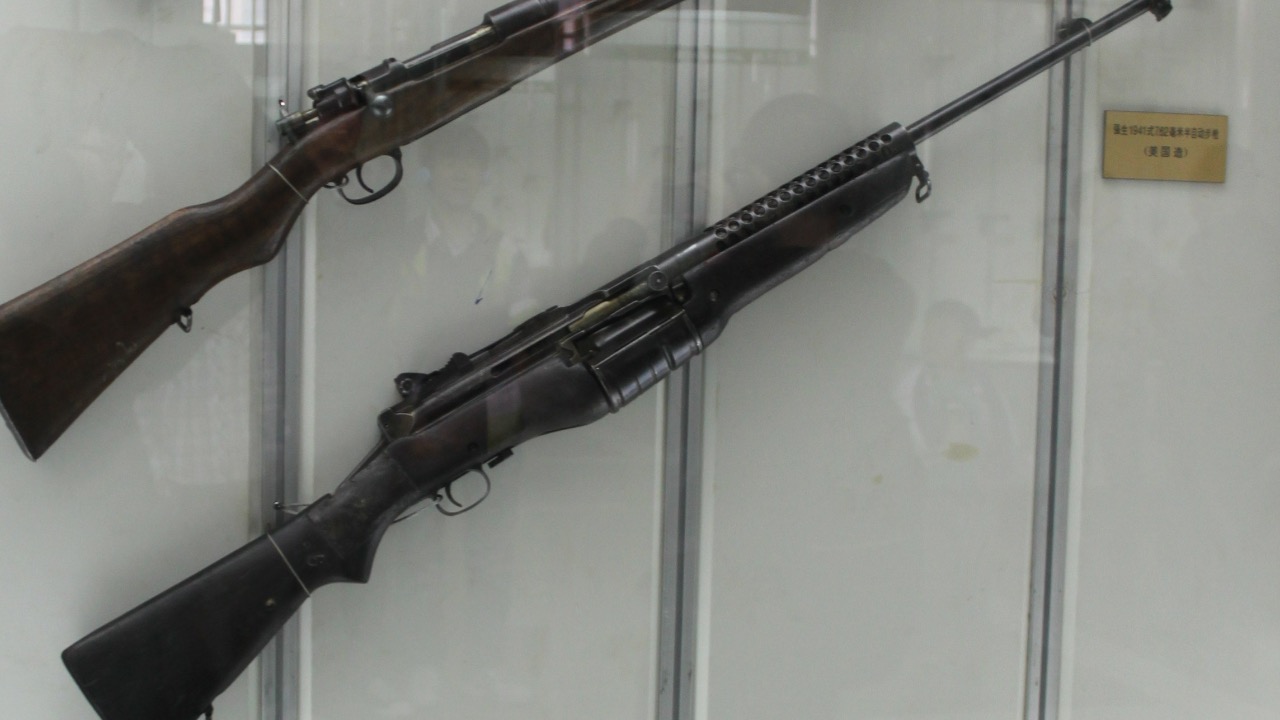
If you handle a Johnson M1941 rifle today, you quickly notice it was far ahead of its time. Designed by Melvin Johnson, the rifle used a short-recoil action and fed from a rotating 10-round magazine that could be topped off with loose rounds or stripper clips. For soldiers who hated running empty magazines, that was a real advantage.
The rifle showed excellent accuracy and softer recoil than many contemporary battle rifles. U.S. Marines used small numbers during World War II, especially in specialized units. Still, it arrived too late to challenge the already entrenched M1 Garand. Production capacity also favored the Garand, which sealed the Johnson’s fate despite its strong performance.
Stoner 63 Weapons System
Eugene Stoner is best known for the AR-15, but the Stoner 63 may have been his most fascinating project. It was designed as a modular weapons system that could convert between rifle, carbine, light machine gun, and belt-fed configurations using many shared parts.
Special operations units in Vietnam tested it extensively and praised its accuracy and controllability. In the light machine gun role, it was especially effective. However, the system required careful maintenance and parts management, which complicated large-scale military logistics. The U.S. military preferred simpler platforms that could be issued and maintained across entire divisions. As a result, the Stoner 63 remained mostly in the hands of specialized units.
Pedersen Device
During World War I, the U.S. Army explored a clever way to increase infantry firepower without replacing existing rifles. The Pedersen Device converted a standard Springfield M1903 bolt-action rifle into a semi-automatic weapon that fired pistol-caliber cartridges.
You removed the bolt and inserted the device, then used a modified magazine to fire .30-caliber pistol rounds rapidly. The concept allowed soldiers to carry more ammunition and deliver faster fire during assaults. Tens of thousands of units were produced before the war ended.
When the conflict ended suddenly in 1918, the military abandoned the project. Most devices were destroyed to keep the technology secret. It was an impressive solution to a battlefield problem that simply arrived too late.
Winchester Automatic Rifle (Model 1918 Trial)
Before the Browning Automatic Rifle became standard, several companies submitted designs for a portable automatic rifle. One of the more interesting entries came from Winchester, which produced a lightweight automatic rifle prototype during the 1918 trials.
The design offered controllable automatic fire and respectable reliability for the era. Testers recognized its potential as a squad support weapon. However, John Browning’s BAR already had strong backing and demonstrated excellent battlefield performance.
Once the military selected the BAR, the Winchester concept faded away. Timing played a major role. The rifle may have found a place in service under different circumstances, but the Army had already committed to Browning’s design.
CETME Model A
Before the famous G3 rifle existed, engineers in Spain developed the CETME Model A. It introduced the roller-delayed blowback system that would later power several well-known rifles. The early CETME rifles were lightweight and chambered in an intermediate cartridge designed for controllable automatic fire.
The design impressed many observers during testing and proved mechanically sound. However, the rifle went through several changes before reaching broader adoption. By the time the system matured, West Germany adopted a refined version that became the G3.
The original CETME Model A never saw widespread service, even though it laid the groundwork for one of the most successful battle rifles of the Cold War.
Robinson Armament M96 Expeditionary Rifle
The Robinson Armament M96 was inspired by the Stoner 63 system and designed to offer modular capabilities in a modern platform. The rifle could be configured in multiple ways and showed strong reliability during testing.
Its operating system handled a wide range of ammunition, and many shooters praised its balance and accuracy. Some observers believed it had potential as a military rifle for units seeking flexible weapon systems.
However, military procurement tends to favor established manufacturers and proven supply chains. Without large-scale government backing or a massive production infrastructure, the rifle never gained traction. Despite its solid design, it remained largely a civilian and niche platform.
Knight’s Armament LAMG
Machine gun development rarely gets attention outside military circles, but the Knight’s Armament Light Assault Machine Gun is one of the most impressive modern examples. It uses a constant-recoil system that dramatically reduces felt recoil and muzzle rise.
When you fire the LAMG, the smoothness stands out immediately. It allows more controlled bursts and improved accuracy compared to many traditional belt-fed guns. In testing environments, it performs extremely well.
Even so, military adoption moves slowly. Existing machine guns like the M240 and M249 already fill established roles, and replacing them requires enormous investment. As a result, the LAMG remains a specialized platform rather than a widely issued weapon.
AAI SPIW Flechette Rifle
The Special Purpose Individual Weapon program in the 1960s aimed to revolutionize infantry firepower. One of the most unusual designs came from AAI, which built a rifle that fired small flechettes—tiny dart-like projectiles—at extremely high velocity.
The concept promised flat trajectories and strong penetration. In theory, soldiers could hit targets more easily and carry lighter ammunition. During testing, the weapon demonstrated impressive ballistic performance.
Unfortunately, the system introduced serious complications. Ammunition was expensive, reliability proved difficult to perfect, and the rifle’s complexity worried military planners. Even though the idea showed real potential, the program eventually collapsed before reaching widespread field use.

Asher was raised in the woods and on the water, and it shows. He’s logged more hours behind a rifle and under a heavy pack than most men twice his age.