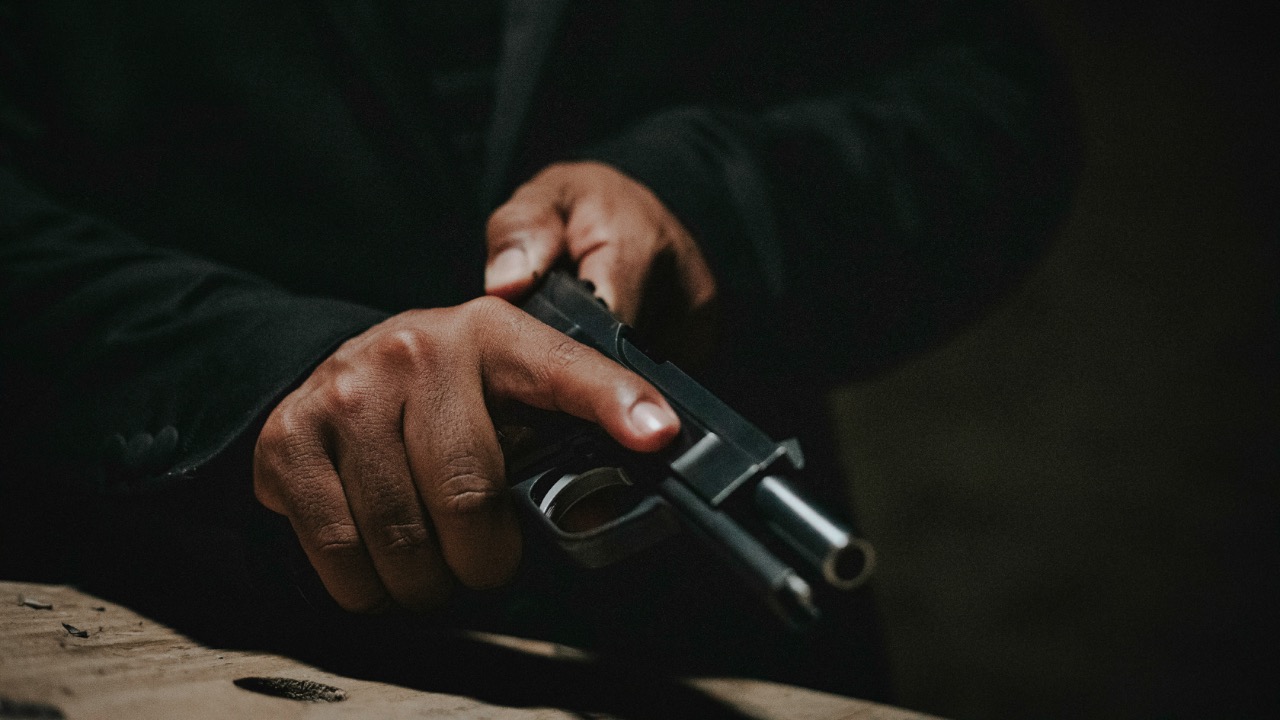
Gun carry and ghost gun bills land on Virginia governor’s desk for a decision
Virginia is on the brink of one of its most sweeping shifts in gun policy in years, as a package of bills on public carry, ghost guns and assault-style weapons arrives on the governor’s desk. The decisions ahead will test how far the state’s new leadership is willing to go on firearm regulation and how it balances gun rights with demands for stronger safety rules.
The measures range from a ban on carrying guns in most state buildings to new rules for untraceable firearms and expanded liability for the gun industry. Taken together, they amount to a direct response to years of stalled efforts and vetoes, and they now await a single signature or veto stamp that could reshape gun law across Virginia.
The political moment: Spanberger and a new direction on guns

The arrival of this gun package coincides with a change at the top of Virginia’s executive branch. Voters chose Abigail Spanberger after years in which previous leadership blocked or reversed many firearm restrictions backed by Democrats.
In a Jan. 19 address to the Legislature earlier this year, Spanberger urged lawmakers to act on affordability, the price of prescription drugs and firearms. According to reporting on that speech, she pressed the Legislature to raise the minimum wage and curb gun violence, tying firearm policy to a broader agenda on economic and public health issues. That framing set the stage for a session where gun bills were not treated as standalone fights, but as part of a larger push on safety and cost of living.
Democrats, who control the General Assembly, responded with a coordinated slate of firearm measures. Gun safety advocates saw a rare alignment of a supportive Legislature and a governor who campaigned on stronger gun laws, while gun rights groups warned that the new majority would move quickly to restrict ownership and carry. The result is a stack of bills that now sits on Spanberger’s desk, with both sides waiting to see whether she signs, amends or vetoes them.
How the General Assembly got here
The path to the governor’s desk began with committee work that revisited ideas previously blocked under Governor Youngkin. A Virginia Senate panel advanced gun safety bills that had once been vetoed by Youngkin, signaling that Democrats intended to run back earlier proposals and send them to a more receptive governor.
Coverage of that hearing described a packed room and pointed testimony as lawmakers revisited limits on assault-style firearms and other measures. The same package included bills that gun safety advocates had pushed for years, including restrictions on certain semi-automatic rifles and large capacity magazines, along with new rules for where guns can be carried in public spaces.
The full account of that session, which highlighted how Democrats used their committee majorities to move the proposals forward, appeared in a report on the Virginia Senate panel proceedings. That coverage emphasized that the bills were not new ideas, but revived efforts that had been blocked at the executive level in previous years.
House Democrats followed suit. Gun safety advocates praised the House action as a turning point in Virginia’s approach to gun violence, while Republicans objected that many of the measures had either failed before or been vetoed by Youngkin. That history is central to why the current moment feels different to both sides: the same bills that once hit a wall now have a clear path to enactment if Spanberger agrees.
What SB 27 would do to the gun industry
One of the most closely watched measures is SB 27, a bill that targets the responsibilities of firearm manufacturers and sellers. According to the History of SB 27, the bill has cleared the General Assembly and now awaits action from the Governor.
The Summary As Passed explains that SB 27 would require each firearm industry member to implement “reasonable controls” to prevent unlawful sales, straw purchases and diversion of guns into illegal markets. Those controls include policies to screen for suspicious purchases, to secure inventory, and to avoid marketing that targets minors or people who cannot legally possess firearms.
The same summary notes that a firearm industry member may not knowingly or recklessly create, maintain or contribute to a public nuisance through the sale or marketing of firearms. If they do, the bill would open a path for civil enforcement by the state and potentially by individuals who are harmed. In effect, SB 27 would carve out a state-level liability framework that sits alongside federal protections for gun makers and dealers.
Earlier coverage of SB 27 in the Virginia Senate described how supporters argued that the bill would hold manufacturers and sellers liable when they fail to adopt basic safeguards, while opponents warned that it could lead to a wave of lawsuits and higher costs. Reporting from that debate quoted Jessie Nguyen detailing how the measure would apply to weapons and magazines that can hold 10 or more rounds, and noted that business groups and gun rights advocates questioned whether the standard of “reasonable controls” would be clear enough.
Another report on Virginia firearm bills heading to the governor explained that the legislation would require firearm industry members to establish reasonable controls designed to prevent unlawful firearm sales, straw purchases and theft. That same account highlighted concerns from retailers about how the new rules might interact with existing federal requirements and whether small shops would face disproportionate compliance burdens.
Assault-style weapons: HB 217 and SB 749
Alongside SB 27, two paired bills would restrict assault-style firearms and certain ammunition feeding devices. A report on the measures heading to the governor noted that HB 217, carried by Del Dan Helmer, and SB 749, carried by Sen Saddam Azlan Salim, both seek to ban “assault firearms.” The same report identified Del Dan Helmer as representing District 10 and Sen Saddam Azlan Salim as representing District 37.
The official Summary As Passed for HB 217 describes a ban on the importation, sale, manufacture and transfer of assault firearms and certain large capacity ammunition feeding devices. It defines covered weapons by features and magazine capacity, and it restricts future commercial activity involving those firearms inside the state.
The companion bill’s Summary As Passed for SB 749 similarly focuses on the purchase, sale and transfer of assault firearms and certain ammunition feeding devices. It provides that any violation would be treated as a Class 1 misdemeanor under the legislation. Together, HB 217 and SB 749 would not require existing owners to surrender their weapons, but they would sharply limit new sales and transfers.
Earlier coverage of the Senate panel work noted that assault firearms manufactured before July 1, 2026 would be exempt, along with antique firearms, permanently inoperable weapons and certain other categories. That exemption is central to the political argument around the bills. Supporters say it shows the legislation is targeted at future sales and high-risk weapons, not at confiscating existing collections. Opponents counter that even a prospective ban on new assault firearms crosses a constitutional line and will invite legal challenges.
Gun rights advocates have already framed the package as a “semi-auto ban” headed to Governor Spanberger’s desk. One national group warned that yet another piece of anti-gun legislation had made it out of the General Assembly and was on its way to the governor, urging members to contact her office. They argue that the bills would criminalize ordinary ownership of popular semi-automatic rifles and magazines that are standard for many sporting and self-defense uses.
On the other side, a leading gun violence prevention organization celebrated the passage of the assault-style weapons bills as part of a broader slate. In a February statement, that group said the measures would help hold the gun industry accountable, ban untraceable ghost guns, improve secure firearm storage, ban guns on certain public property and strengthen protections for victims of domestic abuse. For those advocates, HB 217 and SB 749 are key tools to reduce the lethality of shootings and to limit access to weapons that can fire many rounds quickly.
Ghost guns and House Bill 40
Perhaps the most technically complex part of the package involves so-called ghost guns. These are firearms that can be assembled from kits or unfinished receivers and that lack serial numbers, which makes them difficult for law enforcement to trace.
According to an analysis from a national gun rights organization, House Bill 40 ends the centuries-old practice of individuals building lawful firearms for personal use without government interference. That summary states that House Bill 40 would prohibit the manufacture of unserialized firearms and would require that key components carry identifying marks, effectively banning many ghost gun kits and homemade builds unless they go through a serialization process.
Another report on Virginia Lawmakers Advance Ghost Gun Legislation described how Democratic state lawmakers pushed a ghost gun bill through one chamber and into the other earlier in the session. That account, titled “Virginia Lawmakers Advance Ghost Gun Legislation,” explained that the measure targeted the sale of unfinished frames and receivers, as well as 3D printed components, and that it was now in the House at that time. The piece framed the bill as a response to law enforcement concerns about untraceable weapons showing up at crime scenes.
Supporters argue that ghost guns allow people who are prohibited from buying firearms to sidestep background checks and that they complicate investigations when shootings occur. They point to rising recoveries of unmarked weapons by police and to high-profile cases in other states where ghost guns were used in school and workplace shootings.
Opponents, including the national group that highlighted House Bill 40, say the bill unfairly targets hobbyists and gun builders who have long assembled firearms for personal use. They describe the practice as a lawful tradition that stretches back to the founding era and argue that the new rules would criminalize ordinary tinkerers who pose no threat. They also warn that the serialization requirements could be difficult to implement for older home-built guns and would create confusion for owners.
Public carry limits: Senate Bill 272 and state buildings
Alongside restrictions on what kinds of guns Virginians can buy or build, lawmakers also moved to limit where firearms can be carried. One of the most significant steps is a ban on guns in many buildings owned or leased by the state.
A detailed account of the package explains that Senate Bill 272 bans Virginians from carrying any firearms in “any building owned or leased by the Commonwealth,” such as the Univ of Virginia and other public institutions. The same report notes that the bill’s introduction did not trigger major security incidents, despite heated rhetoric around gun-free zones.
SB 272 would apply to a wide range of state facilities, including administrative offices, higher education buildings and other properties under state control. It would not necessarily cover every outdoor space or local government building, but it would create a statewide baseline that removes firearms from many public indoor settings.
Supporters say that banning guns in state buildings is a basic workplace safety measure and that it aligns Virginia with other states that already restrict firearms in government offices and on college campuses. They argue that public employees and students should not have to navigate hallways where anyone might be armed, and that security can be more effective when only law enforcement is allowed to carry inside.
Opponents counter that gun-free zones do not stop determined attackers and instead disarm law-abiding citizens who might otherwise defend themselves. They point to previous protests and rallies at the Capitol where armed demonstrators gathered without incident and argue that those events show that responsible carry can coexist with public safety. Some gun rights advocates have also raised concerns about how the ban would interact with concealed carry permits and whether it would criminalize inadvertent violations by visitors who are unfamiliar with the new rules.
Other key measures in the gun package
The bills on Spanberger’s desk extend beyond assault weapons, ghost guns and carry in state buildings. Together, they form a broad package that touches nearly every stage of the firearm life cycle, from manufacture to sale to storage.
Gun safety advocates highlight measures that improve secure firearm storage and strengthen protections for victims of domestic abuse. The February statement from a major advocacy group praised the passage of a slate of gun violence prevention bills that included safe storage requirements and restrictions on gun possession for people subject to certain protective orders. Those provisions aim to reduce accidental shootings and to prevent abusers from accessing weapons during volatile periods.
Another part of the package focuses on affordability and public health. A report on the Virginia General Assembly’s work on affordability, gun violence and public health described how lawmakers tied firearm policy to broader efforts on prescription drug costs and economic relief. That coverage noted that in her Jan. 19 speech, Spanberger urged action on both the minimum wage and gun violence, signaling that she sees firearm regulation as part of a larger safety net.
At the same time, critics have zeroed in on bills that they say would drive up the cost of gun ownership. A petition on Change.org titled “Oppose House Bills 207, 919, 1094, and Senate Bill 763” argues that while many firearm-related bills this session relate to safety, these bills are simply anti-gun in nature, infringing on the constitutional rights of law-abiding citizens from all walks of life, including Democrats. The petition warns that increased fees and taxes would put firearms out of reach for lower-income residents and would do little to stop crime.
Debate has also focused on how the package interacts with existing background check and red flag laws. Supporters say the new bills close loopholes in current law and target gun violence more precisely, while opponents argue that the measures go too far and infringe on constitutional rights. One report captured that divide by quoting Supporters who say the bills close loopholes in existing law and target gun violence, while opponents insist that the measures overreach and burden lawful owners.
Inside the committee fights and floor debates
The path from introduction to the governor’s desk involved a series of intense hearings and floor debates. In the House, Democrats used their majority to pass a sweeping gun control package over GOP objections. Gun safety advocates praised the House action and called it a turning point, while Republicans warned that the bills were either unnecessary or unconstitutional.
One report highlighted how Gun safety advocates framed the House vote as a long-awaited correction after years in which similar measures had stalled or were vetoed by Youngkin. That coverage emphasized that many of the bills had been introduced in previous sessions but never became law, and that advocates saw the new votes as the payoff for sustained organizing and electoral gains.
In committee, lawmakers heard from law enforcement, survivors of gun violence, gun owners and industry representatives. A CBS 19 report on the divided debate quoted Supporters who said the bills close loopholes in existing law and target gun violence, while opponents argued that the measures go too far and infringe on constitutional rights. That framing captured the core disagreement: whether the new rules are a necessary tightening of a porous system or an overreach that punishes responsible owners.
During House debate on the assault-style weapons bill, Dan Helmer of Fairfax County, a lead sponsor, told the House Firearms Subcommittee that “this bill is based on a simple idea” and defended its focus on specific weapons and magazine capacities. Opponents in that hearing raised concerns that the definitions were too broad and that the law would be vulnerable to litigation, particularly under recent Supreme Court decisions that have shifted the standard for evaluating gun regulations.
In the Senate, coverage of SB 27’s progress noted that the Virginia Senate advanced the gun bill holding manufacturers and sellers liable after a contentious hearing. Jessie Nguyen reported that lawmakers debated how the liability standard would apply to weapons and magazines that can hold 10 or more rounds and whether the bill would invite lawsuits against retailers who follow federal law but are accused of failing to adopt “reasonable controls.”
How advocates on both sides are mobilizing
As the bills head to the governor, advocacy groups are ramping up their campaigns. Gun safety organizations have launched public messaging that frames the package as a life-saving set of reforms that finally matches Virginia’s laws to its gun violence problem. The Brady group’s February statement, for example, celebrated the passage of a slate of gun violence prevention bills and highlighted specific provisions on ghost guns, safe storage, guns on certain public property and protections for domestic abuse victims.
Those groups are urging supporters to contact Spanberger and to push for quick signatures on the bills. They argue that the measures reflect broad public support for background checks, assault-style weapon limits and restrictions on untraceable firearms, and that Virginia has already seen the benefits of earlier reforms such as red flag laws and expanded checks.
On the other side, national and state-level gun rights organizations are warning members about what they describe as an unprecedented attack on the Second Amendment in Virginia. The NRA Institute for Legislative Action has published alerts describing the package as a set of “anti-gun bills” headed to the governor and has singled out House Bill 40 and the semi-auto ban as top priorities for opposition. Those alerts encourage phone calls, emails and public pressure on Spanberger to veto or significantly amend the measures.

Leo’s been tracking game and tuning gear since he could stand upright. He’s sharp, driven, and knows how to keep things running when conditions turn.