What history classes leave out about Columbus — and why it still matters
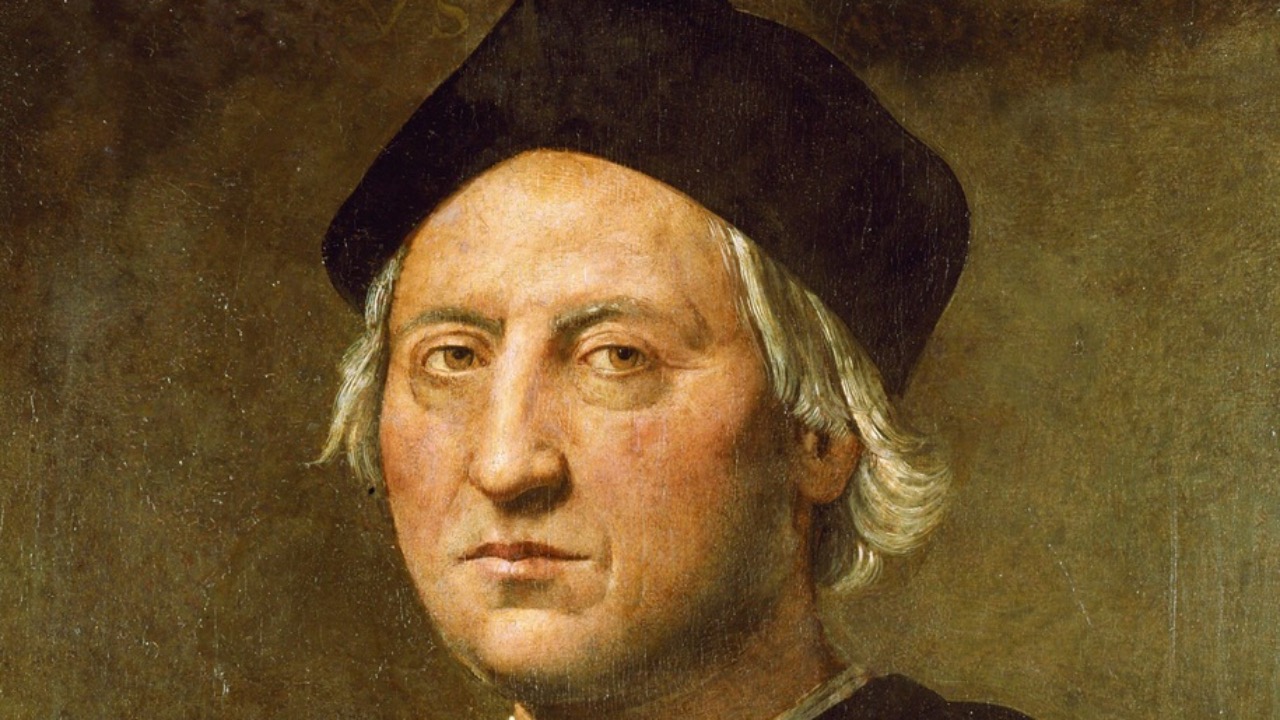
For generations, classroom lessons have turned Christopher Columbus into a children’s rhyme and a cardboard-cutout hero, stripping away the violence, resistance, and Indigenous survival that define the actual story. What history classes leave out is not a footnote; it is the heart of how the Americas were claimed, contested, and remembered. The way schools still frame Columbus helps determine whose suffering is ignored, whose knowledge is dismissed, and whose past counts as American history.
The hero students meet in elementary school
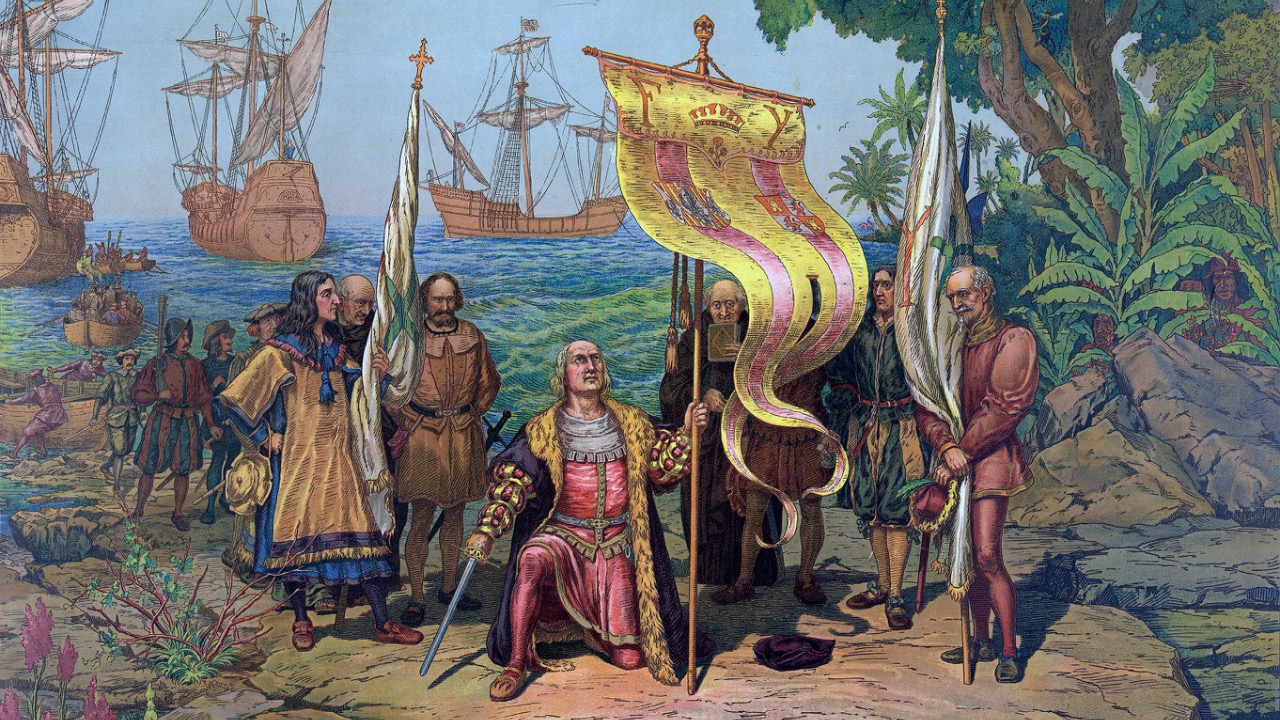
Most children in the United States first meet Columbus through a simple script: a brave sailor, three small ships, a dangerous voyage, and the triumphant “discovery” of a New World. Textbooks and classroom decorations often present Christopher Columbus as a solitary genius who set out across an unknown ocean and proved skeptics wrong. In this version, he is the starting point of American history, the first European whose name students are expected to memorize.
Teachers who grew up with this narrative repeat it through worksheets, plays, and coloring pages that show smiling sailors and grateful “Indians.” The familiar line “In 1492, Columbus sailed the ocean blue” turns a complex invasion into a catchy slogan. Classroom activities often stop at the moment his ships reach land, then jump quickly to parades and a federal holiday, leaving little space for what happened to the people already living in the Caribbean.
This early framing matters. When children learn that one man “discovered” a place already filled with societies, they absorb the idea that history begins when Europeans arrive. Indigenous communities become background scenery instead of political actors with their own stories, rights, and knowledge systems.
The myths that keep being taught
Several specific myths anchor the schoolhouse version of Columbus. One of the most persistent is that he set sail to prove the world was round. Historical accounts show that by 1492, most educated Europeans already accepted a spherical Earth, a point even popular outlets such as the History Channel have highlighted. The dispute was not about shape but about size, and Columbus was simply wrong about the distance to Asia.
Another myth is that Columbus personally “discovered America” in a geographic sense. Teaching resources now stress that, contrary to what grandparents were taught, Christopher Columbus did because the land had been inhabited for thousands of years by diverse Indigenous nations. Nor was he the first foreign sailor to reach the continent, since Norse voyages to places like Vinland long predated his crossing. Yet the word “discovery” still appears in school worksheets and state standards.
Students also often hear that Columbus was a wise, benevolent leader who treated Indigenous people fairly in exchange for their help. Modern summaries of his voyages show a very different record. Accounts gathered in classroom myth-busting guides describe enslavement, forced labor, and brutal punishment for those who did not meet gold quotas or resisted Spanish control. The gap between the gentle classroom portrait and the documented violence is not a small historical correction; it is the difference between a story about exploration and a story about conquest.
What actually happened in the Caribbean
When Columbus arrived in the Caribbean, he entered lands governed by the Taíno and other Indigenous peoples whose communities, agriculture, and trade networks had developed over centuries. For the Taíno people of the Caribbean, their erasure began almost immediately with Columbus’s arrival, as described in accounts that trace how people were captured and shipped to Spain as slaves and how local political structures were broken apart.
Educational materials that center Indigenous voices describe how warfare, enslavement, and forced relocation disrupted and altered the lives of Indigenous Peoples in after 1492. These resources link Columbus’s voyages to the beginning of a transatlantic system that moved not only crops and animals but also diseases and human beings. The demographic collapse that followed, driven by violence and infection, reshaped entire regions.
Later accounts of the voyages describe how Columbus sent thousands of Taino “Indians” to Spain to be sold and how many died during the journey. Those who remained were pressed into forced labor, and those who resisted faced harsh reprisals. These details rarely appear in elementary textbooks, yet they are central to understanding why Indigenous activists argue that celebrating Columbus without context glorifies the start of a catastrophe.
How the holiday helped build a myth
The heroic image of Columbus did not grow naturally from the fifteenth century. It was built over time, especially in the United States, where civic groups and political leaders turned him into a symbol of progress, Catholic inclusion, and Italian American pride. As one historical overview notes, the Columbus celebrated in American schools for generations bore little resemblance to the historical figure. The mythical Columbus was fearless, visionary, and almost single-handedly responsible for opening a new era of civilization.
That myth filtered into textbooks, children’s biographies, and parades. The holiday itself, Columbus Day, became a way to celebrate exploration and legacy, with official descriptions that rarely mention the people who paid the price for that expansion. Promotional essays about the holiday describe Columbus Day, celebrated on the second Monday of October, as a reflection on courage and discovery, with little attention to Caribbean suffering or Indigenous resistance.
Over time, this public story hardened into a school curriculum that treated Columbus as a neutral starting point rather than a contested figure. The result is a civic ritual that asks children to cheer for a man whose actions helped launch centuries of dispossession, while Indigenous communities and their histories remain marginal.
Why schools still cling to the old story
Educators who want to change how Columbus is taught run into several obstacles. Some parents and community members see any criticism of the explorer as an attack on patriotism. Commenters in public debates argue that too many parents consider the truth unpatriotic and that some of the truth about Columbus would be considered too adult for early grades. That pressure can make schools cautious about revising familiar stories.
Teachers also face structural limits. The mainstream history taught in most U.S. schools and U.S. culture, even when people try to “ignore Columbus,” sets up students to understand American history through a narrow sequence of explorers, colonies, and presidents. One educator-focused analysis describes how students move from Columbus in early grades to the Oregon Trail in fifth grade, with Indigenous nations appearing mainly as obstacles or victims rather than as continuing communities.
There is also the practical challenge of time and training. Many teachers have not been taught Indigenous histories in depth themselves. They rely on district-approved textbooks that still repeat myths, and they juggle testing requirements that leave little room for revising units. Without institutional support, even well-intentioned educators can fall back on the simple, heroic script.
What Indigenous-centered resources reveal
Indigenous scholars and institutions have spent years building alternative materials that correct classroom myths. One widely used resource points out that many students learn the phrase “In 1492, Columbus sailed the ocean blue,” then shows how Columbus was not the first foreign explorer to land in the Americas and how the region was already home to complex societies. The same resource explains how celebrating Columbus without context hides the ongoing effects of colonialism today, including land dispossession and cultural suppression.
The National Museum of the American Indian and related initiatives, such as Unlearning Columbus Day, encourage teachers to shift the focus from the explorer to Indigenous Peoples in the Americas who survived and adapted. These programs highlight Taíno perspectives, Indigenous place names, and the ways Native communities remember the arrival of Europeans as the beginning of invasion rather than discovery.
Such materials do more than correct dates. They invite students to think about how language like “discovery” and “New World” erases people who were already there. They also connect the past to present struggles over land, treaty rights, and representation, showing that colonialism is not just a chapter that ended centuries ago.
Why Columbus still belongs in the story
Some advocates worry that removing Columbus from lessons entirely would create a new kind of distortion. Teaching guides that promote critical thinking argue that educators should not erase Columbus entirely but instead use his story to examine how power, greed, and resistance shaped the early modern world. One homeschooling resource, for example, suggests that acknowledging Columbus’s role, including his abuses, can help communities become stronger by confronting difficult truths together.
Other educators echo that point. One commentary on teaching Columbus and the truth of history argues that students need to learn how to weigh multiple viewpoints and that this critical thinking is what will sustain the country going forward and engage the population as citizens. The author insists that the goal is not to replace one hero with another but to help students see that historical figures can be both influential and deeply flawed.
This approach treats Columbus as a case study in how historical reputations are built. Students can compare primary accounts of violence with later children’s books that celebrate him, then ask who had the power to shape the narrative. Rather than canceling Columbus, the lesson becomes an exercise in analyzing propaganda, mythmaking, and historical memory.
How teachers are rethinking the holiday
Across the country, educators are experimenting with new ways to handle October’s holiday. Some districts have shifted from Columbus Day to Indigenous Peoples Day, while others keep the name but change the curriculum. A widely shared teaching guide argues that students need to understand that Columbus is important, even if he is not someone to be celebrated, and that multiple viewpoints are necessary if young people are to view the past honestly.
The same guidance encourages teachers to move beyond a single heroic or villainous figure and instead frame the period as the start of the Columbian exchange, a term historians use for the movement of people, plants, animals, and diseases between Europe, Africa, and the Americas. One resource on teaching Indigenous histories notes that Columbus did not “discover America,” but his voyages began this exchange, which had mixed outcomes for both Europeans and Native Americans.
Some teachers invite students to read Indigenous accounts, write from the perspective of Taíno children, or analyze how holiday parades represent history. Others use role plays and debates that ask students to consider how different groups, from Native communities to Spanish settlers, might have experienced the same events. The goal is not to produce a single verdict on Columbus but to help students see that history is contested and that their own textbooks are products of political choices.
Why this fight over a fifteenth-century sailor still matters
Debates over Columbus can look, at first glance, like symbolic battles about statues and street names. In classrooms, however, they are about something more immediate: who gets to be visible in the national story and who is treated as a footnote. When students can name Columbus but cannot name the Taíno or other Indigenous nations, they learn that some histories matter more than others.

Leo’s been tracking game and tuning gear since he could stand upright. He’s sharp, driven, and knows how to keep things running when conditions turn.