
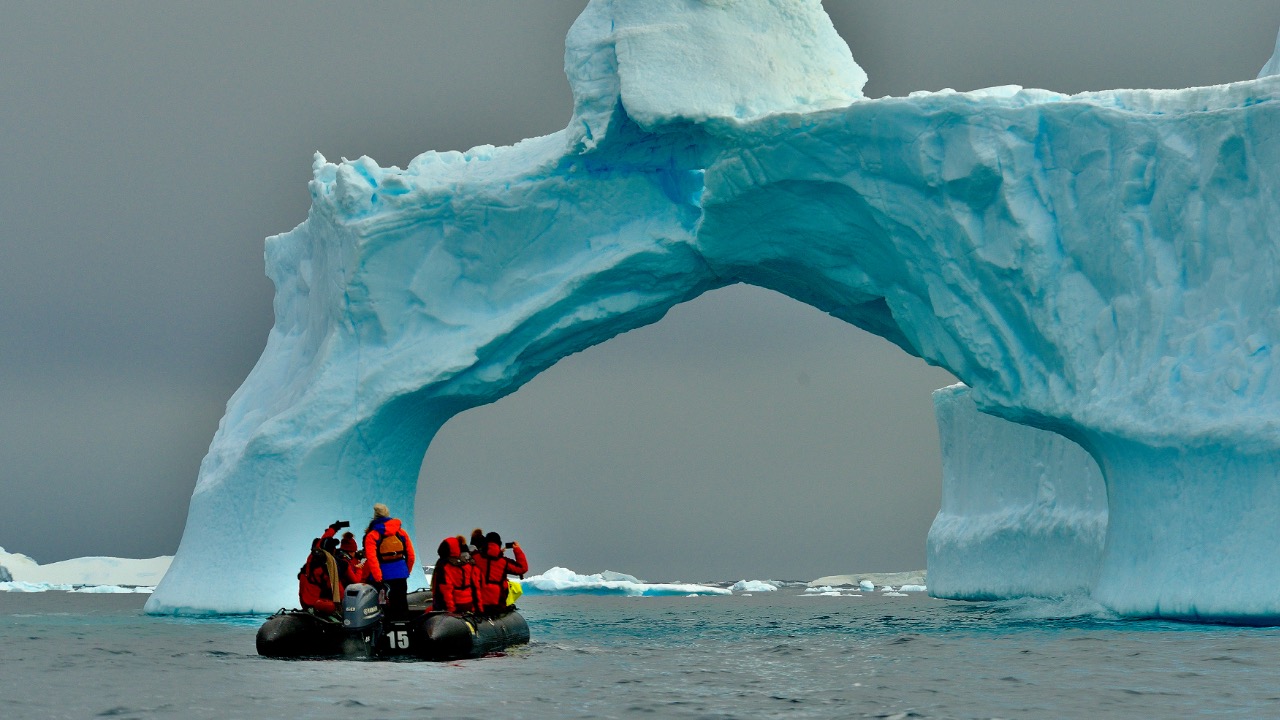
Scientists report unexpected findings from new Antarctic research
When you think about Antarctica, you probably picture a frozen, lifeless expanse at the bottom of the world. But the truth is, this place keeps rewriting what you think you know. Every season, researchers head south expecting to confirm old models about ice loss, ocean currents, or wildlife patterns. More often than not, they come back with something they didn’t see coming.
The latest wave of Antarctic research has delivered exactly that—results that challenge long-held assumptions. Some findings point to surprising resilience. Others raise new concerns. All of them remind you that Antarctica isn’t static. It’s dynamic, complex, and still full of unanswered questions.
Warm Water Surging Beneath West Antarctic Ice

Researchers studying the West Antarctic Ice Sheet have confirmed stronger-than-expected pulses of warm, deep ocean water moving beneath major glaciers. You might assume surface air temperatures tell the whole story, but what’s happening below the ice matters more. That warmer water is reaching grounding lines—the spots where glaciers lift off bedrock and begin to float—accelerating melt from underneath.
What caught scientists off guard wasn’t simply that this process exists. It’s the speed and variability. Some years show far more intrusion than models predicted. That means future sea-level rise projections may need adjustment. When the ocean drives change from below, it’s harder to slow and even harder to forecast.
Hidden Rivers Flowing Under Miles of Ice
You wouldn’t expect running water beneath two miles of ice, but radar surveys continue to map vast subglacial river systems. Beneath East Antarctica, researchers have identified active drainage networks that shift over time, rerouting meltwater in ways that affect how quickly glaciers slide.
The surprise isn’t that water exists down there. It’s how organized it is. These aren’t random trickles. They form connected systems that influence ice movement over hundreds of miles. When meltwater lubricates the base of an ice sheet, it can speed glacier flow toward the coast. That hidden plumbing system is now recognized as a major factor in how Antarctica behaves.
Microbial Life Thriving in Extreme Isolation
Deep ice cores and subglacial lake samples have revealed microbial communities surviving in total darkness, under crushing pressure, and with minimal nutrients. In places like Lake Vostok, life persists in conditions that resemble icy moons more than Earth’s surface.
What’s unexpected is the diversity. These microbes aren’t barely hanging on. Genetic sequencing shows complex metabolic pathways that allow them to process minerals and trace chemicals for energy. That forces you to rethink the limits of life. It also sharpens the focus on astrobiology, because if life can survive here, it broadens where scientists might search beyond Earth.
Antarctic Sea Ice Showing Regional Contrasts
For years, Antarctic sea ice trends puzzled researchers because they didn’t neatly mirror Arctic declines. Now, newer satellite data show sharper swings—rapid losses in some regions, temporary rebounds in others. The Southern Ocean isn’t responding uniformly.
The surprise is how strongly wind patterns and shifting ocean currents are influencing sea ice from year to year. In parts of the Southern Ocean, changing wind belts are redistributing ice rather than simply melting it in place. That variability complicates climate models and challenges the idea that Antarctic ice behaves as a single, unified system.
Penguins Adjusting in Unexpected Ways
You might assume Antarctic wildlife is locked into rigid survival patterns. But studies of Emperor penguin colonies show behavioral shifts in response to unstable sea ice. Some groups are relocating breeding grounds, while others are altering timing to match changing conditions.
The unexpected part is how flexible certain populations appear. Not every colony is declining at the same rate. Local geography, ice shelf stability, and food availability all play a role. While long-term risks remain serious, these adaptive behaviors show a level of resilience that wasn’t fully appreciated in earlier research.
Ancient Landscapes Preserved Beneath the Ice
Airborne radar mapping has revealed buried mountain ranges, river valleys, and sediment basins under the East Antarctic Ice Sheet. In some regions, researchers have identified landscapes that have been sealed off for millions of years.
The scale of preservation surprised scientists. These aren’t vague outlines; they’re detailed topographies frozen in time. That matters because the shape of the land beneath the ice influences how glaciers flow today. It also offers a glimpse into Antarctica’s past climate—when forests and rivers once existed in places now locked under ice.
Ice Shelf Fractures Forming in New Patterns
Recent fieldwork has documented fracture systems spreading across key ice shelves in patterns not fully anticipated by stress models. Rather than forming in straight, predictable lines, cracks are branching in response to subtle shifts in ocean swell and surface meltwater.
What stands out is how small changes compound. Meltwater pooling on the surface can force open crevasses, while distant storms generate waves that flex ice shelves from below. Those combined forces weaken structural integrity. When shelves thin or break apart, inland glaciers lose a natural barrier that slows their movement toward the sea.
Methane Signals Emerging From Coastal Sediments
Researchers studying sediments along Antarctica’s continental shelf have detected localized methane releases tied to warming ocean water. These emissions aren’t on the scale of Arctic permafrost thaw, but they weren’t widely expected in Antarctic systems.
The surprise lies in how sensitive shallow marine sediments are to subtle temperature shifts. As warmer water circulates along the seafloor, it can destabilize methane trapped in hydrates. Scientists are still determining how significant these releases are globally, but the finding adds another layer to how interconnected ocean warming and atmospheric chemistry can be.
Antarctica keeps challenging what you think you understand. Each discovery—whether it points to vulnerability or resilience—reminds you that this continent operates on its own terms. The more researchers look beneath the surface, the more they realize how much is still unfolding at the bottom of the world.

Asher was raised in the woods and on the water, and it shows. He’s logged more hours behind a rifle and under a heavy pack than most men twice his age.


