AI facial recognition leads to arrest — woman says she’s never been to the state
A Tennessee grandmother says artificial intelligence did not just misjudge her face, it took her freedom. Identified by an AI facial recognition system as a suspect in a North Dakota bank fraud case, she was arrested even though she insists she has never set foot in that state. Her story has become a stark test of how far police should trust machine-generated matches when a person’s liberty is on the line.
The case highlights a collision between cutting-edge policing tools and old-fashioned due process. It also raises a basic question for anyone who might be captured on camera, which is to say almost everyone: what happens when an algorithm says you are someone you are not, and the system believes it?
The arrest that began with an algorithm
Investigators in Fargo were looking into a bank fraud case in North Dakota when they turned to an AI-powered facial recognition system to help identify a suspect captured on surveillance video. According to reporting on the case, Fargo police used the technology to single out Angela Lipps, a grandmother from Tennessee, as a possible match. Officers then treated that match as a key lead and moved to secure a warrant.
Police in Fargo later acknowledged that Fargo police identified as a suspect based on the AI result and that this identification helped drive the decision to pursue charges. The facial recognition hit did not simply sit in a file; it became the foundation for a real-world arrest, even though Lipps and her attorney say she was in Tennessee at the time the alleged fraud occurred.
The investigation also unfolded against a broader backdrop of concern about how AI tools are being integrated into law enforcement without clear guardrails. As the family of the Tumbler Ridge shooting victim presses a separate lawsuit that alleges OpenAI could have prevented a deadly attack, the Lipps case adds a very different but related example of AI systems intersecting with life-altering outcomes.
From Tennessee home to North Dakota jail
In July, United States marshals arrived at Lipps’s home in Tennessee and took her into custody on the North Dakota warrant. She was transported more than a thousand miles to Fargo, where she was booked into jail and held in connection with the bank fraud case. According to her account, she repeatedly told officers and jail staff that she had never been to North Dakota and could not have opened an account there.
Coverage of the case describes how the grandmother from Tennessee ended up in a cell in FARGO, North Dakota even though her lawyer says phone records and other evidence placed her at home at the time the alleged fraud occurred. Those details, they argue, could have been checked before she was taken across state lines and locked up.
Some reports describe her time behind bars as lasting months, while others say she spent about two months in custody, which suggests some discrepancy between sources that has not been fully resolved. What is clear is that Lipps spent a significant stretch of time in detention, separated from her family and her life in Tennessee, because a machine said she resembled someone in a grainy image.
Police admit mistakes but stop short of full accountability
After Lipps was finally released, Fargo authorities began to face questions about how the investigation had been handled. In a short video statement, a representative for the department acknowledged that mistakes were made where AI facial recognition helped identify a potential suspect. The statement framed the errors as part of a learning process as officers adapt to new technology.
Investigators have also faced scrutiny for how they communicated with Lipps and her family. One account notes that the Family of Tumbler shooting victim is pursuing separate AI-related claims, while Lipps’s relatives say authorities never contacted her before the arrest to ask basic questions that might have exposed the error. Instead, the first real conversation came with armed officers at the door.
Police in Fargo have not publicly disputed that the AI system misidentified Lipps. They have, however, emphasized that human investigators made the final decisions, a point that could become central if she pursues civil claims. The department has talked about reviewing its policies, although there has been no detailed public blueprint for what those reforms would look like.
A grandmother’s account of life turned upside down
Lipps has described herself as a Tennessee grandmother who had never been in trouble with the law before the AI match. In interviews, she has said that being taken from her Tennessee home, transported to North Dakota, and held without effective recourse left her feeling powerless. Her family has said the experience shattered their trust in both technology and law enforcement.
One broadcast report recounts how a Tennessee grandmother said in the Fargo bank fraud case after software tagged her as a possible suspect. Another segment states that a Tennessee grandmother spent six months in jail after a facial recognition system wrongly identified her for fraud in North Dakota and that authorities released her on Christmas Eve with no resources, which again highlights conflicting accounts about the exact length of her detention.
Regardless of the precise timeline, the human impact is not in doubt. Lipps has spoken about losing income, missing family milestones and struggling to rebuild her life after returning home. The stigma of an arrest, especially one tied to fraud, can linger long after a case is dropped, and credit reports, employment records and social relationships do not always update as quickly as a court docket.
How AI facial recognition entered the case
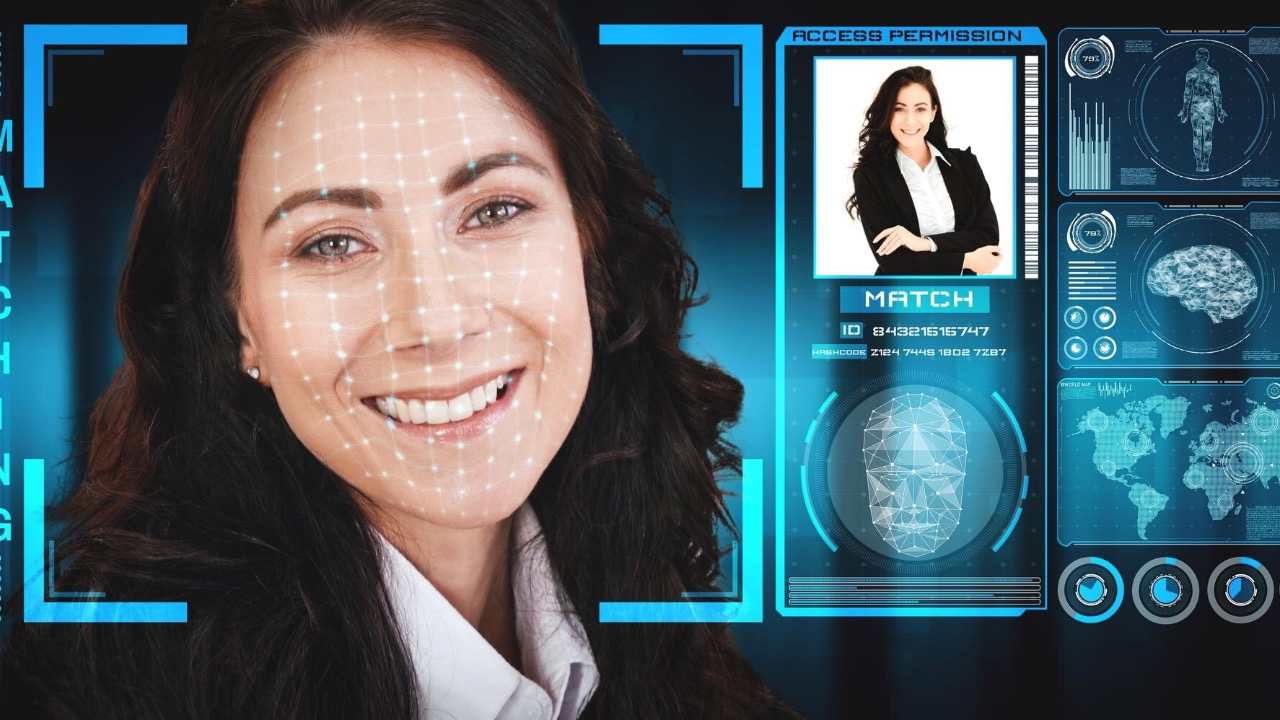
Facial recognition systems compare images of unknown individuals against large databases of photos, often pulled from driver’s licenses, mugshots or other government records. In the Fargo investigation, officers relied on an AI tool that scanned surveillance footage from the bank and produced a match to Lipps, who lived in Carter County in Tennessee.
Video coverage has described how a Carter County woman for two months because of a facial recognition software error. Another segment explains that a Tennessee grandmother says she spent two months in jail for a crime she did not commit, all because of a facial recognition error that labeled her a suspect in a bank fraud case.
Experts have long warned that such systems can be less accurate when analyzing women, older people and people of color. Even when the error rate is low in percentage terms, the sheer volume of images processed can produce many false matches. The Lipps case shows what happens when one of those false positives is treated as near-certain proof.
Legal and policy questions that now follow
As Lipps and her attorney consider next steps, legal advocates are watching for signals about how courts will treat AI-driven identifications. One key question is whether a facial recognition hit should ever be enough, on its own, to justify an arrest warrant. Civil liberties groups argue that it should be treated as an investigative lead that requires corroboration, not as definitive evidence.
Reporting on the case notes that Zoe Sottile wrote to arrest a Tennessee woman for crimes committed in a state she says she has never visited and how officials have so far avoided issuing a direct apology. That reluctance to accept responsibility could influence any future settlement talks and may also shape public opinion about the technology.
Meanwhile, some lawmakers have begun to talk about setting clearer rules for when and how police can use AI facial recognition. Proposals range from outright bans on real-time scanning of crowds to requirements that any AI-generated match be confirmed through traditional investigative work before it reaches a judge. The Lipps case is already being cited in those debates as a concrete example of what can go wrong.

Asher was raised in the woods and on the water, and it shows. He’s logged more hours behind a rifle and under a heavy pack than most men twice his age.