Why some rifles never earn a second season
Some rifles are instant favorites yet never make it past their first real outing. Others, like the M16, stay in service for generations despite early controversy and fierce criticism. The difference between a one‑season wonder and a long‑running workhorse rarely comes down to looks or hype alone; it is a mix of engineering, culture, logistics, and the stories people tell about how a weapon performs when it matters.
Seen through that lens, the question of why some rifles never earn a second season is really about why certain designs fail to win trust from soldiers, gamers, or even anime fans, while others quietly build reputations that keep them in circulation long after their supposed replacement has arrived.
When a rifle becomes a long‑running character
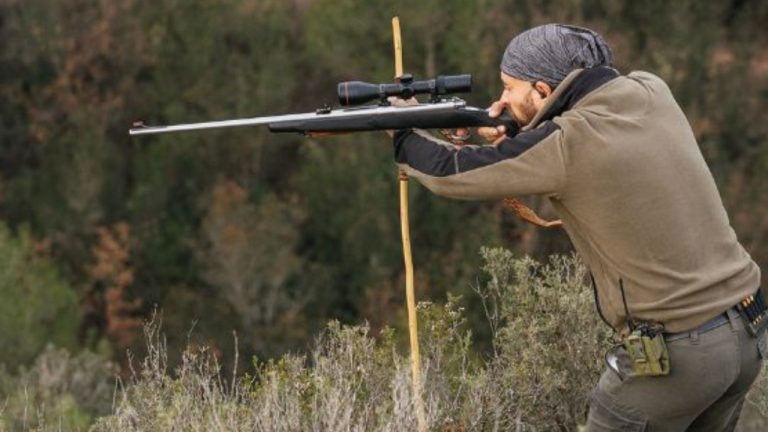
Before looking at the designs that vanish, it helps to understand why a rifle like the M16 has stayed in the cast for so long. The M16 family arrived as a lightweight, high‑velocity alternative to older battle rifles and has remained a central service weapon through multiple conflicts. Reporting on its history describes how the rifle went from a controversial newcomer to a standard that shaped expectations for what a modern infantry arm should be, with its light recoil, modularity, and compatibility with optics and accessories all helping it endure in service for decades, even as new designs appeared in armories and on procurement lists, according to analysis of why the M16 has stayed in uniform.
The same reporting notes that, even as planners signaled the end of the M16 era by moving combat arms forces toward newer platforms and with The Marine Corps adopting successor rifles, the older pattern still lingers in training units and allied forces. That kind of staying power is the opposite of a rifle that never gets a second season. It reflects a design that proved reliable enough, flexible enough, and cheap enough to support that commanders, armorers, and rank‑and‑file troops kept it in rotation even as they complained about its flaws.
In other words, a rifle earns repeat seasons when it becomes part of the institution’s muscle memory. Manuals, drills, spare parts, and tactics all grow around it. Replacing such a weapon is not just a matter of signing a new contract; it means rewriting a script that thousands of people already know by heart.
The curse of the first bad impression
Many rifles that never come back for a second run suffer from a single unforgivable sin: they fail the people who are supposed to trust them. Historical accounts of early M16 fielding in Vietnam describe stoppages, corrosion, and ammunition problems so severe that Congress launched an into why the rifles were failing so much in combat. That inquiry, which unfolded while the Vietnam War was still underway, shows how quickly a weapon’s reputation can become a political problem once troops start reporting jams and malfunctions under fire.
The M16 ultimately survived that scandal, in part because engineers and logisticians changed propellants, cleaning kits, and training. Many other rifles are not so lucky. If a weapon is introduced in smaller numbers, or used by a partner force with less political clout, early failures can doom it before fixes arrive. Once soldiers believe a rifle is unreliable, they may resist carrying it, hoard older models, or use captured weapons instead. Commanders notice that behavior and quietly push for a return to proven designs.
That pattern shows up in popular culture as well. A line in Full Metal Jacket has the character Cowboy offer to trade a pimp “some ARVN rifles, never been fired and only dropped once.” The joke works because viewers recognize the stereotype that Army of the Republic of Vietnam units abandoned their weapons in panic. The gag is not a technical critique of any specific model, but it shows how a rifle’s image can be shaped by stories of how it was used, or not used, in battle.
When that kind of reputation attaches to a particular pattern, it can be nearly impossible to shake. A design that is mocked as “never been fired and only dropped once” is not going to be invited back for another procurement cycle, even if later tests show that the hardware itself was not the main problem.
When the user never buys in
Sometimes the rifle is not the only thing under review. The people carrying it may never fully accept the system that delivered it to them. One account of the South Vietnamese armed forces describes a major problem with the ARVN that had little to do with metallurgy or ballistics and everything to do with motivation. According to a detailed look at that army’s performance, units often lacked cohesion and confidence, which led to scenes where American troops joked that they would “be glad to trade you some ARVN rifles. Ain’t never been fired and only dropped once,” a line that echoed the same stereotype of weapons abandoned in retreat, as recounted in an examination of Here was the.
That kind of institutional weakness can attach itself to the equipment. A rifle associated with a force that collapses or surrenders can be written off as tainted, even if the weapon itself performed adequately. When planners in other countries review that history, they may decide to skip that pattern in favor of a design with a cleaner story, which quietly removes it from contention for future contracts.
On the flip side, a strong user culture can keep a flawed weapon alive. If elite units adopt a rifle and build a reputation around it, their prestige can protect the design from early retirement. The Stoner 63 system, chronicled in technical histories and enthusiast sites, never became a standard infantry rifle despite its innovative modular design, but its association with certain special operations units gave it a cult following that still shapes how collectors and historians talk about it.
Logistics, training, and the cost of a second season
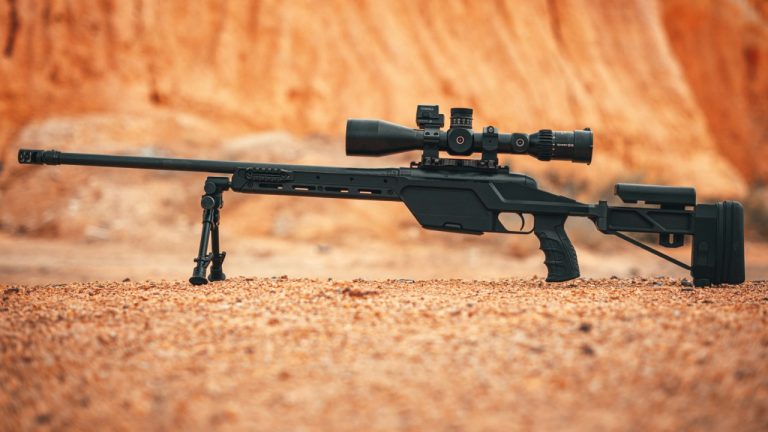
Even a technically sound rifle can fail to earn a second season if it does not fit the rest of the production. Armies and police forces invest heavily in spare parts, armorers’ tools, training courses, and manuals. A new design that requires unique magazines, different cleaning procedures, or specialized maintenance can be expensive to keep alongside existing stock.
For a rifle to survive past its first procurement run, it has to justify those costs. The M16 did that by becoming the baseline for a whole ecosystem of carbines, designated marksman variants, and accessories. As later analysis notes, the same family of weapons could be adapted for different roles, which meant that logistics officers could support multiple mission sets with a single core design, a key factor in why the Stoner 63 system remained a niche curiosity while the M16 line became the default choice.
Weapons that demand a completely separate supply chain are often the first to be cut when budgets tighten. Training is another barrier. If a rifle’s manual of arms is radically different from what troops already know, it requires more time on the range and in classrooms. Commanders may decide that the marginal gains in accuracy or weight are not worth the disruption, particularly if the new weapon does not offer a clear advantage over existing models.
In that sense, the second season is less about novelty and more about compatibility. A rifle that can slide into existing holsters, racks, and doctrine has a better chance of sticking around than a revolutionary design that demands everything change at once.
Lessons from digital battlefields
The same dynamics show up in virtual arsenals. In Fortnite, for example, The Hunting Rifle is described as a Sniper Rifle in Fortnite: Battle Royale that was added in Season 3, according to the Hunting Rifle entry. It offered a distinctive, scope‑less precision experience that rewarded timing and map knowledge rather than pure zoomed‑in marksmanship.
Yet even in a game, weapons can disappear from the meta. One creator’s commentary on the item’s return in a later chapter notes that Fortnite finally unveiled the hunting rifle in Chapter 6 and that players could find it in both rare chests and regular chests, but that it did not feel as dominant as some expected once it came back, as seen in footage of the hunting rifle in action. In that context, the rifle’s “second season” is literal. Its effectiveness is judged not only by raw stats, but by how it fits into evolving game balance, new movement options, and changing player tastes.
Developers face a similar calculation to real‑world procurement officers. A weapon that is too strong can warp the experience, while one that is too weak becomes dead weight in the loot pool. If a rifle does not encourage engaging gameplay, it may be vaulted and never return, no matter how nostalgic some fans feel about it.
Digital platforms also influence how quickly these judgments spread. Tools built for creators, such as the resources described for developers who want to integrate YouTube features into their apps through YouTube APIs, make it easier for streamers and analysts to publish breakdowns of weapon performance. A rifle that underperforms in a popular game can be dissected in slow motion, with charts and overlays, within hours of a patch. That kind of scrutiny accelerates the cycle of hype, backlash, and quiet removal that determines whether a virtual gun gets a second season.
Anime, risk, and why good stories stop at one season
The idea of a “second season” comes from entertainment, and some of the clearest explanations for why a promising project ends after one run come from that world. In one discussion about anime renewals, a commenter named Mar argued that studios do not want to take a financial risk on follow‑up seasons when the numbers do not justify it. According to that conversation, studios are wary because people are very picky or only watch certain anime instead of giving others a try, which leaves solid shows without enough audience to guarantee a return on investment, as summarized in a post about why good anime sometimes stops after one season.
In the same thread, Mar pointed out that Studios are chasing a limited pool of attention and that People often gravitate toward familiar brands or big marketing pushes. That means even strong series can be passed over if they do not fit into a safe formula or if they peak at the wrong moment in a crowded schedule. A follow‑up link that zooms into a specific comment in that discussion captures the blunt logic behind those decisions: Studios don’t want to gamble on a second season when they can focus on new titles that might break out instead.
That same risk calculus applies to rifles. Procurement officers, like anime producers, have limited budgets and political capital. Choosing to fund a second production run of a marginal weapon means turning down other projects. If a rifle’s first season did not deliver clear wins in testing or combat, the safer move may be to cut losses and shift resources to a different design, even if some users liked the original.
There is also a timing factor. The second season of the anime No Guns Life, for example, was slated to premiere on April 9, 2020, but was delayed and instead aired from July 9 to September 24, 2020, due to the COVID‑19 pandemic, according to the episode list. That disruption did not kill the show, but it did illustrate how external shocks can derail even a planned continuation. For weapons programs, similar shocks can come from budget cuts, leadership changes, or sudden shifts in threat assessments that make a once‑promising rifle look outdated before it has a chance to mature.
Marketing, myth, and the ARVN rifle joke
Public perception can be as decisive as test data. The ARVN rifle joke that shows up in both historical writing and films is a case study in how a single line can define an entire category of equipment. In one military history newsletter, readers are invited to Get We Are The Mighty’s Weekly Newsletter and Sign Up to receive stories that include the quip about ARVN rifles that “ain’t never been fired and only dropped once,” a phrase that appears in an article about Here was the which ties the joke to deeper structural issues in that force.
The humor works because it compresses a complex narrative into an image anyone can understand: a pristine rifle lying in the mud, abandoned by a soldier who ran. Over time, that image can overshadow more nuanced assessments of the weapon’s actual performance. Collectors might dismiss a particular model as “the ARVN rifle” without considering its engineering merits. Procurement officials in other countries might avoid it simply to steer clear of the association.
The same process happens in gaming and entertainment. A weapon that becomes a meme for being weak or annoying can struggle to shake that label, even if developers buff it in later patches. A show that is mocked for its animation or pacing may never get the audience needed to justify a second season, regardless of improvements behind the scenes.
Once a narrative hardens, it shapes expectations. Rifles that enter service with a cloud of skepticism, or that become the butt of jokes, have to work much harder to prove themselves. Many never get the chance.
How procurement platforms and data shape the cast list
Behind every decision to renew or retire a rifle is a growing web of data and digital tools. Procurement networks managed by companies like Recurrent, which lays out how it handles user information and business relationships in its terms and conditions and privacy policy, show how modern defense and media portfolios are managed as part of larger ecosystems. Rifles, like media brands, are evaluated as assets within a broader strategy.
Military‑focused platforms such as Recurrent Military aggregate coverage of gear, tactics, and veteran issues, which influences how enthusiasts and decision makers talk about specific weapons. A rifle that earns a reputation for reliability or innovation in those channels may gain momentum for further adoption. One that appears mainly in stories about failure or controversy can find itself quietly sidelined.

Leo’s been tracking game and tuning gear since he could stand upright. He’s sharp, driven, and knows how to keep things running when conditions turn.