15 Surprising Facts About the 1911 Pistol
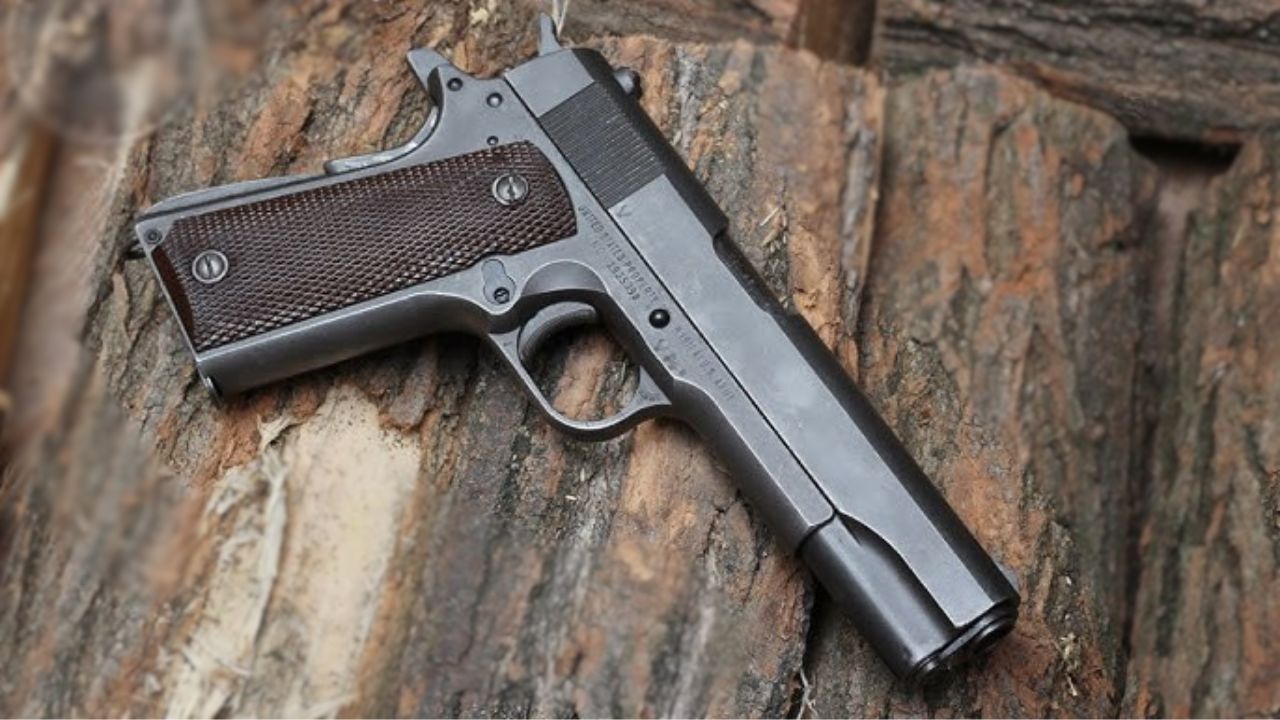
The M1911 pistol is one of the most well-known handguns ever made, but a lot of people only recognize the name without knowing much about its background. Designed over a century ago, it’s still in use today in various forms, which is unusual for a firearm of its age.
What keeps it interesting is how much history is tied to it and how little its core design has changed. Even modern versions still closely follow the original layout, which says a lot about how solid the original concept was. Here are some lesser-known facts that help explain why it’s lasted so long.
It was officially adopted by the U.S. military in 1911
The M1911 pistol entered U.S. military service in 1911 after being designed by John Browning. It replaced earlier sidearms that were considered less effective for combat use.
That adoption marked a major shift toward semi-automatic pistols in the military, setting a standard that influenced handgun design for decades afterward.
It served as the standard U.S. service pistol for 74 years
The 1911 wasn’t just used briefly — it stayed in active military service until 1985. That’s one of the longest service runs for a sidearm in U.S. history.
Its long lifespan shows how reliable it was considered, even as newer designs eventually started to replace it.
It was designed by John Browning
The pistol was created by firearms designer John Browning, who is responsible for many influential weapon designs. His approach focused on mechanical simplicity and reliability under stress.
The 1911 reflects that mindset, with a design that emphasizes function over complexity.
It was originally chambered in .45 ACP
The 1911 was built around the .45 ACP cartridge, which was chosen for its stopping power at the time. That pairing became one of the most recognizable handgun combinations in history.
Even today, many versions still use the same caliber, which contributes to its classic identity.
It uses a short recoil operation system
The 1911 operates using a short recoil mechanism, where the barrel and slide move together briefly before separating. This system was advanced for its time and is still used in modern firearms.
It’s part of what made the design effective and helped it stay relevant for so long.
It was battle-tested in multiple major conflicts
The 1911 saw service in World War I, World War II, Korea, and Vietnam. Few firearms have been used across so many major conflicts over such a long period.
That combat history played a big role in building its reputation for reliability.
It has a single-stack magazine design
The original 1911 uses a single-stack magazine, meaning bullets are arranged in a single column. This limits capacity compared to modern double-stack pistols.
However, it also contributes to a slimmer grip, which many users still prefer today.
It was replaced but never fully retired
Even after being officially replaced by newer service pistols, the 1911 never disappeared completely. It continues to be used by some military units, law enforcement, and civilian shooters.
Its continued presence shows how deeply it’s embedded in firearm culture.
It has one of the largest aftermarket ecosystems
Because of its popularity, the 1911 platform has an extremely large aftermarket. Grips, barrels, triggers, and internal parts can all be customized.
That flexibility has kept it relevant long after newer designs entered the market.
It was considered advanced for its time
When it was first introduced, the 1911 was ahead of many competing designs in terms of reliability and firepower. At the time, semi-automatic pistols were still relatively new in military use.
It helped set expectations for what a service pistol should be.
It influenced nearly every modern handgun design
Many modern pistols borrow concepts from the 1911, even if they don’t look similar. Its operating principles and ergonomics influenced decades of handgun development.
That’s part of why it still feels familiar even compared to newer designs.
It has been used by special operations units
Even after being officially replaced, modified versions of the 1911 have continued to appear in special operations use due to customization options and familiarity among certain shooters.
Its adaptability has helped it stay relevant in niche roles.
It is known for a very distinct trigger feel
The 1911 is often recognized for its single-action trigger system, which many shooters describe as clean and consistent compared to other designs.
That trigger feel is one of the reasons it still has a strong following.
It has been continuously produced for over a century
Few firearms have been in production as long as the 1911. Various manufacturers around the world still produce versions of it today.
That continuous production is rare for any mechanical design, especially in firearms.
It remains popular despite newer designs
Even with modern polymer-frame pistols dominating the market, the 1911 still has a dedicated user base. Many prefer it for its history, feel, and mechanical design.
Its longevity comes down to a mix of performance, familiarity, and tradition that newer designs haven’t fully replaced.

Leo’s been tracking game and tuning gear since he could stand upright. He’s sharp, driven, and knows how to keep things running when conditions turn.