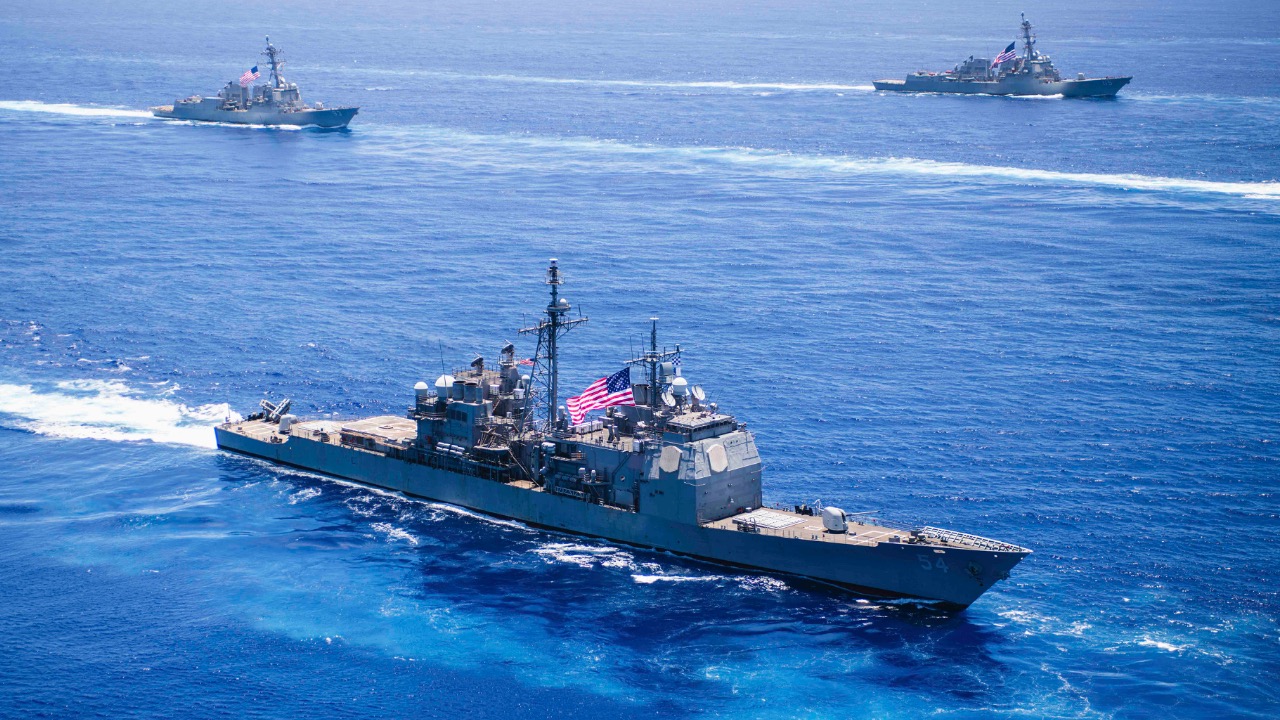
US navy destroyers come under attack in Strait of Hormuz
In the narrow waters of the Strait of Hormuz, where one-fifth of the world’s oil supply passes each year, three U.S. Navy guided-missile destroyers recently faced a direct challenge from Iranian forces. On May 7, the USS Truxtun, USS Mason, and USS Rafael Peralta pushed through the passage toward the Gulf of Oman as part of efforts to keep commercial shipping moving. Iran responded with missiles, drones, and swarms of small boats in what officials described as an unprovoked barrage. American crews and supporting aircraft intercepted every threat. No U.S. vessels took hits, and the Navy answered with targeted strikes on Iranian launch sites and command posts. The episode fits into a pattern of friction that has tested a shaky ceasefire while underscoring the waterway’s enduring strategic weight.
The Destroyers Entered a High-Risk Passage
The three Arleigh Burke-class ships moved in formation through waters barely 21 miles wide at their narrowest point. You see the risk immediately when you consider how little room exists for maneuver against fast-moving threats. Iranian speedboats darted close while missiles and drones approached from multiple angles. Crews stayed alert at their stations, relying on layered sensors and weapons systems honed for exactly this kind of scenario. Air support overhead added another layer of protection, scanning for anything that slipped through initial defenses. The transit succeeded without loss, but the close call reminded everyone how quickly routine passage can turn tense in this corner of the Persian Gulf.
That outcome did not come by accident. Decades of training and investment in Aegis combat systems gave the destroyers the edge they needed. You notice the pattern in similar past incidents where American ships have held their ground through coordinated attacks. The Navy’s approach here stayed measured, focused on safe transit rather than escalation. Still, the event leaves little doubt that future movements will demand the same vigilance from every sailor involved.
Iranian Forces Coordinated Their Assault
Iran timed the attack to coincide with the destroyers’ entry into the strait, launching a mix of assets at once. Small boats raced in to probe defenses while longer-range systems fired from shore. The goal appeared clear: disrupt the passage and send a message about control of the waterway. Officials noted the barrage came without warning, fitting a pattern of responses to U.S. naval activity in the area. You can trace similar tactics in earlier episodes where Iran has tested boundaries with swarms and standoff weapons.
Despite the intensity, the assault failed to score any strikes on the American ships. U.S. forces tracked and neutralized each incoming element in real time. The episode highlights how Iran continues to rely on asymmetric tools in a region where its conventional navy faces clear disadvantages. Yet the willingness to engage U.S. warships directly raises questions about how far Tehran intends to press its position amid fragile talks.
Defenses on the Destroyers Proved Effective
Aegis systems aboard the destroyers locked onto threats within seconds of detection. You appreciate the coordination when you realize missiles and drones were engaged at range while close-in weapons handled any leakers. Supporting aircraft, including helicopters, provided extra eyes and firepower that helped blunt the small-boat runs. The integrated approach left no gaps for the attackers to exploit. Crews reported clear situational awareness throughout, thanks to constant data sharing across platforms.
This success reflects years of investment in networked defense rather than any single piece of hardware. The ships maintained course and speed, refusing to deviate even as the threats multiplied. Their steady progress through the strait demonstrated both technical reliability and crew discipline under pressure. Observers familiar with naval operations see this as a textbook example of how modern surface combatants handle saturation attacks without needing to retreat.
Strikes Followed in Self-Defense
After neutralizing the immediate threats, U.S. forces struck back at the sources. CENTCOM targeted missile and drone launch sites, command centers, and surveillance nodes tied directly to the attack. The response stayed limited to facilities involved in the assault, avoiding broader infrastructure. You see the logic in keeping the action proportional while making clear that attacks on American ships carry consequences. No further Iranian strikes followed in the hours after the exchange.
The self-defense strikes align with standing rules of engagement in the region. They signal that the Navy will protect its vessels without seeking wider conflict. At the same time, the measured reply keeps pressure on those responsible while leaving room for diplomatic channels to remain open. Officials emphasized that the goal remains de-escalation once the immediate danger passes.
Project Freedom Provided the Backdrop
The destroyers’ transit formed part of a larger push to restore safe movement for commercial traffic through the strait. Operation Project Freedom aimed to escort merchant vessels past Iranian threats after weeks of disruptions. You notice how the military effort combined destroyers, aircraft, and unmanned systems to create protected corridors for shipping. The May 7 passage tested that framework under live fire and showed both its strengths and its limits.
Although the operation faced an early pause amid diplomatic progress, the Navy continued select transits to maintain momentum. The destroyers’ role went beyond simple escort duty; they acted as mobile shields for the broader flow of oil and goods. Their success under fire reinforces the value of persistent presence in contested waters, even when political talks appear close to breakthroughs.
The Strait Remains a Vital Chokepoint
Roughly 21 million barrels of oil move through the Strait of Hormuz daily, feeding markets from Asia to Europe. You understand the stakes when you map out how few alternative routes exist for Gulf producers. Any sustained closure sends ripples through global energy prices and supply chains within days. The recent clash underscores why both sides treat the waterway as non-negotiable real estate.
Iran has long claimed the ability to shut the strait at will, while the United States has repeatedly affirmed its commitment to keeping the passage open. The destroyers’ safe transit offers reassurance to shippers, yet the underlying tensions mean insurance rates and routing decisions stay cautious. Commercial operators continue to weigh the risks against the necessity of using this shortest path.
Regional Tensions Continue to Simmer
The exchange arrives against a backdrop of stalled ceasefire negotiations and mutual accusations of bad faith. You see the strain in how quickly naval movements trigger responses from both capitals. Iran maintains its right to defend its interests in the Gulf, while Washington insists on freedom of navigation for all nations. Neither side shows signs of backing down on core positions.
Diplomatic channels remain active, but each incident chips away at trust. The destroyers’ experience illustrates how fragile the current calm can become when military assets enter contested zones. Analysts watch closely for whether this latest flare-up will slow or accelerate talks already underway in multiple capitals.
Future Transits Carry Lingering Uncertainty
Naval planners now face the task of scheduling additional movements while accounting for unpredictable threats. You recognize the challenge in balancing operational needs against the risk of further clashes. The Navy will likely adjust tactics based on lessons from May 7, perhaps increasing air coverage or refining detection thresholds. Shippers, meanwhile, await clearer signals before committing more vessels to the route.
The episode leaves the region in a holding pattern. Successful defense of the destroyers buys time for diplomacy, yet repeated tests could erode the fragile status quo. For now, the focus stays on protecting the flow of commerce without letting isolated incidents spiral into something larger.

Asher was raised in the woods and on the water, and it shows. He’s logged more hours behind a rifle and under a heavy pack than most men twice his age.