12 Calibers That Cut Through Brush Better Than Most Hunters Realize
Brush is unforgiving, yet many classic hunting calibers handle it better than most hunters assume. Real-world testing and big-woods experience show that bullet construction, weight, and velocity matter more than myths about “brush busters.” These 12 specific cartridges, from mild 6.5 G options to hard-hitting 45/70, have proven surprisingly capable when shots thread through limbs and saplings.
1. .30-30 Winchester
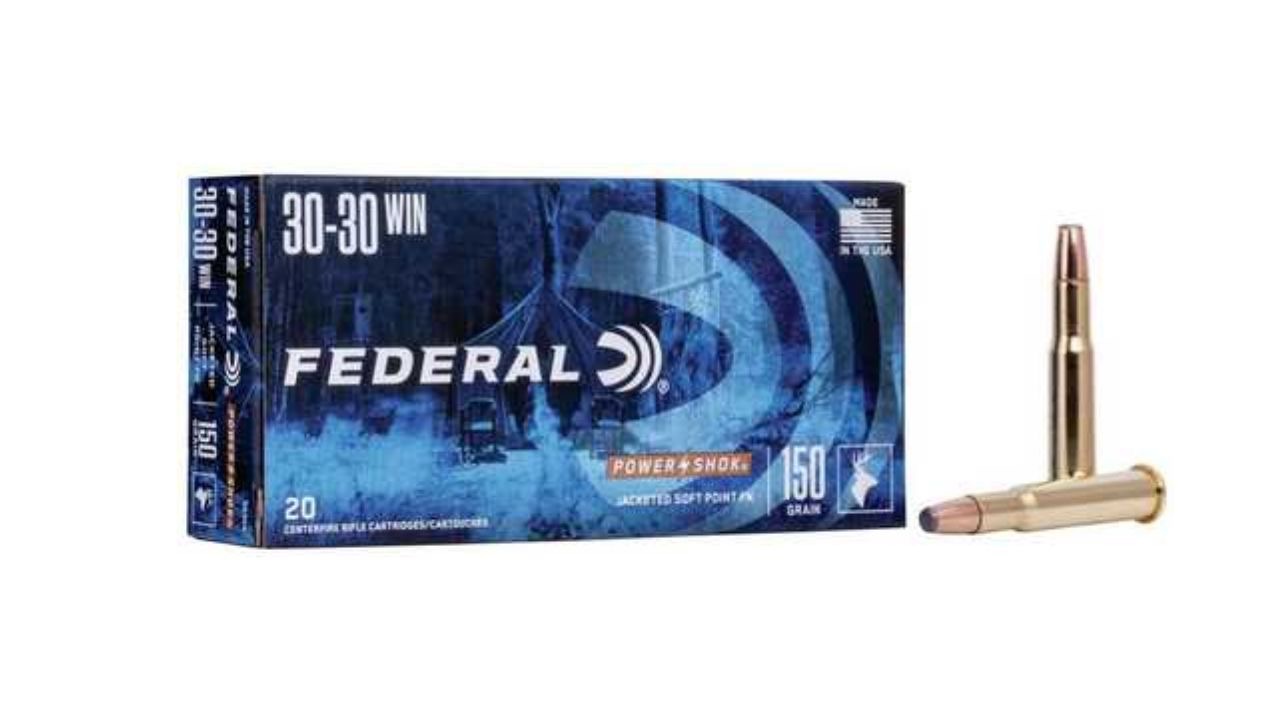
The .30-30 Winchester has long been treated as the default “brush gun” caliber, and modern data still supports its reputation. Controlled testing of Perceptions About Brush found that traditional flat and roundnose .30-30 loads often stayed on target better than many sleek spitzers when they clipped light cover. That does not mean it ignores branches, but it shows why the cartridge remains trusted in thickets where shots rarely stretch past 150 yards.
For deer hunters in dense timber, the .30-30’s moderate recoil encourages fast, accurate follow-up shots, which matters more than chasing mythical “brush busting” power. Its relatively slow, heavy bullets tend to lose speed quickly after deflection, reducing the risk of unpredictable ricochets deep into the woods. That balance of control, terminal performance, and manageable recoil keeps it relevant wherever visibility is measured in yards, not hundreds of yards.
2. .35 Remington
The .35 Remington is frequently cited as a caliber that “makes sense the moment you carry it” in real thickets. Reporting on calibers that punch highlights how a 35 caliber bullet at moderate velocity can track straighter through light cover than many hunters expect. The cartridge pushes relatively heavy projectiles that hold momentum without the fragile, high-velocity behavior of some magnum rounds.
In practical terms, that means the .35 Remington can deliver reliable penetration on whitetails or black bear inside typical woods distances while still being controllable in compact lever rifles. The heavier bullet weight also helps maintain energy if a twig shaves off a bit of speed, although any impact with brush can still cause deflection. Hunters who want a step up from .30-30 without jumping to punishing recoil often find this cartridge a sweet spot.
3. .308 Winchester
The .308 Winchester is usually associated with open-country precision, yet it is also a strong performer in timber when loaded sensibly. Expert guidance on Winchester for deer emphasizes its reputation for accuracy and versatility from dense woods to fields. In brush, that accuracy matters, because a carefully placed shot that avoids limbs is more ethical than relying on any supposed “brush busting” magic.
Testing discussed in advice on whether to fire a 30-30 or .308 Win through brush notes that even this cartridge will deflect if it hits a half-inch twig with the animal 25 yards beyond. The takeaway is that .308 Winchester shines when hunters slow down, pick lanes, and pair the round with controlled-expansion bullets. Used that way, it offers deep penetration on deer, elk, or hogs in cover while keeping recoil manageable in short, handy rifles.
4. .338 Winchester Magnum
The .338 Winchester Magnum is often framed as a long-range elk round, but its controlled-velocity loads can be surprisingly effective in dark timber. Technical guidance on the 338 Winchester Magnum notes that the . 338 Win Mag is not for everyone, yet it is one of the most respected big-game hunting calibers of all time. That reputation comes from its ability to drive heavy bullets that retain momentum through bone and muscle.
In thick conifer or alder tangles where moose and big bears live, those heavy bullets can also be more resistant to minor disturbances from grass or small twigs than lighter, faster projectiles. Recoil is significant, so this cartridge suits experienced shooters who can handle its 31 ft-lbs of energy in a field-ready rifle. For those who can, it offers a margin of performance that matters when large animals appear suddenly at close range in brush.
5. .45/70 Government
The 45/70 Government has an outsized reputation in brush, and recent testing reinforces why. Controlled comparisons reported that the 45 and 70 combination outperformed in penetrating brush and still delivered a bullet flying “straight and true” on target. Coverage of how the 45/70 outperformed in penetrating brush describes how, despite moderate velocity, its heavy bullets stayed stable after passing through light cover.
That behavior makes the 45/70 a favorite in lever rifles carried for close-range shots on big-bodied game in timber. At the same time, other testing cautions that even this cartridge can deflect significantly when it hits substantial branches, so it is not a magic solution. Hunters who respect those limits yet value decisive penetration on elk, moose, or bear in alder choked draws will find the 45/70 among the most confidence inspiring deep woods options.
6. .444 Marlin
The .444 Marlin was designed as a heavy hitting woods cartridge, and it still excels where visibility is limited. A survey of the best deep woods rifles highlights a Marlin 336 in . 444 M configuration, celebrating how the Anniversary Model lever gun pairs fast handling with serious bullet weight. That combination allows hunters to send large diameter projectiles at moderate speeds that are less prone to violent fragmentation if they clip light brush.
In practice, the .444 Marlin delivers energy levels approaching some medium bores while keeping rifle weight and length reasonable for still hunting. Its flat trajectory inside 150 yards is more than adequate for whitetail or black bear in cutovers and cedar swamps. For those who want more punch than .30-30 or .35 Remington without stepping into magnum recoil, this cartridge remains a compelling, if sometimes overlooked, choice.
7. .350 Legend
The .350 Legend was built as a low recoil straight wall option that still works in brushy whitetail habitat. Discussion in a Comments Section about a Ruger American Scout in 6.5 G, 300 Blackout, 7.62 x 39, or 350 Legend notes that all would be viable in brush, especially for hunters sensitive to recoil. The Legend’s straight wall design also fits regulations in many Midwestern states while keeping rifles compact and handy.
Brush testing has shown that .350 Legend bullets, like others, can deflect sharply when they hit limbs, so it should not be treated as a guaranteed “brush buster.” Its real advantage is controllability combined with enough energy for clean kills on deer inside typical woods distances. Hunters who prioritize precise shot placement and fast follow-ups in tangled cover can leverage the cartridge effectively without overestimating its ability to ignore obstacles.
8. 6.5 Grendel
The 6.5 Grendel offers an efficient, low recoil option that still carries serious punch in tight cover. In the same discussion of a Ruger American Scout, hunters singled out 6.5 G as a smart choice for brush because it balances mild recoil with solid terminal performance. Out of short barrels, it can push relatively heavy 6.5 millimeter bullets that maintain stability well at modest velocities.
Those characteristics give the Grendel enough authority for deer and hogs in the 50 to 200 yard window that defines much timber hunting. While any impact with branches can bend a bullet off course, the cartridge’s efficiency encourages hunters to run heavier for caliber projectiles that handle marginal impacts better than ultralight, high speed tips. For those who prefer AR pattern or compact bolt rifles, it quietly ranks among the more practical brush capable calibers.
9. .300 Blackout
The .300 Blackout was engineered for short barrels, which makes it naturally suited to maneuvering in thick cover. Hunters in the same brush rifle pointed to 300 Blackout as another low recoil option that will work great in brush when paired with appropriate bullets. Supersonic loads send .30 caliber projectiles at moderate speeds that are less likely to explode on contact with twigs than some very fast varmint rounds.
Inside 150 yards, that combination can anchor hogs and deer cleanly while keeping muzzle blast and recoil manageable in lightweight carbines. Subsonic hunting loads, when legal, demand extra care with range and expansion but can be valuable around noise sensitive areas. In all cases, the Blackout’s strength in brush lies more in rifle handling and shooter control than in any special resistance to deflection.
10. 7.62x39mm
The 7.62x39mm, familiar from AK pattern rifles, has ballistics that line up closely with classic woods cartridges. A comparison of AR 15 vs AK 47 notes that while both platforms fire intermediate rounds, they do not use the same caliber, and the 7.62 round favors heavier, slower bullets. That profile, combined with rugged rifles, has made it a practical choice for hunters who want a compact, quick pointing carbine in brush.
Soft point hunting loads in 7.62x39mm deliver reliable expansion on deer sized game at modest ranges while keeping recoil low. In tangled cover, the cartridge’s arcing trajectory is less of a drawback because shots are short and angles are steep. Hunters who already own an AK or SKS pattern rifle can often turn it into a capable brush gun simply by choosing quality expanding ammunition and confirming zero at realistic woods distances.
11. .358 Winchester
The .358 Winchester is a classic sleeper cartridge for deep woods hunting. Reporting on brush busting deer guns highlights a 358 at 2,100 fps and notes that even a 500-grain . 458 bullet will be deflected upon contact with a branch, adding that Certainly the heaviest will resist deflection only to a point. That context shows why .358 Winchester is valued: it throws heavy bullets at moderate speed without pretending to ignore physics.
In short action rifles, .358 Winchester offers substantial frontal area and penetration for elk or bear in timber while remaining portable. Its recoil is stout but generally more manageable than some magnum options with similar energy. Hunters who invest in this cartridge often do so precisely because it threads the needle between controllable power and the ability to keep bullets tracking reasonably well through the inevitable light clutter of real woods.
12. .280 Remington
The .280 Remington is not usually the first cartridge mentioned in brush conversations, yet it deserves more credit. Guidance on brush busting deer guns advises hunters to Think twice before grabbing the harder kicking calibers like . 280 Rem and . 30-06, explaining that They add versatility for reaching farther, but recoil can be a tradeoff in tight cover. That same versatility, however, means a .280 can serve both as a woods rifle and an open country tool.
With careful bullet selection, such as controlled expansion 140 to 160 grain projectiles, .280 Remington can handle deer and elk from dark timber to high ridges. In brush, its advantage is a flat trajectory that lets hunters pick small gaps and trust their zero rather than lobbing shots. For those who want one rifle that hikes easily into steep, forested basins yet still reaches across a clear cut, .280 Remington quietly checks more boxes than many realize.

Asher was raised in the woods and on the water, and it shows. He’s logged more hours behind a rifle and under a heavy pack than most men twice his age.