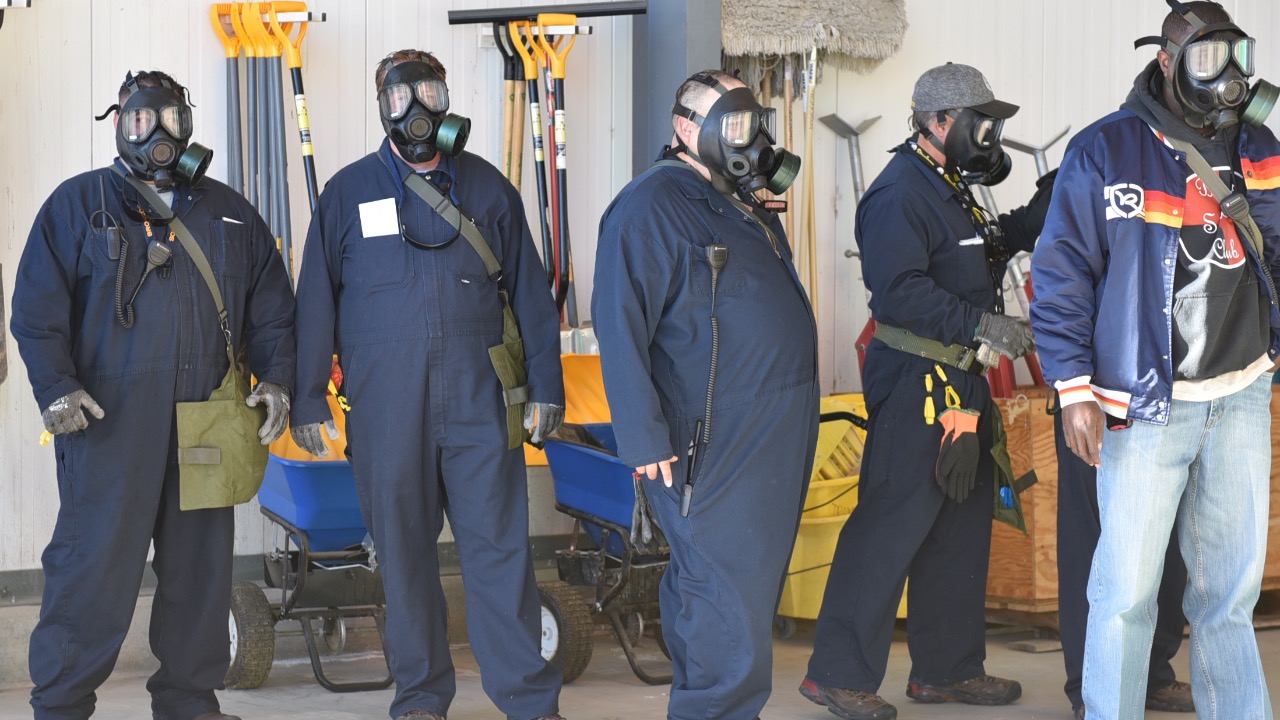
Crews make cautious overnight progress containing chemical leak in Orange County, California
In the heart of Southern California’s suburban sprawl, emergency teams have spent days managing a volatile situation at an aerospace manufacturing site in Garden Grove. A large storage tank holding thousands of gallons of a flammable industrial chemical began releasing vapors last week, forcing authorities to act quickly. You find yourself following updates from officials as they balance cooling efforts with the constant risk of further complications. Progress has come slowly through overnight operations, with teams monitoring temperatures and structural changes while thousands remain displaced from their homes.
The unfolding situation at the facility
Teams responded to the initial report at the GKN Aerospace plant on Western Avenue after vapors started coming from one of the tanks. The chemical involved, used in making plastics and composites, heated up and created pressure that crews have worked to manage with water sprays and barriers. Overnight shifts allowed them to get closer inspections, revealing cracks in the tank exterior that changed their approach to containment.
This development gave responders a clearer picture of the tank’s condition. They adjusted strategies based on direct observations rather than remote readings alone. You watch as these measured steps help reduce immediate threats, even as the work continues around the clock in coordination with specialists from across the region.
Impacts on nearby communities
Residents across Garden Grove and parts of neighboring cities like Cypress, Stanton, and Anaheim received evacuation notices that affected around 40,000 people. Many left with minimal belongings, heading to shelters or staying with family farther away while officials monitored air quality and potential spread. Schools closed temporarily, and daily routines shifted as the area quieted under the orders.
Local leaders have coordinated with state resources to support those displaced. You see how communities pull together during these alerts, with neighbors checking on one another and services expanding to meet basic needs. The focus remains on safety without unnecessary alarm as conditions evolve.
Technical challenges in containment
The tank, originally holding up to 34,000 gallons with several thousand remaining, presented difficulties because of damaged valves that blocked easy access to the contents. Crews set up sandbag barriers around the site to catch any potential release and prevent it from reaching drains or waterways. Overnight missions involved careful entry to assess pressure and temperature shifts directly.
Experts from the manufacturer and hazmat units collaborated on options, including continued cooling and pressure relief planning. You notice the deliberate pace they maintain to avoid sudden changes that could worsen the scenario. These efforts reflect years of training applied to an uncommon industrial challenge.
Official responses and coordination
California’s governor declared a state of emergency to bring in additional support for responders and shelter options. Fire authority leaders provided regular briefings, updating on temperature trends and the discovery of structural issues like the tank crack. Coordination across agencies ensured clear communication lines remained open for operational needs.
Public updates emphasized staying away from the area and avoiding speculation. You follow how these channels help keep everyone informed while teams focus on the work at hand. State and local partnerships have strengthened the response as the situation stabilizes incrementally.
What comes next for the area
Crews continue monitoring for any signs of change while preparing contingencies for different outcomes. The cautious overnight work has lowered some risks, though full resolution will take more time and analysis. Residents await word on when they might return, balancing caution with the desire for normalcy.
Environmental teams stand ready to handle any release, and health officials track possible effects from earlier vapors. You sense the broader lessons emerging about preparedness in dense suburban zones near industrial sites. Recovery planning has already started alongside the active containment.
Staying informed during the response
Authorities advise relying on official sources for the latest details rather than unverified tips or rumors. Evacuation zones may adjust based on progress, and support services remain available for those affected. The emphasis stays on patience as specialists work through complex engineering decisions.
This incident highlights the coordination required when industrial incidents occur near homes. You appreciate how responders prioritize measured advances over quick fixes. Ongoing updates will continue shaping the path forward for everyone involved.

Asher was raised in the woods and on the water, and it shows. He’s logged more hours behind a rifle and under a heavy pack than most men twice his age.