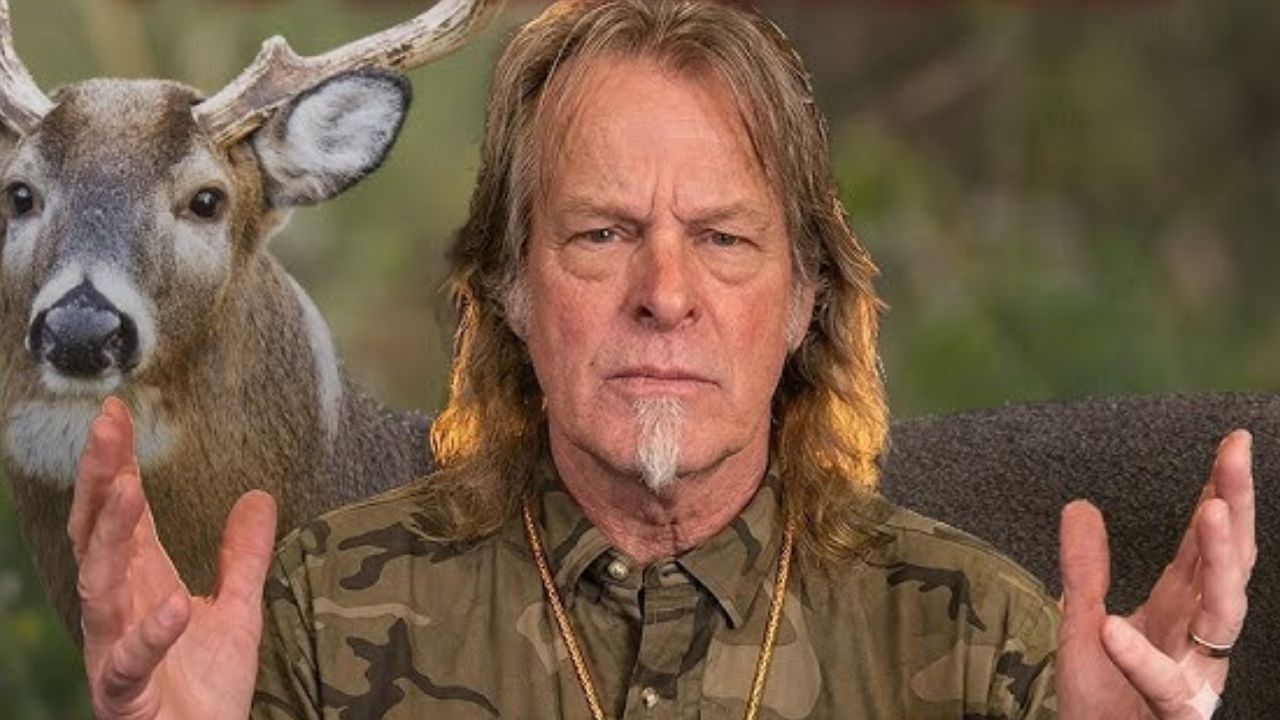
Ted Nugent: ‘You can ban hunting all you want – I will still go hunting’
Ted Nugent has spent decades casting himself as both rock star and hunting evangelist, and his latest vow that “you can ban hunting all you want, I will still go hunting” fits neatly into that persona. The remark is less a casual boast than a statement of defiance that connects his celebrity, his politics and a long-running fight over who gets to regulate wildlife and how far those rules should reach.
That stance lands at a moment when state legislatures, wildlife agencies and advocacy groups are clashing over hunting seasons, predator control and how to treat invasive species. Nugent has turned those fights into a personal battleground, arguing that government regulators and animal-rights activists are threatening a way of life he insists he will not surrender.
What happened
The latest flashpoint for Nugent’s rhetoric is a proposed constitutional amendment in Louisiana that would declare hunting and fishing a fundamental right. He has publicly backed the Louisiana bill, appearing alongside supporters who argue that enshrining hunting in the state constitution would shield it from what they describe as future attacks by animal-rights campaigns and shifting political winds. In that context, his promise to keep hunting even if lawmakers tried to ban it is aimed squarely at energizing those who want to lock such protections into law, and it tracks with his broader push for constitutional guarantees around hunting and fishing.
Nugent’s absolutist tone did not appear out of nowhere. For years he has presented himself as a kind of outlaw traditionalist, a Detroit-born guitarist who built a second career as a high-profile hunter, television host and activist. Long profiles have traced how he moved from the rock stages of the 1970s into a life centered on ranches, guided hunts and political advocacy, positioning himself as a spokesman for what he calls “backstrap culture.” A detailed account of his life describes how he turned his enthusiasm for deer, hog and predator hunting into books, television shows and a speaking circuit that treats the outdoors as a cultural identity as much as a pastime, with his Texas ranch serving as a personal stage set for that identity.
His confrontations with wildlife agencies have been just as central to that story as his stagecraft. In Michigan, Nugent clashed with the Department of Natural Resources after a sting operation involving wild pigs on one of his properties led to charges related to illegally possessed feral swine. The case, which centered on whether certain exotic or feral animals could be kept or moved under state law, drew national attention because it pitted a celebrity hunter against regulators tasked with containing an invasive species that can devastate crops and native habitats. Nugent responded by accusing officials of overreach and political targeting, turning the wild pig sting into a rallying point for his claim that bureaucrats were criminalizing ordinary hunters.
The tension resurfaced when Nugent blasted the Michigan Department of Natural Resources over proposed changes to deer hunting rules. He attacked state officials over bag limits, season structure and chronic wasting disease policies, telling them to “get the hell out of our way” and portraying the agency as an obstacle to sound wildlife management rather than a guardian of the herd. His critique framed the DNR as disconnected from hunters on the ground, and his comments about deer hunting regulation mirrored his broader argument that hunting decisions should be driven by local knowledge and personal freedom.
Across interviews and public appearances, Nugent has repeated that hunting is not only a sport but a moral duty tied to conservation and self-reliance. In one extended conversation about his lifestyle, he described daily archery practice, strict game-meat diets and a belief that responsible hunters do more for wildlife than distant policymakers or online activists. Those remarks, presented as part of a larger portrait of his routines and beliefs, show how he blends personal anecdotes with sweeping claims about American culture, using his own habits as proof that hunters like him are the real conservationists.
Why it matters
Nugent’s vow to keep hunting regardless of bans matters because it crystallizes a deeper argument about law, identity and the limits of civil disobedience. On one level, his comment plays as political theater, a way to dramatize opposition to what he sees as creeping restrictions on firearms and wildlife use. On another, it edges toward a rejection of democratic decision-making in wildlife policy, hinting that some rights are so fundamental that he would ignore any law that tried to curtail them.
That framing resonates with a segment of hunters who view regulations not as technical tools for managing animal populations but as cultural threats. For them, talk of bans, tighter seasons or new licensing rules can feel like an attack on family traditions and rural economies. Nugent amplifies that sentiment by casting hunting as a birthright that predates modern government, then pairing it with a broader skepticism of environmental regulation and urban political power. His Louisiana advocacy, with its push to define hunting as a constitutional right, fits into a pattern where he encourages supporters to see policy debates as existential battles rather than routine adjustments to game management.
Wildlife agencies, by contrast, tend to frame their work in terms of population science, disease control and habitat protection. The Michigan DNR’s moves on feral swine and deer management, whether popular or not, were justified as responses to concrete threats such as agricultural damage and chronic wasting disease. When Nugent attacks those efforts as illegitimate or tyrannical, he invites his audience to distrust the very institutions that collect data and set seasons. His defiance around the feral pig enforcement and his rhetoric on deer rules feed a narrative in which regulators are cast as enemies rather than partners in conservation.
The stakes are not only philosophical. If large numbers of hunters adopt Nugent’s view that unpopular regulations can simply be ignored, enforcement becomes more difficult and the biological goals behind those rules become harder to achieve. That risk is especially acute in areas where invasive species like feral swine can explode in number if even a minority of landowners refuse to cooperate with removal efforts. It also complicates efforts to contain diseases that move silently through deer herds and can be slowed only by carefully structured harvests and testing regimes.
Nugent’s celebrity also keeps hunting in the broader cultural conversation. Profiles of his career, including accounts of his outspoken political speeches and his life on a Texas ranch, have introduced nonhunters to debates over high-fence operations, exotic game and the ethics of trophy hunting. A narrative that follows his journey from rock tours to bowhunting evangelism shows how he has used his platform to argue that killing and eating wild animals is more ethical than relying on industrial agriculture, a claim he repeats in interviews and books that reach far beyond traditional hunting media. In that sense, his defiant line about hunting bans is part of a larger effort to reframe the public image of hunters as principled and environmentally engaged, even as many critics see his style as inflammatory.
For lawmakers, Nugent’s involvement can be a double-edged sword. His support for measures like the Louisiana amendment can energize core voters who already care deeply about hunting rights, but it can also polarize debates that might otherwise stay technical. Some legislators may welcome his ability to draw attention and donations, while others may worry that his rhetoric about ignoring laws could alienate moderates who support hunting but also value orderly regulation.
What to watch next
The immediate test for Nugent’s message will come in statehouses and at ballot boxes. The fate of the Louisiana constitutional amendment will signal how receptive voters are to the idea that hunting and fishing require explicit, elevated protections. If the measure passes comfortably, it could encourage similar efforts in other states, with Nugent and aligned groups pointing to Louisiana as proof that their warnings about future bans resonate with the electorate.

Leo’s been tracking game and tuning gear since he could stand upright. He’s sharp, driven, and knows how to keep things running when conditions turn.