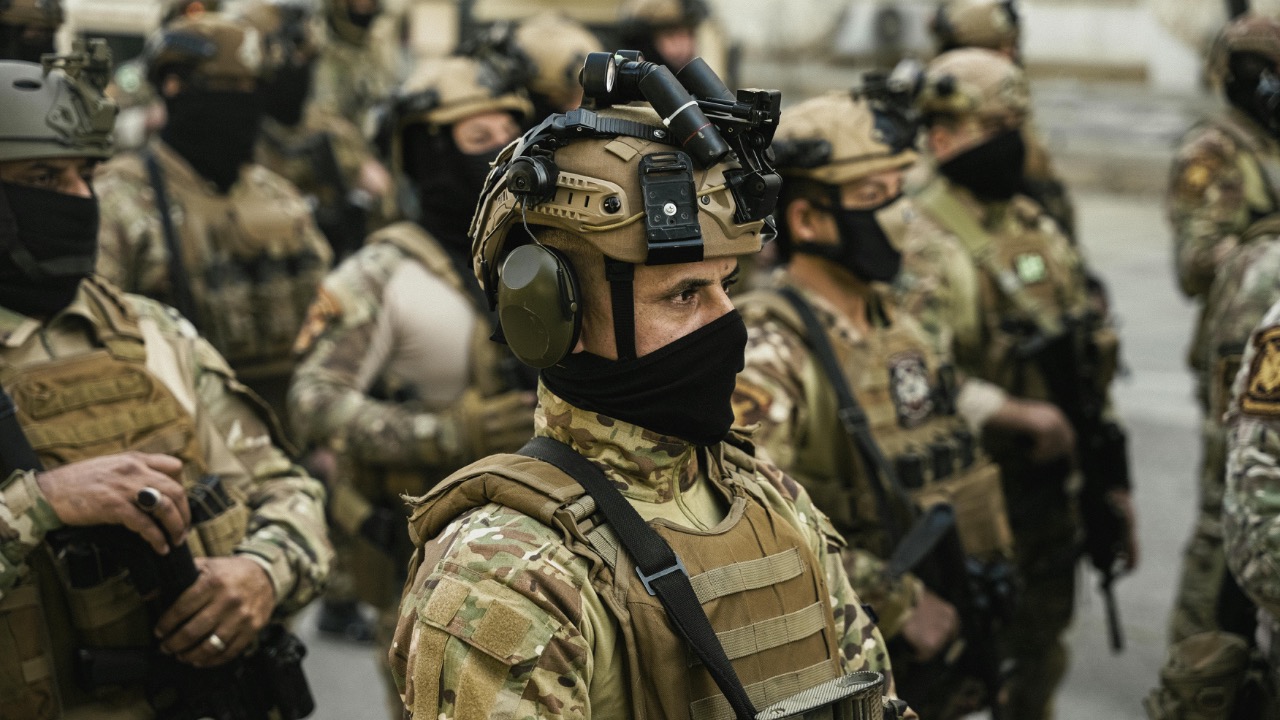
US special operations commander says next war will require military to ‘creatively destroy’ outdated training methods
America’s top special operations commander is warning that the next major conflict will punish any military that trains for yesterday’s wars. He is calling for the Pentagon to “creatively destroy” outdated methods and rebuild training around artificial intelligence, long-range precision weapons, and information warfare that moves at machine speed.
His message is blunt: if U.S. forces keep rehearsing the same drills that defined the post‑9/11 era, they risk falling behind adversaries that are already experimenting with autonomous systems and battlefield data at scale.
What happened
U.S. Special Operations Command leader General Bryan Fenton used a recent public appearance to argue that the American military must overhaul how it prepares troops for combat. He described a need to “creatively destroy” legacy training routines that were designed for counterinsurgency campaigns and smaller raids, and replace them with programs built for contested skies, electronic attack, and algorithm-driven targeting. According to his remarks, the current pipeline still leans heavily on live-fire ranges, static classroom instruction, and long checklists that assume the United States will control the air, the spectrum, and the pace of battle.
Fenton’s warning comes as the Pentagon studies lessons from Ukraine and the Red Sea, where cheap drones, commercial satellites, and long-range missiles have made it harder for any force to hide or mass troops. He pointed to the way Russian and Ukrainian units use small quadcopters to spot artillery targets within minutes, and how that tempo compresses the time available for human decision makers. In his view, a training system that still centers on multi-day planning cycles and scripted exercises cannot prepare operators for a fight in which sensors and shooters are linked in near real time.
He also highlighted the spread of artificial intelligence into both friendly and hostile arsenals. Fenton cited U.S. experiments with AI-enabled targeting and logistics, then contrasted them with reports that rivals are testing autonomous loitering munitions and machine-generated deception campaigns. The commander argued that special operations forces must learn to work with AI tools as teammates, not just as background software, and that this shift requires a different kind of instruction and evaluation. As he put it in one discussion, the force has to be willing to break cherished routines and “creatively destroy” the training habits that slow adaptation, a phrase captured in a recent account of his.
Inside Special Operations Command, that rhetoric is already shaping experiments. Fenton described scenario-based exercises that inject surprise drone swarms, GPS jamming, and deepfake videos into what used to be straightforward hostage rescue or direct-action drills. In some cases, instructors are shifting from grading checklists to grading how quickly teams recognize that their communications are compromised or that an AI-generated audio clip is trying to spoof their leadership. The commander framed these changes as early steps, not a finished overhaul, and said the broader Department of Defense will have to move in the same direction if it wants to stay ahead of peer adversaries.
Why it matters
Fenton’s comments land at a moment when the Pentagon faces a strategic pivot. For two decades, U.S. forces optimized for counterterrorism raids in places like Mosul and Helmand. The next war that planners describe looks very different: a high-end clash with a technologically sophisticated rival, potentially in the Western Pacific or Eastern Europe, where hypersonic missiles, cyberattacks, and massed drones could hit U.S. bases and networks from the opening minutes. Training that still assumes permissive airspace and uncontested communications risks creating a dangerous gap between what units practice and what they will face.
Special operations forces sit at the sharp edge of that problem. They are often first into new theaters and depend on agility rather than sheer mass. If their preparation does not reflect modern threats, the United States could lose its most flexible tool for shaping crises before they spiral. Fenton’s call to “creatively destroy” legacy methods is therefore more than a slogan. It is a signal that the community that once drove innovation after 9/11 now sees itself at risk of stagnation unless it tears up parts of its own playbook.
The commander’s focus on AI and data-driven operations also reflects a broader competition with China and Russia. Both rivals are investing heavily in machine learning for intelligence analysis, target recognition, and electronic warfare. If U.S. troops are not accustomed to working with AI assistants that can, for example, fuse drone feeds, satellite imagery, and intercepted communications into a single picture, they may be slower to act than opponents who train that way from the start. Fenton’s argument is that training must normalize this human-machine teaming so that it feels as natural as using a radio.
There is also a cultural dimension. The U.S. military prides itself on checklists, standard operating procedures, and hard-earned doctrine. Those habits save lives, but they can also make institutions resistant to change. By using language like “creative destruction,” Fenton is borrowing from business theory that treats innovation as a process of deliberately breaking old models so that better ones can emerge. Applied to training, that might mean retiring beloved field courses that no longer match real threats or accepting that some skills, such as manual map reading, will get less emphasis than coding, data literacy, or counter-drone tactics.
For rank-and-file operators, the shift could change daily life. Instead of repetitive marksmanship drills on familiar ranges, they might spend more time in instrumented kill houses where every movement is tracked, then reviewed with AI-assisted feedback. Rather than static PowerPoint lectures on cyber hygiene, they could face live red-team attacks on their devices during exercises, with performance measured by how quickly they detect and contain intrusions. Fenton’s message suggests that the measure of a well-trained unit will be less about how perfectly it follows a script and more about how creatively it responds when the script falls apart.
What to watch next
The key test for Fenton’s vision will be whether Special Operations Command can scale its experiments into lasting institutional change. That will require money, time, and political backing. Budget decisions over the next few years will show whether the Pentagon is willing to shift resources from traditional facilities, such as large live-fire ranges, to more flexible training infrastructure like virtual and augmented reality suites or AI-enabled simulation centers. Congress will also have a say, since lawmakers often protect legacy programs that benefit bases in their districts.
Another indicator will be how quickly training curricula incorporate lessons from current conflicts. If courses for Green Berets, Navy SEALs, and Air Force special tactics airmen begin to feature regular modules on drone swarms, space-based targeting, and information operations that use deepfakes and botnets, that will suggest Fenton’s message is taking hold. Observers will be watching for signs that young operators are being taught to script simple tools, interpret data dashboards, and question the integrity of every signal they receive, skills that matter in a battlefield saturated with sensors and deception.
Allies and partners are part of the picture as well. U.S. special operations units train closely with counterparts from countries such as the United Kingdom, Australia, Poland, and Japan. If Fenton’s push leads to new joint exercises that stress AI-enabled command systems, contested logistics, and combined drone operations, those events will help spread the new training philosophy beyond American forces. Conversely, if multinational drills remain focused on traditional small-unit tactics without the digital layer that defines modern combat, it will suggest that the overhaul is lagging.
There are also risks to watch. Moving too fast toward automation could leave some troops overreliant on software that can be spoofed or hacked. Training that leans heavily on virtual environments might miss the physical and psychological stress of real terrain, weather, and danger. Fenton’s concept of “creative destruction” will have to balance innovation with the fundamentals that keep units disciplined and resilient when technology fails. How instructors strike that balance, and how they measure success, will shape whether the next generation of operators is more adaptable or simply more distracted by gadgets.

Leo’s been tracking game and tuning gear since he could stand upright. He’s sharp, driven, and knows how to keep things running when conditions turn.