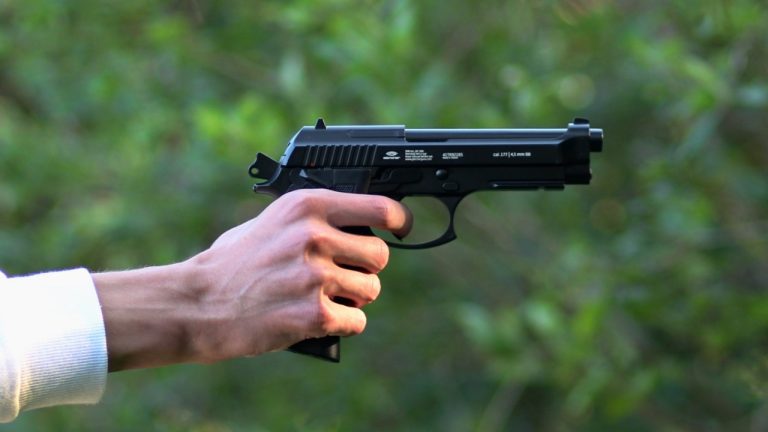
Vehicle storage habits that quietly violate updated weapons laws
Across the country, gun owners are discovering that the way they have always left a pistol in the console or a rifle on the backseat is no longer just risky, it can be illegal. Legislatures are rewriting storage rules with a focus on unattended weapons in cars, and the quiet shift means some everyday habits now fall on the wrong side of updated weapons laws. I want to walk through the most common vehicle storage practices that look normal in a parking lot but can expose a driver to criminal charges, civil liability, or both.
These changes are not confined to one region or political culture. From Colorado to Michigan and Florida, lawmakers are tightening definitions of “secure” storage, expanding what counts as a firearm, and tying penalties to what happens when a gun left in a vehicle ends up in the wrong hands. The result is a patchwork of rules that demand far more from gun owners than simply locking the car doors.
From glove box to locked box: how Colorado rewrote the rules

Colorado offers one of the clearest examples of how routine storage habits have been overtaken by statute. Under House Bill 24-1348, a firearm left in an unattended vehicle generally must be secured in a locked, hard sided container and kept out of plain sight, a standard that goes well beyond tossing a handgun in the center console. The law is explicit that simply locking the doors is not enough, and it applies whether the vehicle is parked in a driveway, a public lot, or outside a trailhead.
Local agencies are already warning residents that, starting in Jan, leaving a gun loose in the cabin or visible on a seat can be treated as a violation. The Louisville, Colorado Police Department has told drivers that Firearm Storage in Vehicles Starting January must meet the new standard, or it will be illegal to leave a firearm in a vehicle unless it is properly secured. For owners who grew up treating the truck as an extension of the gun safe, that is a fundamental change in what the law expects every time they step away from the driver’s seat.
Why “just locking the doors” is no longer a legal shield
For years, many gun owners assumed that if a vehicle was locked, they had done their part. New statutes are dismantling that assumption by focusing on inaccessibility, not just nondischargeability. In a detailed critique of a recent storage bill, one legal analyst in Jul underscored that the core requirement is that an unauthorized person cannot readily access the weapon, which is a higher bar than simply preventing it from firing, and that shift is reshaping how courts may view a gun left in a car that is easy to reach but technically unloaded, as discussed in a video at Jul.
Colorado’s approach illustrates the point. A policy explainer aimed at residents notes that, Starting January, Colorado gun owners must use a locked container in unattended vehicles to reduce the surge in firearm thefts from cars, and that a visible gun in a console or door pocket is exactly what thieves target first. The guidance from Colorado emphasizes that the law is designed to cut off that easy access, not to excuse owners because a window had to be smashed before the gun was taken.
Michigan’s child access focus and the unattended car problem
Michigan has taken a different route, tying storage duties to the risk that children will encounter a weapon left behind. The state’s Department of Health and Human Services, or MDHHS, has highlighted a new firearm storage safety law that requires gun owners to secure weapons in locked containers or with locking devices when minors are likely to be present, a standard that applies in homes and can extend to vehicles parked where children live or play. In its public messaging, MDHHS has framed the law as a way to prevent youth injuries and deaths linked to unsecured guns.
Michigan’s Public Act 17 of 2023 goes further by spelling out what must happen when a weapon is left unattended. State officials have explained that Michigan‘s Public Act requires individuals to keep unattended weapons unloaded and locked with a locking device or stored in a locked container, which plainly covers a gun left in a parked car. A parent who runs into a store while a child waits in the backseat next to a loaded handgun on the floorboard is no longer just making a bad safety call, they may be violating a specific statutory duty.
Florida’s evolving standards for guns in cars
Florida has long regulated how firearms can be stored on premises and in vehicles, and recent debates suggest that standard is tightening. The core rule in the Florida Statutes is that a person who stores or leaves a loaded firearm on a premise under his or her control must keep it in a locked box or secure location if a minor is likely to gain access, unless it is carried on the person. That premise language has been interpreted to include vehicles parked at home, which means a handgun left in an unlocked glove box in the driveway can trigger liability if a child retrieves it.
Lawmakers are also considering more explicit vehicle rules. A proposal tracked as FL S0256 would require handguns in private vehicles and vessels to be secured in locked containers or with locking devices, with the stated goal of reducing gun thefts and improving public safety. The bill analysis notes that the Summary This measure introduces new requirements for storing handguns in private vehicles, which would make the casual habit of leaving a pistol under the seat without any lock a potential offense even when no child is involved.
Console carry, dash holsters and the “rapid access” trap
One of the most common modern habits is staging a handgun for quick draw while driving, then forgetting that the same setup becomes unattended storage the moment the driver steps away. Training groups that focus on vehicle safety warn that so called console vaults or simple drop in compartments can leave a gun very easy to access, which is exactly what thieves and curious teenagers exploit. A guide on securing firearms in cars lists several Things to avoid, including relying on thin metal console inserts or mounting a gun under the vehicle’s dashboard where it is visible and reachable from outside.
At the same time, the concealed carry industry markets products that encourage drivers to mount holsters in the cabin for speed. One popular brand notes that Another solution is to install a holster mount inside the vehicle, securing a holster beneath the dashboard or on the center console for rapid access, often faster than waistband carry, as described in Another discussion of driving with a firearm. A separate review of a driver defense holster boasts that, While driving, the author either uses a duty holster and belt or a strong side holster, but finds that drawing from a dedicated vehicle holster is very quick if you are seated, as noted in a piece that begins, While. The legal problem arises when that same holster is left loaded and exposed after the driver exits, turning a self defense setup into a potential storage violation.
Frames, receivers and parts: when “not a gun” is still a firearm
Another quiet shift in weapons law is the expansion of what counts as a firearm for storage purposes. In Massachusetts, for example, updated definitions treat a frame, receiver, or even an unfinished receiver as a firearm that must be stored in a safe or locked container when not in use. A legal analysis of improper storage charges warns about the Frame & Receiver Trap, explaining that Under the revised statute, a bare frame or receiver has to be stored in a safe just like a complete gun, which surprises owners who thought parts could be left on a workbench or in a vehicle without consequence, as detailed in a piece that highlights the Frame Receiver Trap Under the law.
Manufacturers echo that caution in their own safety materials. A consumer instruction guide for a COMPLETE AR15 M4A1 CLONE LOWER RECEIVER tells buyers to Ensure that all firearm components are stored securely and out of reach of children and unauthorized users, and to Always follow local laws and regulations regarding firearm ownership and modifications. That language, found in a document that repeats the words Ensure and Always, underscores that even a stripped lower receiver left in a truck bed or behind a seat can be treated as an unsecured firearm under modern statutes.
Police, militias and the myth that “everyone does it this way”
Some gun owners justify casual vehicle storage by pointing to law enforcement or militia style groups that appear to operate with weapons constantly at hand. Yet even police agencies are grappling with the fallout from guns stolen out of cruisers. An analysis of missing service weapons notes that officers have had firearms taken from the trunk, the middle console, or the glove box when they left them unattended, and urges departments to Plan Your Route Many steps ahead to avoid parking in places where a thief can quickly smash a window and grab a gun from the middle console or glove box, as described in a piece that opens with the phrase Plan Your Route.
On the civilian side, militia style groups that patrol the southern border often insist they are not breaking the law because they see themselves as conducting civil patrols in open areas. A research paper on these organizations notes that Most insist they are not breaking the law by conducting their civil patrols, and that many of their actions fall within a legal gray area in municipal, state, and federal laws, as examined in a study that highlights the word Most. But even if their patrols skirt criminal liability, the same storage rules apply when they leave rifles in trucks at motels or staging areas, and updated statutes give prosecutors more tools to treat sloppy vehicle storage as a standalone offense.
What counts as “securely encased” when you park
Even in states that allow broad vehicle carry, the details of what counts as secure storage are tightening. In Florida, for example, drivers often rely on the rule that a firearm can be kept in a glove box or snapped case, but newer guidance stresses that long guns such as rifles and shotguns must also be securely encased when transported in a vehicle. A dealership backed explainer on driving with firearms in Florida notes that Yes, specific regulations do apply to long guns versus handguns, and that Long guns must be securely encased when transported in a vehicle, language that appears in a piece using the words Yes and Long to distinguish the categories.
Those definitions matter when the engine is off. A rifle laid across the backseat of a pickup at a gas station may not be “securely encased” even if the doors are locked, and a shotgun in a soft case that is unzipped or easily opened could be treated as accessible to anyone who breaks into the cab. Colorado’s vehicle law, explained in a news feature on how to carry a handgun in a car, makes a similar point by requiring that handguns in unattended vehicles be stored in locked hard sided containers and kept out of sight, and clarifying that this includes RVs and that Other types of firearms that are not handguns must be stored similarly, even if they can be kept in soft sided containers, as described in a piece that notes Dec and Other details. The practical takeaway is that a case or bag is not automatically compliant unless it is closed, locked, and placed where it cannot be easily seen or grabbed.

Leo’s been tracking game and tuning gear since he could stand upright. He’s sharp, driven, and knows how to keep things running when conditions turn.