
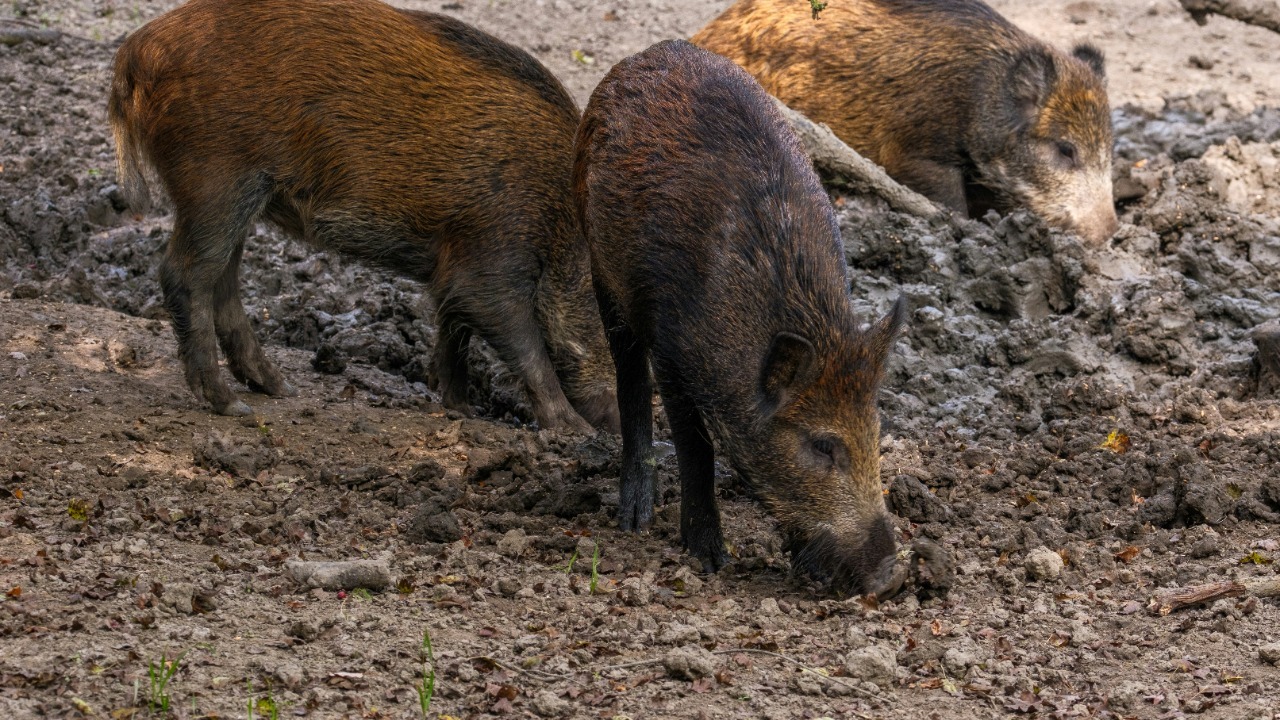
Why feral hog damage costs states millions each year
Feral hogs are no longer a niche nuisance tucked away in remote swamps. They are a fast‑breeding, highly mobile invasive species that now rip up fields, forests, and suburbs across much of the United States, leaving a repair bill that runs into the billions. States are paying for ruined crops, broken infrastructure, disease surveillance, and aggressive control campaigns, yet the animals keep spreading into new counties and new neighborhoods.
The headline numbers are stark, but the real story is how those costs compound: every uprooted pasture, every damaged irrigation line, every diseased carcass left in a creek forces landowners and agencies to spend again the next season. I see the same pattern in the data from agriculture departments, wildlife biologists, and economists, all pointing to the same conclusion: feral hog damage is a structural budget problem, not a one‑off disaster.
The scale of the feral hog invasion

To understand why the price tag is so high, it helps to start with the sheer scale of the invasion. Wild pigs, or Sus scrofa, are a non‑native species that combine the strength of Eurasian boar with the fertility of domestic swine. Earlier research on expansion trends shows that feral swine numbers have climbed over recent decades, bringing them into much closer contact with commercial agriculture across the United States. That expansion is not just a biological curiosity, it is the foundation for the mounting economic losses that state agencies now track.
Wild pigs are now entrenched across North America, with populations in at least 35 states and a growing footprint in Canada and northern Mexico. In many regions, today’s wild pigs are a mix of escaped domestic swine and Eurasian
Why the damage bill runs into the billions
Economists who specialize in invasive species now treat feral hogs as a textbook example of how ecological problems become fiscal crises. National estimates put agricultural losses alone at more than $1.6 billion a year, and a closer look at those figures shows how varied the damage really is. In one breakdown of farm impacts, Additional losses include $193 million in pastureland destruction and $122 million in lost income when producers change planting plans to avoid hog pressure. Those are not abstract numbers, they are line items in state‑level farm income reports and tax receipts.
Zoom in further and the state‑by‑state burden becomes even more vivid. In South Carolina alone, feral swine inflict some $115 million in damages on agricultural industries each year, a figure that has helped earn them the label of “ecological zombies.” When I compare that $115 m hit in a single state to the national totals, it is clear why budget officers in farm states now treat feral hogs as a recurring natural disaster, one that does not wait for hurricane season.
How hogs tear up crops, pastures, and profits
On the ground, the costs start with the soil itself. A single feral hog can cause $500 worth of damage by rooting and wallowing in a field, and that is before counting the lost yield from crops that never make it to harvest. Producers report entire rows of corn, peanuts, or rice flattened overnight, with hoofprints and churned mud where a carefully leveled seedbed used to be. When I talk with agronomists, they describe hog damage as a hybrid of flood and hail: it arrives suddenly, leaves a mess, and often requires replanting.
Pastures and hay fields take a similar beating. The same analysis that tallied national losses found $193 m in pastureland destruction, a figure that reflects not just torn sod but also the cost of reseeding, fertilizing, and temporarily feeding livestock elsewhere while fields recover. In Louisiana and neighboring states, researchers have documented how the expansion of feral swine populations has increased direct interaction with commercial agriculture, driving up the per‑acre cost of doing business. For many ranchers, the math is brutal: every acre hogs tear up is an acre that cannot feed cattle, which means buying more hay or selling animals early.
Hidden infrastructure costs that rarely make headlines
Beyond the obvious crop losses, feral hogs quietly erode the infrastructure that keeps modern agriculture running. They root under fences, topple posts, and break gates, forcing landowners to spend weekends on repairs instead of fieldwork. One Arkansas extension specialist described how hogs rooted up the polypipe for a farmer’s irrigation system, forcing crews to stop planting and realign the pipe before water could flow again, a vivid example captured in a report on field destruction. That kind of disruption rarely shows up in insurance claims, but it translates into overtime pay, delayed planting, and narrower harvest windows.
The pattern mirrors what development economists call the “infrastructure effect” in conflict zones, where damage to on‑farm and off‑farm equipment, including tractors, irrigation systems, and storage facilities, slows the ability of farmers to rebound after a shock. A study of the Boko Haram insurgency described how this infrastructure effect reduces resilience in and after a crisis, and the analogy fits feral hog country uncomfortably well. When hogs repeatedly damage pumps, levees, and access roads, they chip away at the very systems that allow farms to recover from droughts, storms, or market swings, leaving states with a more fragile rural economy.
From golf courses to suburbs: damage beyond the farm gate
State budgets feel hog damage well beyond row crops and ranches. Parks departments and municipal crews now spend significant time repairing turf, trails, and drainage systems in urban and suburban green spaces. Golf courses are a particularly vivid example: they combine manicured turf, irrigation, and quiet nighttime hours, a perfect recipe for rooting. In regions like Florida, where courses are often placed in more densely populated areas, hog damage quickly becomes a neighborhood issue rather than a rural curiosity.
Transportation and public safety budgets are also in play. Federal wildlife officials warn that feral swine cause major damage to a wide range of resources and threaten human health and safety through vehicle collisions, a risk highlighted in guidance on Feral swine management. When a 200‑pound hog darts across a highway at night, the resulting crash can trigger medical bills, road repairs, and insurance claims that ultimately feed back into state spending. Add in the cost of repairing levees, culverts, and stormwater systems that hogs undermine with their burrowing, and it becomes clear why transportation and public works agencies now have feral swine on their risk maps.
Disease, water contamination, and public health risks
The economic story is not just about broken fences and flattened corn. Feral hogs are also disease vectors, and that raises the stakes for state health and agriculture departments. Wildlife health experts warn that feral swine carry pathogens that can infect livestock, wildlife, and people, which is why federal agencies frame Ongoing research into feral swine damage as both an economic and a public health priority. Surveillance for diseases like swine brucellosis and pseudorabies requires lab testing, field sampling, and coordination across state lines, all of which cost money long before an outbreak hits the headlines.
Water contamination is another quiet but costly front. As one analysis of farm impacts put it, feral hogs do not just trample fields, they also foul ponds and streams, with one breakdown of producer losses listing “Damaging the land” and contaminating water sources as distinct cost categories. When hogs wallow in stock tanks or defecate in creeks that feed municipal systems, utilities and landowners must invest in filtration, fencing, and alternative water supplies. Those expenses rarely show up in simple crop‑loss tallies, but they are part of the reason the total feral hog bill keeps climbing.
Why control is so expensive – and still not enough
States are not ignoring the problem. Over the past decade, federal and state agencies have poured money into trapping, aerial gunning, research, and outreach, yet the animals continue to spread. One assessment of national spending noted that, despite more than $100 m in federal money, an estimated 6 million to 9 million feral swine still ravage landscapes nationwide. That $100 million in federal support is only part of the picture, because states and private landowners also spend heavily on their own control programs.
Industry analyses estimate that producers and agencies together spend Feral Hog Control of $207.5 million on Crops and $266.6 million on Livestock, with Managing feral hog populations described as time‑intensive, costly, and often frustrating. A separate breakdown of the Multidimensional Cost Burden of feral hogs lists harvest disruption at $25.85 million for crops, reflecting the way hog activity forces farmers to reroute machinery and miss optimal harvest windows. When I add those control and disruption figures to the direct damage estimates, it becomes obvious why state wildlife and agriculture agencies describe feral hogs as one of their most expensive long‑term challenges.
Ecological “swine bombs” and the limits of eradication
The biology of feral hogs makes them uniquely hard to manage. Wildlife biologists warn that their high reproductive rate can create what some call a “Feral Swine Bomb,” where populations explode if control efforts lag even briefly. Animals of the Swamp, Feral Hog by Pedrik is often used to illustrate how They are a destructive, invasive species that causes extensive damage to crops, native plants, and wildlife habitat. When I look at the numbers, the implication is clear: to simply hold populations steady, managers must remove a large share of the animals every year, a target that is difficult to hit across millions of acres.
Hunting alone cannot solve the problem. As one conservation analysis framed it, Is It Possible to Eradicate Hogs? Once feral pigs become established, landowners can remove most of the hogs from their property, but without coordinated, sustained efforts, hog populations will continue to grow. That reality forces states to invest in large‑scale trapping networks, data systems to track removals, and cross‑boundary partnerships, all of which add administrative costs on top of field operations.
Who ultimately pays: taxpayers, landowners, and rural communities
When I follow the money, it eventually leads back to taxpayers. Professional societies that track wildlife policy note that the control and eradication of feral swine is costly to state and federal agencies, placing a burden on budgets and taxpayer dollars, a point underscored in an issue statement on feral swine in North America. Every helicopter flight, research grant, and cost‑share trapping program is funded by public money, often diverted from other conservation or infrastructure priorities. For rural counties with small tax bases, even modest hog control programs can crowd out spending on roads, schools, or emergency services.
Private landowners shoulder a parallel burden. Surveys of producers in Arkansas and neighboring states found that Feral swine, the land‑damaging, disease‑carrying wild hogs that roam throughout the country, cause millions of dollars in damage and force farmers and ranchers to spend heavily on control efforts. Industry analysts estimate that feral hogs are a highly adaptable and invasive species that have been found in more than 35 U.S. states, and that feral hogs do not just affect crops, they also inflict serious and costly damage to the infrastructure that keeps farm operations running when labor costs are factored in. For many families, the choice is stark: pay now for traps, fencing, and night work, or pay later in lost income and lower land values.
Why the problem keeps growing despite better data
One of the more sobering findings in recent research is that even as data improve, the damage curve keeps bending upward. New work from university economists has tried to capture the full cost of wild pigs, noting that earlier estimates often left out worker wages and equipment, and warning that, Unfortunately, these pigs and their impact go just beyond what you might think. When I compare those comprehensive estimates to older figures, the gap suggests that many states have been undercounting the true economic drag of feral hogs for years.

Leo’s been tracking game and tuning gear since he could stand upright. He’s sharp, driven, and knows how to keep things running when conditions turn.


