11 Pistols that look good on paper but disappoint on the range
Some pistols look perfect in a catalog, with big capacity numbers and slick marketing, then fall apart once you start burning powder. Here are 11 handguns that, based on published testing and hard numbers, show how good specs on paper can still translate into frustration on the firing line.
1. Kel-Tec P11
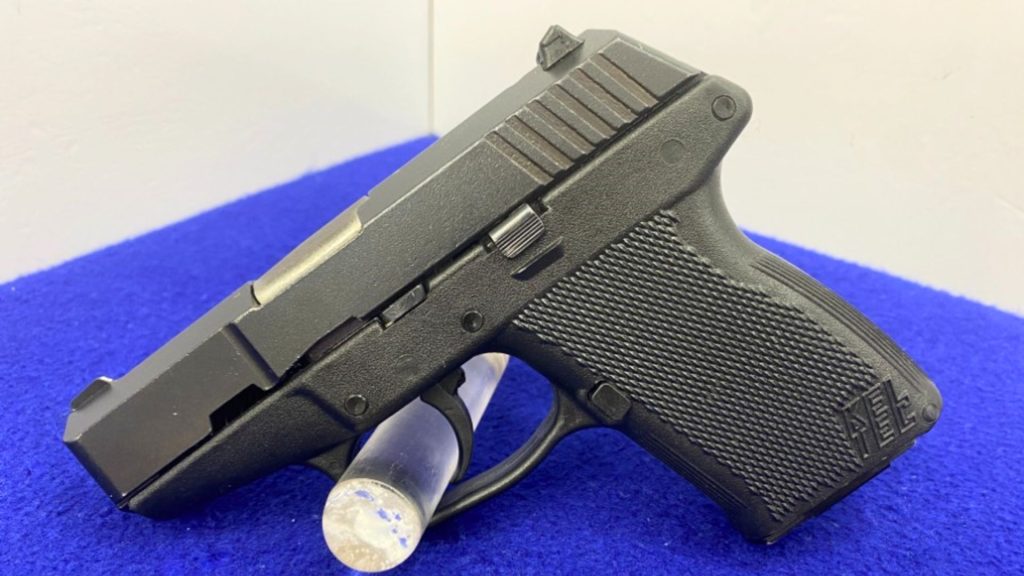
The Kel-Tec P11 hit the market in 1995 as a lightweight 9 mm subcompact with 11+1 capacity, which sounded ideal for concealed carry. In practice, testing documented chronic feeding issues that showed up early and often, especially with defensive hollow points that should have been its bread and butter.
Worse, evaluators reported frame cracking after roughly 500 rounds, a round count many carry guns see in a single training weekend. For anyone who trains regularly, a pistol that starts to structurally fail that quickly is not a backup, it is a liability that can derail practice and erode confidence.
2. Smith & Wesson SW99
The Smith & Wesson was pitched in 1999 as a striker-fired partner to the Walther P99, promising the same modern reliability in a co-branded package. On the bench, though, range reports found inconsistent trigger pulls from shot to shot, which made it hard to call your hits once you stretched past 15 yards.
That kind of variability might be tolerable on a casual plinker, but not on a pistol marketed for duty and defense. When the break weight and feel wander, shooters start steering the gun instead of pressing the trigger, and the SW99’s paper groups showed exactly that problem at realistic defensive distances.
3. Ruger P95
The Ruger P95 looked like a bargain in 1996, offering a decocker, 10+1 capacity, and a street price around $250. It built a reputation for being chunky but serviceable, yet user testing uncovered a recurring weak point in the slide stop that turned into real reliability trouble.
Reports documented frequent slide stop failures that caused malfunctions in roughly 10 percent of tested magazines, which is far beyond what I would tolerate in a carry or home-defense gun. When a control that is supposed to lock the slide open instead induces stoppages, you end up fighting the pistol instead of running it.
4. Taurus PT92
The Taurus PT92 has long traded on its resemblance to the Beretta 92FS, offering a similar layout with 17+1 capacity since production ramped up in the 1980s. On paper, that makes it an appealing full-size option for those who like the classic service-pistol profile at a lower price.
Independent testing in 2020, however, reported cracks forming around the ejection port after about 1,000 rounds. For a full-size alloy pistol, that is a worrying durability red flag, especially for shooters who plan to run regular classes or high-volume practice where four-figure round counts come quickly.
5. Hi-Point C9
The Hi-Point C9 has long been the poster child for affordability, with 1990s-era designs selling around $150 and offering 8+1 capacity in 9 mm. The tradeoff shows up when you clock rounds over a chronograph and compare them to published ammunition specs.
Testing found muzzle velocities running about 200 feet per second below spec, which drags down energy and flattens trajectory enough that practical effective range shrinks to roughly 20 yards. For defensive use, that means less reliable expansion and more guesswork on holds, even if the gun technically goes bang.
6. Phoenix Arms HP22
The Phoenix Arms HP22 promises cheap .22 LR plinking, typically around $100 with 10-round magazines, and has been around since the 1990s. On the surface, that sounds like an easy way to get trigger time without burning through centerfire ammo budgets.
Once testers started checking targets at 25 yards, they found rifling inconsistencies that caused bullets to keyhole instead of cutting clean round holes. That kind of instability wrecks accuracy and makes the pistol a poor trainer, since you cannot honestly evaluate fundamentals when the barrel itself is throwing shots sideways.
7. Savage Stance
The Savage Stance marked Savage’s return to the handgun market in 2022 as a slim 10+1 9 mm priced around $300. At events where Guns & Ammo Handguns Editor Jeremy Stafford spoke with Rob Gates about the new Savage Arms Stance Micro Compact, the pitch centered on modern carry features in a very flat package.
Early range reviews, however, noted striker block failures in about 5 percent of 200-round sessions, which is a serious concern on a pistol aimed at concealed carry. When a safety component tied to the striker is not completely reliable, it raises questions about both drop safety and long-term durability for everyday users.
8. Springfield Armory XD-E
The Springfield Armory XD-E entered the scene in 2017 as a hammer-fired 9 mm with 8+1 capacity, targeting shooters who preferred a traditional double-action/single-action system in a compact frame. On paper, that combination should have appealed to folks wary of striker-fired triggers.
Lab measurements told a different story, with double-action trigger pulls averaging around 12 pounds, which is heavy by any standard for a small defensive pistol. That weight slows rapid fire, encourages low hits as shooters yank through the stroke, and makes it harder for new shooters to build consistent trigger control under stress.
9. Sig Sauer P320 Compact
The Sig Sauer P320 rode a wave of attention after the platform was adopted by the U.S. Army as the M17 in 2017, with its modular chassis system touted as the future of service pistols. Civilian buyers understandably expected duty-grade safety and reliability from the compact variant.
Between 2016 and 2017, more than 100 accidental discharges were reported, leading to a voluntary upgrade program to address the issues. Any time a striker-fired pistol can discharge when dropped or jostled, it becomes a serious concern for law enforcement agencies, armed citizens, and range policies that rely on predictable mechanical behavior.
10. Glock 43X MOS
The Glock 43X MOS took the already popular 10+1 subcompact and added an optics-ready slide in 2019, aiming squarely at the surge in micro red-dot carry guns. On paper, it looked like a near-perfect blend of capacity, concealability, and modern sighting options.
Once shooters started mounting optics and running drills, user forums and independent tests reported rail tolerances that allowed the optic to shift zero after roughly 300 rounds. For a pistol built around a slide-mounted dot, losing zero that quickly means wasted ammo, missed hits, and a lot of re-torquing between practice sessions.
11. Walther PPQ M2 SC
The Walther PPQ M2 brought the PPQ’s ergonomic grip and excellent 9 mm trigger into a subcompact package with 10+1 capacity starting around 2013. On paper, it promised full-size shootability in a smaller footprint, which is exactly what many concealed carriers want.
Endurance testing in 2018, however, found disassembly lever issues that produced failure rates around 15 percent over 500 rounds. When a core takedown component starts causing stoppages, it undermines both maintenance and reliability, leaving shooters with a pistol that feels great in the hand but cannot be fully trusted when it matters.
Supporting sources: Savage Stance Micro-Compact, Full Review: New.

Asher was raised in the woods and on the water, and it shows. He’s logged more hours behind a rifle and under a heavy pack than most men twice his age.