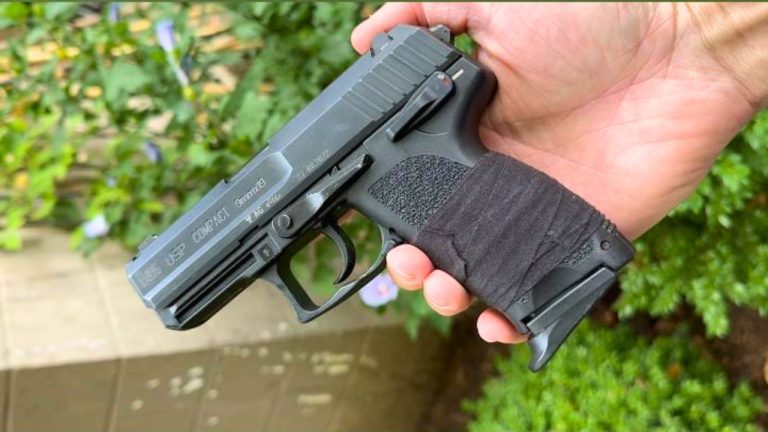
This common glovebox item is now classified as an illegal firearm accessory
Across the country, a tiny piece of metal that used to ride quietly in gloveboxes and center consoles is now being treated like a contraband firearm. The “Glock switch,” a thumbnail‑size device that snaps onto the back of a pistol slide, has gone from obscure tinkerer’s part to a priority target for lawmakers and police. As states and federal agencies scramble to keep up, gun owners who toss gear into their trucks without thinking are finding out the hard way that one casual accessory can carry the same penalties as an illegal machine gun.
That shift is colliding with a broader legal whiplash around gun add‑ons, from bump stocks to AR‑15 furniture, and it is creating a confusing landscape for anyone who carries. I see it every time I talk with hunters, concealed carriers, or folks who keep a handgun in the car: people assume the real risk is the gun itself, not the little parts rattling around beside the registration. The new reality is that the smallest item in your glovebox may be the one that gets you in the most trouble.
From obscure gadget to felony: how the Glock switch landed in your glovebox

The Glock switch started out as a niche curiosity, a way for hobbyists to tinker with how a Glock pistol cycles. In practice, it is a simple conversion device that replaces or clamps over the rear plate of the slide and changes how the trigger bar resets. Once installed, a semiautomatic handgun can fire a burst of rounds with a single pull, which is exactly why federal law treats it as a machine gun all by itself. The part is small enough to sit unnoticed in a coin tray or glovebox, which is how many otherwise law‑abiding drivers end up with a felony‑grade accessory riding along with their insurance card.
As the devices spread, state lawmakers began calling them out by name. In Feb, legislators hearing testimony on illegal gun modifications kept coming back to the “Glock switch,” and a reporter named Victoria Lucas walked viewers through how the part works and why police are seeing it more often in traffic stops and street arrests. In that coverage, the focus was squarely on the switch as a standalone threat, not just an add‑on, and the push was to prohibit these Glock accessories outright rather than wait for them to be attached to a pistol.
Why a tiny back‑plate is treated like a machine gun
To understand why a glovebox trinket is now an “illegal firearm accessory,” you have to look at how federal law defines a machine gun. Under the National Firearms Act and the Gun Control Act, anything that can convert a semiautomatic into a weapon that fires more than one round per trigger pull is itself a machine gun, even if it is not installed. That is the same logic that has been used on other controversial add‑ons, from bump stocks to drop‑in auto sears, and it is why a loose switch in your truck can be charged the same way as a fully automatic rifle.
The legal fight over bump stocks shows how far regulators have been willing to stretch that definition. After a high‑profile mass shooting that involved rapid‑fire attachments, the Bureau of Alcohol, Tobacco, Firearms and Explosives treated bump stocks as machine guns, even though they rely on recoil and have no mechanical parts or springs. When The US Supreme Court stepped in, it held that these stocks did not meet the statutory definition, lifting the Trump‑era restriction on those gun attachments. The Glock switch is different, because it directly alters the firing mechanism, but the bump stock saga shows how contested the line has become.
Supreme Court whiplash and what it signals for accessories
When the Supreme Court weighed in on bump stocks, it did more than settle a fight over one plastic stock. The majority said the agency had gone too far by rewriting the definition of a machine gun through regulation, rather than leaving that job to Congress. In a loss for the government, the Court held that the Ban on these stocks was unlawful, and the ruling came with a sharp dissent from liberal Justice Sonia Sotomayor that underscored how divided the justices are on gun policy. That split is a warning sign for any future attempt to lump new accessories into the same category without clear statutory language.
The decision also highlighted how technical details can decide the fate of an accessory. In the bump stock case, the justices dug into whether the shooter’s finger was still technically pulling the trigger for each round, and whether the device had any internal mechanical parts. The opinion, which was formatted with settings like Font Color and White and even referenced controls such as Font Opacity and Font Size at 100%, underscored how granular the analysis became. When the Court ruled that the Ban was unlawful, it sent a message that regulators cannot simply declare every rapid‑fire aid a machine gun, a point that will hang over future fights about conversion switches and similar gun accessories.
California’s hard line: if it is in the glovebox, it is already a problem
Even before you get to conversion devices, some states treat the glovebox itself as the wrong place for a firearm. In California, the rule is blunt: you cannot legally store a handgun in the glove compartment, whether it is locked or not. State law requires that a pistol in a vehicle be unloaded and secured in a locked container, safe, or trunk, and the glovebox does not qualify. That means a driver who thinks they are being careful by tucking a compact pistol beside their registration is already on the wrong side of the line.
That same strict approach spills over into how the state looks at accessories. A California driver who keeps a pistol in the console and a conversion device or questionable part in the glovebox is stacking risks. The state’s guidance spells it out plainly: Can I Keep a Gun in My Glove Box in California? The answer is no, and the law is very clear that the only legal options are a locked container, safe, or trunk. Anyone who ignores that and tosses a handgun or a suspect accessory into the glovebox is inviting a traffic stop to turn into a criminal case, as the California law on vehicle storage makes clear.
AR‑15 owners and the next wave of “illegal accessories”
While Glock switches grab headlines, AR‑15 owners are staring down their own list of parts that could be treated as contraband. California has already passed The Two New Laws that tighten the screws on rifles and their components, and those rules are set to bite harder in 2026. Assembly Bill 1263, often shortened to Assembly Bill 1263 or simply Assembly Bill in legislative shorthand, sweeps in a wide range of parts that used to be sold over the counter with little thought about legal exposure.
Under those changes, common AR‑15 components such as pistol grips, thumbhole stocks, and certain barrels are being pulled into a more restrictive regime. The law does not care whether those parts are installed on a rifle or sitting in a parts bin in your garage. If you are an AR owner who keeps a spare grip or stock in the truck, that accessory could be treated as a regulated item in its own right. The guidance for 2026 spells out that these components can be controlled as items that can be used to produce firearms or accessories, and that is a major shift for anyone who has been casually tossing extra AR parts into a range bag or truck toolbox.
Bump stocks, ATF, and the lesson for every glovebox accessory
The legal history of bump stocks is a case study in how fast an accessory can go from mail‑order novelty to contraband. The Legal History is usually told as a straight line From ATF Ban to Supreme Court Reversal, but for gun owners it felt more like a roller coaster. After the 2018 Ban that followed a mass shooting where the shooter had bump‑equipped rifles, owners were told to destroy or surrender their stocks or risk federal charges. Many did, only to watch the courts later say the agency had overstepped.
Before June 2024, the official position was that these stocks were machine guns under federal law, even though they relied on recoil and the shooter’s finger rather than any internal mechanism. When the Supreme Court Reversal came, it wiped out that interpretation and left bump stocks in a legal gray zone that still varies by state. For anyone who keeps gear in a vehicle, the lesson is simple: an accessory that is legal today can be treated as contraband tomorrow, and the fact that it is sitting in your glovebox instead of on a rifle will not save you if the rules change again. That is why I pay close attention to updates on whether bump stocks are legal and how the Ban and reversal are being interpreted.
How lawmakers are targeting switches and similar parts
Statehouses have started to treat conversion devices as a category of their own, separate from the guns they attach to. In hearings earlier this year, legislators and police officials described how easily a Glock switch can be 3D printed, imported, or bought under the table, and how quickly it can turn a traffic stop into a shootout. The push now is to write statutes that name these parts explicitly, so prosecutors do not have to argue that a generic “conversion device” counts as a machine gun in court.
In that Feb hearing where Victoria Lucas reported from the state capitol, lawmakers talked about making possession of a Glock switch a standalone felony, even if the person stopped did not have a Glock pistol on them at the time. The idea is to cut off the pipeline of parts before they ever reach the street. That approach mirrors how some states treat drug paraphernalia, where having the tool is a crime even without the substance. For gun owners, it means that a single part tossed into a glovebox can carry the same weight as a prohibited firearm, especially when the law calls out the Glock switch by name.
What this means for everyday gun owners on the road
For most of us who carry or hunt, the truck is an extension of the gun safe. It is where spare magazines, slings, and cleaning kits pile up over time. The new wave of laws around switches, bump stocks, and AR‑15 parts means that habit is getting riskier. A driver who would never dream of carrying an unregistered machine gun might still have a conversion device, a questionable stock, or a restricted grip rolling around under the seat, and in many jurisdictions that is enough to trigger serious charges.
The safest move now is to treat every accessory like a firearm from a legal standpoint. Know exactly what each part does, how your state classifies it, and whether it is legal to possess at all, installed or not. In places like California, where even storing a handgun in the glovebox is illegal, the margin for error is thin. Add in the federal machine gun rules and the shifting landscape around items like bump stocks, and the message is clear: if you would not be comfortable explaining that part to a patrol officer on the side of the highway, it does not belong in your glovebox.
Practical steps to keep your glovebox out of trouble
Staying on the right side of the law starts with a hard look at what you actually carry in your vehicle. Empty the glovebox, center console, and door pockets, then sort every gun‑related item into three piles: clearly legal, clearly illegal, and “I am not sure.” Anything in that middle pile deserves research before it goes back in the truck. That includes odd back‑plates, trigger housings, binary or forced‑reset triggers, bump‑style devices, and any part marketed as “full‑auto” or “rapid fire,” even as a joke.

Asher was raised in the woods and on the water, and it shows. He’s logged more hours behind a rifle and under a heavy pack than most men twice his age.