Why powerful handgun calibers generate more debate than agreement
Powerful handgun calibers stir up more arguments than consensus because they sit at the crossroads of physics, fear, pride, and personal history. The numbers on paper rarely settle anything, and the people who care most about those numbers often bring decades of lived experience to the table. When you mix recoil, real-world performance, and identity into one topic, you get a debate that keeps looping instead of landing on a final answer.
The roots of the modern caliber argument
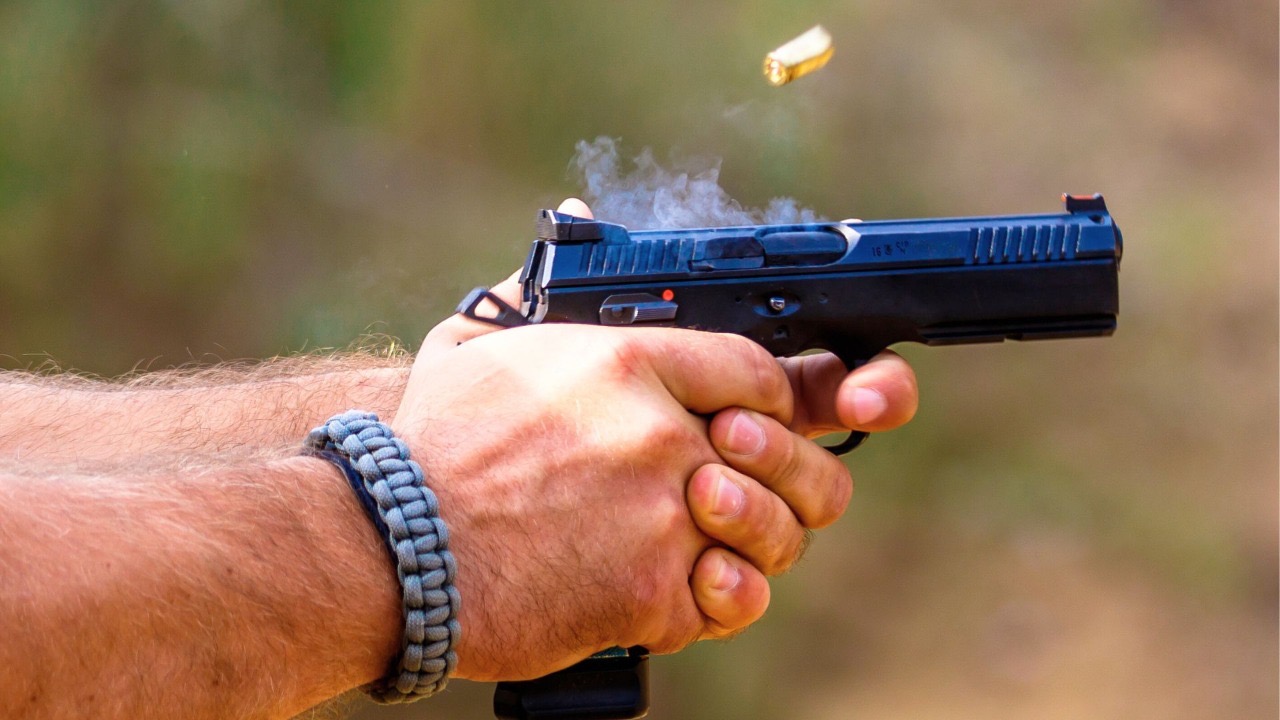
When shooters talk about “the caliber debate,” they are usually circling around the same handful of service cartridges rather than every obscure round on the shelf. In most conversations I hear, the center of gravity is 9 mm, .40 S&W, and .45 ACP, with .38 Special and a few magnums chiming in from the sidelines. One writer named Jan framed it bluntly, pointing out that these three are the most commonly argued over and that the search for a single perfect round “is not a real thing,” a reminder that the fight is more cultural than scientific in many caliber debates.
That focus on a few mainstream cartridges matters because it shapes how people think about “power.” The same arguments repeat: 9 mm fans lean on capacity and controllability, .40 S&W shooters talk about a balance of mass and speed, and .45 ACP loyalists lean into big-bore tradition. Once those camps form, every new test or anecdote gets filtered through preexisting loyalties. Instead of asking what works for a specific shooter in a specific role, the conversation drifts toward defending a tribe, which is why the topic generates more heat than agreement.
Physics, recoil, and what “power” really feels like
On paper, caliber is a simple measurement of bullet diameter, but in the hand it shows up as recoil, muzzle blast, and how quickly you can get back on target. Larger handgun calibers usually push more mass at similar or higher velocities, which means more momentum coming straight back into your grip. One technical breakdown notes that as caliber increases, recoil generally rises and can make it harder to control the gun, especially when you are trying to shoot quickly or under stress, a point that lines up with how caliber and recoil interact in rapid fire.
That physical reality is why “more powerful” does not automatically mean “better” for defense. A cartridge that looks impressive in a ballistics chart can be a liability if the shooter flinches, struggles to keep a solid grip, or cannot manage follow-up shots. In my experience, the shooters who stay honest about their own limits tend to gravitate toward something they can run well instead of the hardest-hitting round they can tolerate once or twice. The problem is that recoil tolerance is personal, so what feels manageable to one person can feel punishing to another, and that gap keeps the argument alive.
Stopping power myths and the narrow gap between calibers
Much of the passion around big handgun calibers comes from the idea of “stopping power,” a term that sounds scientific but usually hides a mix of gut feeling and half-remembered stories. When you look at actual shooting data, the gap between common service cartridges is smaller than the arguments suggest. One widely cited analysis of real-world incidents found that, between the most common defensive calibers, listed as . 38, 9 mm, . 40, and . 45, there was only an eight percentage point spread in how often a single hit stopped an attacker, a result that undercuts the belief that one of these rounds is in a different league for handgun stopping power.
That same look at shootings also highlighted something many experienced trainers repeat: shot placement and penetration matter more than caliber within this family of cartridges. If . 38, 9 mm, . 40, and . 45 are all clustering within a few percentage points of each other, then obsessing over a couple of millimeters of bullet diameter starts to look more like a psychological comfort blanket than a performance necessity. Still, the myth of a magic one-shot stop is hard to kill, and as long as people believe a bigger bore can bend the odds in their favor, the argument over “enough gun” will keep resurfacing.
Why 9 mm keeps winning the practical argument
Despite all the noise, 9 mm has quietly become the default handgun caliber in the United States for everyone from new shooters to law enforcement. One guide for new gun owners flatly states that the 9 mm is the most popular handgun caliber in the U.S., and credits that status to a balance of manageable recoil, effective terminal performance, and affordable practice ammo that works for concealed carry, home defense, and range training, a mix that makes 9 mm especially attractive to beginners.
Modern ammunition has only strengthened that case. Today’s self-defense 9×19 mm JHP loads are described as highly reliable and effective at stopping threats, and many gun owners now consider 9 mm the best all-around choice for personal protection, especially when you factor in how much easier it is to find and shoot quality JHP ammunition. When a cartridge offers good performance, higher capacity, and lower recoil in the same size gun, it is no surprise that it becomes the baseline everyone else is measured against, even if that does not end the arguments.
The .40 and .45 loyalists and why they are not letting go
For every shooter who has settled into 9 mm, there is another who still swears by .40 S&W or .45 ACP and has no interest in switching. In one community discussion, a user named WildRose explained that he shoots the . 40 S&W primarily because he likes the combination of mass, velocity, and deep penetration, and he is comfortable with the trade-offs that come with that 40 choice. That kind of reasoning is common among .40 shooters who came up in the era when it was the hot law-enforcement round and still trust its track record.
.45 ACP has an even deeper emotional footprint. In one recent online discussion about the FBI’s caliber decisions, a commenter pointed out that the two areas 9 mm wins are capacity and concealability, and added that you cannot make a 45 as small as a 9 mm of the same capacity, a practical nod to the size penalty that comes with a 45. Even so, many .45 shooters are willing to carry a larger, heavier pistol because they like the recoil impulse, trust the big-bore history, or simply feel more confident with a larger diameter bullet, and confidence is hard to argue away with spreadsheets.
Online culture, memes, and the never-ending argument
Caliber debates used to play out at gun counters and range benches; now they live on message boards and social media where they can run forever. On one firearms forum, a user named Someone joked that there should be a dedicated space for “40s&w owners just happy to b…” and the thread spun into a tongue-in-cheek idea for a subcommunity of people who are content with their choice and tired of defending it, a snapshot of how solving the debate has become a running joke. The humor is telling, because it shows how self-aware many shooters are about the circular nature of these arguments.
Other corners of the internet try to tackle the topic more seriously but still end up reinforcing the same themes. In one discussion titled Help understanding the 9 mm debate, a commenter spelled out that subduing a threat typically requires multiple hits with any pistol caliber, and used that point to argue that capacity and controllability matter more than chasing a mythical one-shot stop, especially when Subduing a threat is the real goal. Even when people agree on fundamentals like that, the back-and-forth rarely ends, because the platforms reward strong opinions and quick replies more than quiet, nuanced agreement.
Training, perception, and why recoil feels like “power”
One reason powerful calibers keep their mystique is that recoil and blast feel like proof of energy, even when the numbers do not back up a huge performance gap. In a personal account of shooting different handguns, one instructor described how, as he fires, he feels the blast and recoil transmitted back through his hands, and the more blast and recoil he experiences, the more he senses energy being delivered downrange, a perception that shapes how many people think about the great gun debate. That gut-level feedback can be hard to ignore, especially for newer shooters who do not yet have a deep base of training.
From a training standpoint, though, that same recoil can be a liability. If a shooter starts to anticipate the hit of a heavy round, accuracy and speed both suffer, and the supposed advantage of a more powerful cartridge evaporates. I have watched plenty of people shoot tighter, faster strings with 9 mm than with .40 S&W or .45 ACP, even when they walked onto the range convinced that the bigger round was “better.” The more time someone spends under a timer, the more they tend to value controllability over raw thump, which is why instructors like Matt, who talked through these trade-offs during a session of Tuesday Night Live, keep circling back to how skill and context matter more than caliber in Apr discussions.
Realistic expectations: multiple hits and messy outcomes
Another reason the caliber fight never quite ends is that real defensive shootings are messy, and people reach for simple explanations to make sense of them. In the same Help thread where shooters hashed out the 9 mm question, one of the clearest points was that subduing a threat typically requires multiple hits with any pistol caliber, not a cinematic one-and-done shot, a reality that undercuts the idea that a single step up in bullet size will dramatically change outcomes when Help is needed fast. That perspective lines up with the stopping power data showing only modest differences between common service rounds.
Once you accept that several well-placed rounds are usually needed, the conversation shifts from “What is the most powerful handgun caliber?” to “What can I shoot accurately and quickly under stress?” That is where capacity, recoil management, and ergonomics start to outweigh caliber labels. It also explains why so many experienced shooters quietly settle into a setup that fits their hands and training habits, then stop worrying about what the internet thinks. The debate keeps raging mostly among people who have not yet made peace with that trade-off.
Why the debate will outlive all of us
Even with better data, better bullets, and more training resources than ever, I do not expect the caliber argument to disappear. Part of the appeal of handguns is that they carry stories: a father’s old .45, a first duty gun in .40 S&W, a compact 9 mm that someone trusted on a rough night. Those experiences harden into opinions, and opinions harden into identities. When Jan or another seasoned voice points out that a single perfect caliber “is not a real thing,” they are pushing against decades of campfire tales and locker-room debates that give powerful handgun calibers their emotional weight.
At the same time, the technical side of the conversation will keep evolving. As more shooters look at recoil charts, ballistic gel tests, and real-world data, the practical center of gravity will likely stay around 9 mm, with . 38, . 40, and . 45 continuing to serve people who shoot them well and trust their history. The arguments will keep flaring up in comment sections and range bays, but underneath the noise, the pattern is steady: pick a cartridge you can control, feed it quality ammo, train hard, and accept that no handgun caliber can guarantee a clean, easy outcome. That gap between what people want a pistol to do and what it can actually deliver is why powerful handgun calibers will always generate more debate than agreement.

Asher was raised in the woods and on the water, and it shows. He’s logged more hours behind a rifle and under a heavy pack than most men twice his age.