A WWI soldier survived a headshot—and reportedly stayed awake for decades
During World War I, a Hungarian soldier reportedly took a bullet through the head, woke up in a field hospital and then never slept again. For the next 40 years he was said to live a busy, outwardly ordinary life, reading, working and socializing through nights that never ended.
The story of Paul Kern sits at the edge of medicine and myth, a case repeatedly cited as one of neurology’s strangest legends. It raises a blunt question for modern readers who know that prolonged sleep loss is usually fatal: could any human brain really stay awake for decades, or does this tale reveal more about how people once understood trauma, science and storytelling?
The man behind the legend
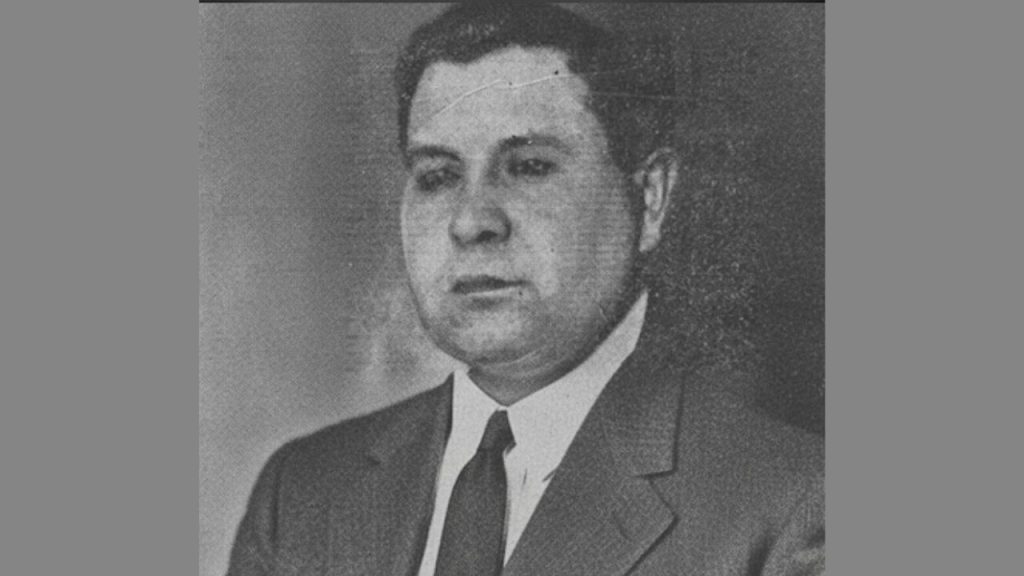
The name at the center of the story is Paul Kern, often described as a Hungarian soldier who fought in World War I. Biographical sketches portray him as a man born in the 1880s who served on the Eastern Front, part of the Austro-Hungarian forces confronting Russian troops. Some accounts add that he later worked in a pensions office and moved through civilian life with an unremarkable routine, apart from the one detail that made him a medical curiosity.
Different retellings agree that Kern enlisted along with large numbers of compatriots, with one modern report noting that, at the time, Kern and 1 joined the war effort to avenge the assassination of Archduke Fr. That detail situates his story in the patriotic surge that followed the killing of Archduke Franz Ferdinand and the outbreak of the First World War, when the Austro-Hungarian Empire mobilized on a massive scale.
Beyond those broad strokes, the historical trail thins quickly. A military history entry describes Paul Kern (Hungarian as a soldier wounded in combat who later worked daily in a pensions department. That same reference ties him to World War I and notes that, on June 24, he suffered the wound that would define his legend. The combination of military service, bureaucratic work and a long life after the war gives the story a grounded, almost mundane texture that contrasts sharply with the extraordinary medical claim attached to his name.
Modern search results cluster around his profile and repeat the same core facts, reflecting how the story has been codified in popular history. Several knowledge panels and search entries for Kern and related queries reinforce his association with World War I, Hungary and an alleged decades-long insomnia that began with a gunshot to the head.
A bullet to the temple on the Eastern Front
The turning point in Kern’s life is set in 1915, during heavy fighting on the Eastern Front. Reports describe him as part of Hungarian units facing Russian forces in the vast, brutal campaigns that stretched across Galicia and beyond. In one widely cited account, Kern was in the midst of a battle when a bullet tore through his right temple, a wound that would normally be expected to kill or leave severe disability.
One narrative of the incident states that in 1915, while he was battling Russian forces, a single shot entered his right temple and exited near the back of his skull, after which he was evacuated to a hospital in Lemberg for surgery. That description appears in an in-depth retelling of Kern’s wartime injury, which emphasizes both the violence of the wound and the improbability of his survival.
A separate feature on the case notes that, a year into the First World War, Kern was shot in the head and had his seemingly fatal wound treated in a military hospital. That account links his injury to the broader context of the First World War’s early years and describes him as a soldier who was shot in the head and did not sleep for 40 years afterward. The phrasing in that piece, which refers to “The World War” and the “Soldier Who Was Shot In The Head And Didn” and “Sleep For” “Years,” underlines how the story has been framed as a singular wartime anomaly.
Another retelling, focused on the human-interest angle, describes how, during a battle against the Russians, Hungarian Paul Kern was hit in the head and left on the field before being rescued. That version highlights the chaos of the front and the randomness of survival, presenting his wound as one of countless injuries suffered in the trenches and forests of the Eastern Front, yet with consequences unlike any other.
From coma to a life without sleep
All versions agree that Kern was initially knocked unconscious or placed in a coma by the shot to his right temple. Surgeons reportedly removed bone fragments and stabilized him, expecting a long and uncertain recovery. The extraordinary twist comes later, when he is said to have awakened lucid and functional but unable to sleep.
One modern summary of the case states that Hungarian Paul Kern was wounded in the head in the war and then did not sleep for 40 years. Another recounting, written in a narrative style, calls him “The Man Who Did Not Sleep For” “Years” and repeats that the period lasted exactly 40 years, a figure that has become central to the legend. A separate military history feature describes Paul Kern as a WWI soldier who survived a headshot and stayed awake for 40 years, presenting the duration as a fixed part of the story rather than an estimate.
Some accounts add details about his hospital stay. They say that after he regained consciousness, Kern told doctors that he felt no desire to sleep and could not drift off even when sedated. Nurses allegedly watched him through the night, waiting for his eyes to close, but he remained awake and alert. According to these narratives, this pattern continued after his discharge, turning what might have been a short-term post-traumatic symptom into a defining trait of his remaining life.
Later summaries emphasize that he did not simply lie awake in bed. Instead, Kern reportedly reorganized his life around constant wakefulness. He is said to have taken long walks, read through the night and used the extra hours for work and social visits. One retelling notes that he adjusted his 24-hour schedule so that he would rest quietly for a few hours each day, even if he never actually slept, a routine that may have helped him cope psychologically with his condition.
What the sources agree on, and where they conflict
Although the core narrative repeats across many references, the details do not always align. One recurring point of agreement is that Kern was Hungarian and that his injury occurred during World War I on the Eastern Front. Multiple sources describe him as a Hungarian soldier or as Hungarian Paul Kern, and several note that the shot entered his right temple during a battle against Russian forces.
There is also broad consensus on the headline claim that he did not sleep for 40 years. A feature on Hungarian Paul Kern states plainly that he did not sleep for 40 years after being wounded in the head in the war. Another piece, focused on the strange story of the Hungarian Paul Kern, repeats the same duration and adds that, during his long life after the war, he reportedly never once felt the urge to sleep or experienced drowsiness in the usual sense. A more narrative article on his life calls him “The Man Who Did Not Sleep For” “Years” and again uses the figure 40 to describe the span between his injury and his death.
Beyond those shared elements, the record becomes patchy. Some accounts say that Kern was wounded on June 24 and later worked daily in a pensions department, suggesting a stable civilian job. Others present him as a government official on the Eastern Front in 1915, hinting at a more administrative role even during the war. A social media discussion of the case refers to him as one of the most unusual cases in neurological history and claims that he did not sleep until he died, but it does not provide independent archival documentation.
There are also differences in how his daily life is portrayed. One article emphasizes that he lived a full, active life, staying awake for 40 years while continuing to work and socialize. Another paints a more melancholy picture, noting that he spent long nights drinking coffee and reading, with friends and family eventually accepting his condition as part of who he was. Some versions mention that he rested in a dark room for a few hours each day, which could indicate a kind of quiet, semi-trance state rather than literal, unbroken wakefulness.
Crucially, none of the modern summaries provide direct access to original hospital records, military files or contemporaneous medical journal articles that would verify the case. The story appears to have been passed down through secondary and tertiary retellings, with each new version reinforcing the same dramatic elements. That lack of primary documentation is why some recent commentators describe aspects of the story as Unverified based on available sources.
How Kern supposedly lived with permanent wakefulness
The most gripping part of the legend is not the injury itself but how Kern is said to have lived afterward. Accounts describe a man who, despite never sleeping, maintained a routine that looked surprisingly ordinary from the outside. He reportedly held a job, kept friendships and even traveled, all while his nights remained as busy as his days.
One narrative emphasizes that Kern never slept again after his head injury yet stayed awake for 40 years while living a full, active life. It describes him reading extensively, attending the theater and visiting friends late into the night. According to that retelling, he used the quiet hours to pursue hobbies and personal interests, effectively gaining an extra third of a lifetime compared with those who sleep.
Another account, focused on the strange story of Hungarian Paul Kern, adds that he would rest in a darkened room for a few hours each day, lying quietly with his eyes closed but never crossing into actual sleep. That detail is significant because it suggests that his body might have entered a kind of deep relaxation or micro-rest state, even if he insisted that he never slept. Some modern commentators have speculated that he could have experienced brief, undetected micro-sleeps or altered states of consciousness, although such speculation remains Unverified based on available sources.
Several summaries mention his reliance on stimulants. One describes how he drank coffee frequently, treating it as both a social ritual and a way to manage the long nights. Another notes that he sometimes visited doctors who prescribed sedatives in an attempt to force sleep, but these reportedly failed. If accurate, that pattern would suggest that his brain no longer responded to typical sleep-inducing signals, an idea that would fascinate neurologists even today.
Despite his condition, Kern is often portrayed as emotionally stable and even cheerful. Some retellings say he did not complain about his wakefulness and instead framed it as a curiosity that set him apart. Others hint at periods of fatigue and frustration, especially as he aged, although the sources do not provide detailed psychological assessments. What they do agree on is that he did not experience the rapid physical and mental breakdown that modern science associates with extreme sleep deprivation.
Could anyone really stay awake for 40 years?
Modern sleep research makes the story of Kern’s 40-year wakefulness difficult to reconcile with current knowledge. Experiments in humans and animals show that prolonged sleep loss is dangerous and eventually fatal. A widely discussed comment in a social media discussion of the case notes bluntly that prolonged sleep deprivation is fatal, reflecting a consensus in neurology that the body cannot function indefinitely without restorative sleep.
In controlled settings, healthy volunteers who stay awake for several days develop hallucinations, cognitive impairment and severe mood disturbances. Animal studies have shown that rats subjected to continuous sleep deprivation die within weeks, often from systemic failure and infections. Human conditions such as fatal familial insomnia, a rare genetic disorder, lead to progressive insomnia and death over months to a few years, not decades.
Given that background, many experts doubt that any person could remain fully awake for 40 years without catastrophic consequences. If Kern’s story has a kernel of truth, they suggest, it might involve a more complex pattern of altered sleep rather than literal, total insomnia. He may have experienced micro-sleeps, in which the brain briefly enters a sleep-like state for seconds at a time, or he might have had highly fragmented sleep that he did not perceive as such.
Another possibility is that his injury damaged brain regions involved in sleep regulation, such as parts of the hypothalamus or brainstem, in a way that changed his subjective experience of sleep. A bullet through the right temple could theoretically affect nearby structures, although the exact trajectory and damage pattern described in the popular accounts are not backed by imaging or autopsy reports. Without those, neurologists can only speculate.
Some modern commentators have pointed out that if Kern truly never slept, he would represent an unprecedented exception to known biology. That would make his case extraordinarily important to document, yet no detailed case report has surfaced in the medical literature. The absence of such a report, given the alleged fame of his condition, fuels skepticism among researchers who rely on verifiable data.
Why the story persists in medical folklore
Despite the scientific doubts, the legend of Paul Kern has proved remarkably resilient. It appears in popular history pieces, social media posts and long-form essays that revisit his case as a kind of medical mystery. One narrative published on a history-focused platform presents him as a striking example of how a single bullet can reshape a person’s life in unexpected ways, and calls him “The Man Who Did Not Sleep For” “Years” in its headline-style framing.
In online groups dedicated to unusual medical stories, participants share posts about Kern and debate whether his brain was kept for research, whether his case could be explained by conditions such as lupus (one commenter insists, “Not with Lupus could this feat be achieved”) and what his experience might reveal about human resilience. Another post in a different group labels him one of the most unusual cases in neurological history and marvels at the idea that he DIDN SLEEP UNTIL DIED, using capital letters to emphasize the extremity of the claim.
The story also circulates through search results and knowledge panels that aggregate basic facts about Kern and link him to related topics. Queries for Kern’s profile return brief summaries that mention his wartime service and insomnia, reinforcing the impression that his case is part of accepted historical record. Additional search entries for Kern-related topics help keep his name in circulation for new audiences who stumble across the story.
Part of the legend’s appeal lies in its narrative symmetry. A young man goes to war, takes a bullet to the head, survives against the odds and then lives a doubled life, awake through nights that others spend unconscious. That structure fits neatly into a long tradition of wartime anecdotes that highlight both the horror of combat and the strange, sometimes miraculous outcomes that follow.
The story also taps into a modern fascination with hacking sleep. In an era when productivity culture celebrates those who claim to thrive on four hours a night, the idea of someone who simply stopped sleeping and suffered no ill effects can feel both seductive and unsettling. Kern becomes, in this framing, a kind of accidental extreme case study for people who wonder what life would be like if sleep were optional.
Separating history from myth
For historians and science writers, Kern’s story presents a challenge: how to treat a widely repeated anecdote that lacks strong primary documentation. Some choose to present it as a curiosity, clearly labeling the more sensational claims as unverified. Others recount the legend in full, leaving readers to weigh the plausibility for themselves.
One narrative that tracks the case through military history and personal anecdotes emphasizes that Kern’s survival after a headshot is itself remarkable, even before the insomnia enters the picture. It notes that he led charges into enemy positions before his injury and later built a life in civilian service, suggesting a trajectory of resilience that would be noteworthy even without the sleep story. Another piece, focused on the strange story of the Hungarian Paul Kern, frames his alleged insomnia as a medical mystery that baffled doctors of his time, but again does not cite contemporaneous clinical reports.
Researchers who have tried to trace the original sources often find themselves looping through the same set of secondary references. A subscription portal and an associated store linked from a long-form feature on Kern hint at deeper archival material, but they do not, in the publicly accessible sections, provide direct scans of wartime hospital logs or early twentieth century neurology journals. Similarly, social sharing links for the feature, including a tweet template, repeat the same core description of a WWI soldier who survived a headshot and stayed awake for 40 years.
Some historians point out that early twentieth century newspapers and magazines often published sensational medical stories with limited fact-checking, especially when they involved exotic locations or unusual conditions. A Hungarian soldier with a bullet scar and a reputation for being a light sleeper could easily have become, through repeated retellings, the man who never slept at all. Without access to original Hungarian-language press coverage or hospital archives, it is difficult to reconstruct how the story evolved.

Leo’s been tracking game and tuning gear since he could stand upright. He’s sharp, driven, and knows how to keep things running when conditions turn.