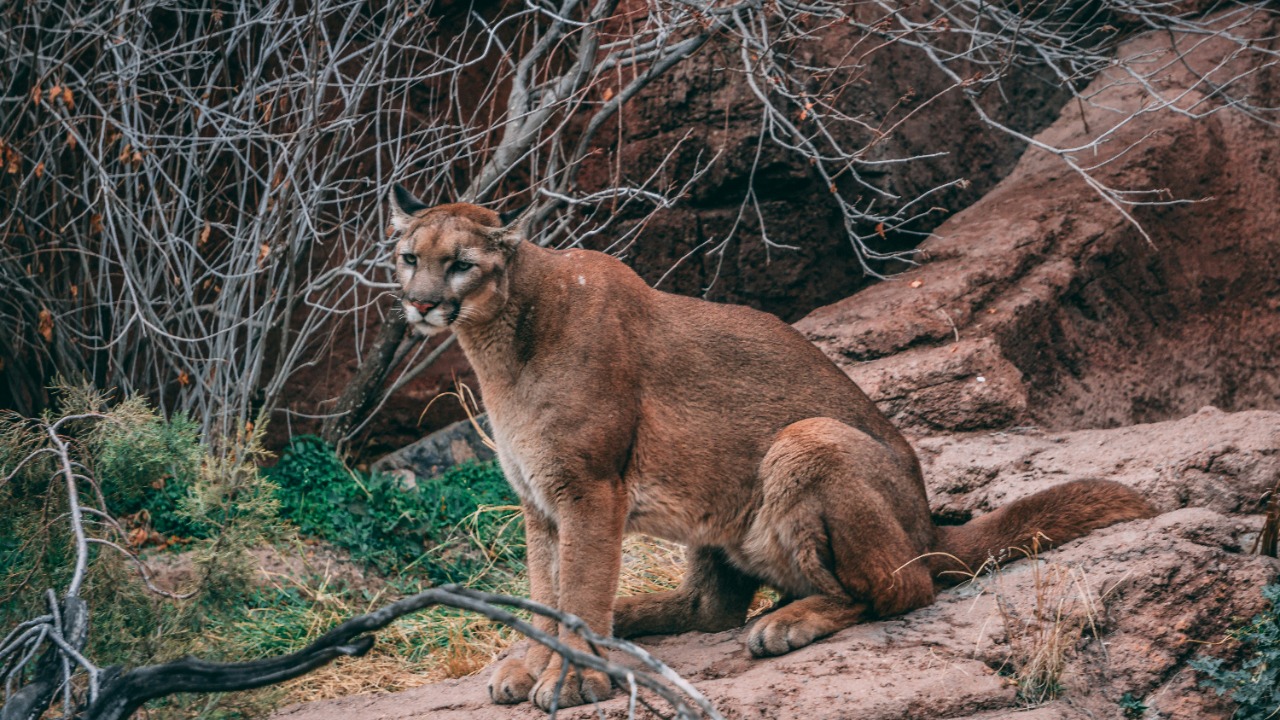
Where mountain lions are expanding into new territory
Mountain lions are quietly reclaiming parts of North America where they were wiped out a century ago, slipping back into prairies, farm country, and even the edges of suburbs. Their return is reshaping debates over wildlife management, public safety, and what it means to share a landscape with a top predator again. I see the pattern most clearly in the places where these big cats are expanding into new territory, from the Great Plains to the forests of the eastern United States and Canada.
Biologists, hunters, and backyard trail‑camera owners are all documenting the same story: young cats pushing out from strongholds in the West, testing fragmented habitat, and sometimes managing to establish breeding populations. The details vary from state to state, but the trend line points in one direction, toward a continent that looks a little more like it did before intensive settlement and predator eradication.
From western strongholds to prairie frontiers

The modern comeback of mountain lions starts in the rugged landscapes where they never fully disappeared, especially in states like Washington, Utah, Montana, and Wyoming. In these western strongholds, healthy populations are producing a steady stream of dispersing juveniles, especially males, that are forced to roam far in search of open territory. Those wanderers are the vanguard that is now showing up hundreds of miles from the nearest known breeding range.
As these cats leave the mountains, they are increasingly turning up in the Great Plains, where grasslands and river breaks offer cover and deer. Reports from ranch country describe what some locals are calling “prairie mountain lions,” a nod to the way these predators are adapting to open country. One detailed account from the northern plains notes that There were no domestic livestock species documented in the diet of the cats studied, which instead focused on wild prey, even as they used brushy draws and badlands to ambush deer.
Great Plains and prairie states: new breeding edges
The most striking shift is unfolding along the central plains, where mountain lions are no longer just passing through but starting to reproduce. Wildlife advocates point to Nebraska as a bellwether, with biologists warning that “Mountain lions in Nebraska are” still vulnerable at the edge of their range and urging managers to resist increasing hunting quotas so the population can stabilize. One conservation analysis framed it bluntly, arguing that “Before the” eastward expansion can truly take hold, states like Utah and Nebraska need secure source populations at their frontiers, including in Utah and the central plains.
Farther south, historically native range is flickering back to life. Officials in Oklahoma recently confirmed two separate reports of mountain lions with kittens, a milestone that signals local reproduction rather than transient visitors. One detailed account stressed that “Historically, Oklahoma is” mountain lion territory and that the species once ranged across the entire Lower 48, with the recent detections aided by the increasing use of trail cameras on ranches and hunting leases.
The Midwest’s slow but steady recolonization
To the north and east, the Midwest has become a kind of testing ground for how far mountain lions can push into farm country and fragmented forests. A landmark analysis of historic and modern records found They found 178 records of cougars in the region, a figure that signaled a clear increase in presence over recent decades. More recent modeling work, shared in a public discussion group, went further, suggesting that cougars are likely to recolonize habitat patches in the Midwest in the next 25 years regardless of whether people actively reintroduce them.
On the ground, that trend shows up as scattered but persistent confirmations in states that long ago lost resident populations. The Illinois Department of Natural Resources has documented a small but telling trickle of cats, with one report noting that Illinois Department of, or IDNR, has confirmed at least six mountain lions in Illi, some of them matched by DNA to the same individual moving across multiple counties. A separate review of 2022 activity emphasized that “Sightings of” mountain lions, Puma concolor, remain rare in Illinois, but that the cats that do appear are typically young males moving through in search of new territories.
Prairie states and farm country: Kansas to Iowa
South of the Great Lakes, the same pattern is emerging in the patchwork of cropland and prairie that stretches across Kansas and neighboring states. Hunters and landowners are increasingly trading trail‑camera images and tracks from creek bottoms and shelterbelts that once seemed too open for big cats. In online discussions about “prairie grizzlies,” one widely shared report urged readers to “Move Over, Prairie Grizzlies, Here Come The Prairie Mountain” lions, arguing that these predators, long associated with rugged mountains, are now expanding back into prairie areas where they can shadow deer herds and use scattered cover to stalk prey in the Mountain West and plains.
Farther north, states like Minnesota, Wisconsin, and Iowa are logging occasional confirmations that fit the same template: mostly solitary males, often detected by chance on deer stands or farm cameras, moving through a landscape that still lacks enough connected habitat to support a full breeding population. A broader look at the Midwest suggests that, for now, these states are corridors rather than destinations, but that could change if conservation corridors are protected and hunting pressure at the western edge is kept in check.
Canada and the northern forest frontier
North of the border, the same west‑to‑east expansion is beginning to reshape the big forests and lake country of central Canada. In Manitoba, wildlife officials and trappers have reported scattered signs of cougars in recent years, often in remote areas where deer and elk populations have rebounded. The province sits directly in the path of dispersing cats from the Rockies and western plains, and its mix of boreal forest and agricultural land offers a mosaic similar to the northern Great Plains of the United States.
Farther east, the story in Ontario has become a touchstone for how a regionally extinct predator can quietly re‑establish itself. One detailed explainer framed the question directly, asking “Have You Ever Wondered HOW Ontario”’s Cougar Population got re‑established in Ontario after being regionally extinct for decades, and then walking through the evidence that a combination of natural recolonization and perhaps a few released or escaped animals helped seed a new presence in the province’s vast forests and shield country. That same account described how the “Cougar Population” is now being tracked through a mix of trail cameras, scat analysis, and local reports that help pinpoint the most likely strongholds for big cats in Ontario.
The contested return of big cats in the Eastern U.S.
East of the Mississippi, the picture is more fragmented and more politically charged. Scientific reviews are clear that, However, in the Eastern U.S., their status remains precarious, with the Florida panther as the only known breeding population in the East, a remnant that survives in south Florida’s swamps and ranchlands. A recent social‑science study on predator recovery in the region stressed that, However, Eastern public opinion will be critical if cougars and red wolves are to reclaim more of their historic range, since tolerance for large carnivores varies sharply between rural and suburban communities in the Florida to Appalachia corridor.
At the same time, anecdotal reports from hunters and rural residents keep the debate alive in states like Georgia and Alabama, where people swap stories of “black panthers” and long‑tailed cats crossing dirt roads at night. One long‑running Facebook group devoted to Southern big cat reports includes a post from Jan that begins, “It’s a big wild swamp. I don’t know if they are reproducing or have all died now but they were for sure there in the late 80s,” capturing the mix of memory and uncertainty that surrounds these sightings in the Jan South.
Citizen science, online debates, and reintroduction talk
Much of what we know about the leading edge of cougar expansion now comes from ordinary people with trail cameras and smartphones. In one widely shared Reddit thread, a commenter summarized the emerging consensus by noting that Cougars are on their way back to the eastern USA, but will take decades, maybe a century, and that highways will make it far harder for females to follow the pioneering males that are already dispersing east, a point made in detail in the Cougars discussion. Another forum devoted to field naturalists put it more technically, arguing that There is a lot of evidence that young male Cougars from the west regularly travel east nomadically in search of territories, but that the lack of females and the barrier of major highways remain a factor limiting further expansion, as detailed in the Feb exchange.
These grassroots observations are feeding into a broader conversation about whether people should actively help the cats along. In one debate about predator recovery in Pennsylvania, a commenter wrote, “I know there’s plenty of open areas in central and upstate Pennsylvania especially in the pocono mountain regions. Yea,” before weighing the pros and cons of formal reintroduction versus waiting for natural recolonization. A separate Southern discussion thread from Jan opened with the line, “But I just wanted to say I’ve been looking into this for like the past 5 years and this is what I’ve gathered so far,” then laid out a personal synthesis of sightings, trail‑camera hits, and agency statements to argue that the cats are already present but extremely elusive in parts of the But South.
Corridors, coexistence, and what comes next
For mountain lions to move from scattered sightings to stable populations in new regions, they need more than just individual wanderers, they need safe corridors and public tolerance. Earlier work on potential routes into the heartland highlighted how Dr. Nielsen’s research mapped key wildlife corridors that could carry cats from the Rockies into the central states, and noted that “What’s more, Wyoming has decided” to adjust some management practices in ways that could influence those pathways, including in areas near Marengo that sit along likely movement routes, as detailed in the Jul analysis. Conservation groups now argue that protecting riparian corridors, limiting roadkill hotspots, and moderating hunting quotas at the expansion edge are all essential if those maps are to become reality.
At the same time, the human side of coexistence is still catching up. A recent climate and biodiversity essay framed mountain lions as part of a broader rewilding toolkit, noting that Certainly, we’re going to need a lot more than mountain lions and beavers to save Earth. But Scott pitches rewilding as a way to restore ecological processes, with apex predators like pumas helping to shape deer behavior and vegetation in ways that ripple through entire watersheds, as described in the Sep reflection. Whether that vision takes hold in places as varied as Illinois, rural Connecticut, or the pine woods of the Southeast will depend on how communities weigh the risks and rewards of living once again with a large, elusive cat that most people will never actually see.
In the meantime, the map of mountain lion country is already changing. From the sandhills of place country to the swamps of the Deep South and the hardwood ridges of New England, reports and confirmed records are filling in gaps that once looked permanent. Whether the next generation grows up thinking of cougars as a normal part of the landscape in places like the upper Midwest or the hills of Connecticut will depend on decisions being made now, often far from the quiet creek bottoms where the cats themselves are already padding back into view.
Supporting sources: Mountain Lion Expansion.

Leo’s been tracking game and tuning gear since he could stand upright. He’s sharp, driven, and knows how to keep things running when conditions turn.