Armed groups fire heavy weapons through Tehran streets during deadly overnight clashes
Heavy automatic gunfire ripping through Tehran’s streets overnight has marked a dangerous new phase in Iran’s confrontation with its own population. Armed groups in pickup trucks, some reportedly tied to foreign militias, turned residential neighborhoods into battle zones as security forces moved to crush protests that have already left thousands dead nationwide. The scale of the violence, and the decision to deploy heavy weapons inside the capital, signal a leadership that is choosing raw force over any gesture of compromise.
What unfolded was not a brief burst of warning shots but sustained barrages that residents described as warlike. Videos and witness accounts from across the city show tracer rounds arcing over apartment blocks, burning Cars in major arteries, and terrified families sheltering indoors while militias roamed the streets. In a country already shaken by economic collapse and months of unrest, the overnight clashes have deepened a sense that the social contract between rulers and ruled is breaking apart.
The night gunfire took over Tehran

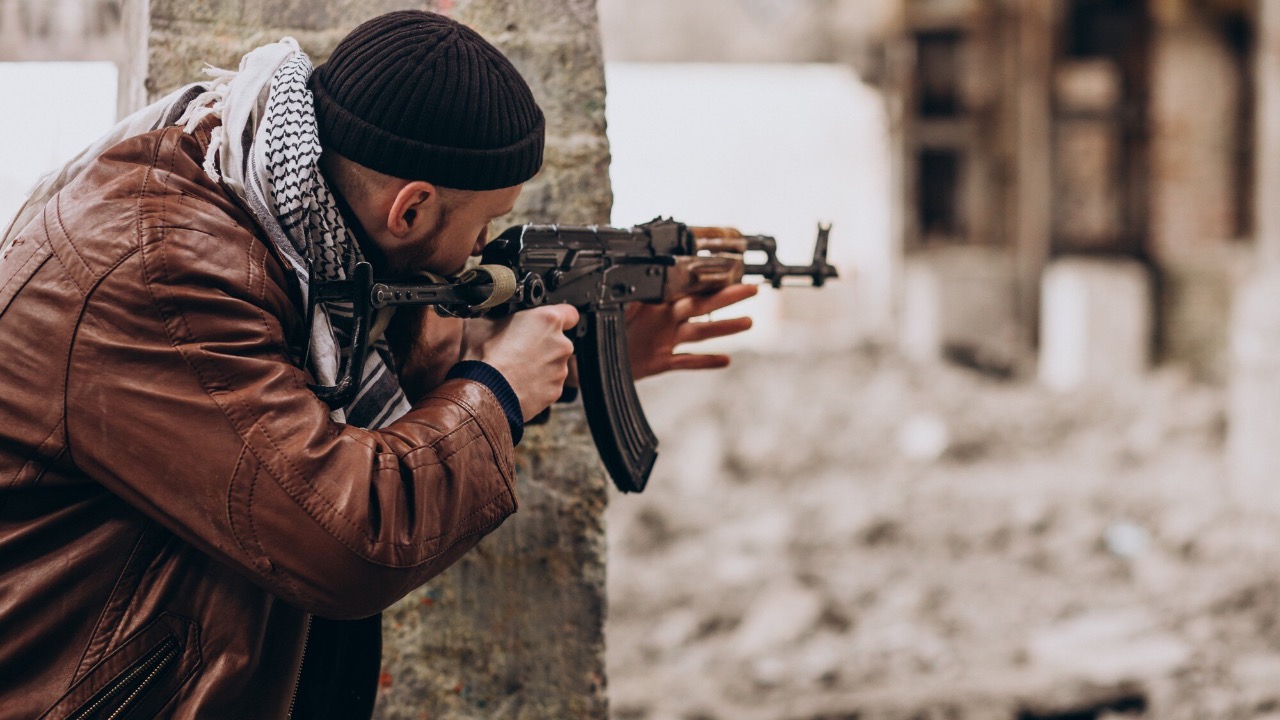
By late evening, large parts of Tehran had effectively become a militarized zone, with Gunfire echoing across multiple districts as armed units swept through key intersections. Footage and eyewitness reports describe convoys of pickup trucks fitted with mounted machine guns racing along main roads, their gunners firing into the air and, in some cases, toward buildings as they advanced. In several neighborhoods, residents said the intensity of the shooting made it impossible to move between homes, turning normally congested streets into empty, shell shocked corridors.
Images from the capital show burning Cars in the middle of major thoroughfares, a stark sign of how quickly protests over the collapse of the currency’s value in Tehran, Iran, spiraled into open confrontation. One widely shared scene, captured by a Stringer for WANA, shows vehicles engulfed in flames while armed men move past them, underscoring how the clashes blended crowd control with battlefield style intimidation. The same night, reports described militias firing heavy machine guns through Tehran streets in deadly night attacks, with residents recounting that Gunfire echoed through Tehran on Tuesday as these units patrolled the streets in Toyotas, asserting control through sheer firepower.
Foreign-backed militias in the capital
What set this crackdown apart was not only the volume of shots fired but who was pulling the triggers. Witnesses and opposition sources reported that Lebanese Hezbollah and Iraqi Popular Mobilization Forces fighters were seen operating alongside local units, their presence signaled by distinct uniforms, accents, and the heavy weapons they carried. In several clips, Hezbollah fighters appear with machine guns slung over their shoulders, moving in small groups through Tehran as Gunfire rings out in the background, suggesting that the state has leaned on its long cultivated network of regional proxies to reinforce its grip at home.
These accounts align with field reports that, in recent days, have pointed to the organized participation of several foreign militias in efforts to suppress unrest across Iran. Analysts who track the country’s proxy network say the same structures that once projected power into Lebanon, Iraq, and Syria are now being turned inward, with imported fighters used to confront demonstrators who are challenging clerical rule. The involvement of Lebanese Hezbollah and Iraqi Popular Mobilization Forces in Tehran’s streets illustrates how a system built for external confrontation is being repurposed to fight domestic opponents, blurring the line between foreign intervention and internal security.
Militarized streets and a city under siege
The visual language of the crackdown has been unmistakably military. Residents described seeing armed men in combat gear patrolling central arteries in convoys, often riding in Toyota pickup trucks more commonly associated with front line militias than urban police. Reports from the capital speak of Tehran streets hit with heavy machine gun fire from militias in deadly night attacks, with Gunfire echoing through Tehran on Tuesday as these units swept past apartment blocks and commercial centers. For many in the city, the sound of automatic weapons replaced the usual late night traffic, reinforcing the sense that the authorities were treating their own capital as hostile territory.
Accounts from multiple districts suggest that these armed groups were not simply guarding government buildings but actively projecting power into civilian spaces. Observers described militias patrolling near ministries and state broadcasting centers, as well as moving through residential neighborhoods where protests had been strongest. One detailed narrative of how Armed Militias Flood Tehran Streets as Nighttime Gunfire Signals Escalating Crackdown notes that Gunfire rang out across parts of Tehran late into the night, with security forces and allied fighters using heavy weapons to deter gatherings before they could coalesce. The choice to rely on such tactics in densely populated areas has raised fears of indiscriminate harm and long term trauma among residents who suddenly found themselves living in what felt like a war zone.
A blackout to hide a crackdown
As the shooting intensified, authorities moved to sever the city from the outside world. At 8 p.m., the authorities shut down internet access and blocked international phone calls, imposing what one account described as an unprecedented communications blackout that left millions cut off. Messaging apps went dark, international lines failed, and even domestic connections became unreliable, making it nearly impossible for families to check on loved ones or for activists to coordinate safe routes home. The timing of the shutdown, just as armed units were fanning out across Tehran, suggested a deliberate effort to conceal the scale of the operation and limit the flow of real time evidence.
As the blackout has slowly been lifted, investigators have pieced together the events of that weekend through firsthand accounts from protesters, doctors, and residents who witnessed the violence. One reconstruction by witnesses describes blood covered streets, overwhelmed clinics, and families searching for missing relatives once connections briefly returned. Another account notes that, As the blackout has slowly been lifted, CNN has relied on Social Media clips and interviews to reconstruct how protests were met with live fire. Together, these fragments reveal a night in which the state tried to erase its own actions in real time, only to have them reassembled afterward from the memories and recordings of those who survived.
From economic anger to armed repression
The eruption of heavy weapons in Tehran’s streets did not come out of nowhere. Earlier this year, protests over the collapse of the currency’s value in Tehran, Iran, drew large crowds into the streets, with demonstrators blocking roads and setting up barricades as inflation devoured wages and savings. Images from those early days showed Cars burning in a street during a protest, a visual shorthand for the fury many felt toward a system they saw as corrupt and unresponsive. As the rallies grew, slogans expanded from economic grievances to direct opposition to clerical rule, turning what began as a cost of living revolt into a broader political challenge.
Faced with this escalation, Iran’s rulers appear to have made a calculated choice to rely on overwhelming force rather than any meaningful reform. One detailed analysis notes that Iran’s rulers are betting on the iron fist, with the unprecedented brutal crackdown on recent protests described as a decision to answer demands for change in the worst possible way. Another report on how Tehran ignored warnings of unrest, chose force over reform, cites officials and analysts who say the leadership had ample notice of public anger but opted instead to prepare security forces and allied militias for confrontation. In that context, the decision to unleash armed groups with heavy machine guns in the capital looks less like a panicked response and more like the logical extension of a strategy built around deterrence through fear.
Casualty figures that hint at the true cost
Even before the latest night of clashes, the human toll of the crackdown across Iran was staggering. State media has acknowledged that at least 3,117 people have been killed during the protests, a figure that would already make this one of the bloodiest episodes in the country’s modern history. Independent monitors, however, say the real number is significantly higher. The US based Human Rights Activists News Agency, known as HRANA, has said 4,519 were killed during the wave of demonstrations, including 4, with many of the deaths attributed to live fire from the security forces. The precision of that figure, 4,519, underscores both the scale of the violence and the effort by rights groups to document each case despite the blackout and intimidation.
These numbers are not abstract statistics but a reflection of how often security forces have resorted to lethal force against unarmed crowds. One detailed report notes that The US based Human Rights Activists News Agency, HRANA, has compiled its tally from hospital records, morgue lists, and testimonies from families who say relatives were shot during demonstrations or died later from their wounds. Another account on at least 3,117 people killed during Iran protests, state media reports, highlights how difficult it is to independently verify the figures, given the restrictions on journalists and the communications shutdowns that accompanied major operations. Still, when set alongside the images of blood covered streets and the sound of automatic weapons in Tehran, the casualty counts help quantify a reality that residents have been living for months.
Protesters facing mercenaries and proxies
For those who continue to take to the streets, the challenge is no longer just confronting local police or Revolutionary Guard units but also contending with what many describe as mercenaries. Field reports and sources close to Iran’s ruling establishment have indicated the organized participation of several foreign militias in suppressing demonstrations, a development that has reshaped the balance of power between protesters and the state. Activists say that when Lebanese Hezbollah and Iraqi Popular Mobilization Forces fighters appear in Tehran, they bring not only heavier weapons but also a different mindset, one honed in conflicts abroad and less constrained by local social ties.
Analysts who study Iran’s regional strategy note that this domestic deployment is the flip side of a long running policy of building proxy forces beyond the country’s borders. One assessment of the challenge for Iranian revolutionaries describes how protesters now find themselves not only opposing the government but also fighting mercenaries linked to the architect of Iran’s proxy network. The same report from Iran emphasizes that this has forced demonstrators to adapt tactics, relying more on flash protests, encrypted messaging when available, and neighborhood level solidarity to avoid being isolated and overwhelmed. In that sense, the overnight clashes in Tehran are part of a broader struggle in which ordinary citizens are pitted against a transnational security apparatus built over decades.
A leadership doubling down on force
Inside the corridors of power, the choice to flood Tehran with armed groups appears to reflect a broader strategic bet. Commentators close to the security establishment argue that any concession would invite more pressure, so the only viable path is to demonstrate that the state remains willing and able to use overwhelming violence. One detailed account from Iran notes that the protests that erupted across the country were met with an iron fist, with officials effectively gambling that fear will eventually restore order. The same analysis references a timestamp of 18:50 GMT and the byline of Ata Mohamed Tabriz, underscoring how closely observers are tracking each phase of the confrontation.
Yet even some establishment linked voices acknowledge that this approach carries significant risks. Economic pressures remain acute, with sanctions, mismanagement, and corruption combining to erode living standards for large segments of the population. The decision to prioritize security spending, including the deployment of foreign militias and the maintenance of a vast internal surveillance apparatus, has further strained public finances. One report even cites a figure of 50 G in the context of the crisis, a shorthand that hints at the scale of resources being mobilized to sustain the crackdown. In the long run, pouring money and manpower into repression rather than reform may deepen the very instability the leadership is trying to contain.

Asher was raised in the woods and on the water, and it shows. He’s logged more hours behind a rifle and under a heavy pack than most men twice his age.