Army’s massive 32-helicopter formation hints at serious Middle East posture
The Army’s record-setting 32-helicopter formation was more than a stunt for the highlight reel. It was a loud, unmistakable signal that Washington is getting serious about the air muscle it can bring to bear if the Middle East goes sideways. When you line that formation up alongside fresh carrier deployments, multi-day air drills, and a steady churn of combat aviation brigades into the region, the picture that emerges is a country quietly tightening its grip on a volatile theater.
I see that big rotary-wing armada as the visible tip of a much larger posture shift, one that stretches from Kentucky flight lines to the deck of The USS Abraham Lincoln. To understand what it really means, you have to look past the spectacle and into the logistics, the unit rotations, and the way planners are knitting together helicopters, jets, and ships into a single, hard-edged message aimed squarely at Iran and anyone else watching.
The record formation that turned heads
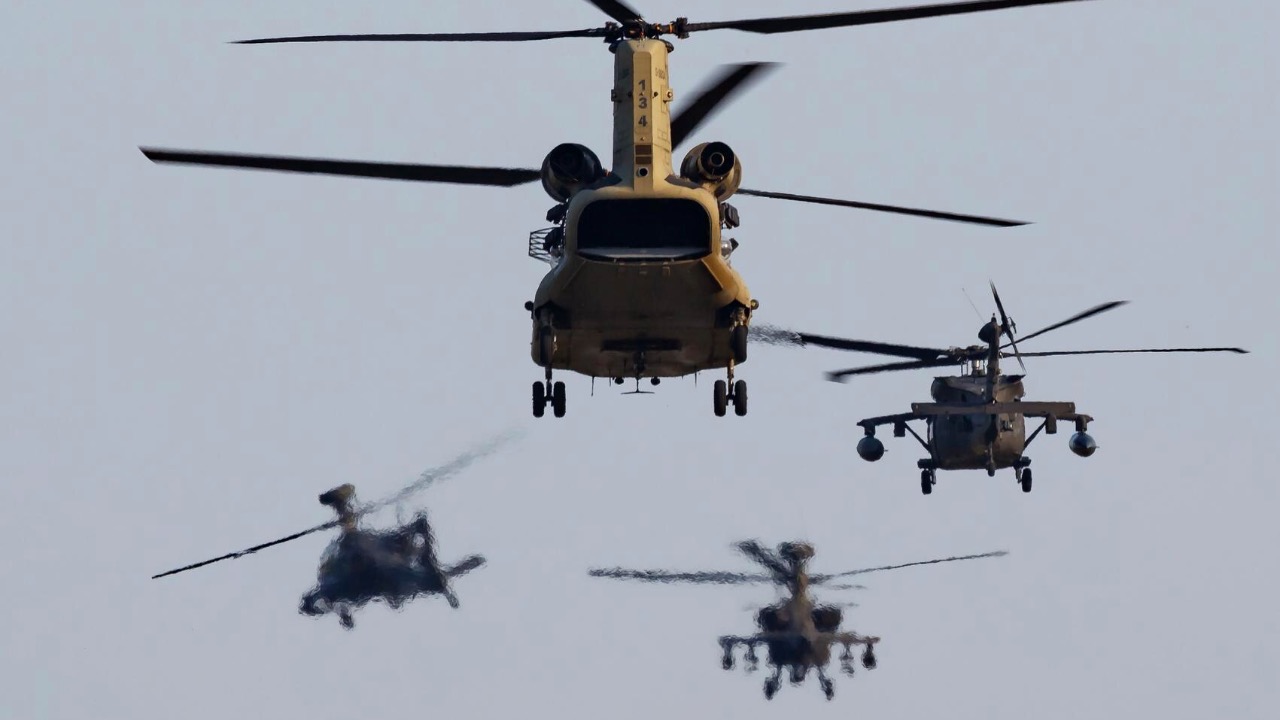
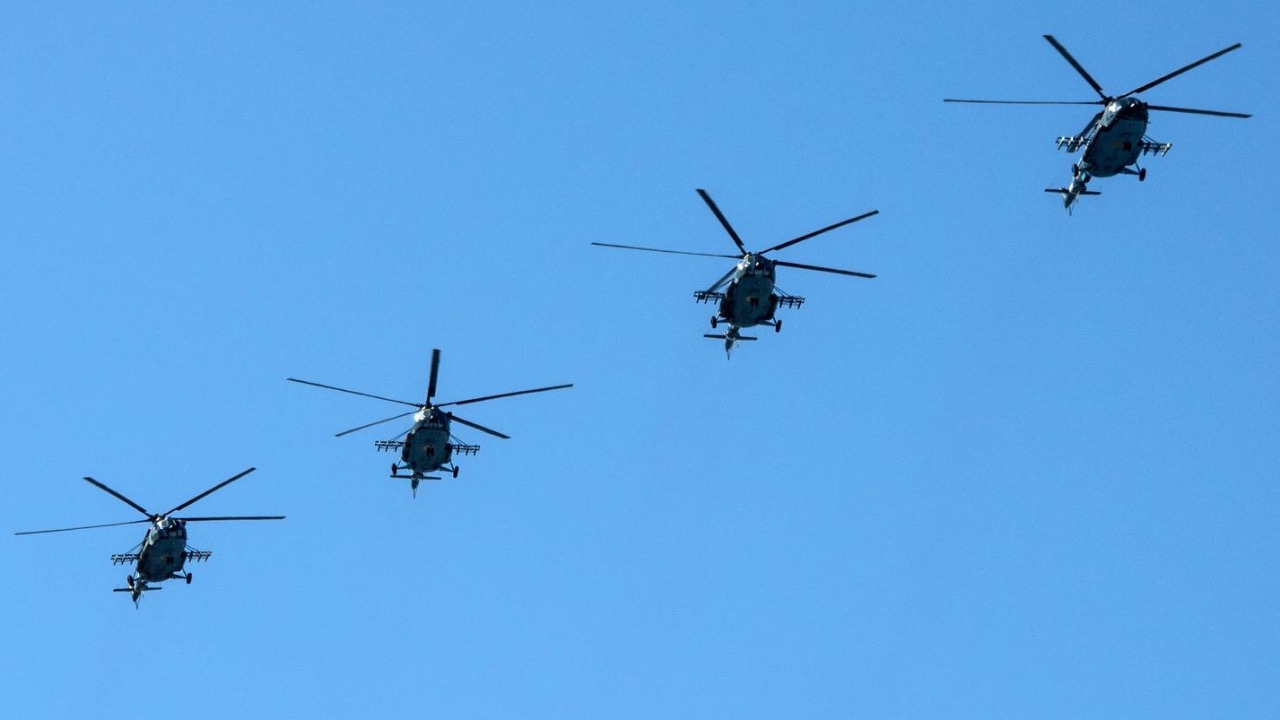
When the U.S. Army put 32 helicopters into a single coordinated formation, it set a new benchmark for large-scale rotary-wing operations and grabbed the attention of anyone who follows military aviation. Reports described how the service deployed exactly 32 aircraft, with the Army Deploys 32 Helicopters, Breaking Record for Largest Military Formation Ever, Published as a milestone event that pushed pilots, crews, and planners to synchronize at a level most forces never reach. That kind of choreography is not something you throw together for a photo op, it is the product of months of planning, rehearsals, and risk management that only a mature aviation enterprise can pull off.
According to coverage of the event, the U.S. Army Deploys 32 Helicopters, Breaking Record for Largest Military Formation Ever, Published as a deliberate demonstration of scale and precision rather than a one-off curiosity. The fact that the formation was billed as the largest helicopter formation flight on record tells me the Army wanted allies and rivals alike to see that it can mass rotary-wing power in a way that few others can match. When you are talking about that many aircraft moving together, you are talking about the ability to lift an entire battalion task force, flood a battlespace with attack platforms, or rapidly reposition combat power across a theater the size of the Middle East.
Why 32 helicopters matter in a real fight
On paper, 32 helicopters might sound like a number for aviation buffs, but in practical terms it is a combat package with serious teeth. According to one detailed breakdown, the U.S. Army Deploys 32 Helicopters, Breaking Record for Largest Military Formation Ever, Published as a benchmark that translates directly into lift capacity, firepower, and redundancy. In a real-world scenario, that many airframes could insert multiple infantry companies, sling-load artillery or air defense systems, and still keep attack birds overhead to cover the whole move. For a commander staring at a map of the Persian Gulf or the Iraqi desert, that is the difference between a slow, vulnerable ground convoy and a fast, hard-to-target air assault.
Analysts at According to the Next Move Strategy Consulting have pointed out that such a record-setting 32 helicopters market formation underscores the operational maturity of U.S. rotary-wing forces, something potential adversaries have struggled to fully replicate. In their view, the ability to coordinate that many aircraft in tight airspace, at night or in marginal weather, is a capability that does not show up overnight. When I look at that, I see a clear message: if a crisis breaks out under Central Command, the Army can surge a 32-ship package or more into the fight, and it has already proven that the crews know how to fly and fight together at that scale.
From training field to Middle East flight line
Big formations like this do not exist in a vacuum, they are the rehearsal for the kind of massed aviation operations that would matter most in a theater like the Middle East. According to one assessment, the U.S. Army Sets Record with 32-Helicopter Formation and, According to the Next Move Strategy Consulting, that 32 helicopters market formation highlights how the service is preparing for complex, multi-axis missions that could be required if tensions with Iran or other regional players boil over. When you practice stacking dozens of aircraft into a single air plan at home, you are really practicing for the day you have to move that same kind of package across desert terrain, under threat, in support of ground forces or special operations teams.
The link between training and deployment is already visible in the unit rotation pipeline. The 3rd Combat Aviation Brigade 3rd Infantry Division from Fort Stewart, Georgia, for example, has been tapped to deploy to Europe, while other aviation brigades out of Fort Campbell, Kentucky, are earmarked for Central Command. That steady drumbeat of rotations means the same types of units that can pull off a 32-ship formation at home are the ones eventually parking their birds on dusty ramps in Kuwait, Iraq, or along the Gulf.
Carrier power and the Abraham Lincoln factor
Rotary-wing muscle is only one piece of the posture puzzle, and it is being paired with a serious upgrade at sea. With the expected arrival of the aircraft carrier USS Abraham Lincoln and its carrier strike group to the US Central Command area, planners are knitting together sea-based airpower with the kind of land-based helicopter formations that have been on display. That carrier brings its own air wing of strike fighters, electronic warfare jets, and helicopters, giving Washington a floating airfield that can move closer to or farther from Iran as needed. When you combine that with Army aviation assets ashore, you get a layered air architecture that can hit targets, move troops, and keep an eye on shipping lanes all at once.
According to a detailed overview of the 2026 United States military buildup, The USS Abraham Lincoln, a nuclear-powered aircraft carrier, was deployed to the Middle East with its strike group as part of a broader response to concerns that tensions with Iran could escalate into wider conflict. That deployment, paired with the Army’s record helicopter formation, tells me the Pentagon is not content with a token presence. It is building a posture that can sustain high-tempo air operations from both sea and land if the president orders more than deterrent flyovers.
Trump’s second term and a shifting baseline
To really read the current posture, you have to remember where it started. At the beginning of Trump’s second term, several warships left the region to support US activities domestically and in other arenas, trimming the visible footprint in the Gulf and eastern Mediterranean. According to one detailed explainer on what military assets the US has in the region, that drawdown was followed by a renewed focus on assets that could strike deep into Iranian territory if needed, including long-range aircraft and precision munitions staged within reach of key targets. That ebb and flow is the backdrop for today’s more muscular stance.
Now, as the White House leans back into a heavier presence, the mix of assets looks different than it did a few years ago. At the same time that At the beginning of Trump’s second term the surface fleet was being shuffled, planners were already thinking about how to reintroduce capabilities in a way that would send a clear message without locking the United States into a permanent surge. The current combination of carrier power, large helicopter formations, and rotational aviation brigades shows how that thinking has evolved, and it helps explain why the 32-ship formation landed with such weight in policy circles.
Multi-day drills and the Iran message
Big formations and carrier arrivals are one thing, but the real test of posture is how often you put those assets through their paces. The United States announced that it was conducting an aerial military exercise in the Middle East amid ongoing tensions with Iran, describing multi-day drills that would bring together fighters, bombers, and support aircraft under a single command. According to one report, The United States announced on Tuesday that it was running these drills in the Middle East specifically to signal that it could launch an attack on Iran if deterrence failed. That is not the kind of language you use for a routine training sortie.
Another account of the same series of events framed it bluntly: US announces multi-day aerial military drills in the Middle East amid Iran tensions, with Andrew Roth and others noting that Central Command added in a statement that the drills were meant to reassure partners and warn Tehran. In that coverage, the words Middle East, Iran, Andrew Roth, and The Guardian are tied directly to the idea that these drills are about signaling as much as they are about sharpening skills. When you layer a 32-helicopter formation on top of that kind of exercise schedule, it is hard to see it as anything other than part of the same message.
Voices from the drills and the carrier deck
The tone from official and semi-official voices around these moves has been anything but subtle. In one widely shared clip, a commentator covering a major exercise as a US aircraft carrier moved into the region quoted tough talk along the lines of “anything ever happens we’re going to blow the the whole country is going to get blown up,” while also noting that Iran says it is not kidding either about its own threats. That segment, tied to a video on US announces major military exercise as the carrier arrived, captured the raw edge of the rhetoric surrounding these deployments. It is not polished diplomatic language, but it reflects the way both sides are talking about the stakes.
Another broadcast, introduced with “hello and welcome i’m Shavani Singh in the Middle East military exercises are rarely just about practice they’re about signaling,” drove the same point home. In that piece, Shavani Singh explained that in the Middle East context, every sortie and every formation is read as a message by regional capitals. When I hear that and then look back at the 32-helicopter formation, it is hard not to see it through the same lens: a flying billboard that says the United States can scale up quickly if it has to.
Combat aviation brigades on the move
Behind the headlines, the Army is quietly shuffling its aviation chess pieces into position. The 3rd Combat Aviation Brigade of the 3rd Infantry Division from Fort Stewart, Georgia, is slated to deploy to Europe to replace another aviation unit, while other brigades are earmarked for Central Command. According to one rotation summary, The 3rd Combat Aviation Brigade Infantry Division at Fort Stewart, Georgia, is part of a broader plan that also includes units out of Fort Campbell, Kentucky, heading toward the Middle East and Europe. That kind of rotation keeps fresh crews in theater and spreads the experience of high-end training events like the 32-ship formation across the force.
Another report notes that the 4th Combat Aviation Brigade 4th Infantry Division from Fort Carson, Colo, will deploy to Central Command, which oversees operations in the Middle East and is based at Fort Campbell, Ky. On top of that, a separate broadcast highlighted how the 101st Combat Aviation Brigade will head from Kentucky to US Central Command, with Nikki McGee explaining that the unit will relieve soldiers already in theater. That segment, tied to a video featuring the Combat Aviation Brigade from Kentucky and Central Command, with Nikki as the reporter, shows how these moves are being communicated back home even as they quietly thicken the aviation presence overseas.

Asher was raised in the woods and on the water, and it shows. He’s logged more hours behind a rifle and under a heavy pack than most men twice his age.