Meteorologist hints at surprise snow event based on new data
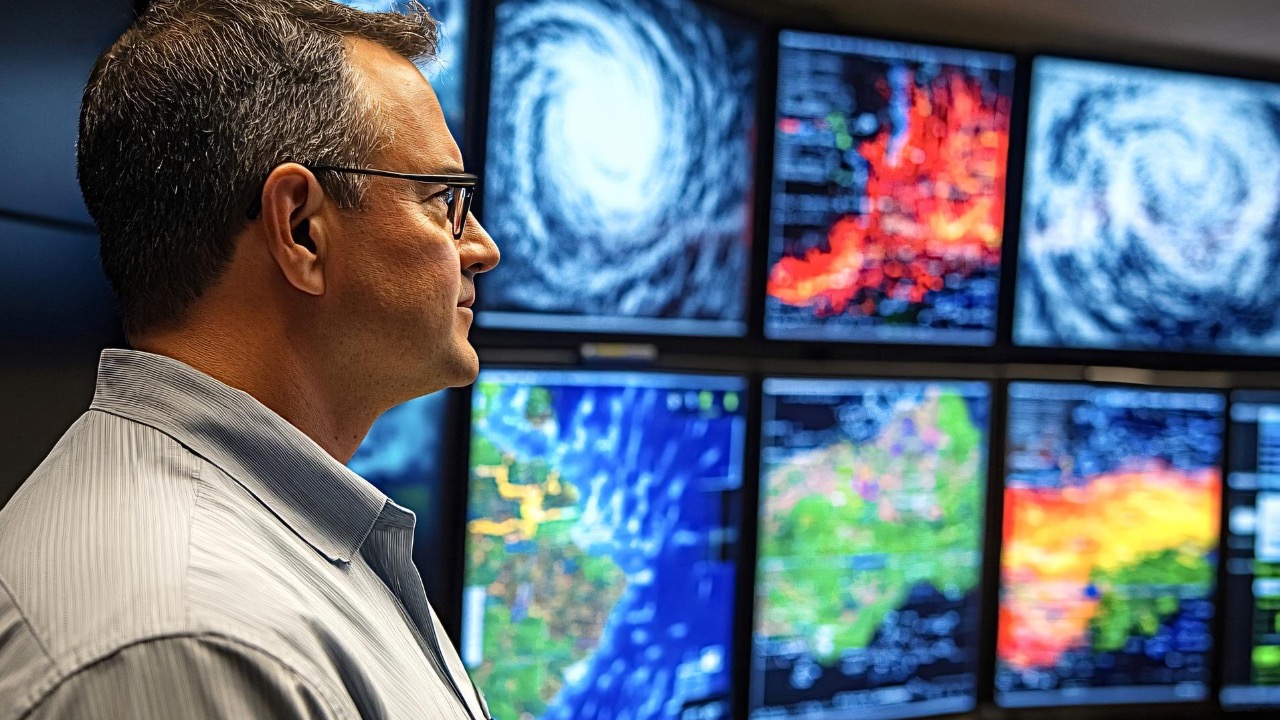
Fresh model runs are hinting that winter is not done surprising us. A cluster of new data points to a colder, stormier pattern taking shape, raising the odds that parts of the United States could see a burst of snow that was not on early-season outlooks. The signals are subtle but consistent enough that at least one meteorologist is now flagging the potential for a short‑notice snow event that could catch travelers and forecasters off guard.
That emerging risk is tied to two converging storylines: a destabilizing Arctic pattern that can shove cold air far from the pole, and a series of mid‑latitude storms that are already producing disruptive snow in several regions. Together, they create the kind of setup where a modest system can suddenly tap deeper cold and turn into a high‑impact winter storm with only a few days’ warning.
New model runs hint at a pattern shift
The first sign that something is changing comes from short‑range forecasts over the Rockies, where forecasters are talking about “entering a snowier pattern” after a relatively quiet stretch. In the Winter Park area, recent guidance shows a run of light systems stacking up, with one discussion noting that snowier conditions are poised to replace the recent dry spell. That kind of localized shift is often the first clue that the broader jet stream is starting to buckle, opening the door to more frequent and sometimes stronger winter storms.
Short‑range details matter because they reveal how much moisture and lift the atmosphere is willing to produce once colder air arrives. In this case, the same forecast package highlights that by Thu, Feb 12, Snow from Wednesday night plus additional Snow on Thursday could add up to 2–5 inches, suggesting that even modest waves are now capable of laying down fresh accumulation from Wednesday into Thursday. When I see a forecast that explicitly calls out that Wednesday and Thursday are likely to feature accumulating Snow in a place that had been quieter, it tells me the background pattern is becoming more supportive of a surprise event elsewhere too, especially if other regions line up under the same evolving jet configuration.
Arctic destabilization sets the stage
Behind the scenes, a more dramatic story is unfolding over the high latitudes. Meteorologists are tracking what has been described as an Arctic destabilization event, in which the normally tight pool of polar cold begins to wobble and fragment. When that happens, the cold does not simply slide south in a neat front; instead, as one analysis puts it, the sky does not care about our sense of order, and the chill can spill into places where you would not expect it. That kind of breakdown is exactly what can turn an otherwise routine storm into a snow producer in regions that had been running mild.
One of the leading voices on these patterns, Meteorologist Judah Cohen, has been focused on how this destabilization can send lobes of Arctic air into the mid‑latitudes. In a detailed explanation, he notes that Meteorologist Judah Cohen has been following how the disrupted circulation can shuffle cold into lower latitudes in irregular bursts. When that process coincides with an active storm track, it creates exactly the kind of environment where a “surprise” snow event becomes more likely, because the necessary cold can arrive late in the game and flip rain to snow with little lead time.
Rare atmospheric signals raise the odds
The Arctic wobble is not happening in isolation. Meteorologists are also flagging what they describe as an Unusual Early Arctic, a pattern that is arriving earlier in the season than usual. In that discussion, Meteorologists describe “rare atmospheric signals” that suggest the polar vortex is weakening in a way that can send cold air surging into regions far beyond the Arctic. When I see language like that from operational forecasters, it is a clear sign that the background state of the atmosphere is primed for volatility rather than quiet, steady weather.
Those same Meteorologists emphasize that they are tracking an unusual configuration of the jet stream that can amplify storms as they move away from the pole. The phrase Meteorologists Spot Rare is not used lightly in technical circles, and it underscores that this is not a routine midwinter pattern. When rare signals line up with an already active storm track, the odds increase that one of those systems will interact with a fresh lobe of cold air and produce heavier snow than earlier forecasts suggested.
Local forecasts already hint at “upside surprise” snow
Closer to the ground, some local forecasts are already using the kind of language that makes snow lovers sit up. In the Winter Park outlook, forecasters describe how Thu, Feb 12 will feature Snow from Wednesday night plus Snow on Thursday that should add up to 2–5 inches, a setup that could or should deliver soft Snow for skiers. That specific call for accumulating Snow on Wednesday and Thursday is embedded in a broader note that the pattern is turning more favorable for frequent light events, as highlighted in the detailed Thu, Feb 12 breakdown.
Even more telling is the way those same forecasters talk about the possibility of an “upside surprise.” In the Conditions section, they note that New Snow at the Mid Mountain stake has been limited, with 0 inches from Monday 5:00 am to Tuesday 5:00 am, yet they still flag a chance for an upside surprise as the storms get closer. That language, embedded in the Conditions discussion that references New Snow, the Mid Mountain stake, Monday and Tuesday, is exactly the kind of quiet hint that a seemingly modest setup could overperform once the atmosphere fully taps into the evolving Arctic pattern.
How Arctic air can flip rain to snow at the last minute
The mechanics behind a surprise snow event often come down to timing. When the Arctic circulation destabilizes, the cold does not slide south in a single, predictable wall. Instead, as one technical explanation notes, When the polar air mass breaks down, it fractures into lobes and tongues that push brutal Arctic air over parts of the hemisphere that had been relatively mild. That description of how the When Arctic air surges south helps explain why a forecast that looked like a chilly rain three days out can suddenly flip to heavy, wet snow as the event approaches.
In practice, that means a storm can spend most of its life cycle in a marginal temperature environment, only to intersect a fresh lobe of Arctic air in its final 12 to 24 hours. If that intersection happens over land, the rain‑snow line can collapse toward the surface, turning highways and runways from wet to slushy in a matter of hours. From a forecasting standpoint, that is exactly the kind of scenario where I would expect a meteorologist to hint at a surprise snow potential, especially when the broader Arctic pattern is already known to be unstable.
Early signals from regional forecast offices
Regional forecast discussions are starting to echo that sense of unease. In one community‑focused outlook labeled Monday, February 9, 2026, forecasters describe a weather system that will bring widespread precipitation but initially assign a Snow Forecast Impact None rating, with a scale that runs through Feakdling, Minor, Moderate, Major and Hegl. That structured impact table, embedded in the Monday briefing that also references Wednesday, Feb 11, 2026, shows that local offices are watching for a shift from low to higher impact as the pattern evolves.
At the same time, forecasters in Wyoming are warning residents not to be lulled by what has been one of the most mild and also warmest winters in Wyoming history. They note that While much of the country has been blanketed in snow, the state has largely escaped, but that is about to change, with snow and cold back in the forecast starting this evening and continuing on Tuesday, Wednesday and Thursday. That message, laid out in a detailed Wyoming update that also warns of dangerous travel on WY 51 and WY 59, is another sign that regional offices see the larger pattern turning colder and more wintry in a hurry.
Valentine’s Day storm potential keeps forecasters on edge
Looking slightly farther ahead, some private meteorologists are already circling Valentine’s Day on their calendars. One long‑range discussion notes that a POTENTIAL VALENTINE DAY STORM is STILL on the table, describing how a Sunday night into Valentine’s Day system that was flagged days earlier is STILL being tracked as a possible high‑impact event. That language, shared in a social media update that explicitly capitalizes POTENTIAL, VALENTINE, DAY, STORM and STILL, underscores how seriously forecasters are taking the risk that a holiday‑weekend system could tap into the evolving Arctic pattern. The post, which credits Pete Lymberopoulos, is accessible through a POTENTIAL link that spells out the concern in detail.
In a follow‑up, the same forecaster reiterates that the POTENTIAL VALENTINE’S DAY STORM is STILL ALIVE, a phrase that captures both the uncertainty and the persistence of the signal in the models. That kind of language is typical when ensembles are consistently hinting at a storm but the exact track and intensity remain unclear. For me, the key takeaway is that when multiple days of guidance keep a Valentine’s Day system in play during an Unusual Early Arctic Breakdown Expected In February, the odds grow that at least one region will see a snow event that feels like it came together at the last minute, even if the seeds were visible in the data a week in advance.
Recent high‑impact storms show what is possible
Any discussion of surprise snow potential has to be grounded in what has already happened this season. Earlier this month, Winter Storm Warnings Hit 4 States With 20 Inches of Snow and 95 MPH Winds, a combination of heavy accumulation and extreme gusts that turned highways into whiteouts and knocked out power in exposed areas. That event, detailed in a national report on how Winter Storm Warnings multiple regions with States With double‑digit Inches of Snow and near‑hurricane‑force MPH Winds, is a reminder that the atmosphere is fully capable of producing high‑end winter weather when the ingredients line up.
Updated guidance from the same storm cycle noted that some areas were expected to see 10 to 16 inches of accumulation as the system wrapped up, a figure that underscores how quickly totals can climb when a storm stalls or intensifies. That detail is captured in a follow‑on analysis that explains how, on February 9, 2026, the storm’s core was still strengthening and that certain corridors would likely see 10 to 16 inches before it moved out. The report, which notes that the forecast was later Updated, shows how even well‑advertised storms can still surprise on the upside, especially in narrow bands where mesoscale dynamics enhance snowfall.
What a “surprise” snow event would mean for travelers
For travelers, the practical impact of all these signals is straightforward: flexibility will be essential over the next couple of weeks. When Meteorologists warn of an Unusual Early Arctic Breakdown Expected In February and highlight that Meteorologists are tracking rare signals that can send cold into regions far beyond the Arctic, they are effectively saying that the atmosphere is primed for rapid changes. That message is reinforced in a technical note that explains how Meteorologists see the jet stream setting up to deliver sharp swings from mild to wintry conditions, sometimes within a single day.
In that context, a surprise snow event would not necessarily mean a blockbuster blizzard, but rather a storm that arrives faster, colder or snowier than the public had been led to expect. It could look like a forecast that shifts from “rain and wind” to “heavy, wet snow” within 24 hours, or a travel corridor that goes from bare pavement to chain controls between the morning and evening commute. Given the hints already embedded in the Winter Park Snow outlook, the Arctic destabilization analyses and the POTENTIAL VALENTINE’S DAY STORM STILL ALIVE messaging shared via ALIVE updates, I see enough evidence to say that anyone with mid‑February travel plans should keep a close eye on the forecast and be ready for winter to deliver at least one more surprise.

Asher was raised in the woods and on the water, and it shows. He’s logged more hours behind a rifle and under a heavy pack than most men twice his age.