Backcountry firearms guides trust when miles from help
Far from cell service and paved roads, professional guides work knowing they are often the only line of defense between their clients and a charging animal or violent stranger. The firearms they trust in those moments are not fashion accessories but carefully chosen tools that balance power, carry weight, and real-world shootability. In looking at the guns they favor, and the training and tactics that surround them, I’m trying to understand what actually works when help is miles away.
From big-bore revolvers to compact 10 mm pistols and short, fast-handling rifles, guides build their kits around specific threats and terrain rather than brand loyalty. Their choices, and the drills they run to keep those choices honest, offer a practical blueprint for anyone who wants a defensive gun that earns its place in the backcountry instead of just adding ounces to a pack.
Why guides still bet their lives on handguns
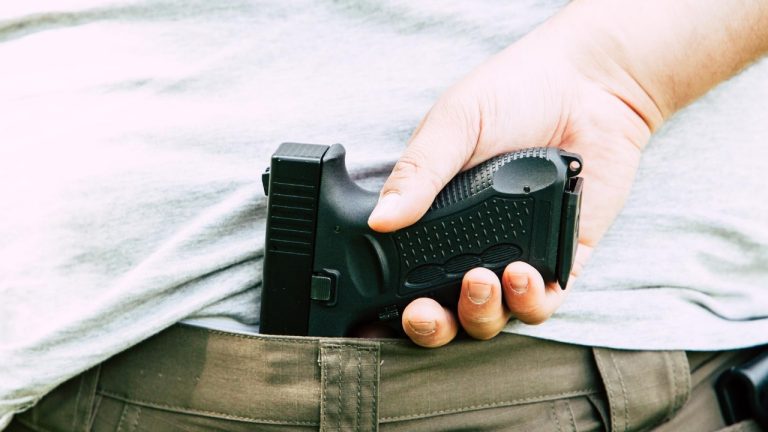
When I talk to outfitters, one pattern shows up again and again: they overwhelmingly carry handguns on their hips while they work. Long guns may ride in scabbards or on ATVs, but the weapon that is physically on the guide when a bear explodes from the brush is usually a pistol or revolver. One detailed breakdown of guide habits notes that Handguns are the most common firearm outfitters carry for protection, precisely because a holstered gun stays with them during every stream crossing, quartering job, and midnight walk to the latrine. That constant presence matters more than raw ballistics when a threat appears at conversational distance.
Guides also know that most backcountry emergencies unfold at very close range, where a quickly drawn handgun is more realistic than a slung rifle. Training standards aimed at professionals reflect that reality, with one demanding course requiring shooters to put 15 out of 18 rounds into a 9 inch target from multiple positions before they pass, a standard described in detail in guidance on what guides carry. I see that as the core of the handgun’s appeal in wild country: it is always there, and serious users hold themselves to accuracy benchmarks that reflect how unforgiving a real charge or human assault will be.
Caliber debates from bear country to trailheads
Arguments over caliber follow any conversation about defensive guns in the wild, and guides are not immune to those debates. In bear habitat, one widely shared discussion among hikers and hunters highlights a preference for a 44 magnum revolver, but the same thread bluntly states that a 12 gauge shotgun loaded with slugs is preferred for reliably stopping large dangerous animals, with a strong reminder that a good quality Bear spray should be the first tool and the gun the last resort. That exchange, captured in a backcountry-focused Facebook group, also points out that if in Bear country, a 10MM pistol can be sufficient for other predators, and even mentions a Springfield 10 mm 3.5 compact as a capable option, as detailed in the 44 magnum but discussion.
Outside of Bear country, another conversation emphasizes that Bear spray can have better results than a firearm for users who are not very proficient, and that Either option demands practice to be effective. Contributors in that thread stress that they are very pro firearms but still view the gun as the backup, not the primary plan, advice that appears in a detailed exchange on Bear spray effectiveness. I read those comments as a reality check: caliber matters, but judgment, proficiency, and nonlethal tools remain the real difference between a close call and a tragedy.
Backcountry revolvers that guides keep within reach
Among handguns, big-bore revolvers still have an outsized place in guide holsters because they combine simplicity with deep penetration on heavy-boned animals. One buyer’s guide aimed at wilderness travelers highlights the Taurus Tracker 44, explicitly naming the Taurus Tracker 44 as a purpose-built backcountry option, and I see that as emblematic of the genre: a medium-frame revolver chambered in a serious cartridge that an average shooter can still control, as described in the Taurus Tracker overview. That same logic drives many guides toward 44 magnum, where heavy hard cast bullets at moderate velocity are known for straight-line penetration rather than dramatic expansion.
Camp-specific recommendations for wilderness defense also lean heavily on 10 mm semi-autos that can carry more rounds while still driving deep with the right loads. One detailed rundown of camp-defense tools lists pistols such as the FN 510 Tactical, Springfield Armory XD-M Elite and 1911 Ronin, Colt Delta Elite, and Ruger SR1911 as serious options for tents and cook sites in predator country, grouping them together as capable 10 mm or .45 platforms in the Tactical and Elite category. I interpret that mix as a sign that guides no longer see a hard divide between revolvers and autos; instead they pick the platform that lets them run heavy, deep-driving bullets with the fewest compromises in speed and reliability.
Trail pistols, holsters and the weight question
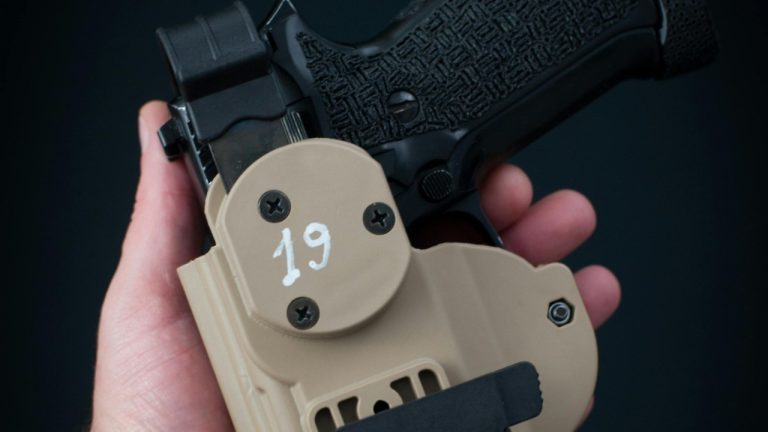
For guides who spend long days on foot, the holster and carry method often matter more than the brand name on the slide. Practical advice aimed at hikers stresses that pairing a handgun with a reliable hiking holster ensures quick access if needed and adds an extra layer of confidence during long miles, a point made explicitly in guidance on Pairing your firearm with the right rig. I see guides apply that by favoring chest holsters that ride above pack belts or strong-side hip rigs that stay clear of climbing harnesses and rifle slings, always with the same goal: a consistent draw stroke under stress.
Trail-gun advice aimed at hikers and casual hunters also leans into the tension between power and ounces. One practical rundown of Trail Gun Choices If the threat is dangerous animals and humans explains that the firearm must combine power and accuracy, yet still remain light enough that the user actually carries it all day, a balance highlighted in a guide to Trail Gun Choices threat is mixed. When I translate that into guide practice, I see them trimming weight where it does not cost performance, such as choosing polymer-framed 10 mm pistols or mid-size revolvers, but refusing to sacrifice shootability just to hit an arbitrary ounce target.
Rifles that earn a place in the scabbard
Although handguns ride on hips, many guides still keep a short, powerful rifle close at hand for situations where they have a few seconds of warning. A prominent example is the Marlin Model 1895 Guide Gun, described as a firearm specifically for guides or anyone looking for a gun for protection, with the ability to hold 7 cartridges and deliver heavy .45-70 bullets at close range, as detailed in a feature on Rifles and The. I view that lever gun as almost purpose built for thick alder and willow, where shots are close, reaction windows are short, and a fast second or third round might be the only thing that stops a charge.
Lightweight bolt actions are also moving into guide scabbards, especially in open country where shots may stretch. One example is the Weatherby Mark V Backcountry 2.0 in 7 mm, which is Designed to tame Weatherby magnum cartridges while remaining light enough to carry, and comes equipped with an Accubrake ST and a 3DHex recoil pad to maintain control on demanding shots, details laid out in the description of the Weatherby Backcountry Accubrake system. I see similar thinking in commentary on how light is too light for a hunting rifle, where a discussion with Jeff Bradley of Christensen Arms explores the tradeoff between ultra-light rifles and the increased recoil and muzzle jump that can make fast follow-up shots harder, a balance examined in a video featuring Jeff Bradley of. Guides I have met tend to settle on rifles that are light enough to carry, but not so light that they become punishing in field positions.
Brush guns and regional rifle setups
Guides who work in dense timber or alder thickets think about rifles very differently from those glassing open basins. One detailed test of brush rifles argues that a brush rifle should be defined by its handling characteristics, specifically a short and handy lever action, pump action, straight pull, semi-auto, or short bolt gun that is easy to shoot in tight thickets at close range, as explained in a study of brush rifle handling. I see that philosophy every time a guide chooses a short-barreled lever gun in .45-70 or .35 Remington over a long, heavy magnum that might snag on every spruce limb.
Regional rifle setups reflect terrain as much as personal taste. One hunter describing his own evolution notes that Navigating dense vegetation in the Midwest or near the Ozark hills of southern Missouri calls for a compact brush gun that can be brought to bear quickly, a point made in a reflection on Navigating Midwest Ozark cover. When I map that mindset onto professional guides, I see them building region-specific kits: a short, iron-sighted lever gun for alder choked river bottoms, a flatter shooting 7 mm Backcountry rifle for alpine basins, and perhaps a combination gun that can feed clients in camp while still serving as a last-ditch defensive tool.
Combo guns and multi-role tools for remote country
Guides who stay out for days or weeks at a time often favor guns that can solve more than one problem. A prominent example is The Savage Model 42, an over and under combination gun that pairs a .22 LR or .22 Magnum barrel with a .410 shotgun tube, described by one experienced user with the line Why I Love It, a defensive gun that will also help you procure food in remote corners of the country, a sentiment captured in a piece highlighting Why Love It 42. I see that concept resonating with guides who want a single firearm that can take small game for the pot, knock down a grouse on the trail, and still be pressed into service if a two legged threat appears in camp.
Rifles chambered in efficient 7 mm cartridges also show up in this multi-role category. One focused look at the 7 mm Backcountry rifle argues that for hunters venturing into remote areas where carrying extra gear is not feasible, lightweight yet strong options are vital, and presents the 7 mm as a hunter’s best companion for both long shots and packability, as outlined in a discussion of the 7mm Backcountry rifle. I interpret that as an argument for versatility: a gun that can ethically take game at distance and still ride easily on a pack strap is exactly the sort of tool a guide can justify hauling up every ridge, especially when it also serves as a potent deterrent to human threats.
Ammo, training standards and real-world drills
Guides who carry guns for a living rarely treat ammunition as an afterthought. One backwoods carry guide states bluntly that Ammo Selection is critical, explaining that a backwoods gun is only as good as the rounds you feed it, and recommending hard cast loads for wildlife threats while reserving expanding bullets for human defense, all under the heading of Ammo Selection. I see that same logic in the way serious handgun carriers choose deep penetrating 10 mm or 44 magnum loads for bears, then switch to controlled expansion bullets when their main concern is carjackers at remote trailheads rather than grizzlies on salmon streams.
Training standards for professional guides also reflect a hard-nosed view of what counts as competent. A structured handgun program aimed at backcountry professionals requires shooters to hit a 9 inch mark with 15 out of 18 shots from each position in order to pass, a standard described in detail in the Dec guidance on Dec handgun drills. I read that as a reminder that simply owning a powerful gun does not equal readiness; guides who truly trust their firearms in the backcountry are the ones who invest time and ammunition until those kinds of hit rates are routine from awkward, improvised positions.

Leo’s been tracking game and tuning gear since he could stand upright. He’s sharp, driven, and knows how to keep things running when conditions turn.