Concealed-carry pistols known for uncomfortable recoil or handling
Compact pistols promise discreet protection, but many of the smallest models are notorious for sharp recoil, awkward ergonomics, and handling quirks that punish the shooter more than the target. When a gun is painful or difficult to control, training time drops, accuracy suffers, and the odds of a fumbled draw or bad hit climb at the very moment performance matters most. I want to look squarely at the concealed-carry handguns that draw the most complaints for uncomfortable recoil or handling, and at the design choices that push a pistol from “manageable” into “miserable.”
Across calibers and platforms, the pattern is consistent: ultra-light frames, abbreviated grips, and hot loads in tiny packages create a level of “snap” that surprises even experienced shooters. By contrasting those problem guns with lower-recoil alternatives and user reports, I can map out where concealed-carry design goes wrong, why some popular models feel worse than their ballistics suggest, and how to avoid buying a pistol you dread taking to the range.
Why small guns kick harder than their ballistics suggest

On paper, many pocket pistols fire relatively modest cartridges, yet shooters routinely describe them as brutal. The physics are simple: when weight and grip area shrink, the same cartridge produces more felt movement in the hand. A compact 9 mm with a full three-finger grip spreads recoil over more surface and lets the shooter lock in, while a micro pistol that only accepts two fingers channels that same impulse into a smaller contact patch, which amplifies the sting and muzzle rise. Even in lower-pressure rounds like .38 Special, a featherweight snubnose can feel harsher than a heavier service-size 9 mm because the gun has so little mass to soak up the rearward push.
Real-world comparisons back this up. One detailed look at common carry calibers notes that after .22 lr, the next step up is .380acp, then 9 mm, then .45acp, but it also observes that some compact pistols in the same caliber feel “snappier,” with more muzzle bounce, than larger guns using identical ammunition, simply because of their size and grip geometry, a pattern that shows up clearly when shooters compare popular calibers. Revolver shooters see a similar effect when they move from steel to lightweight alloys: the cartridge has not changed, but the experience does. That is why a cartridge like 38 Special, which can be loaded to moderate pressures, often feels more controllable in a medium-frame revolver than in the lightest snubnose, even though the ballistics on paper look nearly identical.
Micro .380s and “pocket rockets” that punish the shooter
Few categories generate more recoil complaints than ultra-small .380 pistols. In theory, .380acp should be a relatively soft-shooting round, yet when it is stuffed into a pistol that weighs barely more than a smartphone, the result can be a sharp, unpleasant snap. One widely discussed example is the Ruger LCP 380, a classic “mouse gun” that enthusiasts still describe as harsh despite its modest chambering. A recent Video on “pocket rockets” singles out the old Ruger LCP 380, noting that at around $200 (and not $250 as some older references claimed), it “sucks” to shoot and has earned a reputation as a 9 mm mouse gun in spirit, even though it is chambered in 380, because the recoil impulse feels so abrupt in such a tiny frame.
User anecdotes echo that verdict. In one long-running concealed-carry discussion, a shooter flatly calls the Bodyguard 380 “the most painful gun I have shot to date,” a sentiment that stands out even in a forum full of hardened carry owners, and another user, identified as G19Gen3, notes that they Owned one and then quickly Sold it, with the commenter Aberroyc chiming in for context. Elsewhere, another carrier recalls that they used to run a S&W bodyguard 380 as a “Great little pocket pistol” that Ran all types of fmj reliably, but the praise for reliability in that Jun thread sits alongside the broader consensus that these micro .380s are fatiguing to shoot in volume. The lesson is clear: even when a tiny pistol feeds and fires well, its recoil characteristics can make regular practice a chore.
Snubnose revolvers and the myth of “manageable magnum”
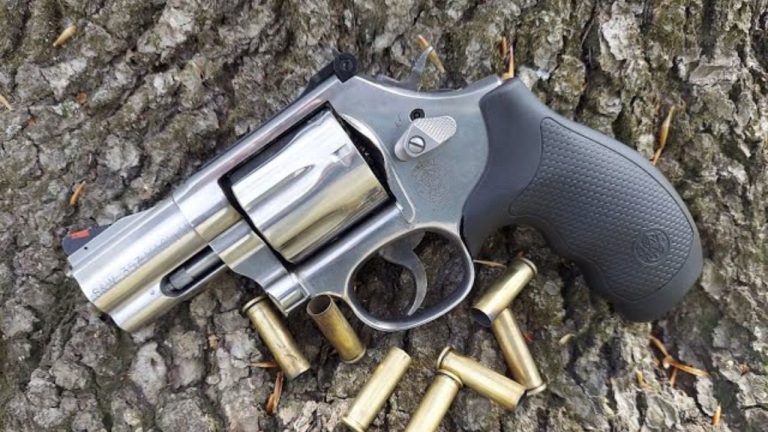
Revolvers remain popular for deep concealment, but the smallest models in serious calibers are infamous for punishing recoil. Lightweight .357 snubs, in particular, promise magnum performance in a pocketable package, yet the combination of short barrels, small grips, and hot loads often produces a blast and snap that many shooters simply cannot control. Ammunition makers acknowledge this reality in their own technical notes: one detailed description of 357 Mag ammunition warns that Recoil and Felt recoil are exacerbated by shorter barreled, smaller framed, lighter weight 357 revolvers, which are typically used for concealed and duty carry, because there is so little mass and grip area to tame the cartridge’s energy, a point spelled out in the ammunition notes.
Even when shooters step down in power, the tradeoffs remain. In one discussion about low recoil carry guns, a user weighing options notes that the SP-101 is pretty expensive, as is the LCR, and suggests that Maybe a . 38 or 327 Federal or . 32 H&R Magnum revolver from Taurus or Charter might be more realistic, while also warning that a particular compact model has a pretty snappy recoil despite its modest chambering, a candid assessment captured in a Sep thread. At the same time, larger-frame revolvers like the Colt King Cobra show how size can tame the same cartridges: a detailed review of that model notes that while Semiautomatic pistols designed for concealed carry receive most of the attention, small, easily carried revolvers remain extremely popular and sell quite well, in part because their extra weight and grip length make them more comfortable to shoot than the lightest snubs, a contrast highlighted in the Colt review.
Derringers, backup guns, and the limits of “last-ditch” firepower
Some of the most uncomfortable carry guns are not primary pistols at all, but niche designs marketed as backups or “get off me” weapons. Derringers are a prime example. Their tiny grips, rudimentary sights, and often heavy triggers make them difficult to shoot well even at close range, and the combination of short barrels with relatively stout calibers can produce a surprisingly sharp kick. One detailed critique points out that Derringers, despite their undeniable cool factor and historical appeal, are a poor choice for concealed carry because their handling and recoil characteristics make accurate, rapid fire extremely difficult, a conclusion laid out bluntly in a Aug analysis.
Backup guns raise similar concerns. A closer look at how professionals use them notes that Backup guns are typically small because they are often carried in deep-concealment positions, and that a subcompact 9 mm is about as large as most people can realistically hide in an ankle holster or vest pocket, a reality spelled out in a detailed backup overview. The problem is that shrinking a 9 mm to backup size often means a two-finger grip, minimal sights, and a slide that is harder to rack, all of which amplify felt recoil and slow follow-up shots. When a gun is meant to be used under extreme stress, those compromises can turn a theoretical advantage into a liability.
When “concealable” becomes too small to control
Even among mainstream semiautomatics, the drive for ever-smaller profiles can backfire. Many subcompacts sacrifice grip length to disappear under light clothing, leaving the shooter with only two fingers on the frame and a dangling pinky. One detailed fit-and-carry guide notes that Sure, you can add aftermarket “pinky extensions” to the magazine to help mitigate this issue, However, it is a fix that often changes the gun’s concealment profile and does not fully solve the control problem, especially for those with larger hands, a tradeoff explained in a size-focused analysis. The result is a pistol that may print less under a T-shirt but bucks and twists more under recoil, making fast, accurate strings of fire harder to achieve.
Real-world shooters often discover this the hard way. In one discussion about low-recoil options for a working jeweler, a commenter using the handle overhead72 notes that they do not recall ever injuring their wrist shooting a handgun, but that if they had to pick a gun for someone with wrist issues, they would prioritize a model that seems to be easily concealable without being so small that it becomes punishing to shoot, a balance they describe in an Oct thread. That kind of feedback underscores a broader point: concealment is only half the equation. If a pistol’s dimensions make it unpleasant to train with, the owner is less likely to build the muscle memory that real-world defensive use demands.
Caliber choices, low-recoil designs, and guns that still miss the mark
Caliber debates often overshadow the more practical question of how a given round feels in a specific platform. A detailed comparison of 38 Special vs. 9mm notes that, all things equal, 38 Special tends to produce slightly less recoil because it operates at lower pressure (and therefore lower velocity), especially in standard-pressure loads, a point illustrated with examples like Winchester 38 Special Ammo in 500 Rounds of 130 Grain FMJ Ammunition and a prompt to Shop for that cartridge, all laid out in a Dec comparison. Yet when that same 38 is fired from a featherweight snubnose, the theoretical advantage can disappear, while a heavier 9 mm with a better grip may feel softer and be easier to control.
Manufacturers have started to respond with purpose-built low-recoil carry guns. One roundup of Top 10 Lower-Recoil Carry Handguns for 2025 highlights models like the Smith & Wesson Model 637-2 163050 chambered in 38 Special +P, priced at $389, as examples of designs that balance power and controllability, a balance that earns them a spot among the Top Lower Recoil Carry Handguns for the coming year. Another overview of soft-shooting pocket pistols points to innovations like S&W’s EZ line, Walther’s CCP and PD380, SIG’s lower recoil 380 variant of the P365, and several Ruger models, all engineered to reduce slide effort and tame recoil in compact frames, a trend described in a Jul overview that specifically calls out 380 as a beneficiary of these design tweaks. Yet even in this space, some pistols still miss the mark, either by remaining too small to grip securely or by pairing soft-shooting calibers with triggers and controls that are difficult for new shooters to manage.
Reliability, training, and why comfort still rules
Recoil and handling are only part of the concealed-carry equation, but they interact directly with reliability and training. A pistol that is painful to shoot will see fewer rounds in practice, which means less familiarity with its quirks and a higher chance of user-induced malfunctions. One widely shared video review of carry pistols notes that a particular model, even after new extractors and springs, would jam several times around 50 rounds, leading the reviewer to conclude that it was unsuitable for defensive use despite its compact size, a damning assessment captured in a Dec breakdown. When that kind of mechanical unreliability is paired with harsh recoil, the incentive to train evaporates.
At the same time, the market’s obsession with ever-smaller guns can overshadow the simple truth that a slightly larger pistol is often easier to shoot well. Some of the most thoughtful carry advice now urges people to consider a larger gun for concealed carry, arguing that the marginal increase in grip length and slide height pays off in dramatically better control and comfort, especially for those who plan to carry daily and train regularly. In my view, the pattern across user reports, technical notes, and product lineups is unmistakable: the concealed-carry pistols most notorious for uncomfortable recoil or handling are the ones that chase extreme compactness or magnum power at the expense of ergonomics. The shooters who end up most satisfied are those who accept a bit more size, choose calibers and loads that they can manage, and prioritize guns they are willing to shoot far more than 50 rounds at a time without dreading every trigger press.

Leo’s been tracking game and tuning gear since he could stand upright. He’s sharp, driven, and knows how to keep things running when conditions turn.