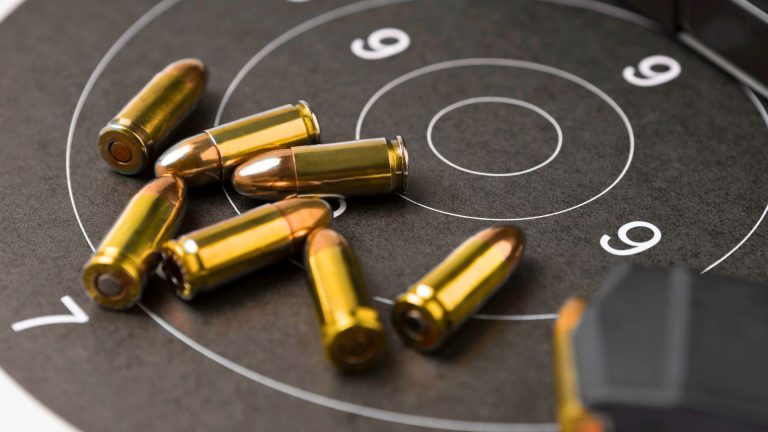
Calibers that make ethical shots harder than they should
Ethical shots aren’t about proving a point or stretching limits. They’re about clean kills, predictable performance, and giving yourself margin when conditions aren’t perfect. Some calibers shrink that margin fast. They demand tighter distances, calmer wind, perfect angles, or bullet placement that leaves no room for error. Plenty of them have taken game over the years, but that doesn’t mean they make good sense today. When a cartridge forces you to pass shots you should feel confident taking, or tempts you to push past its comfort zone, ethics get complicated. These are calibers that don’t forgive small mistakes and make doing the right thing harder than it needs to be.
.22 Long Rifle

The .22 LR has probably accounted for more animals than any cartridge alive, but that history doesn’t make it suitable for big game. Limited penetration and extremely low energy leave almost no room for error once bone or bad angles enter the picture.
Even at close range, ethical outcomes depend on perfect placement and calm animals. Any movement, deflection, or marginal hit quickly turns into a tracking problem or worse. The round isn’t consistent enough on larger game to offer a clean margin, and relying on it shifts responsibility from equipment to luck, which isn’t a place ethical hunters should be operating from.
.22 Hornet
The .22 Hornet sits in an uncomfortable middle ground. It offers more speed than a rimfire but still struggles with penetration and energy on deer-sized animals. Bullet construction matters a lot, and not all loads behave predictably after impact.
Wind drift and rapid velocity loss complicate things beyond short distances. Shots that look easy through a scope can turn marginal quickly in real conditions. While it can work under controlled circumstances, it requires restraint most hunters don’t consistently maintain. Ethical shots shouldn’t rely on perfect calm and ideal angles every time.
.218 Bee
The .218 Bee has nostalgia working in its favor, but nostalgia doesn’t improve terminal performance. Its light bullets and modest velocities limit penetration, especially on quartering shots or heavier-bodied deer.
Range is short, and the margin for error is thin. Any misjudgment in distance or wind shows up immediately on target. While it has taken game cleanly, it demands near-ideal conditions to do so. Ethical hunting shouldn’t require you to thread needles when better tools exist.
.224 Valkyrie
On paper, the .224 Valkyrie looks capable, but real-world hunting exposes its limitations. Bullet selection becomes critical, and expansion can be inconsistent at lower velocities encountered at distance.
Wind drift and energy loss shrink your ethical window faster than expected. Shots that seem well within range can arrive with less authority than planned. The cartridge can work, but it asks you to manage too many variables at once. Ethical shots are easier when a cartridge carries reliable performance across a wider range of scenarios.
.22-250 Remington

The .22-250 is fast and flat, which builds confidence quickly, sometimes too quickly. Light-for-caliber bullets can fragment aggressively, limiting penetration on less-than-perfect angles.
Wind drift may be manageable, but terminal performance varies widely with bullet choice. A slight miscalculation can turn a solid hit into a long track. While effective in careful hands, it demands discipline and restraint that many hunters struggle to maintain once distance starts stretching.
.243 Winchester (Light Bullet Loads)
The .243 Winchester can be excellent, but lighter bullet choices narrow its ethical window. Rapid expansion and reduced penetration become issues when shots aren’t perfectly broadside.
Wind and distance compound those problems quickly. While accurate and mild to shoot, the cartridge places a premium on bullet selection and shot discipline. Ethical shots are possible, but the round doesn’t forgive impatience or marginal angles the way heavier options often do.
.300 Blackout
The .300 Blackout excels at close range, but beyond that, performance drops fast. Subsonic loads lack penetration and energy for ethical big-game use, while supersonic loads still have limited reach.
Trajectory becomes steep quickly, and wind drift isn’t forgiving. Shots that appear manageable can arrive slower than expected. The cartridge works inside strict limits, but ethical shots demand constant awareness of those limits, which can be easy to forget in the field.
6.5 Grendel
The 6.5 Grendel is capable, but it doesn’t offer much cushion at longer distances. Velocity loss affects expansion, especially with tougher bullets.
Wind drift and drop require precise data and execution. While accurate and efficient, it pushes ethical responsibility heavily onto the shooter. Any lapse in range estimation or wind call narrows outcomes fast. Ethical shots are easier when a cartridge gives you more room for small mistakes.
.30-30 Winchester
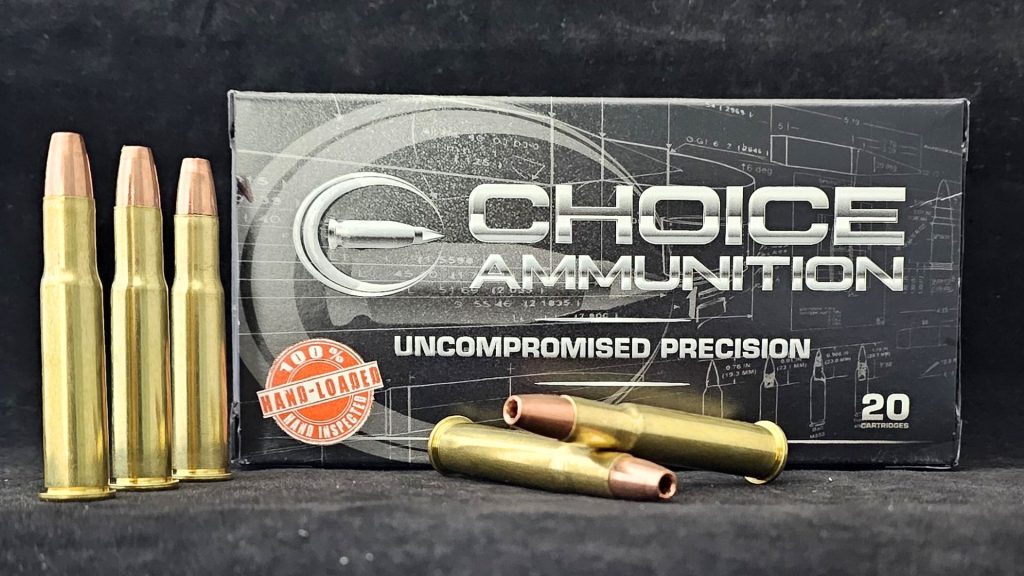
The .30-30 has filled freezers for generations, but distance is its weak point. Trajectory drops quickly, and wind plays a larger role than many expect.
Shots beyond moderate range demand careful holdover and perfect judgment. Stretching it too far turns confidence into guesswork. Ethical shots are still possible, but the cartridge forces restraint that not every situation encourages, especially in open country.
.45-70 Government
The .45-70 hits hard up close, but its rainbow trajectory complicates longer shots. Bullet drop is dramatic, and small ranging errors become big misses.
Wind drift and slower velocities reduce predictability past short distances. Ethical shots require strict distance discipline and a clear understanding of the cartridge’s limits. When those limits get ignored, outcomes can turn questionable fast.
.25-20 Winchester
The .25-20 belongs to another era of hunting conditions. Energy levels are low, and penetration is limited, especially on modern big-game expectations.
Even inside short ranges, it demands perfect angles and calm animals. Any deviation shrinks ethical outcomes quickly. While it has historical success, better options exist today that make clean kills far more consistent and responsible.
.410 Slug
The .410 slug is often misunderstood. While accurate at very short distances, energy and penetration drop rapidly. Range estimation becomes critical almost immediately.
Any attempt to stretch distance turns ethical certainty into hope. Shot placement must be perfect, and angles must be ideal. Ethical shots with a .410 require restraint and honesty that can be hard to maintain when bigger, more forgiving tools are readily available.

Asher was raised in the woods and on the water, and it shows. He’s logged more hours behind a rifle and under a heavy pack than most men twice his age.