Colombia plane crash raises concerns after reports of explosion
A Colombian Air Force transport plane packed with troops and equipment crashed shortly after takeoff in the south of the country, killing at least 66 people and injuring dozens more. Early witness accounts of an explosion and official confirmation that ammunition detonated on board have turned a national tragedy into a pressing safety and accountability test for Colombia’s military.
The disaster near the border with Peru has revived long standing concerns about how the armed forces manage aging aircraft, hazardous cargo and high risk missions in remote regions. As investigators sift through wreckage and testimony, families of the 66 dead and the 81 people treated for injuries are demanding clear answers about what went wrong in the air and on the ground.
The crash: a brief takeoff and a catastrophic fireball
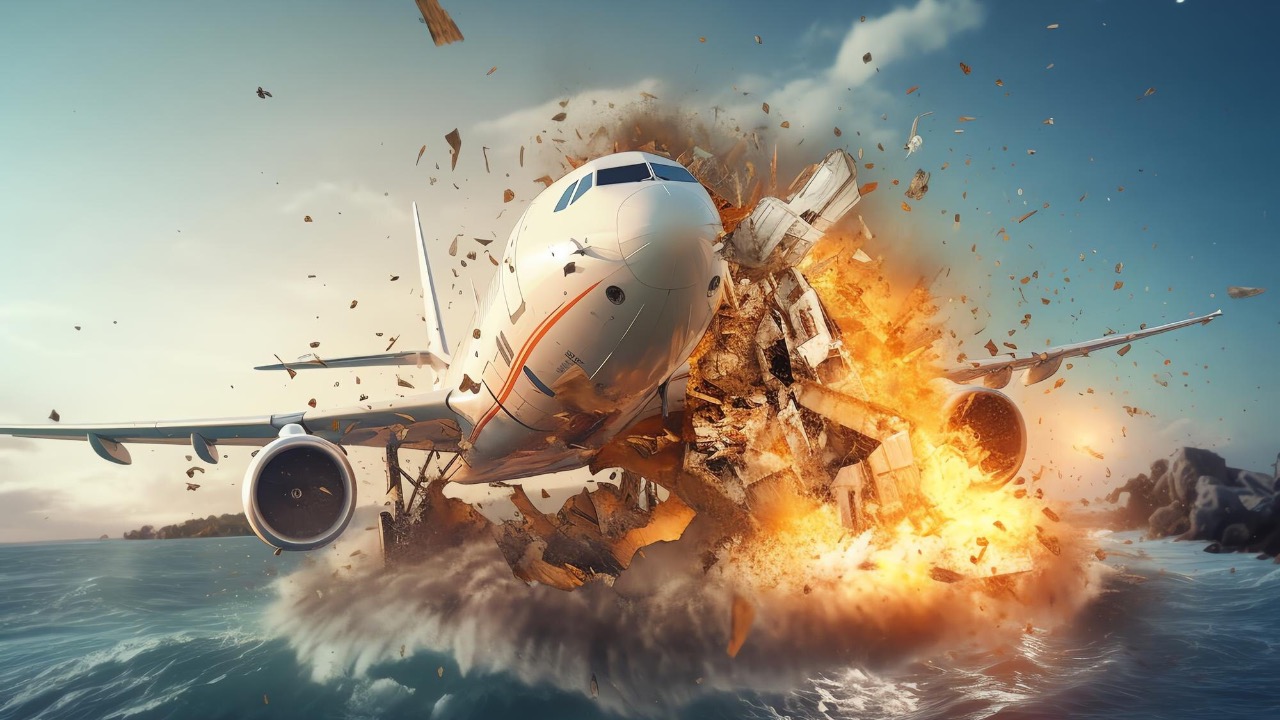
According to initial reports from Colombian authorities, the military transport aircraft went down in the south of the country shortly after lifting off from a runway near the border region. The plane belonged to the Colombian Air Force and was carrying soldiers and equipment toward central Colombia when it lost altitude and slammed into the ground only minutes into the flight.
Witnesses described a low flying aircraft that appeared to struggle almost as soon as it left the runway. Video and photos from the scene showed a towering column of smoke rising from the crash site, with rescuers racing toward the burning wreckage. In images shared by local media, thick plumes of black smoke curled above the trees and fields as emergency crews tried to reach survivors trapped inside the twisted hull.
The aircraft was operating in a zone where Colombia’s armed forces routinely shuttle personnel and supplies to remote bases. Earlier this year, military planners had been using heavy cargo planes to move troops from the south toward Bogotá and other hubs, part of a broader effort to support operations near the borders with Ecuador and Peru. On this flight, the aircraft was reportedly carrying a large contingent of service members, along with ammunition and other gear.
Authorities quickly confirmed that the plane crashed soon after takeoff, not during a landing attempt or en route cruise. That detail has focused attention on the critical first minutes of flight, when engines, weight distribution and pilot decisions interact in a narrow safety margin. A short climb followed by a steep descent is consistent with either a sudden mechanical failure, a catastrophic event inside the cabin, or a combination of both.
Death toll and the scale of the tragedy
The human cost became clear within hours. The Colombian military reported that at least 66 people had been killed in the crash, a figure later repeated by several senior officials. One account from the head of Colombia’s armed forces described 66 k dead, a stark shorthand that captured the scale of the loss for a force that has already endured decades of conflict and risk filled operations.
Alongside the fatalities, medical teams reported that 81 people were treated for injuries ranging from burns and fractures to smoke inhalation and trauma. Local hospitals in the region were quickly overwhelmed and additional support was requested from larger medical centers. Helicopters and ambulances ferried survivors from the crash site to emergency rooms as doctors worked to stabilize the most critical cases.
Images distributed by the Armed Forces press office showed rows of injured passengers on stretchers, some still wearing military fatigues, others wrapped in blankets as medics checked vital signs. The combination of 66 confirmed dead and 81 people treated underscored just how many were on board and how crowded the aircraft had been at the time of impact.
For Colombia, which has seen its share of aviation disasters, the loss of 66 service members in a single incident ranks among the deadliest military air accidents in recent memory. The fact that so many of the victims were active duty personnel has deepened the sense of national mourning and raised urgent questions about whether their deaths could have been prevented.
Ammunition on board and reports of an explosion
One of the most alarming details to emerge is that the aircraft was carrying ammunition as part of its cargo. Officials acknowledged that ammunition being carried on board detonated after the crash, turning the wreckage into a lethal inferno and complicating rescue efforts. The presence of explosive material inside a packed transport plane has become a central focus of public concern.
Residents near the crash site reported hearing a loud blast and seeing flames erupt from the aircraft as it struck the ground. Some described a sequence of smaller pops that sounded like rounds cooking off in the heat. Others said they saw an initial flash that suggested something inside the plane had ignited even before the fuselage came to rest.
Military spokespeople have so far framed the ammunition detonation as a consequence of the crash rather than its cause. According to one detailed account, the plane appeared to be in airworthy condition before takeoff and the crew was fully qualified, which has led officials to emphasize that the explosion likely followed the impact rather than triggering it in mid air. However, investigators have not yet released a final timeline of events.
The possibility that ammunition may have shifted during takeoff, or that it was not stored according to strict safety protocols, is now part of the inquiry. Transporting munitions alongside large numbers of personnel is inherently risky, especially if cargo is not secured to withstand sudden maneuvers or turbulence. The combination of heavy weight, volatile materials and a short runway in a remote area can magnify any small error into a disaster.
What investigators know so far
Colombian authorities have opened a formal investigation into the crash, with military experts and aviation specialists examining both the wreckage and the flight’s planning documents. Early statements have stressed that there are no clear indications of an attack by illegal actors, which suggests that officials are leaning toward mechanical failure, human error, or cargo related issues as the most likely explanations.
Investigators are expected to review maintenance logs to confirm whether the aircraft had any unresolved technical issues before the flight. One senior officer has already said the plane was in airworthy condition, a claim that will be tested against inspection records and previous incident reports. The crew’s training and recent flight hours will also be scrutinized to rule out fatigue or procedural lapses.
Witness testimony will play a key role. Videos captured by bystanders and shared on social media show the aircraft’s brief climb and the moment it began to lose altitude. Analysts will study the angle of descent, the presence of smoke or fire before impact, and the timing of any visible explosion. Audio from air traffic control, if available, could reveal whether the pilots reported a problem in the seconds before the crash.
Another line of inquiry concerns the weight and balance of the plane. With dozens of passengers, ammunition and other cargo on board, any miscalculation in loading could have left the aircraft struggling to gain altitude. Investigators will examine cargo manifests, loading procedures and the distribution of weight across the fuselage to determine whether the plane was within safe operating limits.
Conflicting numbers and the challenge of early reporting
In the chaotic hours after the crash, different casualty figures circulated as authorities tried to account for everyone on board. Some early reports mentioned 57 dead, while others quickly shifted the toll upward to 66 as rescue teams reached more of the wreckage. The discrepancy reflects the difficulty of gathering accurate information when fires are still burning and survivors are being rushed to hospitals.
The figure of 66 has since become the reference point for official statements, reinforced by multiple accounts that cite 66 people or 66 k killed in the incident. At the same time, the confirmation that 81 people were treated for injuries has clarified the enormous number of individuals involved. Together, these numbers suggest that the aircraft was carrying well over one hundred people, including soldiers and possibly some civilian personnel linked to military operations.
Such confusion is not unusual in large scale disasters, particularly in remote regions where communication infrastructure is limited. Initial counts often rely on partial manifests, eyewitness estimates and incomplete hospital data. As authorities cross check lists of passengers, crew and survivors, the figures tend to converge. In this case, the convergence around 66 dead has given families and the public a clearer, if devastating, picture of the human toll.
The shifting numbers also highlight the importance of transparent communication in the aftermath of a tragedy. When officials revise casualty figures, they must explain why earlier counts were wrong and how the new totals were verified. Without that clarity, rumors can spread quickly and undermine trust in the investigation.
Scenes from the crash site and rescue efforts
Video from the aftermath showed thick smoke billowing from the shattered remains of the Colombian Air Force plane as firefighters and soldiers worked side by side to contain the flames. The crash site, located in a rural area with limited access roads, posed immediate challenges for rescue teams who had to navigate rough terrain while carrying heavy equipment.
First responders described a scene of intense heat and intermittent explosions as ammunition inside the wreckage ignited. This forced teams to approach in short bursts, retreating whenever new rounds began to cook off. Despite the danger, they managed to pull survivors from the crumpled fuselage and transport them to waiting vehicles for evacuation.
Images from the Armed Forces press office showed injured passengers lying on the ground near the wreckage, some receiving oxygen, others being stabilized with splints and bandages. Local residents joined the effort, offering water, blankets and basic first aid while ambulances made repeated trips to nearby clinics.
As night fell, portable lights illuminated the crash zone while search teams continued to comb through debris for any remaining survivors. The presence of unexploded ammunition and fuel made the work slow and perilous. Specialists in explosive ordnance disposal were called in to secure the area so that investigators could begin their detailed examination of the site.
Political and military response
The crash has drawn a swift public response from Colombia’s political and military leadership. Senior officials expressed condolences to the families of the 66 victims and praised the bravery of the rescue teams who risked their lives amid exploding ammunition and burning fuel. The head of Colombia’s armed forces, who confirmed that at least 66 k were killed, also pledged full cooperation with the investigation.
Government representatives have framed the incident as a national tragedy that demands both mourning and accountability. There have been calls for a thorough review of military aviation safety, including how transport missions are planned and how hazardous materials are handled. Some lawmakers have already signaled that they will seek hearings on the state of the air fleet and the protocols that govern troop movements.
Within the armed forces, the loss of so many personnel in a single event has had a profound emotional impact. Units across the country have held memorial services, with flags lowered and moments of silence observed at bases and barracks. Commanders have emphasized the need to support surviving crew members and the families of the dead, many of whom depended on military salaries and benefits.
The crash has also intersected with ongoing debates about Colombia’s defense priorities. Plans to modernise the military, including the replacement of aging aircraft, have been under discussion for years. The destruction of a heavily used transport plane and the deaths of 66 people may add new urgency to those conversations, particularly if investigators find that mechanical issues or outdated equipment contributed to the disaster.
Safety record and aging aircraft concerns
Colombia’s military relies heavily on transport aircraft to move troops and supplies across a country with challenging geography and limited road infrastructure in many areas. Some of these planes have been in service for decades, maintained and upgraded but still operating near the end of their intended life cycles. Aviation experts have long warned that older airframes require more intensive maintenance and carry higher risks if budgets and oversight do not keep pace.
The crash has revived questions about whether the Colombian Air Force has the resources and institutional culture needed to manage those risks. If the aircraft involved was indeed in airworthy condition, as one senior official said, then the focus will shift to how airworthiness is defined and verified. Are inspections frequent and thorough enough. Are critical components replaced on schedule or kept in service longer than recommended due to cost pressures.
Another concern is the operational tempo imposed on the fleet. In recent years, Colombia’s armed forces have been tasked with a wide range of missions, from border security and counter narcotics operations to disaster relief. Transport aircraft often fly multiple legs per day, landing on short or rough runways in remote regions. High utilization increases wear and tear, which in turn demands more maintenance and more disciplined adherence to safety protocols.
Past incidents involving military aircraft in South America have shown that small lapses, such as deferred repairs or incomplete pre flight checks, can have catastrophic consequences when combined with full passenger loads and challenging weather or terrain. The investigation into this crash will likely compare maintenance practices and safety culture in the Colombian Air Force with international standards for military aviation.
Transporting troops and ammunition: a risky combination
The fact that ammunition detonated after the crash has brought renewed scrutiny to how the military combines personnel and hazardous cargo on the same flights. In many armed forces, strict rules govern the storage, packaging and placement of munitions inside transport aircraft. These rules aim to ensure that even if a plane crashes, the risk of a secondary explosion is minimized.
Questions now being asked include whether the ammunition on this flight was properly secured, whether it was separated from passengers by reinforced barriers, and whether the quantity on board exceeded recommended limits. If investigators find that the cargo was loaded in a way that increased the likelihood of detonation, they may recommend changes to Colombia’s military transport procedures.

Leo’s been tracking game and tuning gear since he could stand upright. He’s sharp, driven, and knows how to keep things running when conditions turn.