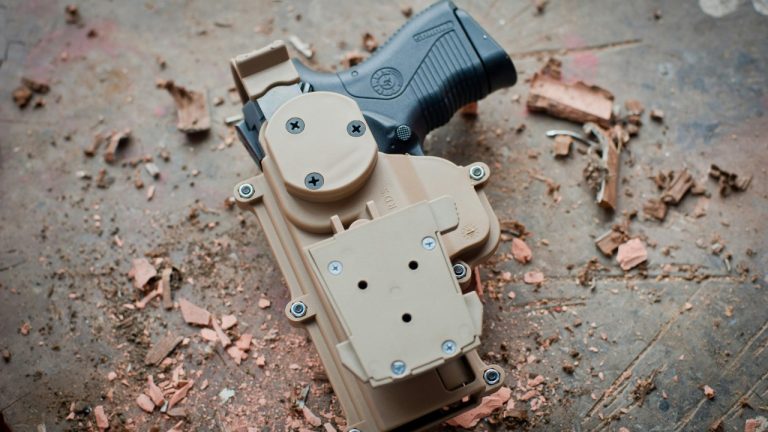
Military equipment once written off that proved impossible to replace
Modern militaries like to talk about the next generation of fighters, tanks, and missiles, yet some of the most decisive tools on today’s battlefields are designs that were once written off as obsolete. When planners try to retire them, they often discover that the industrial base, the budget, or the battlefield itself cannot yet live without those supposedly outdated systems. I see that tension everywhere from small arms to bombers, where legacy equipment keeps returning to service because nothing newer can match its mix of reliability, availability, and cost.
Behind each of these comebacks is a structural story about production lines, maintenance, and politics. As the United States and its allies race to field advanced systems, they are also scrambling to repair, repurpose, and even resurrect older gear that was meant to be gone for good. The result is a force that looks far more hybrid than the glossy brochures suggest, with yesterday’s hardware quietly doing work that today’s technology still cannot fully replace.
The paradox of “obsolete” in a modern arsenal

On paper, militaries try to move old kit out of frontline units as quickly as possible, clearing space for modernized weapons and vehicles. The U.S. Army has even formalized that instinct in a program Called Rapid Removal of Excess, or R2E, which collects gear from posts like Joint Base Lewis McChord and shifts it to units that can still use it or to disposal. The plan is to pick it up, move it out, and keep formations focused on modernized weapons rather than cluttered motor pools of aging equipment, a process that is meant to accelerate the exit of obsolete systems from active inventories through R2E.
Yet the same logic that clears out surplus also reveals how hard it is to truly replace some platforms. Equipment reset doctrine defines how forces restore combat capability after heavy use, describing how Equipment reset encompasses maintenance, repair, and recapitalization to bring units back to a desired level of combat capability. In practice, that often means pouring money and labor into older vehicles and weapons that were supposed to be on the chopping block, because the alternative, waiting years for new production, would leave dangerous gaps. The paradox is that the more stressed the force becomes, the more yesterday’s gear proves impossible to fully retire.
Rifles that refused to die: from Garand to M14
Few examples capture this better than the evolution of U.S. service rifles. The M1 Garand of WWII and Korea was supposed to give way to a new generation of automatic weapons, yet its basic layout and operating concepts lived on in the M14 battle rifle. An evolution of the famed M1 Garand of WWII and Korea, the M14 became the standard issue rifle for the U.S. military in the early Cold War, only to be declared outdated when the lighter, higher capacity M16 family arrived. For a time, the M14 was pushed to the margins, stored in armories or handed to ceremonial units, its role apparently finished according to accounts of Garand of WWII.
Then combat conditions changed. In Afghanistan and Iraq, U.S. forces found themselves needing accurate fire at longer ranges and more punch against cover than the 5.56 mm round reliably delivered. The supposedly obsolete M14, with its 7.62 mm cartridge and sturdy receiver, suddenly looked attractive again as a designated marksman platform. Armories pulled rifles from storage, units fitted them with modern optics and rails, and a weapon written off decades earlier returned to frontline service. The same reporting that traces the M14’s lineage from the Garand also notes how it and the M1918 Browning Automatic Rifle were revived when newer systems could not fully match their niche, a pattern reinforced in a second account of the Garand of WWII.
When “new” fails: the early M16 and the cost of replacement
Not every replacement lives up to its promise, and when it fails, older gear can become indispensable again. Early M16A1 rifles jammed frequently in Vietnam after a switch to dirtier powder and the false belief that the rifle was self cleaning, a combination that left troops with weapons that could fail at the worst possible moment. That experience still shapes how the U.S. military evaluates new small arms, and it is one reason why some commanders kept older designs in reserve or were slow to discard them entirely, as detailed in assessments of Early M16A1 problems in Vietnam.
The lesson is that declaring a system obsolete on a spreadsheet does not mean it is truly redundant in the field. When a new weapon underperforms, the fallback is often the older platform that was supposed to be gone, whether that is a rifle, a helicopter, or an armored vehicle. Analysts who catalog 26 weapons the military regrets purchasing point out that some high profile programs, including an attack helicopter type, never delivered the expected capability, which in turn forced services to keep legacy aircraft flying longer than planned. In that light, the persistence of older rifles and support weapons looks less like nostalgia and more like a hedge against the risk that the next big thing will not work as advertised.
Relics that still win wars: tanks, guns, and conversion
Heavy armor tells a similar story, where tanks that should have been museum pieces are still shaping modern conflicts. Military scholars have noted that Technologically obsolete tanks have historically been repurposed into recovery vehicles, engineering platforms, or static defenses, extending their utility long after they lost the edge in tank on tank duels. In some recent wars, older Soviet designed armor has been converted into launch platforms for long range strike systems, allowing forces to strike deep inside Russia using hardware that would not survive a direct fight but can still carry missiles, a pattern examined in detail in work on how Technologically obsolete weapons still win.
That same logic applies to artillery and air defense. New technologies grafted onto aging platforms ensure that U.S. military forces keep pace with innovations that are rapidly changing the character of war, even when budgets or production capacity cannot deliver entirely new fleets. Analysts who track force readiness argue that New technologies grafted onto aging platforms ensure that older ships, aircraft, and vehicles remain viable until they are no longer economically repairable and must be replaced, a dynamic captured in assessments of New modernization methods. In practice, that means radar upgrades on Cold War destroyers, digital fire control on towed howitzers, and new missiles on launchers first fielded decades ago.
Industrial limits: why missiles and bombers cannot be swapped overnight
Even when a military wants to move on from older systems, the industrial base can slow that transition to a crawl. The U.S. government recently created the Munitions Acceleration Council, a body designed to coordinate increased production among defense firms and push output of key missiles to as much as four times the current rate. That effort reflects a hard reality: the United States cannot simply flip a switch and replace every older munition with a newer model, so it must ramp up both legacy and advanced lines in parallel, as described in reporting on the Munitions Acceleration Council.
Big ticket aircraft programs face similar constraints. Boeing’s F47 program is running into trouble at the exact moment the United States hoped to push ahead in sixth generation air dominance, with the biggest drag coming from the adaptive engine that will power it. Both GE and Pratt and Whitney are developing variable cycle designs, but supply chain constraints have pushed timelines back and slowed the entire project, while China’s own prototypes appeared in 2024 and highlighted a different challenge. Analysts note that The US had better engineering, R&D, machinists, pattern maker, resources, and supply lines 35 years ago, and that gap feeds the idea that the F47 is already several years behind, as described in commentary on how the United States is struggling to sustain its tempo. Until those industrial issues are solved, older fighters and bombers will have to carry more of the load than planners once expected.
Policy whiplash: cancellations, contracts, and Trump’s pressure on industry
Strategic choices about what to cancel can lock militaries into older equipment for generations. One prominent example is a Navy stealth bomber concept that never made it to production; instead of acquiring an advanced stealth bomber, the Navy settled on the Supe carrier based aircraft and other legacy platforms, a decision whose effects still shape naval aviation. Analysts who trace the history of major U.S. programs that never made it argue that the effects of the cancelation remain with us today, not only in aviation but also in ground systems like Future Combat Systems, as detailed in reviews of how, instead of a new bomber, the Instead of a new platform, the Navy doubled down on existing airframes.
At the same time, political leaders are trying to force industry to deliver new systems faster and cheaper, with mixed results. Trump in early January signed an executive order aimed at addressing cost overruns and delayed timelines in delivering weapons, tying contractor compensation more tightly to on time performance and fulfillment of their contracts. That move has flummoxed parts of the defense industry, which now faces pressure to accelerate programs even as supply chains and workforce pipelines strain, as described in coverage of how Trump is reshaping contract incentives. In the near term, that tension can make it even harder to retire older systems, because services hesitate to scrap proven hardware while new programs are under political and industrial stress.
Repair, sustainment, and the fight over who fixes what
Keeping legacy equipment in service is not just about design, it is about who is allowed to repair it. Having the most advanced weapons in the world will not matter in wartime if they are not mission capable, and analysts warn that the surge in demand any future conflict will create could overwhelm current sustainment models. They argue that Having the right sustainment contracts and competitive repair options is essential, and that the Pentagon has learned these lessons the hard way in past wars, as detailed in critiques that urge leaders to Having the right sustainment approach.
Lawmakers are now trying to give the military more control over that process. The Servicemember Right to Repair Act provides DoD with the tools to access the materials needed to maintain the military’s own equipment, and to train personnel in the skills needed in future possible austere environments. In parallel, the legislation dubbed as the Warrior Right to Repair Act of 2025 seeks to prohibit the Defense Department from entering into contracts that block the military from accessing the software, parts, or diagnostic tools needed to diagnose, maintain, or repair those goods, as described in summaries of the The Servicemember Right to repair and the Warrior Right to repair Act of 2025. If those efforts succeed, they will make it easier to keep older platforms running far beyond their original design lives.
Doctrine meets imagination: how even fiction understands “obsolete”
Interestingly, the same logic that keeps real world militaries tied to older gear shows up in speculative fiction and gaming communities. In one widely discussed worldbuilding scenario, The Imperial Exploratory Corps despite having access to and using modern weapons at times prefer the use of archaic firearms due to reliability and the fact that enemies do not have the advantage against such low tech tools. That fictional unit’s choice to carry bolt action rifles into a high tech universe mirrors the real world instinct to hold on to simple, robust weapons that can be maintained in the field, as described in discussions of how Imperial Exploratory Corps operates.

Leo’s been tracking game and tuning gear since he could stand upright. He’s sharp, driven, and knows how to keep things running when conditions turn.