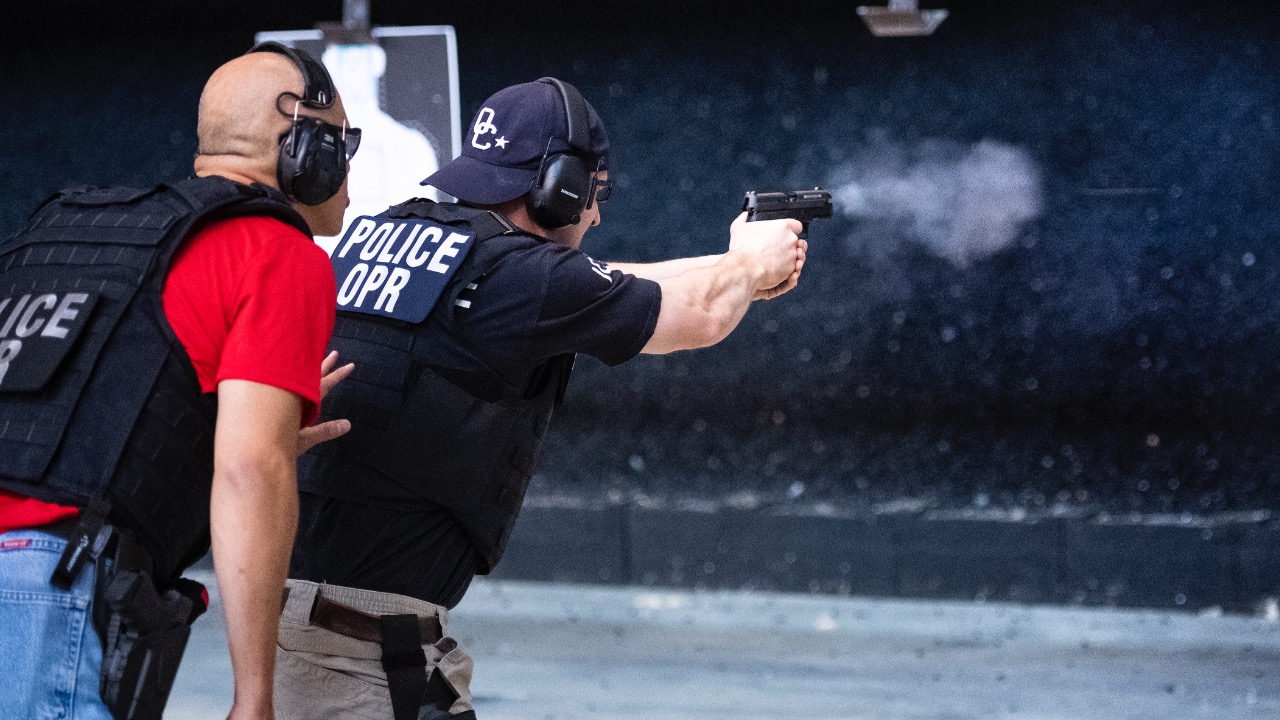
Documents show repeated firearm safety incidents during ICE training drills
Internal documents and new oversight letters depict an agency whose firearms training environment is repeatedly marred by preventable safety failures. Rather than routine practice on the range, recent drills have produced accidental gunshot wounds, unintentional discharges, and a growing paper trail of concern about how Immigration and Customs Enforcement prepares its agents to use deadly force.
Together, those records point to a structural problem rather than a few isolated mistakes. As hiring surges and tactical operations expand, the training systems meant to keep both agents and the public safe appear strained, inconsistent, and at times dangerously lax.
Documents reveal a pattern of accidental shootings
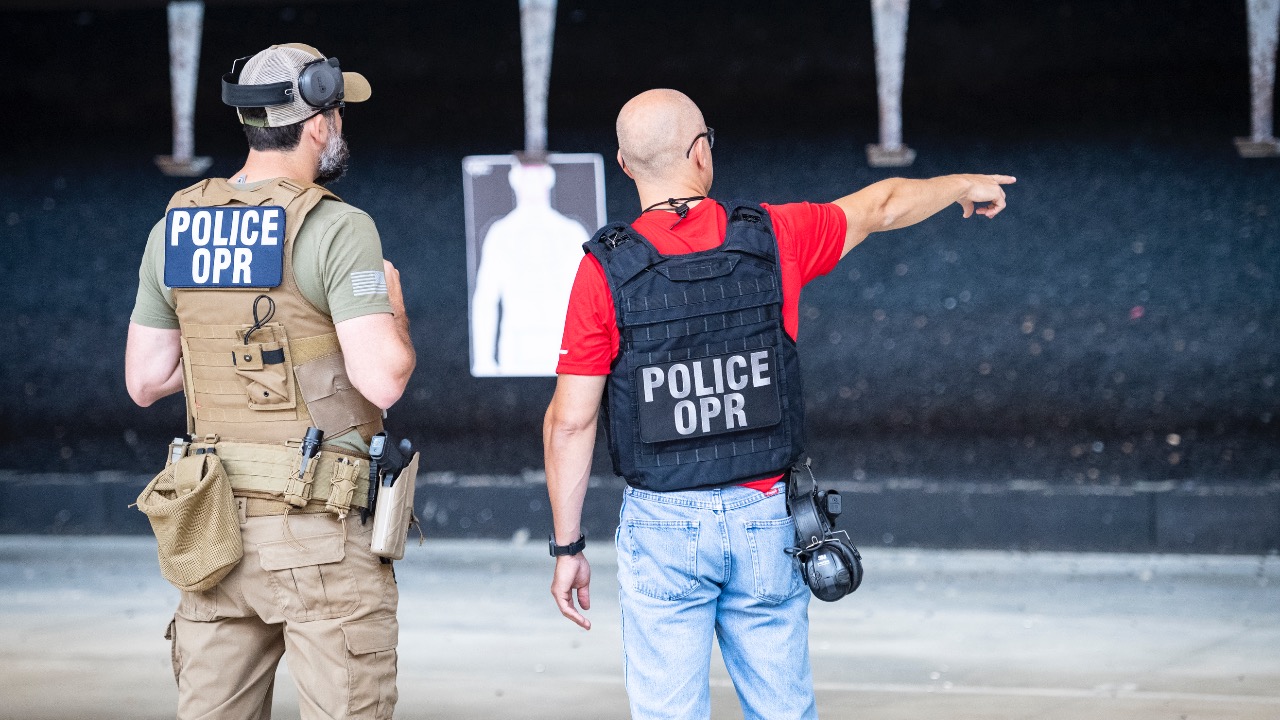
Recent records obtained through public disclosures show that firearm mishaps have become a recurring feature of ICE training days rather than a rare anomaly. One review cited in those materials counted a total of 267 total shooting over a defined period, and about 38 percent of them were classified as unintentional discharges. That ratio is striking for any law enforcement body, but it is particularly alarming in a federal agency that regularly conducts armed operations in neighborhoods, workplaces, and hospitals.
The files also describe specific episodes that bring those statistics into sharper focus. In one cluster of incidents, Three federal immigration accidentally shot themselves in the leg during routine training exercises within two days, each injury occurring in what should have been a controlled setting. The repetition of nearly identical mistakes in such a short span suggests that the underlying protocols for weapon handling, supervision, or both are not being applied with the rigor that firearms training demands.
Use-of-force training has not kept pace with ICE’s expansion
The internal safety problems are unfolding as ICE is expanding its footprint and operational tempo. A Department of Homeland Security announcement earlier this year touted a historic 120 percent attributed to a high profile recruitment campaign, a surge that dramatically increases the number of armed personnel in the field. Scaling up that quickly places heavy pressure on training academies and field offices to process new hires, qualify them on firearms, and refresh the skills of existing agents.
Public records obtained by oversight groups indicate that the content and consistency of that training have not fully kept pace with the agency’s growth. One set of documents about how ICE is being describes a patchwork of legal briefings, deescalation modules, and scenario drills that vary significantly by location and instructor. The same cache of materials shows that ICE agents’ use of force increased dramatically in early 2025, raising questions about whether the curriculum is effectively translating written policy into safer behavior on the ground.
Reported spike in excessive force complaints
Beyond accidental shootings on the range, the training concerns intersect with a surge in allegations of excessive force in the field. Training materials reviewed by advocates stated that in the first two months of 2025 there was a 353 percent increase in the reporting of excessive force incidents compared with a prior baseline. That spike occurred just as ICE agents’ use of force was already rising, and it came after officials had asserted that new legal and deescalation training would reduce such complaints.
The same documents, which track how agents were instructed on law and deescalation, suggest that the promise of reform has not translated into consistent practice. Materials about how ICE agents’ use changed in the first months of Trump’s second administration describe a sharp rise in reported incidents, even as the agency insisted that new training would improve compliance. The combination of more frequent force complaints and ongoing accidental discharges in training suggests that the system intended to instill restraint and technical competence is not functioning as advertised.
The Minneapolis shooting and the case of Alex Pretti
Concerns about training quality gained national attention after a fatal shooting in Minneapolis involving an ICE operation. Detailed reporting on the ICE Minneapolis shooting of Alex Pretti describes an encounter in which agents said they believed a man was armed, only for later evidence to cast doubt on that account. The incident quickly became a flashpoint for questions about how agents are taught to assess threats and apply lethal force in fast moving situations.
Members of Congress later cited Video evidence shows when pressing for answers about the shooting. That detail cuts to the heart of the training debate: if agents are misidentifying everyday objects as weapons, the instruction they receive on threat perception, communication, and deescalation may be dangerously inadequate. The Pretti case also highlights how a single encounter can expose systemic weaknesses in both classroom preparation and live fire drills that are supposed to build judgment under stress.
Congressional Democrats demand answers on “lax” training
In response to the Minneapolis shooting and the broader pattern of safety failures, members of the New Democrat Coalition have moved to formal oversight. In a detailed letter dated in Feb, a group of lawmakers opened by writing, undersigned, who are on concerns about ICE and Customs and Border Protection training. The letter to Secretary Noem seeks specifics on curriculum, instructor qualifications, and how the agencies track and respond to use of force incidents.
Those lawmakers point not only to fatal encounters but also to recurring mishaps during practice sessions. Their oversight materials reference ICE agents keep during firearms drills, as well as reports of shortcuts in both in person and virtual training formats. By framing the issue as one of systemic laxity rather than isolated misconduct, the New Democrat Coalition is signaling that it views the safety problems as a management and policy failure that demands detailed corrective plans from the Department of Homeland Security.
Hiring surge and the risks of rushing new agents
The training concerns are magnified by the speed and scale of ICE’s recruitment drive. The department’s own announcement of a historic 120 percent celebrates rapid hiring as a success story, but it also implies that training centers, firearms ranges, and field supervisors are suddenly responsible for preparing far more agents than before. When agencies grow that quickly, there is a real risk that classroom hours are compressed, range time is rationed, or mentoring in the field becomes thinner.
Independent analysis has warned that ICE’s expansion has at times outpaced its internal checks. One review of ICE expansion and notes that as the agency grew in cities such as Detroit, Indianapolis, and Minneapolis, mechanisms for oversight and community engagement did not always keep up. When combined with the documented rate of unintentional discharges and the rise in excessive force reports, the hiring surge raises the possibility that some agents are being pushed into armed roles before they have fully internalized safe weapon handling and deescalation techniques.
Training shortcuts and technology errors
Alongside traditional firearms instruction, ICE has increasingly relied on technology and remote formats to manage its training load. Lawmakers have flagged reports that some agents are completing required courses virtually, with limited real time supervision or assessment. In the same oversight push that cited the Minneapolis shooting, members of Congress warned about Other shortcuts have that incorrectly flagged applications with prior criminal histories. While that particular problem involved case processing rather than weapons, it illustrates how overreliance on automated systems can introduce new forms of risk.
When training itself is shifted into virtual or compressed formats, similar vulnerabilities can arise. If instructors are not physically present to correct unsafe grip, stance, or trigger discipline, agents may carry bad habits onto the range and into the field. The documented pattern in which Former ICE officials acknowledge that accidental discharges are not unheard of in federal law enforcement suggests that some level of mishap is expected, but the current frequency inside ICE training environments appears to exceed what many would consider acceptable. That reality raises hard questions about whether shortcuts in curriculum delivery are undermining safety.
Spillover into hospitals and community spaces
The consequences of inadequate training show up not only on firing ranges and during high profile raids, but also in everyday community settings. In Tacoma, Sponsored reports from describe ICE agents who often ignore hospital safety and privacy practices when guarding detainee patients. Nurses say they are concerned that the presence of armed agents, who sometimes appear unfamiliar with medical protocols, can intimidate staff and immigrant patients alike.
Those accounts align with broader testimony that Nurses also say seeing detainees restrained at both ankles and both wrists, even during medical procedures, a practice that raises human rights and safety concerns. If agents are not thoroughly trained on how to balance security with medical needs, their presence can escalate tension in already stressful environments. The same gaps in judgment and communication that contribute to accidental shootings during drills can also make hospitals and clinics feel less safe for both staff and patients.
Accountability, public pressure, and what comes next
The growing body of documentation has prompted advocacy groups, lawmakers, and community organizations to push for deeper accountability. Civil society investigators who compiled records on what we know argue that transparency on curricula, instructor standards, and incident reviews is a necessary first step. At the same time, the New Democrat Coalition is using formal letters and public statements to keep pressure on Secretary Noem and other leaders to explain how they will reduce both accidental discharges and excessive force in the field.
Public engagement around these issues is also spreading through less formal channels. Social sharing tools such as Twitter share links embedded in oversight updates make it easier for constituents to amplify concerns about lax training and specific incidents like the shooting of Alex Pretti. Local representatives maintain sites such as Schneider House to communicate with residents about federal law enforcement oversight. Whether these combined efforts lead to concrete changes in firearms instruction, deescalation practice, and supervision will determine if the repeated safety failures documented in ICE training drills remain a recurring feature of the agency or become the catalyst for a more disciplined approach to the use of force.

Asher was raised in the woods and on the water, and it shows. He’s logged more hours behind a rifle and under a heavy pack than most men twice his age.