17 Hog cartridges that still penetrate through heavy bone
Hogs are tough, especially the big boars with heavy shields and dense shoulder bones. If you want reliable penetration through that armor, you need cartridges and bullets built for the job, not whatever soft-point deer load is on sale. Below are 17 proven hog cartridges that, when paired with the right bullets and shot placement, will punch through heavy bone and reach the vitals.
1) .223 Remington with bonded or monolithic bullets

The .223 Remington can work on hogs when it is loaded with tough bullets and used inside sensible distances. Bonded soft points and all-copper monolithic designs hold together when they hit the shield and shoulder, instead of blowing up on the surface. That construction lets a relatively small bullet keep driving after it hits bone, which is what you need on a quartering boar.
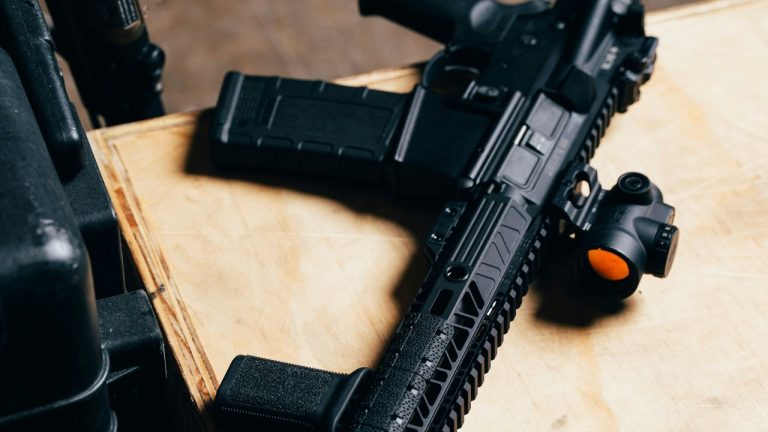
I treat .223 as a precision tool for smaller hogs or careful head and neck shots on bigger ones. Out of a 16 inch AR, a 62 to 77 grain bonded or copper bullet still carries enough velocity at moderate ranges to break a shoulder and reach the lungs. Hunters who lean on this cartridge need to be picky about angles and avoid raking shots on very large boars.
2) 6.5 Grendel in an AR-15 platform
The 6.5 Grendel was built to squeeze more punch out of the AR-15, and it shows on hogs. Heavier bullets with higher sectional density give it an edge in penetration over .223, especially when you use controlled expansion designs. That extra weight and length help the bullet stay on track after hitting the shield and major bones in the shoulder.
Inside typical night-hunting distances, the Grendel hits hard enough to break both shoulders on medium hogs while still exiting. I like it for hunters who want a mild recoiling semi-auto that still carries enough authority for quartering shots. With good bullets, it is a noticeable step up from 5.56 without forcing you into a heavier AR-10 pattern rifle.
3) 6.8 SPC for close to midrange work
The 6.8 SPC was designed to improve terminal performance from short barrels, which lines up nicely with hog hunting from blinds and trucks. It throws a heavier bullet than .223 at moderate speeds, which helps it keep together when it hits bone. Properly constructed soft points and bonded bullets in this caliber tend to mushroom and keep driving instead of fragmenting.
In the real world, that means you can take shoulder shots on average hogs with more confidence than you would with lighter .223 loads. Recoil is still manageable in compact carbines, which matters when you are shooting off sticks or out of a side-by-side. For hunters who like short, handy rifles in thick cover, 6.8 SPC is a practical choice.
4) .300 AAC Blackout with heavy expanding bullets
The .300 AAC Blackout shines in short barrels and suppressed setups, which are common in hog country. Supersonic loads with tough expanding bullets give you a .30 caliber hole with decent penetration at close range. Those bullets are built to open up at modest velocities while still hanging together when they hit cartilage and bone.
I do not treat .300 Blackout as a long-range hog round, but inside 150 yards it can be very effective. The key is staying away from fragile varmint bullets and leaning on bonded or copper designs. When you do that, the cartridge will break shoulders on average hogs and still reach the vitals, especially from 16 inch barrels or efficient 9 inch pistols.
5) 7.62×39 with modern soft points
The 7.62×39 has a reputation built on cheap ball ammo, but modern soft points change the story on hogs. A 123 grain bullet that actually expands instead of penciling through gives you a wider wound channel while still carrying enough mass to break bone. The moderate velocity helps bullets hold together instead of shredding on impact.
In practical terms, that makes a well-fed SKS or AK a capable hog rifle inside typical woods ranges. Accuracy with quality ammunition is better than many people expect, and the cartridge’s mild recoil encourages careful shot placement. For hunters who already own a 7.62×39 rifle, upgrading to proper hunting loads turns it into a legitimate hog tool.
6) .308 Winchester with controlled expansion bullets
The .308 Winchester is one of the most reliable hog cartridges when penetration is the priority. With 150 to 180 grain controlled expansion bullets, it has the mass and construction to break heavy shoulders and still reach the far lung. Sectional density in those bullet weights is strong enough to keep them tracking straight through gristle and bone.
From bolt guns and semi-autos alike, .308 gives you a wide safety margin on shot angles. Quartering-to shots that would be risky with lighter rounds are manageable when you are pushing a tough .30 caliber bullet. For hunters who want one rifle that can handle everything from small pigs to giant boars, .308 is hard to argue against.
7) .30-06 Springfield for maximum versatility
The .30-06 Springfield adds velocity over .308, which can translate into deeper penetration when paired with the right bullet. A 165 or 180 grain bonded or partition-style bullet from a .30-06 hits with authority, even on big boars with thick shields. That extra speed helps the bullet open reliably while still keeping enough shank intact to drive through bone.
I like .30-06 for hunters who might shoot hogs at both close and extended ranges. It carries energy well and handles steep quartering angles without drama when you choose a bullet built for large game. Recoil is noticeable but manageable in a well-fitted rifle, and the cartridge’s track record on tough animals speaks for itself.
8) .270 Winchester with tough 130–150 grain bullets
The .270 Winchester is often thought of as a deer round, but with sturdy bullets it performs very well on hogs. A 130 or 150 grain controlled expansion bullet has enough sectional density and speed to punch through shoulders and shields. The key is avoiding thin-skinned deer bullets that can fragment too quickly on heavy bone.
When you pick the right load, .270 gives you flat trajectory and deep penetration in the same package. That combination is handy in open country where shots might stretch past typical feeder distances. Hunters who already trust their .270 on elk will find it more than capable of handling big boars with similar bullet choices.
9) 6.5 Creedmoor with hunting-weight bullets
The 6.5 Creedmoor built its reputation on accuracy, but its bullet design also helps with penetration. Hunting-weight bullets in the 120 to 143 grain range have high sectional density, which lets them slip through bone and tissue efficiently. When those bullets are built for controlled expansion, they open up and still keep driving.
On hogs, that means you can take shoulder shots at moderate ranges and expect the bullet to exit or lodge under the far hide. Recoil is mild enough that most shooters can spot their own hits, which matters when multiple pigs are in the field. For hunters who already own a Creedmoor for deer or steel, it transitions nicely into hog duty.
10) .25-06 Remington for flat-shooting penetration
The .25-06 Remington sends relatively small diameter bullets at high speed, which can be a recipe for shallow wounds if the bullet is fragile. With tough 115 to 120 grain hunting bullets, though, it becomes a deep-penetrating round that still shoots flat. Those longer bullets carry good sectional density for their caliber, helping them stay together through bone.
In open fields or crop country where hogs might hang up at distance, the .25-06’s trajectory is a real advantage. You can hold on hair out farther than many traditional woods cartridges while still getting through the shoulder. Hunters who like lighter recoil but want more reach than .243 often find .25-06 a comfortable middle ground.
11) .280 Remington and 7mm Express class loads
The .280 Remington, sometimes marked as 7mm Express, sits in a sweet spot for hogs. It throws 140 to 160 grain bullets with excellent sectional density at useful speeds, which is a recipe for penetration. With bonded or partition-style bullets, it will break shoulders and keep going on large boars.
Compared with .30 caliber options, the .280’s 7mm bullets often slip through tissue a bit more efficiently while still expanding wide. That balance makes it a strong choice for mixed-bag hunts where deer and hogs share the same ground. Recoil is manageable, and rifles chambered for it tend to be accurate and easy to carry in rough country.
12) 7mm-08 Remington in compact rifles
The 7mm-08 Remington brings much of the .280’s bullet performance into a shorter, lighter package. It pushes 120 to 150 grain bullets that penetrate well thanks to their length and sectional density. When you pair it with controlled expansion bullets, it has no trouble punching through hog shoulders at typical hunting ranges.
I like 7mm-08 in compact bolt guns that are easy to maneuver in thick brush or cramped blinds. Recoil is light enough for smaller-framed shooters, which encourages good form and precise shot placement. For families or new hunters who still want a cartridge that can handle big boars, 7mm-08 is a smart pick.
13) .300 Winchester Magnum for large boars
The .300 Winchester Magnum is more cartridge than most hogs require, but it shines when truly big boars are on the menu. With 180 to 200 grain bonded or partition bullets, it delivers deep penetration even on steep quartering shots. Those heavy bullets carry momentum that helps them smash through heavy bone and dense muscle.
In open country or when shooting from elevated blinds at longer distances, the magnum’s flat trajectory and retained energy are reassuring. Recoil is stout, so it rewards shooters who practice and use proper stock fit. For hunters who want one rifle that can handle elk, moose, and the biggest hogs they will ever see, .300 Win. Mag. fits the bill.
14) .45-70 Government with hard-cast or bonded bullets
The .45-70 Government has been breaking big bones for a long time, and hogs are no exception. Heavy bullets in the 300 to 405 grain range, especially hard-cast or bonded designs, plow through shields and shoulders with authority. Even at modest velocities, that much mass and frontal area create a deep, straight wound channel.
Lever guns chambered in .45-70 are popular in thick hog country because they handle quickly and hit hard at close range. The cartridge is not a long-range tool, but inside 150 yards it is devastating when you pick the right load. Hunters who like traditional rifles and big-bore performance often gravitate to this option for tough boars.
15) .450 Bushmaster in AR and bolt platforms
The .450 Bushmaster was designed to put big-bore performance into short rifles and AR platforms. It throws 250 to 300 grain bullets that expand wide while still carrying enough weight to break heavy bone. At typical hog distances, those bullets hit with a lot of frontal area and momentum.
In straight-wall states and thick cover, .450 Bushmaster has become a favorite for hunters who want quick handling rifles with serious stopping power. Recoil is noticeable but manageable in well-designed stocks and gas guns. For hogs, it gives you confidence on raking shots and big boars that might not present perfect broadside angles.
16) .458 SOCOM for suppressed close-range work
The .458 SOCOM was built to deliver heavy bullets from AR-15 platforms, and that translates well to hog hunting. Bullets in the 300 to 400 grain range, especially bonded or copper designs, carry enough mass to crush through shoulders at close range. Even at subsonic speeds, hard bullets in this caliber can penetrate deeply.
Most hunters use .458 SOCOM inside 100 yards, often with suppressors and thermal optics for night work. In that role, it behaves like a compact big-bore rifle that cycles quickly and hits hard. For close-range ambushes over feeders or in thick brush, it is one of the more decisive options available.
17) 12-gauge slugs for extreme close quarters
A 12-gauge slug is not a rifle cartridge, but it deserves a place whenever penetration through heavy bone is the topic. Modern sabot and rifled slugs in the 1 ounce range carry massive frontal area and enough velocity to break shoulders and shields at close range. They do not have the reach of centerfire rifles, but inside 100 yards they hit like a hammer.
Many hog hunters already own a slug-capable shotgun, which makes this an accessible option for thick cover and driven hunts. Recoil is heavy, and follow-up shots are slower than with light rifles, so practice matters. When you keep ranges short and pick sturdy slugs, a 12-gauge can anchor big boars even on steep quartering angles.

Asher was raised in the woods and on the water, and it shows. He’s logged more hours behind a rifle and under a heavy pack than most men twice his age.