Farmer discovers unexpected results from grazing sheep near solar panels
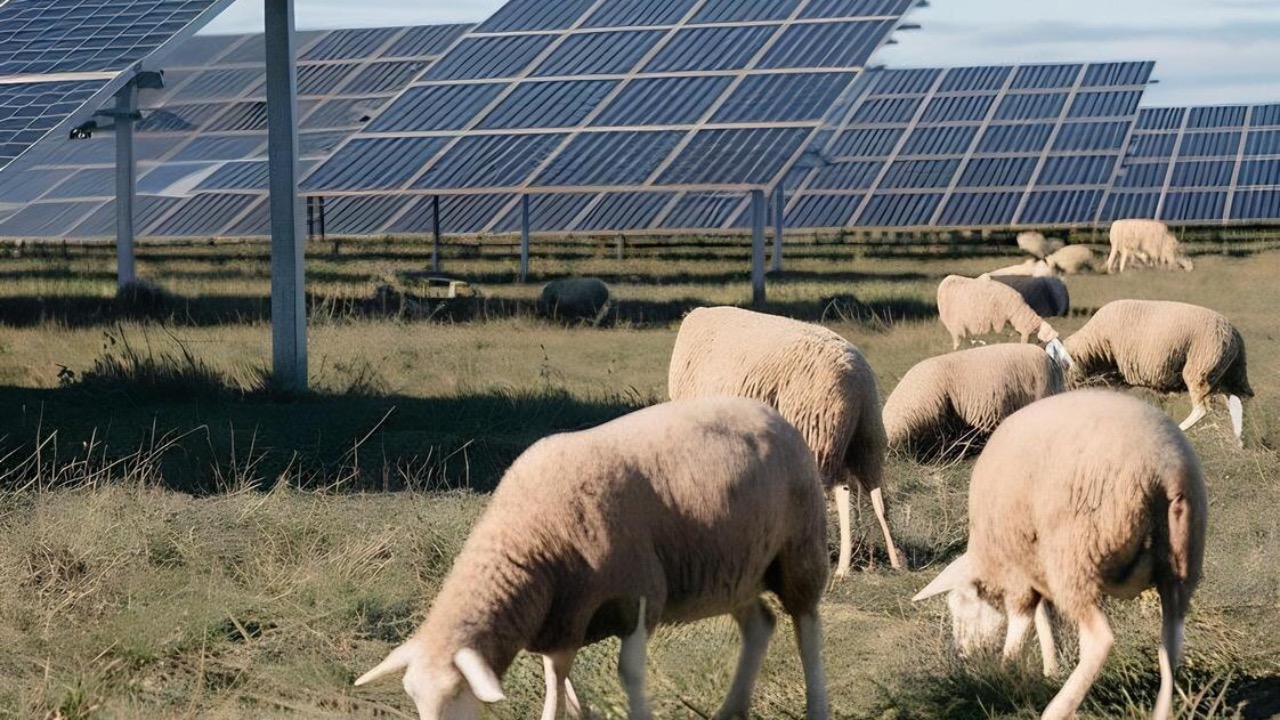
When a British farmer opened a gate and let a flock of sheep wander beneath a field of solar panels, the goal was simple: cut vegetation costs on a tight budget. What followed upended expectations about animal welfare, soil health, and even the economics of clean energy. The experiment echoed a growing body of research suggesting that pairing solar power with grazing livestock is not a niche curiosity but a serious tool for rural resilience.
Across Europe and the United States, similar trials are revealing that sheep and solar infrastructure can support each other in unexpected ways. From improved wool quality to healthier soils and more stable farm income, the animals are quietly rewriting assumptions about what a solar farm can be.
A farmer’s surprise under the panels
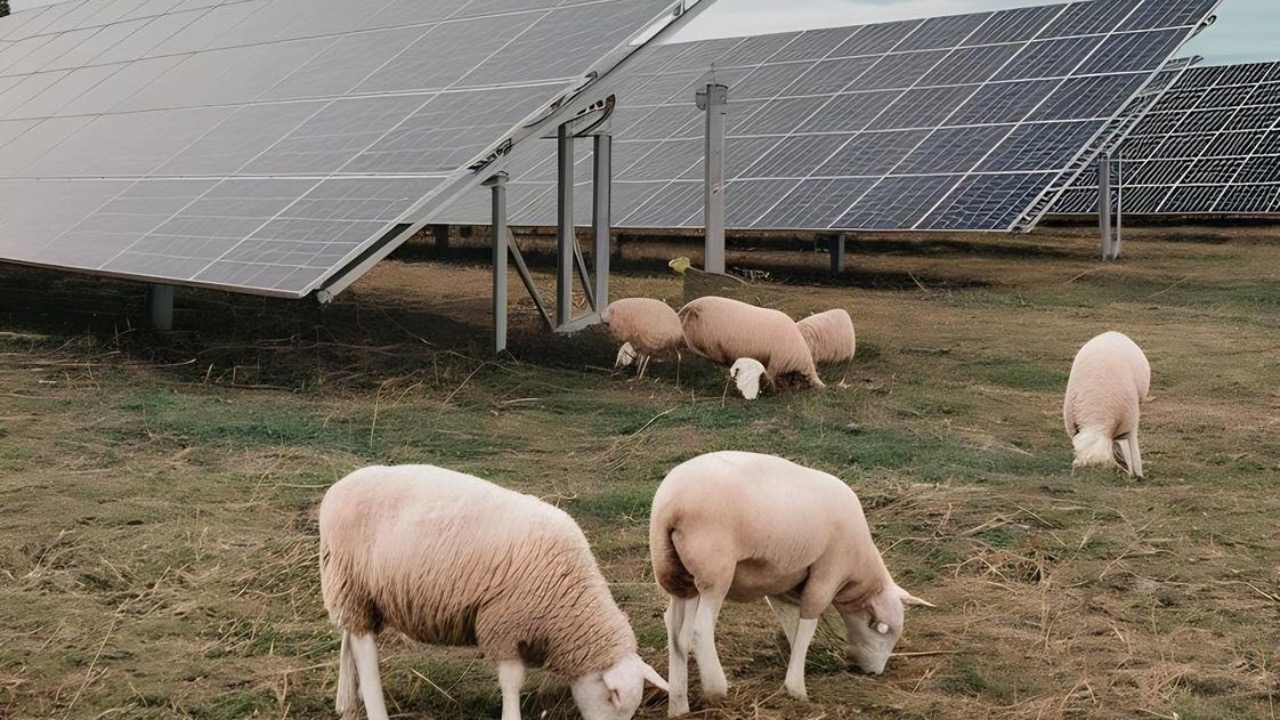
For Dr. Liz Genever, who farms in the south of England, the decision to graze sheep alongside solar panels started as a practical fix in a difficult financial climate. Free grazing access on solar sites gave her room to expand her flock without taking on new land costs, a lifeline for a business under pressure. The move allowed her to grow numbers while sidestepping the capital outlay that usually comes with buying or renting more acreage, an arrangement she described as a “massive leg up” for her operation.
The surprise was not just the savings but how well the animals adapted to the new environment. The panels created a patchwork of shade and shelter that softened harsh weather and gave the flock more comfortable conditions than open pasture alone. According to reporting on her experience, the chance to graze under and around the structures changed how she thought about both her sheep and the role of solar in the countryside, with Free grazing access framed as a rare win for both climate goals and farm economics.
Her experience mirrors a wider shift as landowners look for ways to keep agricultural businesses viable while accommodating large solar arrays. Rather than viewing panels as a threat to food production, some farmers now see them as infrastructure that can carry part of the financial load of raising livestock.
Why sheep fit where other animals do not
The growing interest in this pairing rests on a simple observation: sheep are unusually compatible with solar hardware. They are small enough to move under the panels, light enough to avoid compacting the soil excessively, and less prone than goats or cattle to chew wiring or push against metal frames. Guidance for agrivoltaic projects notes that not all livestock are suitable around delicate equipment and that sheep are far less likely to damage installations than goats or cattle, a point highlighted in agronomy advice that begins with the phrase While the opportunities are significant.
Corporate landholders that host solar arrays have reached similar conclusions. One major industrial site that integrated grazing concluded that Sheep grazing reduces carbon emissions tied to mowing and herbicide use, while also supporting a more natural cycling of nutrients, carbon, and water across the site. The animals reach tight corners and uneven ground that machines struggle to manage, and they do it without diesel or chemical inputs.
On average, it takes only a few days for a flock to clip vegetation to the desired height across a large solar field. Advocates describe Sheep are the animal for solar panels, precisely because they can maintain vegetation in hard to reach areas without interfering with the equipment itself.
Evidence from large-scale experiments
Individual farmers like Dr. Liz Genever provide compelling anecdotes, but researchers have started to test the pairing at scale. One experiment placed exactly 1,700 sheep among solar panels and tracked how the animals behaved in this unfamiliar environment. The study divided two sheep groups between different parts of the array and monitored grazing patterns, movement, and social dynamics. According to a summary of the work, the project used those 1,700 animals to look at how flocks respond to shade structures and how that affects plant growth and energy production.
The scientists reported that the animals did not simply avoid the hardware. Instead, they integrated it into their daily routines, using the panels for shelter and forming new spatial relationships that mirrored natural patterns in open rangeland. The description of the trial invites readers to Imagine a flock of 1,700 animals weaving through rows of glass and steel and finding a new equilibrium.
Separate coverage of the same research notes that 1,700 sheep walked through solar panels as part of a controlled study and that scientists later published surprising results about how the animals and plants responded. That work, described in a detailed report on 1,700 sheep moving through an operational array, suggests that the presence of livestock can change microclimates under the panels and alter how vegetation recovers between grazing cycles.
Soil, forage, and biodiversity gains
Beyond animal behavior, a growing body of agronomic research points to soil and forage benefits when sheep graze within solar arrays. A multi site study that compared grazed solar fields with undisturbed control plots found that soil health indicators improved where sheep were present. The work looked at six separate photovoltaic sites and measured how repeated grazing affected organic matter, compaction, and nutrient availability. The results, summarized in a report on Soil quality, suggest that managed flocks can build healthier ground rather than degrade it.
More recent research funded through New ASGA NYSERDA Research on Solar Grazing, Soil, Forage, and Economic Benefits has added economic and forage data to that picture. The project reported that Soil health was improved under grazed arrays, that Forage quality remained suitable for livestock, and that long term contracts between graziers and solar owners created measurable Economic Benefits for both sides. The summary of New ASGA NYSERDA frames these gains as evidence that solar grazing is more than a maintenance gimmick.
Short form video from working sites reinforces the scientific findings with on the ground observations. One clip shows a grazier pointing out the diversity of plants that have sprung up beneath the modules, noting that under the panels they could see different species taking advantage of filtered light and reduced heat. The footage, shared in a piece titled How Solar Grazing Boosts Biodiversity, captures a sense of abundance rather than the barren gravel that often surrounds older solar farms.
Animal welfare and “employed” sheep
For the sheep themselves, the solar setting can look surprisingly comfortable. Farmers who work with these systems talk about animals that are calmer and more content than flocks on exposed hillsides. One grazier in a video interview remarks that the panels function like a giant shade structure, keeping Pennel sheep cooler in the height of summer and drier in heavy rain. In that recording, dated in Apr, he jokes that “pennel sheep are happy sheep” under the panels, a line captured in the clip titled Sheep under solar.
The idea of “employed” sheep has also entered popular culture. A widely shared social media reel from Jan describes thousands of animals whose only responsibility is eating the grass around solar panels. The creator marvels that these flocks are “overachieving at their jobs” by doing what they would do on any pasture, only now as part of a clean energy workforce. The post, available as an Oh, to be an employed sheep reel, captures a lighthearted version of a serious trend.
Farmers who raise animals for meat and wool are also finding unexpected welfare and product advantages. One producer named Gray, who farms sheep for their meat, has said that raising animals under solar panels offers clear benefits for the wool. The shade and moderated temperatures reduce stress on the animals and appear to support better fleece quality, while the panels also protect the flock from some of the worst weather extremes. Gray noted that the system allows her to “put back more than we are taking out,” a phrase recorded in coverage that begins with While Gray farms sheep for their meat.
Economic lifelines for rural communities
Behind the pastoral images sits a harder edge of rural economics. Many livestock operations face thin margins and volatile markets. Solar grazing offers a new revenue stream that does not rely on commodity prices alone. Farmers can negotiate contracts to provide vegetation management services, often paid per acre or per season, while still selling lamb, mutton, or wool from the same animals.
Analysts who track agrivoltaic projects describe livestock as a very effective tool for managing vegetation in solar energy systems. Guidance from extension specialists notes that combining Grazing with solar can increase community support for new arrays, since land stays in agricultural use rather than being fenced off entirely. One overview of Agrivoltaic opportunities highlights that land under panels can still yield forage rated as grade 2 to 3, which is suitable for many classes of livestock.
Solar developers and energy companies see advantages too. Vegetation that grows too high can shade panels and cut power output, so keeping grass and weeds at the right height is a core maintenance task. One utility scale project that added sheep described the animals as an ideal pairing because they keep the site “healthy” without heavy machinery. A report on that project notes that Why sheep make on solar farms comes down to cost, safety, and the ability to reach awkward patches.
Some farmers take the concept further by co developing solar and grazing on their own land. One video profile from Jun shows a family that installed a solar farm as a form of drought proofing, then integrated sheep to keep the land productive. They describe the arrangement as a way to stabilize income during dry years while still running a working farm. Their story, shared in a clip titled When sheep and work together, reflects a broader search for climate resilience.
Community perception and climate stakes
Public acceptance can make or break large energy projects, and the visual of sheep moving through panels has become a powerful symbol for supporters. In Colorado, a television segment followed a flock hired to trim grass on a solar site and framed the scene as clean energy and agriculture growing side by side. The piece, narrated by CBS reporter Dylan Thomas, introduced viewers to a partnership that felt less like industrial intrusion and more like a modern twist on traditional grazing. The story, which began with the line that they end in Colorado where clean energy and agriculture are growing side by side, ran under the banner of Sheep do some.
Consumer facing platforms have picked up the theme as well. One feature on farmers who paired sheep with solar panels pointed readers toward programs such as Palmetto’s LightReach and a marketplace called Solar Explorer that help households secure lower energy rates. The article argued that among these options, agrivoltaic projects that cut emissions from burning fossil fuels while supporting local agriculture offer a particularly attractive package. The piece, which referenced Palmetto and Solar Explorer by name, framed solar grazing as a bridge between climate conscious consumers and rural producers.

Leo’s been tracking game and tuning gear since he could stand upright. He’s sharp, driven, and knows how to keep things running when conditions turn.