
Fourteen gun myths the media repeats again and again
Gun debates in the United States are saturated with confident claims that do not survive contact with data, law, or basic mechanics. Yet many of those claims are repeated so often in news coverage that they start to sound like common sense rather than contested talking points. I want to walk through fourteen of the most persistent narratives, explain why they are misleading, and point to what the underlying research and legal record actually show.
Some of these myths exaggerate the danger of firearms, others oversell the promise of simple fixes, and a few misstate what the Constitution or existing laws already say. All of them shape how audiences think about risk, responsibility, and rights. Untangling them is not about winning an argument for one side, it is about making sure public conversation is grounded in facts instead of slogans.
1. Myth: More guns automatically mean more crime
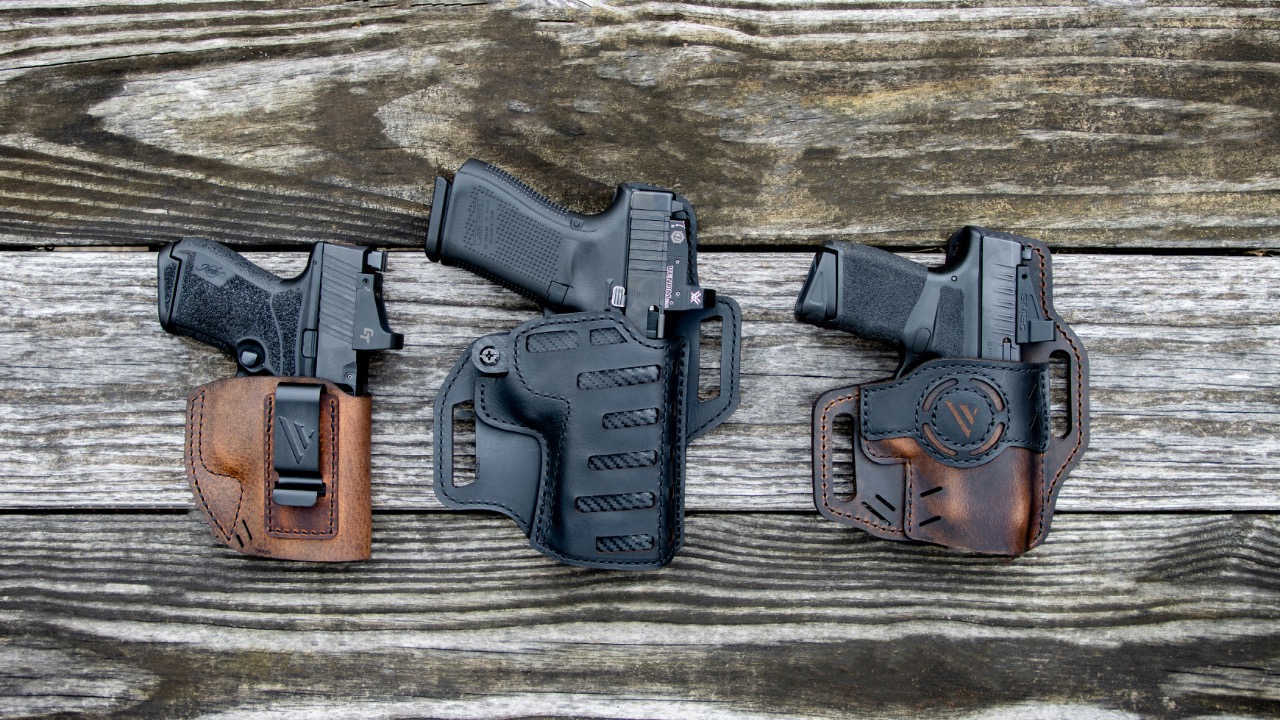
One of the most common media shortcuts is the assumption that gun ownership levels and violent crime move in lockstep. The story line is simple: if there are more firearms in civilian hands, there must be more murders and assaults. When I look at the research and at specific jurisdictions, though, the picture is far more complicated. Analyses of local bans and buybacks have repeatedly found that simply restricting legal ownership does not guarantee a drop in violence, and in some cases, crime trends barely budge after high profile restrictions.
One review of handgun bans noted that when a large town prohibited ownership in the early 1980s, violent crime did not fall in the years that followed, even as officials touted the policy as a success, a pattern summarized in a detailed policy paper. Other researchers have highlighted how gun control myths often ignore defensive uses and focus only on crimes, which can skew the perceived relationship between ownership and harm. None of this proves that guns reduce crime, but it does undercut the easy claim that more firearms automatically translate into more violence.
2. Myth: Guns only exist to kill
Another familiar refrain is that a firearm has a single purpose, to take life, and that any other use is a fringe exception. That framing erases the reality that millions of Americans use guns for sport, training, and deterrence without ever firing a shot in anger. When I talk to competitive shooters or hunters, they describe their rifles and pistols the way a cyclist talks about a road bike or a musician talks about a favorite instrument, as tools that support a discipline rather than as talismans of violence.
Even some gun control advocates concede that hunting and target shooting are widespread, but coverage often glosses over how those activities shape design and ownership patterns. One analysis of common talking points flagged the claim that guns only have as a myth, noting that training, competition, and collecting are central reasons people invest in firearms. A separate breakdown of advocacy rhetoric pointed out that the phrase Myth, Guns Only related claims ignore the way responsible owners structure their lives around safety rules and nonviolent uses. Recognizing that complexity does not minimize the damage guns can do, but it does challenge the idea that every firearm in private hands is a homicide waiting to happen.
3. Myth: There is no such thing as a “good guy with a gun”
After mass shootings, commentators often dismiss the idea that armed citizens or off duty officers can ever make a positive difference, treating the phrase “good guy with a gun” as pure marketing. The reality is that defensive gun use is hard to measure precisely, but it is not a fantasy. Surveys and victimization studies have consistently found that people report using firearms to stop assaults, robberies, or home invasions, often without firing a shot. Those incidents rarely lead national broadcasts, which can make them seem vanishingly rare.
One recent study described as the most comprehensive to date estimated roughly 1.6 m defensive gun uses in a single year, a figure that dwarfs the number of gun crimes recorded in official statistics. A separate review of the “no good guy” claim argued that critics often rely on narrow case counts that exclude incidents where a gun was displayed but not fired, or where no police report was filed, even though those situations can still prevent harm, as detailed in a focused analysis. I find it reasonable to debate how often armed intervention works or fails, but the blanket assertion that it never happens is not supported by the available evidence.
4. Myth: Video games are driving gun violence
Whenever a high profile shooting involves a young man, some coverage quickly pivots to his entertainment habits, especially first person shooters. The implication is that violent games are a primary driver of real world attacks, that simulated gunplay rewires the brain and turns players into killers. Researchers who study aggression and media effects have spent years testing that claim, and the consensus is far more cautious than the headlines suggest.
One broadcast segment on video games and shootings noted that countries with similar or higher gaming rates do not experience U.S. levels of gun homicide, which undercuts the idea that consoles are the key variable. In a related discussion of Source Of The, experts pointed out that the belief “these video games dehumanize individuals” is often asserted without clear causal evidence linking specific titles to specific crimes. That does not mean media exposure has zero effect on attitudes, but it does mean that blaming PlayStation discs for complex social problems lets policymakers avoid harder conversations about law, enforcement, and mental health.
5. Myth: Mass shootings are the main face of gun crime
Television coverage understandably focuses on mass shootings, especially attacks in schools, churches, or shopping centers. Those events are horrifying and newsworthy, but the intense spotlight can create the impression that they represent the bulk of gun deaths. When I look at mortality data, most firearm fatalities are suicides, and most homicides involve one victim at a time, often in domestic or neighborhood disputes that never make national news.
One overview of gun violence stressed that while mass shootings are devastating, they account for a small fraction of overall deaths, and that focusing exclusively on them can distort policy priorities, a point underscored in a community oriented discussion. Another piece on mass shootings highlighted how local activists are trying to redirect attention to everyday gunfire in cities, which rarely gets the same airtime. Psychiatric researchers have also cataloged 10 mythsabout mass violence, noting that public fear is often out of proportion to statistical risk. When media treat mass shootings as the default gun crime, they risk leaving audiences misinformed about where most harm actually occurs.
6. Myth: “Assault weapons” and the AR-15 are uniquely powerful
Few firearms attract as much rhetorical heat as the AR-15. In many stories it is portrayed as a kind of super gun, vastly more lethal than ordinary rifles, and uniquely unsuited to civilian hands. The reality is that the AR-15 is a semi automatic rifle that fires one round per trigger pull, using ammunition that is ballistically comparable to other common centerfire cartridges. Its popularity, modular design, and appearance make it a cultural flashpoint, but those traits do not magically transform its mechanical function.
One video segment noted that Few firearms spark as much debate as the AR-15, and that it was Originally developed as a lightweight rifle for the U.S. military before civilian variants became widespread. Commentators often conflate those civilian models with select fire military weapons, even though the legal versions sold in gun stores lack automatic capability. Advocacy groups that catalog gun control myths argue that focusing on cosmetic features like pistol grips or barrel shrouds can distract from more substantive questions about who should have access to any firearm and under what conditions.
7. Myth: “Ghost guns” and parts kits are totally unregulated
Coverage of so called “ghost guns” often suggests that anyone can order an untraceable weapon online, assemble it in an afternoon, and face no legal consequences. The term usually refers to unfinished receivers or frames that require additional machining before they can accept parts and function as firearms. While these products have raised real enforcement questions, the legal landscape is not the free for all some segments imply, especially in states that have tightened rules in recent years.
One guide for hobbyists noted that As of 2025, California requires owners of unfinished frames or 80% lowers to either serialize them through official channels or dispose of the parts legally, undercutting the idea that such items exist in a regulatory vacuum. Broader overviews of state gun laws emphasize that many jurisdictions have layered additional restrictions on top of federal rules, from registration requirements to bans on specific configurations. When media describe ghost guns as completely unregulated, they flatten a patchwork of evolving statutes into a single, inaccurate narrative.
8. Myth: High capacity magazines are easy to define and bans are straightforward
Another recurring storyline treats “high capacity” magazines as a simple category, as if there were a clear technical line between normal and excessive. In practice, lawmakers have drawn that line at different places, sometimes at ten rounds, sometimes at fifteen or more, and those thresholds often do not match the standard magazines that come with common handguns and rifles. That mismatch can turn ordinary factory equipment into contraband overnight, a nuance that rarely makes it into quick television hits.
One legal bulletin on magazine limits described how courts have struggled with bans that rely on shifting definitions, and how some cases have hinged on whether the state can show that restricting certain capacities meaningfully reduces crime, as detailed in a case study. Commentators who track Gross errors in gun policy debates have also pointed out that some research on magazine bans assumes that any defensive use involving a gun is a social harm, which can skew cost benefit calculations. When coverage frames magazine limits as an obvious, low cost fix, it often skips over these legal and empirical complications.
9. Myth: The Second Amendment is only a “collective” right
For years, some commentators have argued that the Second Amendment protects only a collective right tied to state militias, not an individual right to own firearms. That interpretation still appears in op-eds and panel discussions, even though the Supreme Court has recognized an individual right in landmark cases. The persistence of the collective framing reflects how deeply it is embedded in parts of the media ecosystem, not the current state of constitutional law.
One critique of gun control commentary noted that it was not until the collective rights theory began to gain traction in the twentieth century that some advocates started to downplay individual ownership, even though earlier legal discussions treated private arms as a given. A related piece on how a journalist described the Second Amendment highlighted the gap between certain media narratives and the way courts now read the text. When I see segments that still present the collective view as settled law, I am reminded how slowly some talking points update in response to actual rulings.
10. Myth: Gun control is always about crime, never about culture or power
News packages often frame gun policy purely as a crime control issue, with both sides claiming their preferred laws will save lives. That lens can obscure the cultural and political stakes that underlie many proposals, from distrust of rural gun owners to fears about government overreach. When I listen closely to activists and commentators, I hear arguments about identity and status woven through the crime statistics, even if those themes rarely get explicit airtime.
11. Myth: Mental illness is the main cause of mass shootings
After major attacks, media coverage frequently pivots to the shooter’s mental health history, implying that psychiatric illness is the primary driver of mass violence. This framing persists despite decades of research showing that most people with mental illness are not violent and that mental illness alone is a weak predictor of criminal behavior. The vast majority of individuals diagnosed with serious mental disorders never harm anyone, and many are more likely to be victims than perpetrators.
Researchers who study violence risk emphasize that factors such as prior violent behavior, substance abuse, social isolation, and acute life stressors are more relevant than diagnostic labels. By collapsing complex pathways into a single explanation, coverage can stigmatize millions of people while doing little to clarify why rare mass attacks occur. Focusing narrowly on mental illness may feel intuitive, but it oversimplifies both psychiatry and violence, and it can divert attention from warning signs that are actually more predictive.
11. Myth: New federal laws have already “fixed” the problem
When Congress passes a high profile gun bill, headlines sometimes suggest that a major turning point has arrived, that a long standing problem has finally been addressed. In reality, most federal firearm laws are incremental, layered onto an already complex regulatory structure, and their effects take years to evaluate. Even supporters of new legislation often acknowledge that implementation, enforcement, and court challenges will shape outcomes as much as the text of the law itself.
Treating recent statutes as definitive solutions can create unrealistic expectations and short circuit follow up analysis. If violence does not immediately decline, critics call the law a failure; if it does, supporters may credit provisions that have not yet been fully enforced. In both cases, the temptation to declare victory or defeat early can crowd out careful assessment of what actually changed on the ground and what did not.
12. Myth: Advocacy groups are fringe players, not central institutions
Gun debates are often presented as clashes between ordinary citizens and abstract forces, with advocacy organizations cast as loud but marginal actors. In practice, these groups are central institutions with professional staff, legal teams, media strategies, and long term policy goals. They shape which studies get attention, which lawsuits move forward, and which narratives dominate coverage.
Whether pro gun or pro regulation, these organizations function much like advocacy groups in other policy arenas, translating ideology into sustained political pressure. Ignoring their role can make gun politics seem more spontaneous and less organized than it really is. Understanding how these groups operate helps explain why certain talking points recur so reliably and why some policy ideas gain traction while others disappear.
14. Myth: The media itself is a neutral observer in gun debates
Perhaps the most persistent myth is that news outlets simply report on gun policy from the outside, without influencing the conversation. Choices about language, framing, imagery, and which experts are invited on air all shape how audiences understand firearms and risk. Terms like “gun violence epidemic,” “weapons of war,” or “common sense reform” carry implicit judgments, even when presented as neutral descriptors.
This does not mean journalists act in bad faith, but it does mean coverage is not passive. By amplifying some claims and sidelining others, media institutions help determine which arguments feel legitimate and which seem extreme. Acknowledging that role is uncomfortable, but it is necessary if the goal is a more informed public discussion rather than a perpetual cycle of outrage and rebuttal.

Leo’s been tracking game and tuning gear since he could stand upright. He’s sharp, driven, and knows how to keep things running when conditions turn.