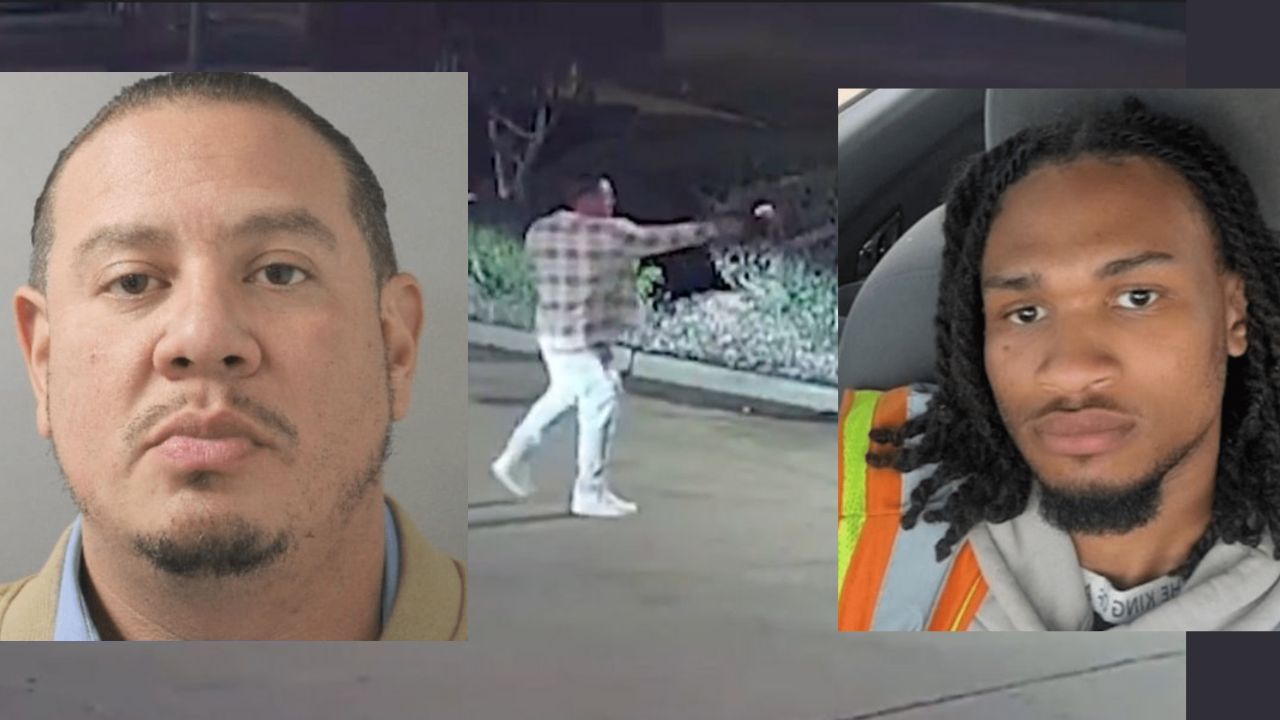
Man fatally shot at gas station after mistaken belief during custody dispute
A routine gas station stop turned deadly when a father, gripped by panic over a custody dispute, opened fire on a vehicle he wrongly believed was tied to his daughter’s alleged kidnapping. The victim, an Amazon delivery worker, was an innocent stranger caught in the crosshairs of a family conflict that had already spiraled into fear and mistrust. The shooting has renewed scrutiny of how volatile custody battles, easy access to firearms, and split-second misjudgments can collide with irreversible consequences.
Investigators say the father insisted he thought his daughter was inside the car when he pulled the trigger, a claim that has become central to both the criminal case and the public debate around it. As the details emerge, the story is not only about one man’s fatal mistake but also about the systems that failed to keep a fraught custody situation from erupting into lethal violence in a public place.
The gas station confrontation that turned fatal
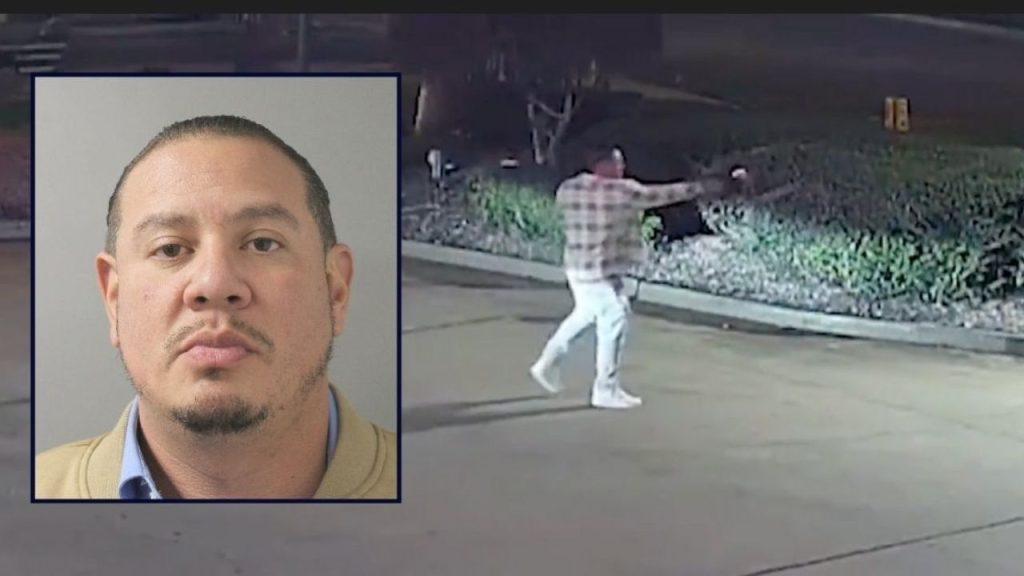
According to investigators, the confrontation began when a father arrived at a gas station expecting to meet his child as part of an ongoing custody arrangement, only to believe that the plan had been derailed. In the confusion, he focused on a vehicle driven by an Amazon worker, convinced that the driver was connected to his daughter’s boyfriend and that his child was in danger inside that car. Witness accounts and early police statements describe a chaotic scene in which the father moved toward the vehicle and opened fire, transforming a mundane stop into a crime scene in seconds.
The victim, identified as Butler, was working when he was shot, and authorities later emphasized that he had no link to the family’s dispute. Video and witness descriptions referenced by local coverage indicate that Butler’s appearance and vehicle resembled those of the boyfriend, a similarity that appears to have fueled the father’s mistaken belief. One report notes that a witness named Burren said Butler also resembled the boyfriend, raising the question of why the father would shoot at a car if he truly believed his daughter was inside, a detail highlighted in a segment featuring Jan and Burren that has circulated on YouTube.
A father’s fear and a claim of kidnapping
From the outset, the father framed his actions as a desperate attempt to stop what he believed was an unfolding kidnapping. Police say he told them he thought his daughter had been taken and that the driver at the gas station was the boyfriend who had allegedly violated the custody plan. That narrative, rooted in fear and suspicion, is now at the heart of his legal defense and the public’s struggle to understand how a custody dispute could lead to a fatal shooting of a stranger.
Investigators, however, have treated the incident as a case of mistaken identity that does not excuse the use of deadly force. In a detailed account of the charges, authorities described how the father confronted the Amazon worker at the gas station, insisting he believed his daughter was inside the vehicle before firing. The criminal complaint, summarized in national coverage, notes that the father has been charged with murder in what police explicitly called an apparent case of mistaken identity, a characterization reflected in reporting that cites the father’s own statements and the police account of the custody dispute in ABC News coverage that credits By Nadine El, Bawab and Ahmad Hemingway.
The victim: an Amazon worker on his route
The man killed in the shooting, Butler, was not part of the family’s conflict at all, but an Amazon worker going about his delivery route. He had pulled into the gas station as part of a routine stop, unaware that a custody dispute was unfolding nearby or that he had been misidentified as someone else. The fact that he was working in a branded vehicle and wearing company gear underscores how quickly assumptions can override obvious context when fear takes over.
Authorities later confirmed that Butler was an Amazon worker who had been driving through the area when the father confronted him. In a detailed national report, officials described how the man charged with killing the Amazon worker believed he was targeting his daughter’s boyfriend, not a stranger. That account, which identifies the suspect as a Man who approached the Amazon worker at the gas station and opened fire, has been widely cited, including in a piece that notes the case was first flagged by WKRC and later summarized with a timestamp of 12:41 PM by KRCR.
How the mistaken identity unfolded
Investigators have pieced together a sequence in which the father and his wife were already on edge before they arrived at the gas station. Police say Mata and his wife had received messages that led them to believe their daughter was with her boyfriend and would be dropped off at that location, a detail that framed every interaction they had once they pulled in. When they saw Butler’s vehicle, which they believed matched the description of the boyfriend’s car, they fixated on it as the source of the perceived threat.
According to the police narrative, the father approached Butler’s vehicle and, convinced his daughter was inside, fired multiple shots. Houston Fire Department paramedics responded and took Butler to a hospital, where he was pronounced dead, a sequence of events laid out in a national account that also notes that Police said Mata and his wife had been told their daughter would be dropped off at the gas station, reinforcing how the mistaken identity took shape in their minds. Those details, including the role of the Houston Fire Department and the identification of Butler, are captured in a report that attributes the chain of events to statements from Police and emergency responders, as summarized in KIMA.
Charges, custody context, and the murder case
Prosecutors have responded to the shooting with a slate of serious charges, treating the father’s actions as criminal rather than a tragic misunderstanding. The central count is murder, reflecting the view that his belief about a possible kidnapping did not justify firing into a vehicle in a public place. Investigators have stressed that there was no evidence the Amazon worker posed any threat, and that the father had other options to verify his daughter’s safety or call law enforcement instead of resorting to a gun.
The custody backdrop, however, is impossible to ignore. Police accounts describe a family already locked in a dispute over where and how the daughter would be exchanged, with tensions high enough that the father interpreted delays and miscommunication as signs of abduction. In one detailed national report, authorities explain that the man charged with killing the Amazon worker had gone to the gas station expecting a custody handoff, only to believe the boyfriend had taken the daughter elsewhere. That report, which credits WKRC and notes the case was highlighted on a Sun afternoon at 3:41 PM, underscores how the custody context shaped the father’s mindset but did not prevent authorities from filing a murder charge.
Patterns of violence at custody exchanges
This case is not an isolated example of violence erupting around custody exchanges. Earlier this year, The Elbert County Sheriff’s Office in Colorado reported that a father was shot during a child custody exchange at a gas station in unincorporated Elbert County, southeast of Denver. That incident, which also unfolded in a public parking area, highlighted how emotionally charged handoffs can become flashpoints when communication breaks down or when one party arrives armed and on edge.
In the Colorado case, authorities said the exchange had originally been arranged to occur at a more controlled facility at the sheriff’s office, but the meeting instead took place at a gas station, where the situation escalated. According to a press release cited in national coverage, The Elbert County Sheriff’s Office described how deputies responded to the shooting and later emphasized the importance of using designated safe exchange zones near Denver rather than informal locations. Those details, including the role of The Elbert County Sheriff and the description of Elbert County, are laid out in a report that traces how a custody handoff moved from a secure facility to a gas station, with tragic results, as summarized in USA Today.
Law enforcement response and local tensions
In the Texas case involving Butler, local law enforcement has been under pressure to show that it can respond decisively to violence tied to family disputes. Deputies were called to the gas station after reports of shots fired, and the father was taken into custody without further incident. The rapid response reflects a broader push in many jurisdictions to treat domestic and custody-related calls as high risk, given how quickly they can escalate when firearms are involved.
Elsewhere in the same region, Constable Mark Herman’s office has highlighted its own efforts to crack down on violent confrontations at businesses. In a recent post titled ASSAULT INVESTIGATION LEADS TO ARRESTS, Deputies with Constable Mark Herman’s Office described responding to a business location, identifying suspects, and booking them into the County Jail, charged with Assault. That message, shared on social media, underscores how local agencies are trying to show they are proactive about violence in public spaces, including gas stations and other commercial sites, as reflected in the detailed account posted by Constable Mark Herman.
Legal stakes and the question of “reasonable” fear
The criminal case against the father will likely hinge on whether a jury believes his fear for his daughter’s safety was reasonable and whether that fear justified the level of force he used. Self-defense and defense-of-others laws often require that a person’s belief in an imminent threat be both genuine and objectively reasonable, a standard that becomes complicated when the perceived danger is based on incomplete or mistaken information. In this instance, prosecutors are signaling that firing into a vehicle at a gas station, without confirming who was inside, crossed a clear legal line.
National coverage of the charges has emphasized that the man is accused of killing an Amazon worker he mistook for his daughter’s boyfriend, and that he is facing serious felony counts as a result. One detailed report notes that the suspect confronted the driver at the gas station, believed he was stopping a kidnapping, and then opened fire, only to learn later that the victim was an uninvolved Amazon worker. That account, which traces the sequence from confrontation to arrest, has been widely shared and includes a segment that begins with the on-screen message “Your browser can’t play this video. Learn more. An error occurred. Try watching this video,” a technical note that appears in the online version of the story but has no bearing on the underlying facts, as seen in the national summary hosted by CBS Austin.
What this tragedy reveals about custody disputes and public safety
For families navigating custody disputes, the gas station killing is a stark reminder of how quickly fear can harden into certainty, and certainty into irreversible action. The father’s belief that his daughter was in danger, however misguided, did not emerge in a vacuum; it was shaped by ongoing conflict, communication breakdowns, and a decision to handle a sensitive exchange in a public parking lot rather than a controlled environment. When that volatile mix met a firearm and a misidentified Amazon worker, the result was fatal.
For the broader public, the case raises urgent questions about how to keep custody exchanges from becoming flashpoints. Law enforcement agencies have urged parents to use designated safe exchange zones, often located at sheriff’s offices or police stations, and to call authorities rather than confronting suspected violations on their own. The pattern seen in the Texas shooting, the Colorado incident involving The Elbert County Sheriff’s Office, and other recent cases suggests that without clearer protocols and more trust in official channels, gas stations and parking lots will continue to be the stage for tragedies that, like the killing of Butler, were both preventable and devastating. The cumulative reporting, from the early video segments featuring Jan and Burren to the detailed national write-ups crediting ABC News and WKRC, paints a consistent picture of a system that leaves too much room for individual panic to dictate life-or-death decisions.

Leo’s been tracking game and tuning gear since he could stand upright. He’s sharp, driven, and knows how to keep things running when conditions turn.