Giant muskie caught after long fight shocks anglers
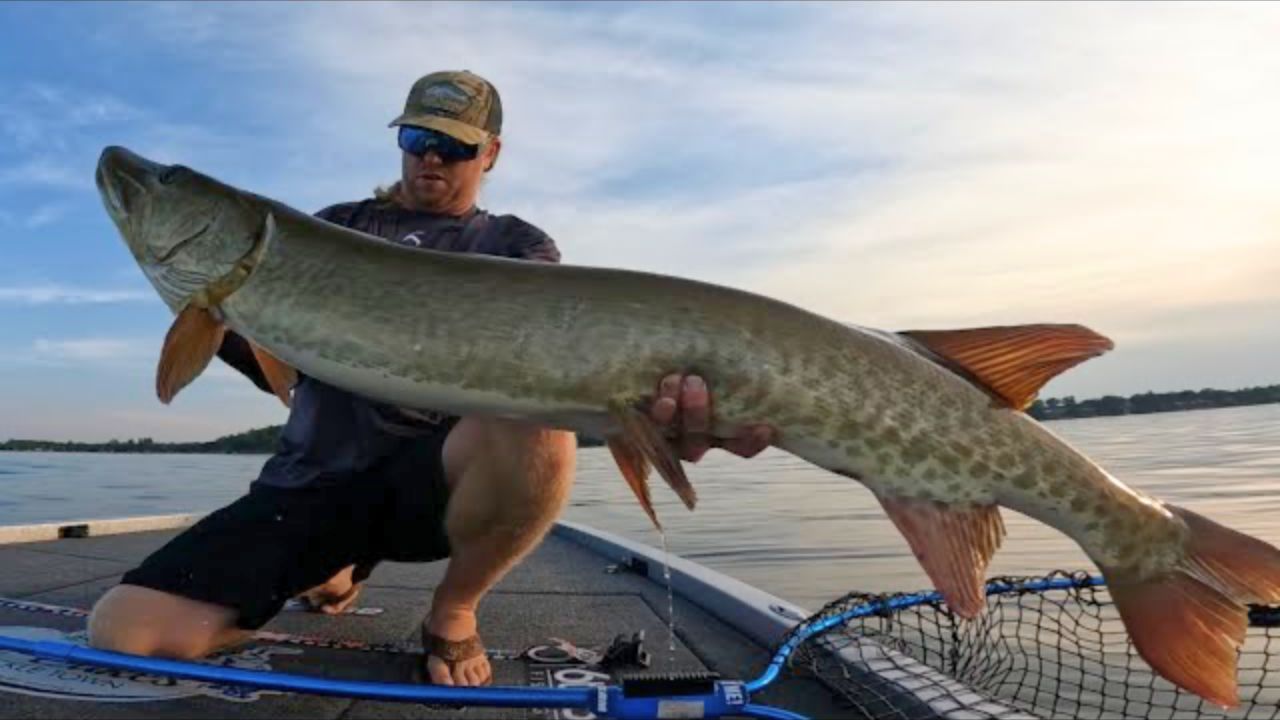
The muskie that erupted from the depths did not come quietly. After a long, grinding fight that left arms shaking and gear tested to its limits, the giant fish finally surfaced, stunning everyone on board and instantly joining the ranks of the most talked about catches in freshwater fishing. For anglers who spend years chasing a single trophy, this kind of encounter is the payoff that turns a routine day on the water into a story that will be retold for decades.
That shock is amplified by context. Modern muskie hunters operate in a world where records are dissected frame by frame, measurements are scrutinized, and every outsized fish is compared against legendary benchmarks. When one enormous muskie finally slides into the net after a drawn out battle, it is not just a personal triumph, it becomes part of a running debate over how big these apex predators can truly get and what it takes to land them.
The long fight that changes an angler’s life
Every muskie angler understands that the fight is often the real prize. The fish that inspired the latest round of astonished reactions did exactly what big muskies are built to do: it stayed deep, used its weight, and punished every mistake. Accounts from similar catches show how quickly expectations can shift. In one case on the St. Lawrence River, the fish was so powerful that the angler initially assumed it had to be a big sturgeon or a giant northern pike, only realizing it was a muskie when it finally came into view after a draining battle on the ice, a story detailed in coverage of a giant New York.
That kind of misidentification in the moment is common when anglers are locked into a fight that stretches on far longer than a typical hook up. The rod loads up, the fish refuses to budge, and the angler starts cycling through possibilities in their head. As the minutes tick by, the adrenaline builds. By the time the fish finally surfaces, the crew is often as exhausted as the muskie, which only heightens the sense of disbelief when they see the size of what they have been wrestling.
For many, that first glimpse is followed by a scramble to control the chaos. Someone grabs the net, another reaches for pliers, and someone else is already thinking about a measuring board and camera. The angler who did the fighting is usually trying to keep the line tight and their hands steady. It is a choreography that experienced muskie crews rehearse in their heads long before they ever meet a true giant in real life.
From surprise strike to social media sensation
Modern muskies do not just shock anglers on the boat, they also ripple out across social media in hours. A Sioux City man who hooked what was described as the catch of a lifetime saw his story spread quickly after he reeled in a possible record muskie in Canada while reportedly targeting walleye, a detail that surfaced in a widely shared Facebook post. That kind of unexpected encounter resonates with weekend anglers because it suggests that a world class fish can show up even when the plan for the day is something else entirely.
Comments on that post show how quickly the muskie community weighs in. Names like David and Okeley appear in the discussion, along with debates over line strength, whether the fish could qualify under specific test categories, and if it might approach a 6 pound test world record at 45 pounds. That back and forth is typical when a huge fish surfaces outside the usual muskie hotspots or techniques. Anglers immediately start parsing the details: what lure, what line, what depth, and whether the fish was intentionally targeted or an incredible accident.
The same pattern plays out whenever a giant muskie photo hits public feeds. The first wave is pure amazement. The second wave is analysis. People zoom in on the grip, the background, and the measuring tape. They compare the fish to coolers, gunnels, and boots to estimate girth and length. In the process, a single long fight on a quiet stretch of water becomes a shared event for thousands of anglers scattered across North America.
How this fish stacks up against the giants
Any outsized muskie is immediately measured against a short list of historic monsters. The most famous of those is the fish credited to Louis Spray, who reportedly landed an enormous muskie in the Chippewa Flowage on Oct. 20, 1949. That fish has long been described as weighing 69 pounds, a figure that still shapes how anglers think about the upper limits of the species.
Yet even that benchmark is not universally accepted. Researchers such as Mills have applied modern forensic technique to the only known photos of Spray’s muskie, raising questions about the true size and proportions of the fish and feeding a debate that has carried on in comment sections and online forums for years, as described in an analysis of who caught the. That scrutiny means that any new giant is not just compared against a number on a plaque, it is also weighed against a history of contested records.
Beyond Spray, the list of biggest muskies includes a handful of fish that still set the standard for modern catches. Roundups of biggest world record highlight how rare it is for a catch to break into the upper tier of documented giants. Many of those fish push past 50 inches, with some crossing into the high 50s, and they often come from a small group of legendary waters that consistently produce outsized predators.
That context matters when anglers start speculating about where a newly caught muskie might rank. A fish that stretches past the mid 50 inch mark and carries the thick, barrel shaped body of a heavy female immediately draws comparisons to the record list. Even if it falls short of official world record status, it can still set new marks for specific line classes, state records, or catch and release categories, which have become increasingly important as more anglers choose to let big fish go.
Modern benchmarks: line class and length records
In recent years, attention has shifted from pure weight to more precise categories such as line class and length only records. Art Weston, for example, landed a massive 57.5-inch muskellunge that measured 138-centimeter, a fish that was positioned as a potential IGFA All Tackle Length World Record for the species. That focus on length allows anglers to document exceptional fish without the stress and time involved in weighing them on certified scales.
At the same time, organizations that track records by line class have given new meaning to fights on relatively light tackle. Discussions around the Sioux City angler’s Canadian muskie, for example, touched on whether the fish might qualify as a 6 pound test world record at 45 pounds, reflecting the kind of detailed scrutiny that surrounds big catches in the age of high resolution photos and social media archives. Official lists of muskellunge records show how these categories have multiplied, giving anglers many different ways to etch their names into the sport’s history.
Length only records also dovetail with the growing catch and release ethic in muskie fishing. Measuring a fish on a bump board, taking quick photos, and then letting it swim away allows anglers to chase recognition without sacrificing the resource. That shift has changed how many anglers approach the end of a long fight. Instead of immediately thinking about taxidermy, they think about replicas, digital photos, and the satisfaction of watching a giant disappear back into deep water.
Regional record chases from Wisconsin to New York
State and regional records add another layer to the story. In Wisconsin, for instance, the muskie record was broken multiple times in a short span. In June of 2025, longtime Wisconsin fishing guide Jeff Van Remortel caught and released a giant muskie in Green Bay that set a new benchmark for the state, a feat detailed in coverage of Wisconsin record muskies. That fish was part of a run of exceptional catches that highlighted just how productive certain waters have become.
Later reporting from Wisconsin’s Department of Natural Resources noted that in June, Jeff Van Remortel, a fishing guide from Hazelhurst, caught and released a 56-inch-long musky that set a record in Wis, again on Green Bay. The precision of that measurement shows how carefully modern records are documented. Length, location, and release status all matter in building a credible case for a new mark.
On the opposite side of the Great Lakes region, New York waters have produced their own headline fish. A widely shared story from earlier this year described a giant muskie pulled through the ice on the St. Lawrence River, where the angler initially thought he was hooked into something else entirely before realizing the true size of the fish, as covered in the account of a monster muskie through. That same thread referenced a CNY angler who caught a huge, 45 inch tiger muskie while ice fishing on Otisco Lake, reinforcing how diverse the record chase has become across different strains of the species.
Even Pennsylvania enters the conversation. Discussions of the largest muskellunge ever caught in that state often branch into the broader question framed as How Big Is. Unfortunately for those who crave a single, undisputed number, the community still debates which fish deserves that crown and how big it truly was.
Women, weekend anglers, and the expanding muskie story
The image of the muskie angler has also evolved. A high profile example came when Greta caught and released a giant fish in Minnesota. According to coverage of the Minnesota woman’s musky, Greta said the fish fight did not last too long, as they boated the musky quickly to weigh and measure it before releasing it. She described it as her biggest fish ever and talked about plans to have a replica mount made, a detail that mirrors how many modern anglers approach trophy fish.
Her story also highlights how different big fish fights can feel. While some giants dig in for long, punishing battles, others rocket to the surface and are subdued relatively quickly, especially when heavy gear and experienced crews are involved. In Greta’s case, the emphasis was on efficient handling and a fast release, showing how a record caliber catch can be both intense and brief.
Weekend anglers chasing walleye, bass, or panfish are also increasingly part of the muskie narrative. The Sioux City man in Canada, reportedly fishing for walleye when he hooked his muskie, fits that pattern. So do stories of ice anglers on Otisco Lake or the St. Lawrence who were set up for one species and ended up tangling with something far larger. Those accidents feed the sense that a life changing fish could strike at almost any time, even for those who do not consider themselves hardcore muskie hunters.

Leo’s been tracking game and tuning gear since he could stand upright. He’s sharp, driven, and knows how to keep things running when conditions turn.