John Wayne’s custom hunting vehicle was called the “War Wagon”—here’s what it really was
John Wayne spent a career riding horses and stagecoaches on screen, but his real-life hunting rig was far more unusual. His custom-built “War Wagon” was not a movie prop at all but a heavily modified International Harvester Travelall set up as a rolling base camp for long days in the field. Beneath the nickname and the Hollywood aura, it was a practical, purpose-built truck that revealed how the actor actually liked to work and travel off camera.
Built around a 1966 International Harvester Travelall, the War Wagon carried a raised roof, a hunting hatch, a spotlight and a raft of hardware that no ordinary buyer could have ordered from a dealer. The vehicle later resurfaced at auction, giving collectors and fans a rare look at how John Wayne blended his on-screen persona with a very functional tool for ranch life and big-game trips.
From cowboy icon to International Harvester owner
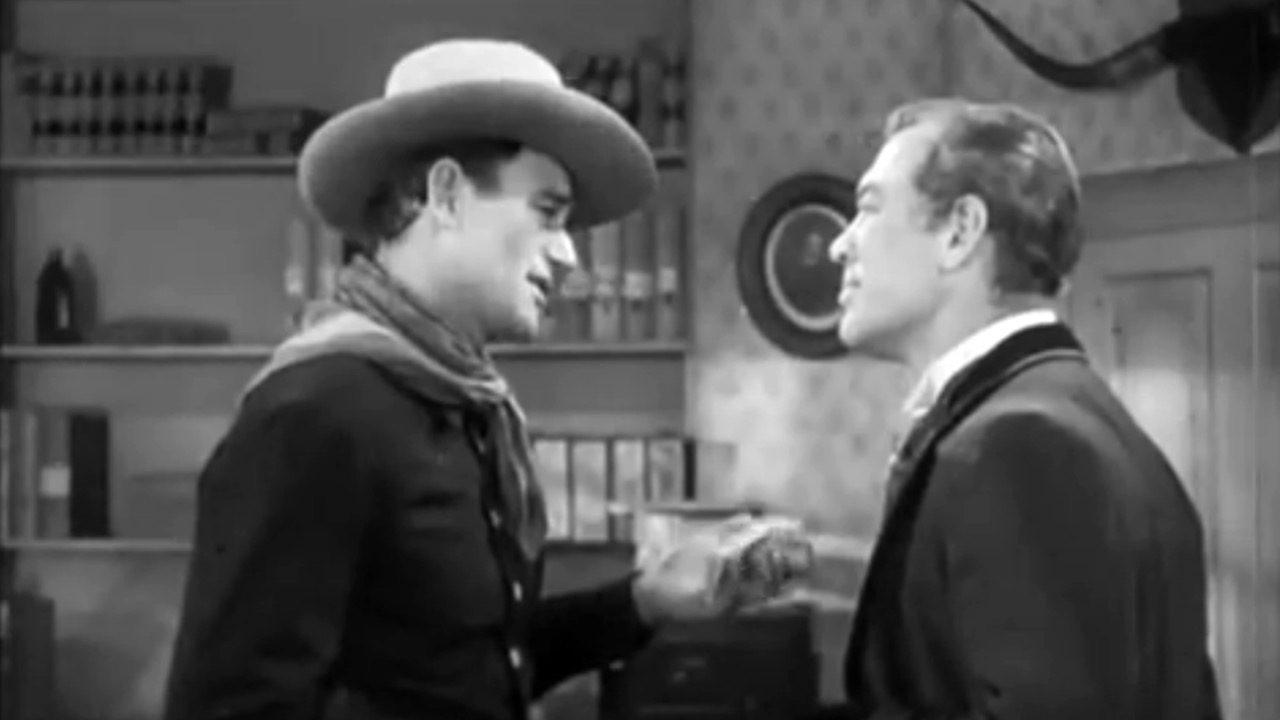
On film, John Wayne appeared in 175 movies and became synonymous with horses, saddles and dust-choked trails. Off screen, he needed something that could haul people, gear and game across rough country without the drama of a stunt sequence. That search for a real-world workhorse led him to an International Harvester Travelall, a full-size wagon already known for its toughness.
The Travelall was International Harvester’s answer to the family station wagon and early sport utility market, built to carry heavy loads and survive ranch roads that would punish lighter vehicles. For Wayne, who maintained an active private life that included ranching and hunting, the platform offered the size and durability he needed before any custom work even began. The War Wagon started as a practical choice and then became something much more specialized.
Wayne’s preference for big, capable wagons was not limited to the Travelall. A separate custom project later produced a modified Pontiac Grand Safari, a 1972 station wagon whose roof Wayne had raised so he could fit more comfortably and move around inside. That Pontiac Grand Safari shows the same pattern: take a large, conventional vehicle and reshape it into a tool tailored to his size and habits.
Why “War Wagon” and not a movie prop
The nickname “War Wagon” invites confusion with Wayne’s 1967 western of the same name, where he starred in a story about a heavily armored stagecoach. In reality, the hunting truck was a separate machine that belonged to his personal life. The label fit because the Travelall looked and functioned like a land battleship for the backcountry, not because it rolled out of a studio lot.
Underneath, the Travelall used an International V-8 engine paired with a five-speed manual transmission and a heavy-duty clutch. That drivetrain, described in auction coverage of the vehicle, gave the War Wagon the torque and control required to crawl over uneven terrain while loaded with people and equipment. The same reporting notes that the truck was equipped with a high-capacity rear axle and other hardware meant for serious work rather than boulevard cruising.
Wayne’s private life often mirrored the rugged characters he played. He spent significant time on ranches, hunted big game and maintained friendships with Western political figures and ranch owners. When the War Wagon eventually surfaced at auction, it passed through the hands of Texas state Representative Joe C. and other collectors, a path that highlighted how the truck had moved within circles that valued both its celebrity connection and its utility. The auction listing, which detailed how John Wayne’s private aligned with his screen image, treated the vehicle as a bridge between those two worlds.
The 1966 International Harvester Travelall at the core
The heart of the War Wagon was a 1966 International Harvester Travelall, a model built to carry large families or work crews with cargo. In standard form it offered a spacious interior, body-on-frame construction and stout mechanicals. For an owner like Wayne, who needed to move hunting parties across ranch land, that combination made more sense than a low-slung luxury car.
Wayne’s Travelall, identified in detailed write-ups as a 1000B series truck, already came from a brand that specialized in farm and commercial equipment. International Harvester built tractors and heavy trucks, so its station wagon was engineered with the same conservative, overbuilt philosophy. That background explains why the War Wagon could accept extensive modifications without losing its structural integrity.
Photographs shared online show John Wayne standing next to an International 1000B, with fans pointing out the unique stance and accessories of the truck. One widely shared post notes that John Wayne standing generated strong reactions from enthusiasts who recognized the rarity of such a celebrity-owned International. That visual evidence reinforces the written descriptions of the War Wagon’s base vehicle and its imposing presence.
Safari inspiration and the raised roof
One of the most distinctive features of the War Wagon was its unusually tall roofline. The Travelall’s roof was raised significantly higher than stock, turning the wagon into something closer to a mobile observation deck. Auction reporting has suggested that the design was perhaps inspired by the safari vehicles Wayne used while filming the 1961 movie Hatari, which involved African wildlife and open-top trucks. That influence was explicit in coverage that described how the War Wagon, perhaps inspired by rigs from Hatari, wore a roll bar and other open-air features.
The raised roof was not a simple cosmetic lift. It created headroom for Wayne, who was a large man, and for guests to stand or move around inside without crouching. It also allowed the builders to integrate a hatch that opened upward, turning the roof into a shooting platform or vantage point during hunts. This kind of modification was far beyond anything International Harvester offered from the factory and required custom metalwork and interior reconfiguration.
Inside, the taller roof supported additional storage and seating flexibility. While detailed blueprints have not been published, descriptions of the War Wagon emphasize that the interior was set up to serve as a base camp, with room for gear, weapons and possibly refreshments. The height also made the vehicle more visible in rough terrain, which could help drivers keep track of it in a convoy or from a distance on a ranch.
Hunting hatch, spotlight and other custom hardware
The War Wagon’s most famous feature was the hunting hatch. This opening in the raised roof allowed a hunter to stand up inside the Travelall and use the roof as a stable platform. A Facebook post that circulated earlier this year described how John Wayne had an International Harvester Travelall whose modifications included a spotlight and a hatch that served as a hunting perch. That same post, shared through John Wayne had, helped reintroduce the War Wagon to a new generation of fans.
The spotlight mounted near the front of the vehicle gave the crew the ability to scan fields and hillsides at night. Combined with the hatch, it turned the Travelall into a kind of mobile blind for spotting game or checking on cattle. The powerful beam also fit with the broader theme of the truck as a self-contained tool for remote areas, where fixed lighting and infrastructure were scarce.
Additional modifications included heavy-duty bumpers that provided extra protection against brush, rocks and potential animal strikes. Coverage in Spanish noted how those heavy duty bumpers offered extra security in rough use, a feature that would have been valuable on narrow ranch tracks or during off-road excursions. The War Wagon also carried a roll bar, a nod to safety and to the safari-style vehicles that inspired its design.
Taken together, these features turned the Travelall into something closer to a purpose-built expedition vehicle. It could haul people, gear and game, provide elevated sightlines and offer a protected interior space for resting or planning the next leg of a hunt. For Wayne, who balanced celebrity with a desire for privacy, the War Wagon also functioned as a refuge where he could spend time with friends away from studio sets and public events.
Ranch life in Arizona and the War Wagon’s home turf
John Wayne’s connection to ranching was not a marketing invention. He owned a number of ranches in Arizona, including the Red Eye Ranch operated by his Red River Land Company in Stanfiel. That specific detail appears in multiple community posts that describe how John Wayne owned of ranch properties in the state, with Red Eye Ranch serving as a focal point.
Those same references reappear in other groups, where fans and historians recall that John Wayne, Arizona, and the Red River Land Company in Stanfiel were closely linked. The repetition of those names across independent posts suggests a well-established understanding of Wayne’s footprint in the region. It also provides a likely backdrop for the War Wagon’s regular use.
On those ranches, a standard car would have been quickly overwhelmed by ruts, mud and distance. The War Wagon’s raised suspension, strong axles and protective bumpers would have been essential for traveling between pastures, checking on water sources or ferrying guests to hunting spots. The truck’s size allowed it to carry multiple passengers comfortably, which was useful when Wayne hosted friends, business partners or visiting dignitaries.
The Arizona setting also explains the value of the spotlight and hatch. Long, hot days often gave way to cooler evenings when wildlife became more active. A vehicle that could operate safely in low light, with a powerful beam and a secure standing platform, would have given Wayne and his companions an advantage during night drives or early morning outings.
How the War Wagon fit into Wayne’s broader car history
John Wayne’s interest in modified vehicles extended beyond the War Wagon. The raised-roof Pontiac Grand Safari shows that he was willing to invest in custom work to make everyday driving more comfortable. That station wagon, described in a celebratory post that called him Actor John Wayne and highlighted his custom built 1972 Pontiac Grand Safari, was altered so that Wayne could fit easier into the cabin and navigate daily life with less strain. The post about Actor John Wayne and his Pontiac Grand Safari framed the car as an example of practical innovation rather than a vanity project.
Viewed alongside the War Wagon, the Grand Safari suggests a consistent pattern. Wayne favored large, body-on-frame wagons that could be reshaped to suit his height and needs. In both cases, the modifications focused on headroom, access and utility instead of flashy styling. The International Harvester Travelall became a hunting command center. The Pontiac became a more comfortable daily driver.
Fans of Wayne’s films sometimes imagine him as permanently attached to horses or classic Western stagecoaches. The reality, documented through these vehicles, shows a man who embraced mid-century American automotive technology when it served his purposes. He did not simply accept what dealers offered. He commissioned alterations that reflected his physical stature, his hobbies and his desire for independence on the road.
A modern rediscovery through enthusiast coverage
The War Wagon might have remained a footnote in Wayne’s biography if not for the attention it received from automotive enthusiasts and social media. Detailed coverage of John Wayne appeared films and still found time to commission a one-off hunting rig helped bridge the gap between film history and truck culture. That reporting described how the Travelall carried options no one could have ordered from a dealership, including the roof hatch and specialized lighting.
Social accounts associated with that coverage amplified the story. The main page that shared the War Wagon feature, reachable through Jalopnik’s post, pushed the Travelall into feeds where both car fans and Western movie enthusiasts could see it. Additional distribution through other platforms, including a profile at jalopnik.bsky.social, a curated page on Flipboard and a feed at x.com/jalopnik, helped the truck’s story travel beyond traditional car forums.
Even the technical path by which readers reached the original article reflects the layered interest in the War Wagon. Some users arrived through a redirect link at International Harvester Travelall that preserved tracking parameters from social sharing. Others found their way through a separate redirect at John Wayne, International, which performed a similar function.
Within that broader distribution, an internal link at John Wayne, Custom served as another entry point. Each of these paths reinforced the same core story: a Hollywood legend commissioned a serious piece of hunting hardware, used it in his private life and left behind a vehicle that now fascinates both film buffs and truck collectors.
What the War Wagon reveals about John Wayne himself
Stripped of myth, the War Wagon was a working truck. It had a manual transmission, a stout V-8, heavy axles, a roll bar, bumpers built for impacts and a roofline shaped to match its owner’s stature and hobbies. Those choices say more about John Wayne than any publicity still of him on horseback.
They first show a man who valued function over flash. The International Harvester Travelall was never a glamorous vehicle. It was a tool for farmers, contractors and large families. Wayne chose it anyway, then invested in modifications that made it even more capable in the field. The hunting hatch and spotlight were not for show. They were practical additions for someone who spent real time outdoors.
The War Wagon also hints at Wayne’s desire for self-reliance. A truck that could serve as a mobile base camp reduced his dependence on fixed lodges or outside services. He could travel to remote corners of his ranches or hunting grounds with confidence that the vehicle would carry what he needed. In that sense, the War Wagon extended the frontier spirit that defined his characters into his personal logistics.
Finally, the vehicle connects Wayne to a broader culture of mid-century customization. At a time when factory options were limited, high-profile owners often turned to specialty shops to create one-off machines. Wayne’s International Harvester Travelall and Pontiac Grand Safari fit into that tradition, alongside custom limousines, camper conversions and celebrity-owned trucks that quietly toured the backroads of America.
Ultimately, the War Wagon has become a kind of rolling biography. Each element, from the raised roof inspired by Hatari safari rigs to the Red Eye Ranch backdrop in Arizona, tells a fragment of Wayne’s story. The truck’s survival and eventual sale at auction allow modern observers to read those clues directly, instead of relying solely on anecdotes.

Leo’s been tracking game and tuning gear since he could stand upright. He’s sharp, driven, and knows how to keep things running when conditions turn.