Guns that stand up to hard use
When people talk about “hard use” guns, they are really talking about tools that keep working when conditions, maintenance and luck all turn against the shooter. In the backcountry, on a duty belt or in a long emergency, the firearms that matter most are the ones that shrug off abuse, dirt and weather while still doing their job. I want to look at how those workhorses are built, and which specific designs have earned a reputation for surviving the kind of treatment that would sideline more fragile gear.
Across handguns, rifles and shotguns, the common thread is not marketing hype but engineering choices: materials that resist wear, finishes that fight corrosion, and operating systems that tolerate neglect. From lever guns carried in bear country to pump shotguns in police cruisers and semi-auto rifles in prepper closets, the guns that truly stand up to hard use share a clear design philosophy that shows up in both technical data and real-world track records.
What “hard use” really means in the real world

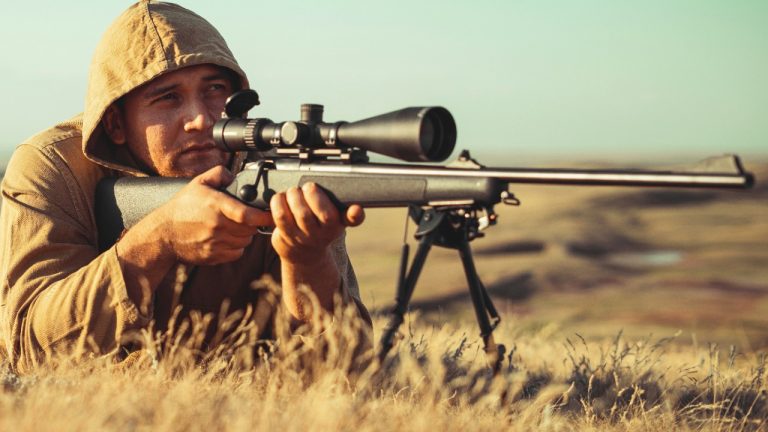
In my view, a hard use firearm is one that can fire thousands of rounds, ride in a truck or on a pack, and still function when it has not seen a cleaning rod in far too long. That standard shows up in backcountry choices like the Marlin 1895 Trapper, which is praised as “Compact and” easy to carry yet still powerful enough for serious defense, and in the way seasoned shooters talk about guns that simply do not quit. When a writer singles out the Marlin 1895 Trapper and literally labels the section “Why I Love It” because it is “Compact and” handy in tight brush, that is a nod to a design that balances portability with the ability to take punishment in rough terrain, not just a passing compliment to a lever gun’s looks, and it is no accident that the same discussion name-checks Bill Ruger as “an exceptionally” influential figure in building robust revolvers that can digest heavy loads without shaking loose, which is another hallmark of hard use design backed up in the backcountry defense guns coverage.
Durability is not just about surviving recoil, it is about resisting deformation, cracking and wear when the gun is hot, dirty or exposed to the elements. Materials science plays a central role here, because as one technical analysis notes, “The answer lies largely in material hardness, a property that determines a material’s ability to resist deformation” and that directly affects a weapon’s “ability to perform under extreme conditions.” That explanation of why “material hardness is critical for modern military weapons” makes it clear that steels and alloys are chosen so that locking lugs, bolt faces and other stressed parts do not peen or stretch under repeated firing, and that is exactly the kind of engineering that separates a true hard use firearm from a range toy, as laid out in the discussion of material hardness.
Finishes, coatings and the fight against the elements
Even the toughest steel will fail early if it is left unprotected against moisture, sweat and abrasion, which is why the surface treatment on a hard use gun matters almost as much as the base metal. Companies that specialize in firearm finishing point out that “Firearms can be subjected to harsh environments, whether for law enforcement, hunting” or other demanding roles, and that without proper anodizing and coatings, “harsh environments could dull finishes and damage the device.” When a shop markets itself as “Your Ideal Partner for the Firearms Industry Firearms” and focuses on anodizing services that build a hard, corrosion resistant layer into aluminum receivers and other parts, it is speaking directly to the need for guns that can ride in salt spray, rain or desert dust without turning into rusted paperweights, as described in the overview of firearm anodizing.
On aluminum framed rifles and pistols, hardcoat anodizing is often paired with nitride or phosphate treatments on steel barrels and bolts, creating a layered defense against wear and corrosion that is especially important when maintenance is sporadic. That is why many hard use AR builders pay close attention not just to barrel steel but to how it is treated, and why serious users look for finishes that can handle repeated heating and cooling cycles without flaking or pitting. In practice, that means a rifle can be dragged through mud, wiped off with a rag and still function, which is exactly the kind of abuse that preppers and professionals alike expect their gear to survive when they talk about guns that will keep working when everything else is going wrong.
Hard use handguns, from preppers to special operations
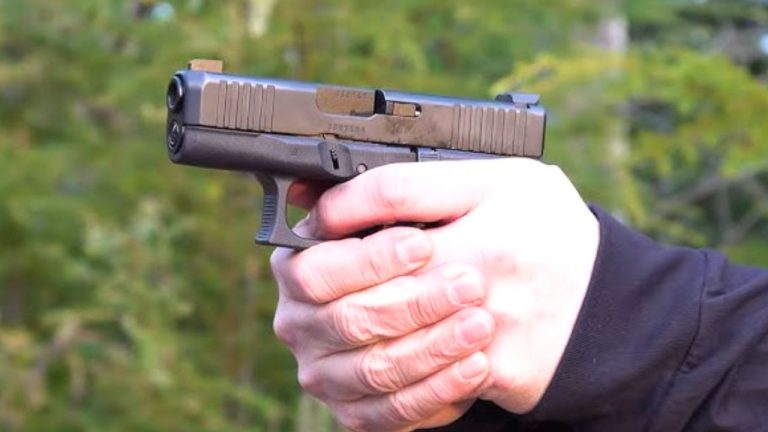
For a sidearm that has to work in bad conditions, simplicity and proven design count more than flashy features, which is why so many preparedness minded shooters gravitate toward polymer striker fired pistols. In one widely cited prepper discussion, the author lays out a basic three gun plan and starts with a “Glock 17, 9 mm pistol” described as “Accurate” and easy to feed because “you can buy a ton of” affordable ammunition, and that combination of reliability, capacity and logistics is exactly what makes a Glock a classic hard use choice for both civilians and law enforcement. The same thread emphasizes keeping things simple and not getting “crazy with the accessories unless asked,” which reflects a belief that fewer add ons mean fewer failure points on a gun that might be called on in a crisis, as spelled out in the prepping handgun discussion that highlights Glock and the word Accurate.
At the other end of the spectrum, some of the most demanding handgun users in the world have validated metal framed designs that are built to survive saltwater, sand and hard use on deployment. The SIG SAUER P226 MK25 is marketed with the line “Once reserved only for” a very small community, and the company notes that the MK25 configuration “made the P226 the official sidearm of the U.S. Navy SEALs,” while also describing the P226 as a standard “by which all other combat handguns are measured.” That kind of endorsement is not about fashion, it is about a track record of surviving maritime environments, high round counts and rough handling, and it shows how a carefully engineered alloy frame, corrosion resistant internals and robust controls can deliver a sidearm that keeps running when lives depend on it, as detailed in the P226 MK25 product description that opens with the word Once.
AR platforms, barrels and the semi auto workhorses
Among rifles, the AR pattern has become the default hard use choice for many shooters because of its modularity and the way well built examples can run for long strings without cleaning. One prepper focused conversation puts it bluntly, stating that “Well built AR’s are designed to run thousands of rounds with 0 maintenance,” and adds that “5.56 is also significantly easier to find” than some other calibers, which makes it attractive for stocking up in uncertain times. That same comment even notes a preference for a modern AR “over one of my Garands,” underscoring how far the platform has come in terms of reliability and ease of support, and it captures the logic behind choosing a rifle that can be fed with common 5.56 ammunition and still function after heavy use, as laid out in the prepper AR discussion that starts with the word Well and calls out 5.56 explicitly.
Within that platform, barrel choice is a major factor in how a rifle holds up to sustained fire, and experienced builders are explicit about what works. When asked “What type of barrel do you prefer,” one expert from Ridgeline, identified as Alex Hartmann, answers that “for a hard use AR” a high quality, cold hammer forged barrel “is the way to go,” because that process produces a dense, durable bore that resists throat erosion and maintains accuracy over many thousands of rounds. That advice, framed in a Q and A that literally opens with “Q: What type of barrel do you” and credits Alex Hartmann of Ridgeline by name, reflects a consensus that barrel steel and manufacturing method are not minor details but core to building a rifle that can handle rapid fire strings, heat and rough handling without losing zero or suffering premature failure, as explained in the hard use AR barrel guidance.
Battle proven alternatives, from Iwi Galil ACE Gen to .308 workhorses

Not every shooter wants an AR, and some prefer designs that blend AK style ruggedness with modern ergonomics, especially in harder hitting calibers. In the .308 and 7.62 semi auto space, one detailed comparison singles out the “Iwi Galil ACE Gen 2” and explicitly labels it the “best AK variant,” highlighting how the Iwi Galil ACE Gen family combines long stroke piston reliability with updated controls and rails. That same overview of .308 and 7.62 rifles treats the Iwi Galil ACE Gen as a serious contender for users who want a rifle that can handle adverse conditions and rough handling while still offering modern optics mounting and accessory options, and it is telling that the model is called out by its full name, Iwi Galil ACE Gen, in the .308 semi auto roundup.
The same rifle appears again in a separate look at AR-15 alternatives, where the author lists “2. IWI ( Israel Weapon Industries ) Galil ACE Gen 2” and refers to “The Galil ACE Gen 2 from Israeli Weapons Industries (IWI ( Isra” as a standout option for those who want something different from a direct impingement AR. That discussion, which names IWI, Israel Weapon Industries, Galil ACE Gen, The Galil ACE Gen, Israeli Weapons Industries and even abbreviates the country as Isra, underscores how the platform’s lineage and manufacturing pedigree contribute to its reputation as a durable, combat capable rifle. When a gun with AK roots is refined by a company like IWI and still retains the ability to run dirty and tolerate abuse, it fits squarely into the category of rifles that can be trusted in hard use roles, as described in the analysis of AR-15 alternatives that highlight the Galil ACE Gen.
Shotguns that survive abuse, from 500-series pumps to full auto bruisers
When it comes to shotguns that can take a beating, pump actions have long been the default choice for both wilderness defense and duty use, and specific models have earned near legendary status. In Canada, a training academy that focuses on bear defense notes that “They ( Mossberg’s 500 and 590 series shotguns ) come in various barrel lengths and capacities,” and emphasizes that this flexibility allows shooters to tailor their guns to different roles while still relying on a proven action. The same discussion points out that the Mossberg 590A1 is built “to military specifications and offers enhanced durability,” which is why it is so often recommended for bear defense and other high stress roles, and it is significant that the text explicitly calls out the numbers 500 and 590 alongside the name Mossberg in its description of popular pump shotguns that “They” recommend for bear defense.
Law enforcement experience backs up that assessment, with one duty firearms survey noting that “A few agencies issue the Mossberg 590A1 shotgun” and explaining that the 590A1 is “the U.S. military version of the 500-series of Mossbe” shotguns, distinguished by features like a heavy walled barrel, metal trigger guard and steel frame mounted safety. That description, which uses the exact phrase 500-series and even truncates the brand name as Mossbe in one spot while still clearly referring to Mossberg, underlines how the 590A1 evolved from the same basic design as the civilian 500 but was upgraded specifically to survive the rigors of military and police service, as detailed in the overview of duty firearms that highlight the Mossberg 590A1.
Backcountry defense and the Mossberg story
In the backcountry, where a gun might be called on to stop a charging animal at close range, reliability and handling matter more than almost anything else, which is why both lever guns and pump shotguns dominate serious recommendations. The same backcountry defense list that praises the Marlin 1895 Trapper as “Compact and” easy to carry also highlights how a short, powerful long gun can be slung all day without becoming a burden, yet still deliver decisive power when needed, and that balance is central to any firearm that has to live on a hiker’s shoulder rather than in a safe. When a writer devotes space to explaining “Why I Love It” in those terms, it is a reminder that hard use in the wilderness is about more than just surviving recoil, it is about a gun that can be brought into action quickly after days of rain, dust and hard knocks, as seen in the backcountry gun discussion that also nods to Bill Ruger’s rugged revolvers.
The Mossberg pump family has its own deep history in that kind of role, and a detailed look at the “MOSSBERG 500: THE COMPLETE STORY OF AN AMERICAN ICON” notes that “There are several versions of the Mossberg 590 ( Mossberg 590M ), including the 590A1, which is a military-grade shotgun that meets” specific durability standards. That same history explains how the 590A1 adds features like a heavy barrel, metal trigger guard and safety, and a bayonet lug, all aimed at making the gun more robust in field conditions, and it is telling that the text explicitly repeats the number 590 and the name Mossberg while explaining how the design evolved. When a shotgun family can trace its lineage from a basic hunting gun to a military grade 590A1 that is trusted for bear defense and police duty, it is clear that the underlying action has proven itself as a hard use platform, as laid out in the Mossberg 500 history that opens with the word There and highlights the 590.
From beginner handguns to full auto shotguns, why durability still rules
Even at the entry level, durability and ease of use are central to how experts recommend defensive firearms, especially for new shooters who may not have the skills or discipline to baby a finicky design. A comprehensive “Best Home Defense Handguns for Beginners Comparison Chart” lays out options with columns for “Caliber” and “Weight,” reflecting a focus on controllability and practicality rather than exotic features, and the models that rise to the top tend to be those with reputations for running reliably with a wide range of ammunition. When a guide for new owners spends its energy comparing Caliber and Weight instead of chasing the latest trend, it is implicitly steering readers toward handguns that can be trusted to work under stress, as seen in the Best Home Defense Handguns for Beginners Comparison Chart that organizes choices around those basic metrics.
At the far end of the spectrum, even exotic platforms like the USAS-12 full auto shotgun are evaluated through the lens of reliability and ruggedness, with one experienced shooter noting that they have “used excellent pump actions, especially the Remington 870 Tactical Models and the Mossberg 590A1.” That comparison, which name checks Remington, the number 870, Tactical Models and the Mossberg 590A1 in the same breath, underscores that even when discussing a rare automatic shotgun, the benchmark for hard use remains the classic pump guns that have proven themselves over decades. The fact that those pump actions are held up as the standard against which a USAS-12 is measured speaks volumes about how durability, simplicity and a track record of surviving abuse still define what it means for a firearm to stand up to hard use, as described in the evaluation of the USAS-12 and pump shotguns.

Leo’s been tracking game and tuning gear since he could stand upright. He’s sharp, driven, and knows how to keep things running when conditions turn.