Hard-hitting calibers that waste usable meat
Hunters who care about filling the freezer quickly learn that not all “more powerful” cartridges are created equal. Some hard-hitting calibers destroy so much tissue that a clean kill comes at the cost of bloodshot shoulders, ruined ribs, and wasted roasts. The challenge is to understand when extra energy helps and when it simply turns usable meat into a red mist.
I want to unpack how velocity, bullet construction, and cartridge choice interact to either preserve or pulverize game animals. By looking at real-world examples, from classic brush guns to extreme big-game rounds, I will map out where power becomes counterproductive and how thoughtful choices can keep more meat on the table.
Energy, velocity and why meat gets bloodshot

When a bullet hits an animal, it does more than punch a simple hole. High-speed projectiles dump energy so fast that they create a temporary cavity, stretching tissue around the path of travel and often tearing it apart. Testing with modern gel blocks shows that Rifle bullets, which travel at much higher velocity than handgun rounds, can create large temporary wound cavities that disrupt tissue the bullet never directly touches, a phenomenon often described as hydrostatic shock. On a deer’s rib cage that can mean a quick kill, but on a shoulder shot it can turn several pounds of meat into jelly.
Bullet design and speed determine how violent that energy transfer becomes. As one detailed discussion of meat-focused projectiles notes, However, velocity also has a major effect on meat damage, especially when paired with thin jackets and soft cores that fragment rapidly. Monolithic bullets that hold together tend to penetrate deeply with more controlled expansion, which can reduce the radius of bloodshot tissue. The physics are simple: the faster and more violently a bullet expands, the more surrounding muscle it can ruin, even when the animal dies instantly.
When “too much gun” really does waste meat
There is a long-running culture war in hunting camps between those who favor mild, traditional cartridges and those who reach for the biggest magnum on the rack. The problem is not that powerful rounds cannot kill cleanly, it is that many of them are designed for long-range or very large animals, not for whitetails at 80 yards. In thick woods, a high-velocity, high-energy load that hits at close range can turn a broadside shot into a massive exit wound with extensive bloodshot tissue. Even fans of classic lever guns concede that while other cartridges may put up better numbers on paper, one drawback of modern high-velocity rounds is the amount of bloodshot meat they can leave behind.
Online debates about caliber selection often circle back to the same theme: a cartridge that is more than adequate for elk or moose can be excessive on smaller-bodied game. In one forum thread on caliber selection and, users compare .40 and .45 options and trade anecdotes about how a .40 can be plenty lethal without the overkill some associate with larger bores. The thread notes details like “Joined Jun 29, 2012,” “Messages 178,” and “Reaction score 0,” a reminder that these are real hunters trying to balance killing power with meat preservation. The consensus is that once you cross a certain threshold of energy for a given animal, more power mostly adds recoil and tissue destruction, not practical effectiveness.
Classic medium calibers that hit hard without ruining the carcass
Moderate-velocity workhorses have earned their reputations precisely because they kill cleanly while leaving most of the carcass intact. The .30-30, for example, has been credited with taking more deer than almost any other rifle cartridge, and seasoned hunters still argue that it is unlikely to be unseated any time. Its relatively modest speed and blunt-nosed bullets tend to expand reliably without the explosive fragmentation seen in some modern high-velocity designs. On a broadside lung shot, that balance often means a quick collapse and only a narrow band of damaged tissue around the wound channel.
Broader caliber charts that match cartridges to species reinforce this middle path. One widely cited breakdown notes that the .22 WMR is ideal for turkey within 75 yards because it will not damage too much meat yet still has enough punch to be ethical. The same chart highlights cartridges like 6.5 Creedmoor and 30-30 Win as top choices for deer-sized animals, precisely because they combine sufficient penetration with controlled expansion rather than the blistering speeds that tend to shred shoulders and hams.
Bullet construction: explosive vs controlled expansion
Caliber is only half the story. The other half is what the bullet does after impact. Purpose-built hunting ammo such as Hornady V-Max and ELDX has become popular for its combination of accuracy and dramatic terminal performance. These loads are engineered for Purpose-designed explosive expansion and long-range capability, which can be ideal for varminting or distant shots on medium game. At close range on a deer’s shoulder, however, that same explosive behavior can turn a neat entry into a fist-sized exit and a halo of ruined muscle.
Hunters who prioritize meat often gravitate toward tougher, slower-opening bullets. In one discussion about minimizing meat loss, a user named get-r-done-idaho explains that in 30-06 he only uses 180 grain Hornady Interlocks, arguing that Your shot placement means more than bullet selection while still favoring controlled expansion at lower speeds. That approach mirrors the logic behind traditional soft points and modern bonded bullets, which are designed to hold together, drive straight, and expand in a more measured way. The result is often a narrower zone of bloodshot tissue and more salvageable meat around the wound.
Speed vs mass: why slower, heavier bullets can save meat
One of the most persistent myths in hunting is that faster is always better. In reality, once a bullet is moving fast enough to expand and reach vital organs, additional speed mostly increases recoil and tissue disruption. A thoughtful breakdown of bullet weight and velocity points out that, within reasonable specs for a given cartridge, a larger and slower traveling bullet is often the more efficient killer with less collateral damage. As one hunter put it in a discussion on bullet weight and meat damage, a heavier, slower projectile can be the most ethical choice because it penetrates deeply without the violent fragmentation that ruins shoulders, and that logic shapes how they think about Jan hunts and the quality of any kills they make.
Traditional big-game cartridges illustrate this trade-off. Loads like 280 Remington push relatively heavy bullets at moderate speeds, which many guides consider ideal for elk-sized animals because they penetrate reliably without the hyper-violent shock of some magnums. One experienced observer even argued that 280 Remington was ideal after seeing too many magnum shooters wound Elk because they were actually afraid of their rifles, a human factor that can lead to poor hits and even more wasted meat. In that sense, a cartridge that a hunter can shoot calmly and accurately, even if it is slower on paper, often preserves more venison than a blistering magnum that encourages flinching.
Magnums, boar loads and the line between power and overkill
Magnum cartridges exist for good reasons, from long-range mountain hunts to truly large and dangerous game. Problems arise when those same loads are used at short distances on animals that do not require that level of power. A comparison of .300 Winchester Magnum and .308 Winchester notes that the bigger round shines if you plan to shoot a moose or grizzly from 300 yards or any big game at distances greater than 500, although the authors do not recommend such extreme shots as a routine practice. At typical woods ranges, the milder .308 can be more than adequate, and the analysis underscores that 300 Win Mag’s extra recoil and blast do not automatically translate into cleaner kills or better meat on the hook.
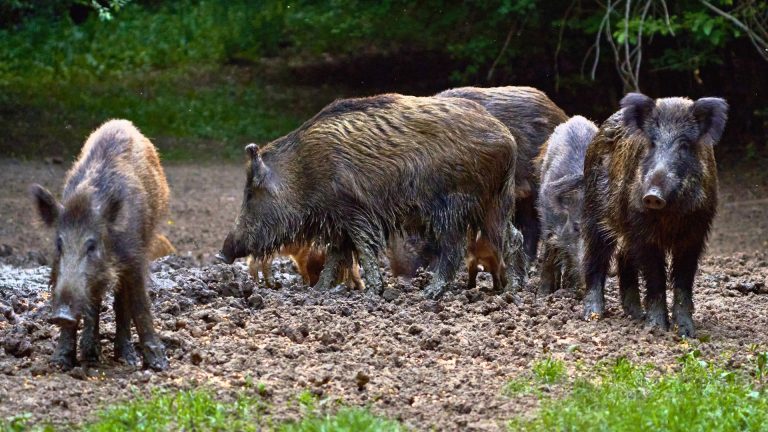
Specialized boar loads show how to walk that line more carefully. One guide to picking ammo for hogs notes that But forgeneral use, the .308 Winchester is better and far more versatile, and that there is never anything wrong with a .30-06. The same piece references Magnu m-class options but stresses that a well-placed .308 Winchester will always work just fine. On tough, shielded hogs that are often shot at close range, a stout bullet in a moderate cartridge can punch through gristle and bone without the excessive hydraulic shock that turns shoulders into soup. The lesson carries over to deer and black bear: match the cartridge to the animal and distance, not to bragging rights at the range.
Extreme big-game calibers and why they are terrible meat guns
At the far end of the spectrum sit cartridges built for the largest and most dangerous animals on earth. Rounds like 375 H&H and .416 Rigby are designed to stop big bears or African game at close range, where failure can be fatal. One detailed discussion of polar bear hunting notes that One thing to note about these calibers is that generally they, including 375 and 416 Rigby, are used at close range, and that it does not take much distance for a polar bear to consider it close range. On such massive animals, the priority is deep penetration and immediate stopping power, not meat quality, and the bullets are built accordingly.
Scaled down to deer or hogs, those same loads are wildly excessive. The bullets are heavy, the recoil is punishing, and the energy transfer at typical whitetail distances can be catastrophic for tissue. The same logic applies, in an even more exaggerated way, to anti-materiel rounds like the .50 BMG. Descriptions of that cartridge emphasize that it is based on the 30-06 Springfield large rifle cartridge and that the bullet alone from a 50 BMG dwarfs the 5.56mm NATO round. Designed to disable vehicles and equipment, not harvest venison, it would obliterate a deer-sized animal and leave almost nothing edible. These extremes make the point clearly: some calibers are simply not meat guns, no matter how precisely they can be aimed.
All-around cartridges and the temptation to stretch their role
Hunters love the idea of a single rifle that can do everything, from coyotes to elk. Cartridges like 280 Remington and 7mm Remington Magnum are often floated as do-it-all options, capable of handling deer, elk, and even larger game with the right bullets. Advocates praise their flat trajectories and strong terminal performance, but that versatility can encourage hunters to push them into roles where they are technically capable yet not ideal for meat preservation. On small-bodied animals at short range, a fast 7mm Remington Magnum load can behave more like a grenade than a scalpel.
Even within the same caliber family, bullet choice and velocity tuning can make the difference between a freezer-friendly load and a meat-wasting hammer. Discussions of 280 Remington as a near-perfect elk round, for example, highlight how its moderate recoil encourages accurate shooting, which in turn reduces wounding losses and the kind of marginal hits that ruin large sections of meat. Yet when those same cartridges are loaded hot with light, fragile bullets for long-range performance, they can behave more like varmint rounds on deer shoulders. The temptation to chase maximum speed and flattest trajectory can quietly erode the original goal of putting clean, intact meat on the table.
Practical choices to keep more meat on the bone
For hunters who want to avoid hard-hitting calibers that waste usable meat, the path forward is less about chasing the newest cartridge and more about matching tools to tasks. That starts with realistic shot distances and target species. If most of your deer hunting happens inside 150 yards in the woods, a moderate cartridge like .308 Winchester or 30-30 with a controlled-expansion bullet will usually kill just as cleanly as a magnum, with less recoil and less bloodshot tissue. Guides who work with boar and deer routinely emphasize that a well-placed .308 Winchester will always work just fine, a reminder that shot placement and bullet construction matter more than raw case capacity.

Leo’s been tracking game and tuning gear since he could stand upright. He’s sharp, driven, and knows how to keep things running when conditions turn.